
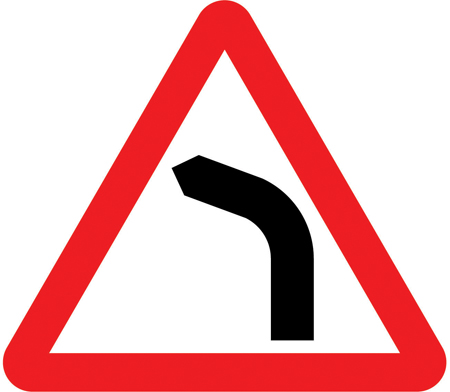
Bend to the left
Warns of a left-hand bend ahead; reduce speed before you enter the curve.
Read full guideLast updated: October 2026 · Sign images © Crown copyright, OGL v3.0
Every red triangle warning sign in the UK Highway Code, with meanings, theory test questions and revision tips. Free to browse, no signup.
✓ Real GOV.UK sign images ✓ Free to browse ✓ Crown copyright
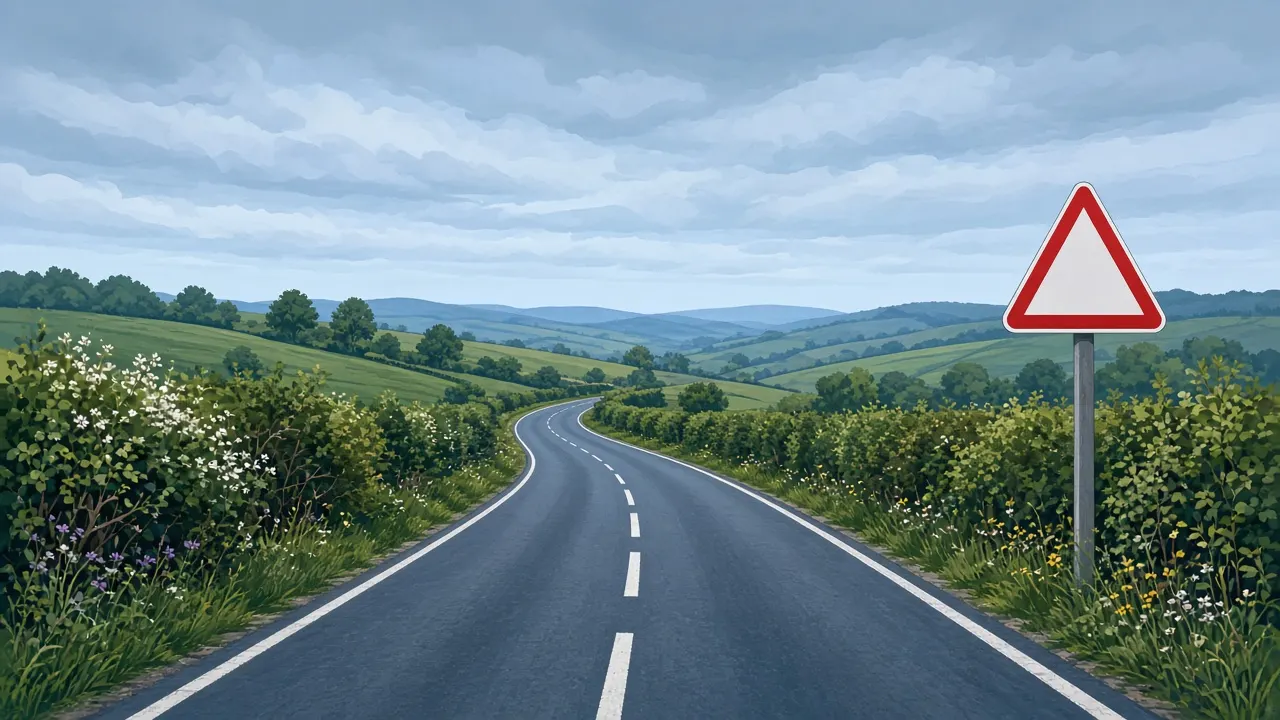
A UK warning sign tells you something hazardous is coming up the road. It does not give you a new legal order by itself. Instead it asks you to look ahead, slow if needed, and be ready to react. That is why theory questions rarely ask you to recite a name. They ask what you would do when the triangle appears.
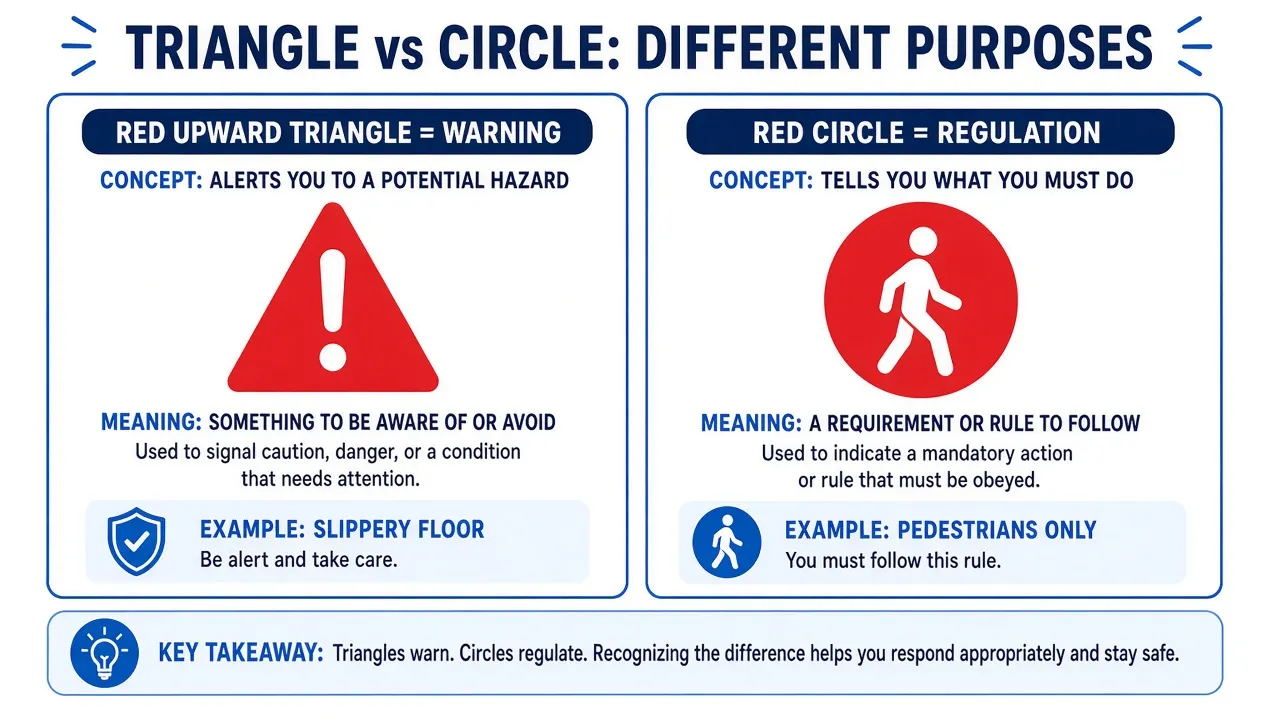
Warning signs in the UK are red-bordered triangles with a white background and a black symbol. The triangle points upwards. The same basic shape appears across countries that follow the Vienna Convention on Road Signs, so the outline alone should scream “hazard ahead” even before you read the symbol.
Plates bolted below the triangle can show distance in yards or a time period such as school hours. In mocks, learners who only glance at the picture miss those plates and pick the wrong speed or action.
Road warning signs cover bends, junctions, crossings, animals, steep hills, uneven surfaces, tunnels and bridges. They do not replace your judgement. A cattle triangle does not set 20 mph; it tells you beasts may be on the road and you must choose a safe speed.
Contrast that with regulatory signs, which usually use red circles to prohibit or require something. Mixing the two families is one of the fastest ways to lose marks in the signs category.
Triangular signs appear on rural approaches, before schools, at pedestrian crossings, near tunnels and on quaysides. Examiners love placing them in scenario questions because they test observation and planning, not memory tricks.
When you walk or drive locally, call out each triangle you pass. Linking the symbol to the real road makes revision stick faster than staring at thumbnails on a phone.
Return to the road signs hub when you want regulatory circles or speed limit plates. Triangles are only half the signs category, but they cause a disproportionate share of wrong answers because learners underestimate how often plates change the answer.
Below is the complete list of warning signs from the UK Highway Code that we use for car theory revision. Each image is the official sign, published by GOV.UK under the Open Government Licence v3.0.
Warns of a left-hand bend ahead; reduce speed before you enter the curve.
Read full guide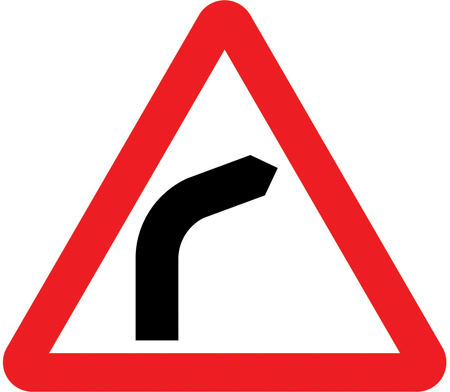
Warns of a right-hand bend ahead; keep a steady line through the bend.
Read full guide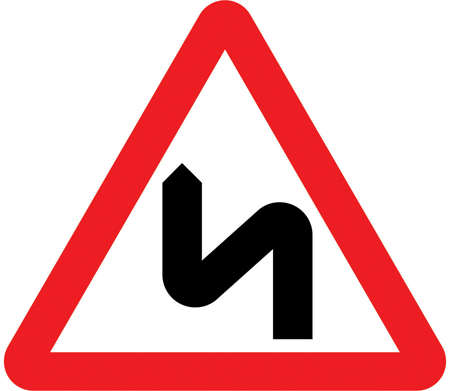
Two bends follow in quick succession, starting to the left.
Read full guide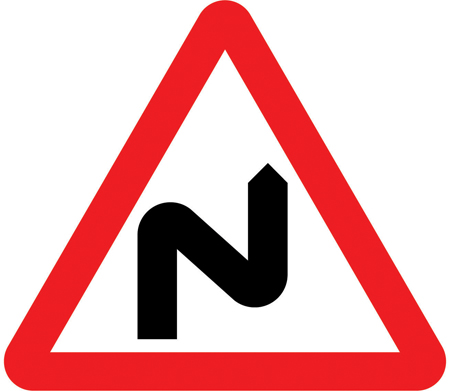
Two bends follow in quick succession, starting to the right.
Read full guide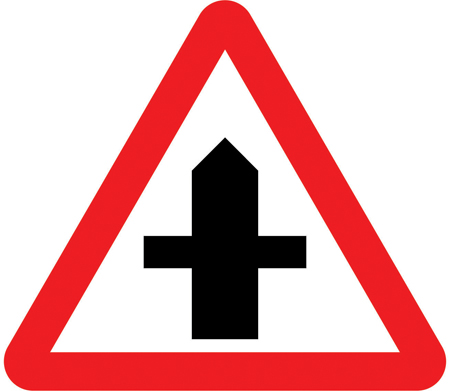
Traffic may join from left and right; look carefully in all directions.
Read full guide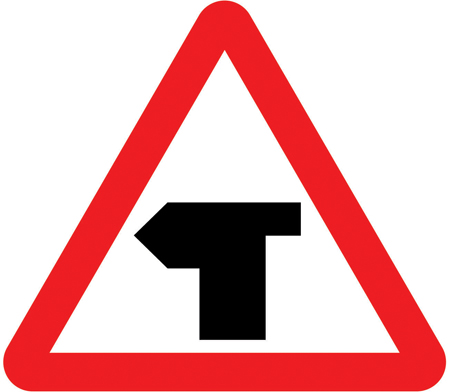
The road meets another at a T; be ready to give way if required.
Read full guide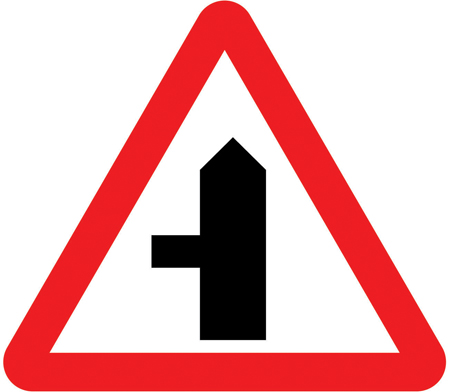
A side road joins from the left; watch for vehicles emerging.
Read full guide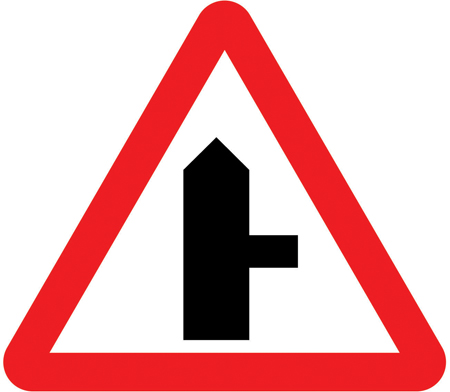
A side road joins from the right; watch for vehicles emerging.
Read full guide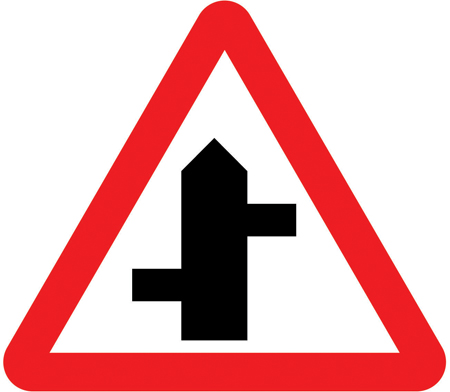
Side roads join at different points; treat each arm separately.
Read full guide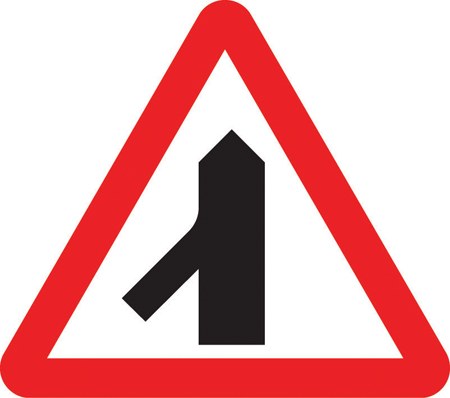
Traffic from the left merges into your lane; adjust speed and position.
Read full guide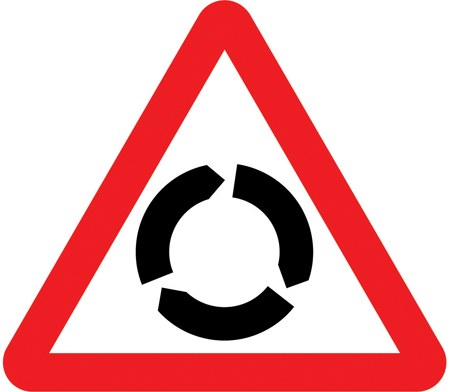
Prepare to give way to traffic already on the roundabout unless signs say otherwise.
Read full guide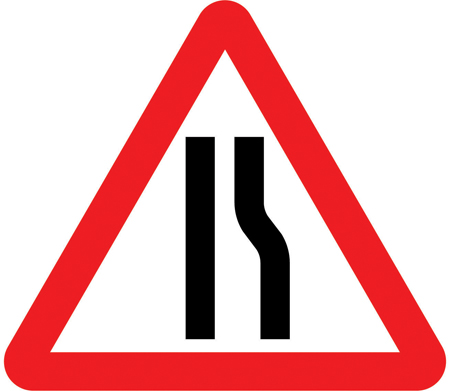
Less width ahead; slow down and be courteous to oncoming traffic.
Read full guide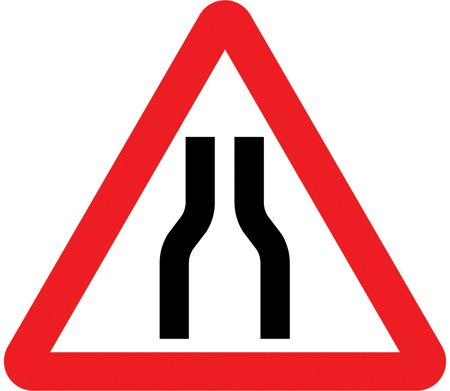
The left side of the road narrows; keep position clear of oncoming vehicles.
Read full guide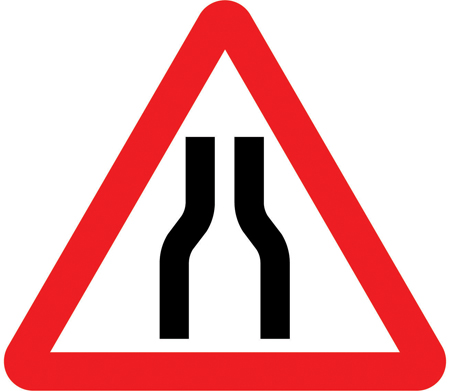
The right side of the road narrows; keep position clear of oncoming vehicles.
Read full guide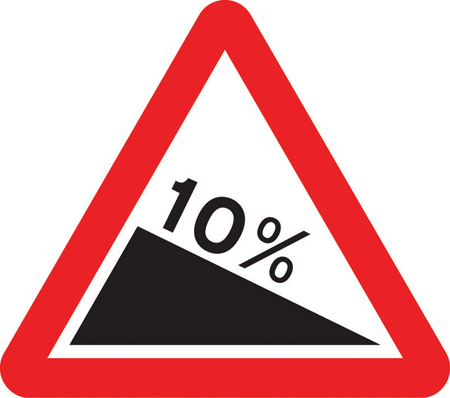
Use a lower gear on long descents to control speed and protect your brakes.
Read full guide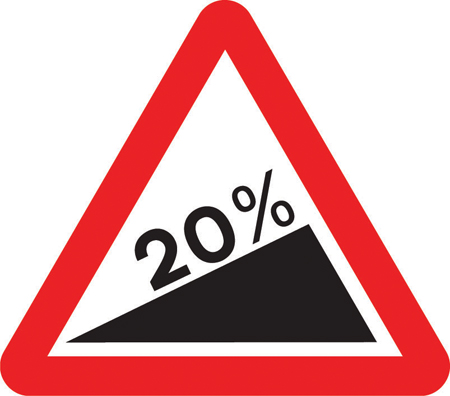
Select a suitable gear early so you can climb without blocking following traffic.
Read full guide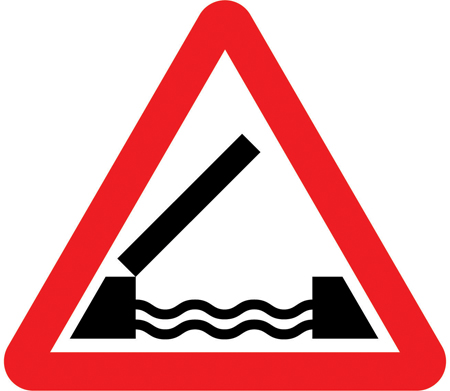
A movable bridge ahead may open for shipping; be prepared to stop.
Read full guide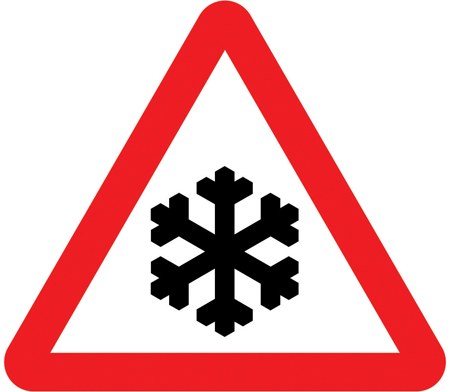
Ice may form on the road, often in shaded or exposed stretches.
Read full guide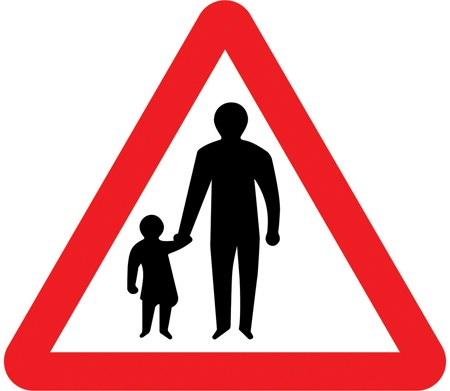
People may be walking in the carriageway; be ready to slow or stop.
Read full guide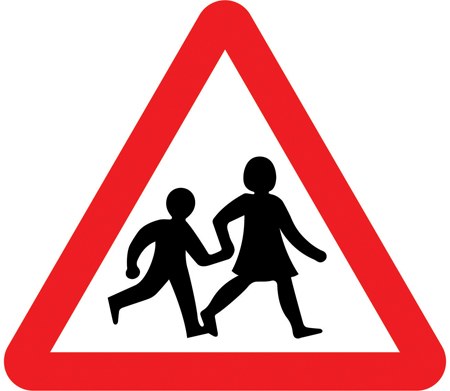
Drive slowly and watch for children crossing near schools.
Read full guide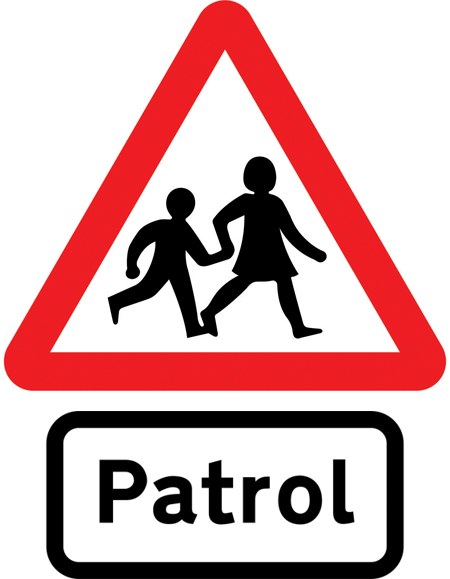
A lollipop warden may stop traffic to help children cross.
Read full guide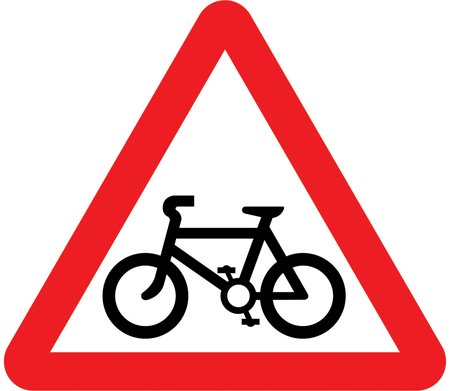
Expect cyclists on or crossing the road; give them plenty of room.
Read full guide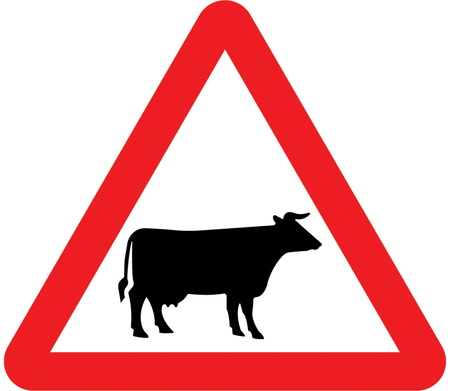
Horses may be in the road; pass wide and avoid revving the engine.
Read full guide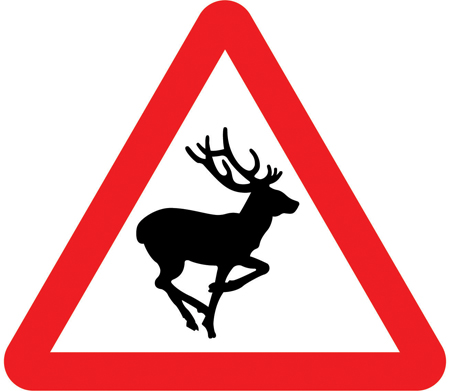
Deer or other wild animals may run onto the road, especially at dusk.
Read full guide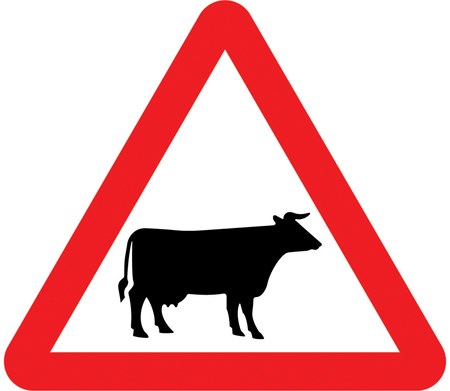
Cattle may cross or walk beside the road; wait patiently if needed.
Read full guide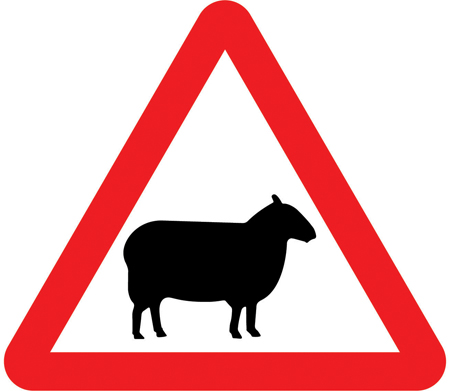
Sheep may be on the road in rural areas; drive slowly and avoid sudden noise.
Read full guide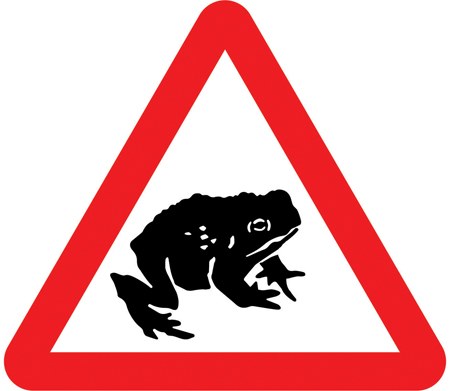
Toads may cross the road in season; watch the carriageway at night.
Read full guide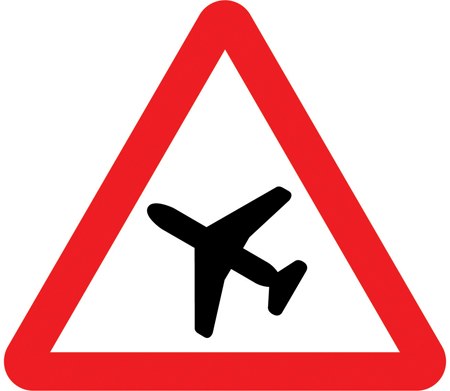
Aircraft may fly low nearby; avoid distraction and keep control of the vehicle.
Read full guide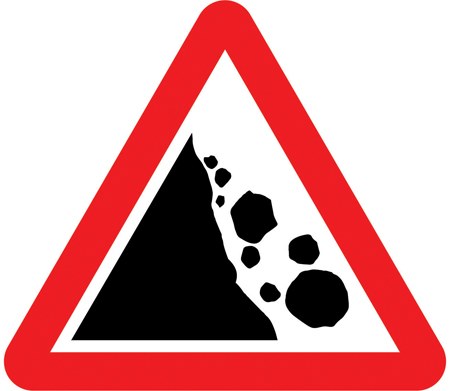
Stones may be on the carriageway; drive cautiously beneath cliffs.
Read full guide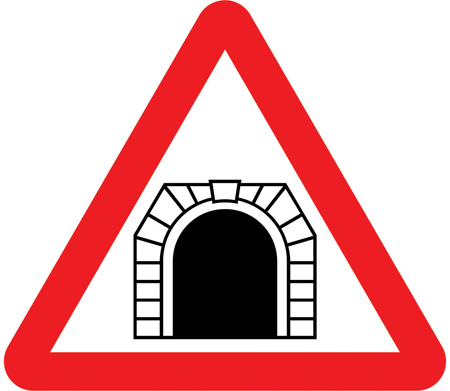
Switch on dipped headlights and remove sunglasses before entering.
Read full guide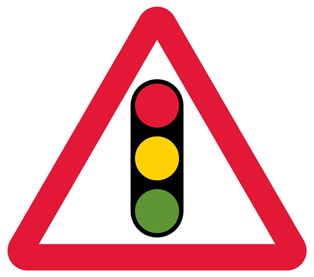
Light-controlled junction ahead; be prepared to stop on red or amber.
Read full guide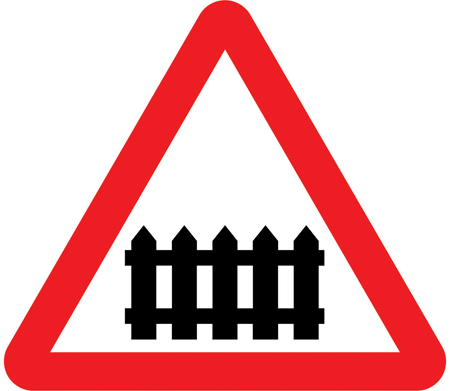
Stop if warning lights show or barriers begin to lower.
Read full guide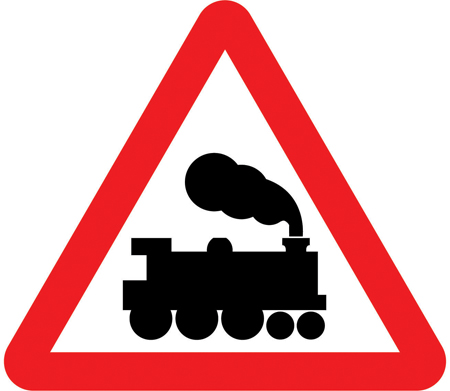
Look and listen for trains; stop if signals show danger.
Read full guide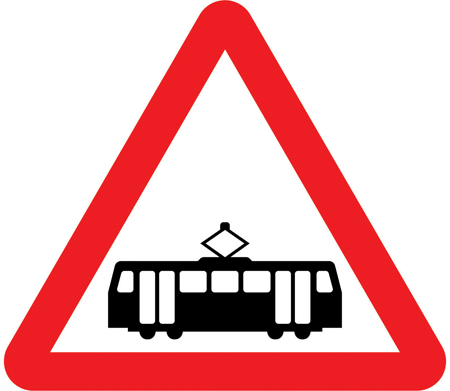
Trams may share the road; watch for rails and passengers boarding.
Read full guide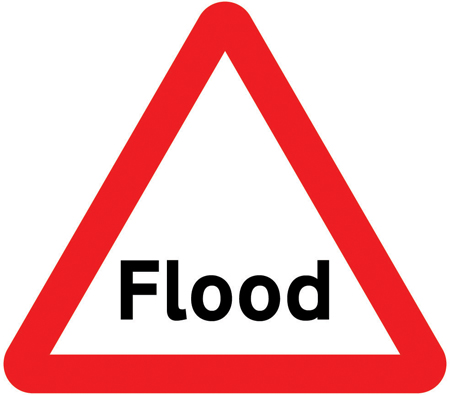
The road may flood after heavy rain; do not enter unsafe water.
Read full guide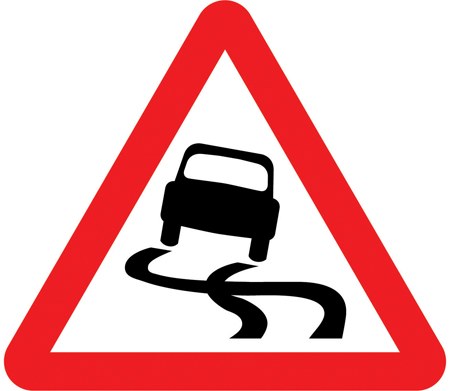
Grip may be poor because of rain, mud or other contamination.
Read full guide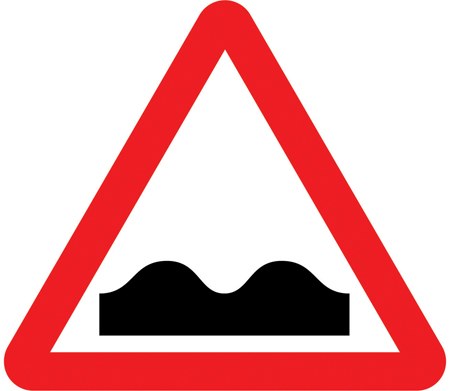
The surface is uneven; reduce speed to keep control.
Read full guide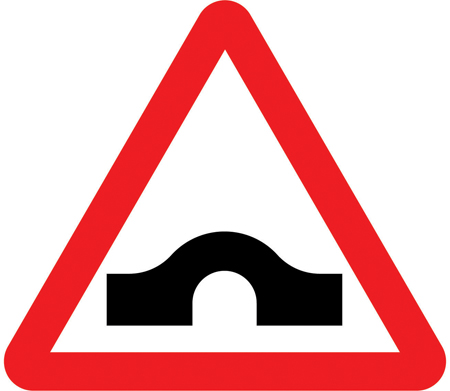
A sharp hump bridge ahead may reduce ground clearance; slow down.
Read full guide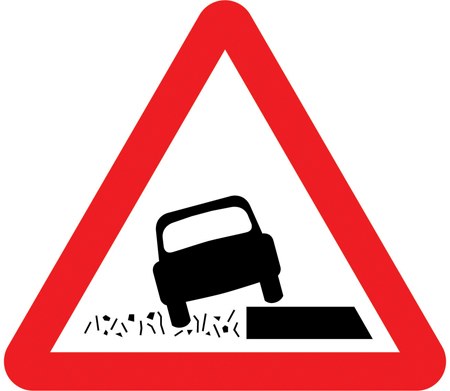
Verge edges may be soft; keep wheels on the carriageway.
Read full guide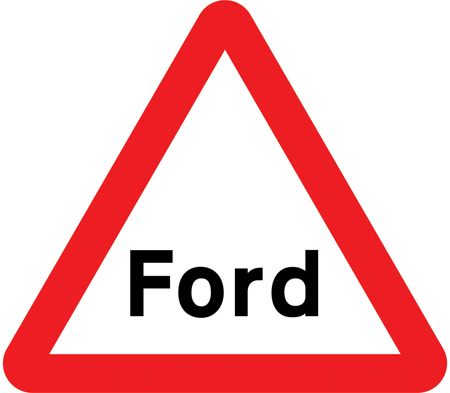
The road crosses shallow water; check depth before driving through.
Read full guide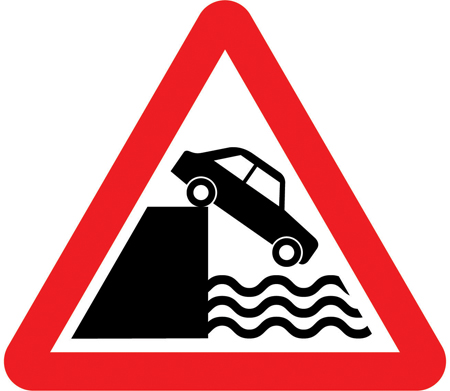
An unprotected drop to water lies close to the road edge.
Read full guide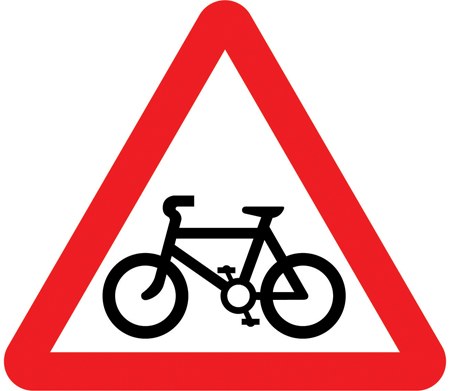
A cycle crossing point ahead; watch for cyclists crossing your path.
Read full guide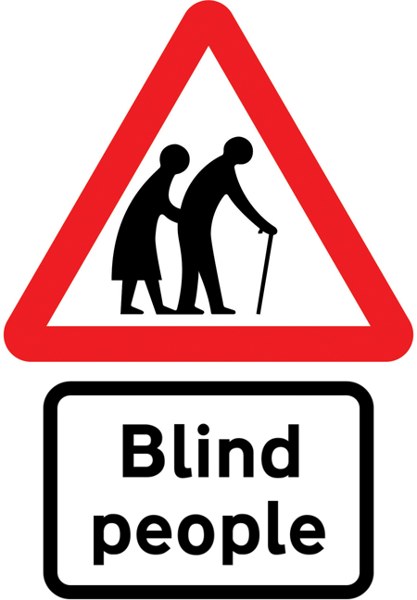
Deafblind people may cross; give them time and extra space.
Read full guide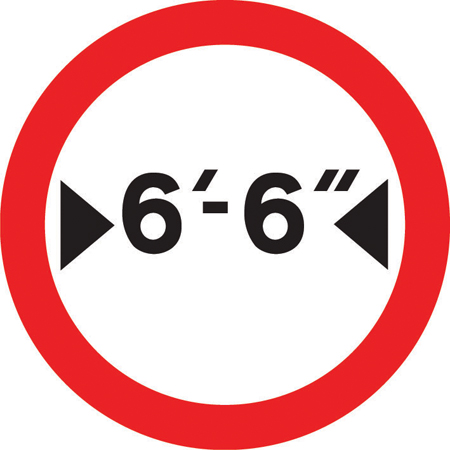
A narrow gap ahead; do not proceed if your vehicle is too wide.
Read full guide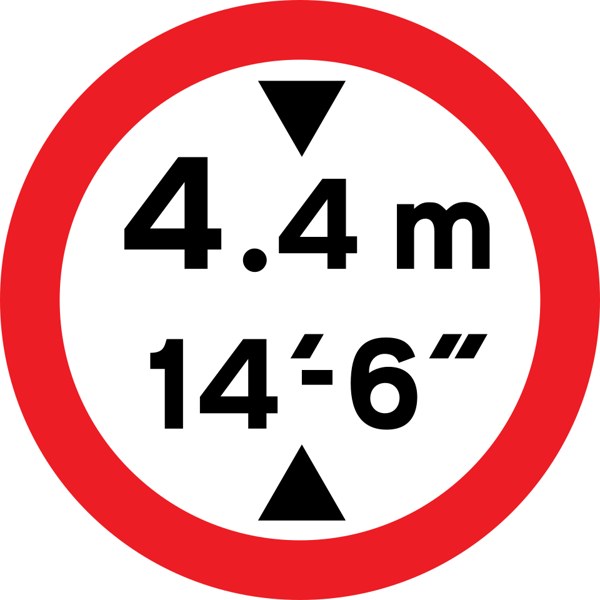
Low headroom ahead; check the plate and your vehicle height.
Read full guide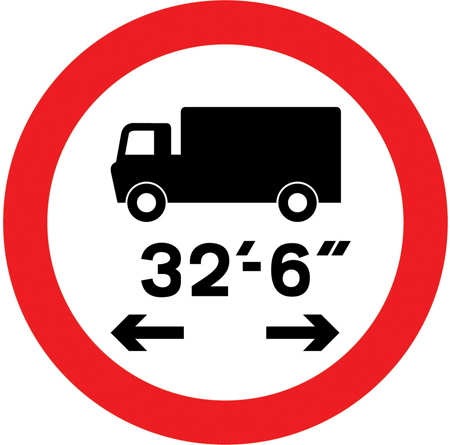
Long vehicles may not fit; check the signed maximum length.
Read full guide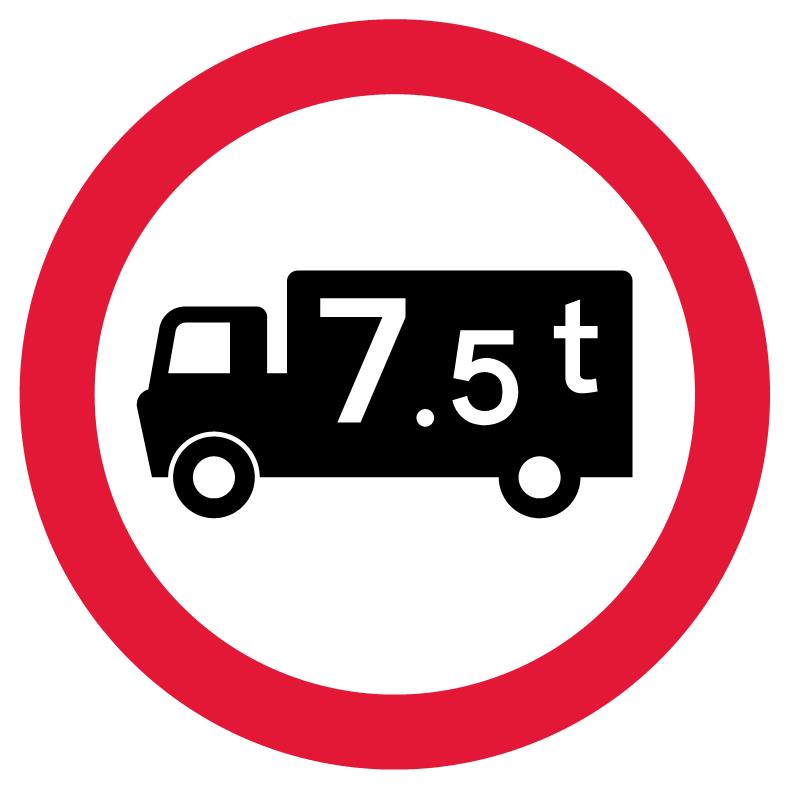
A weak bridge or road ahead limits vehicle weight.
Read full guide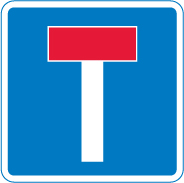
The road ahead does not provide a through route for motor traffic.
Read full guide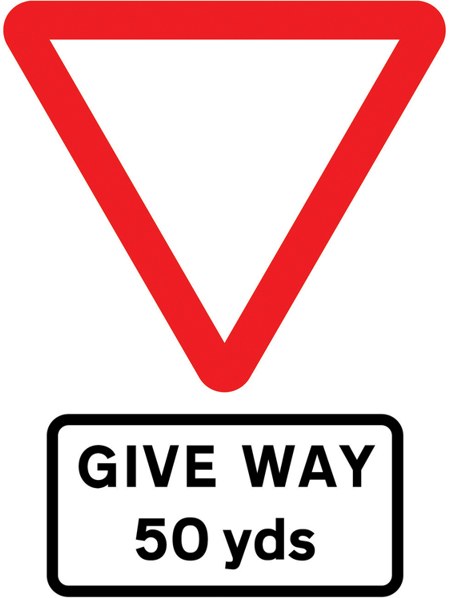
A give way line is ahead; slow down and prepare to yield.
Read full guide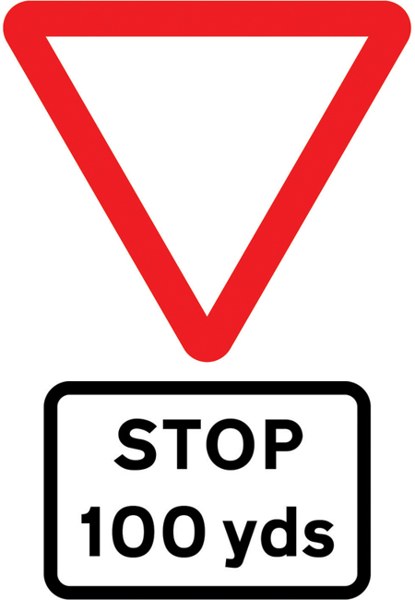
A stop line is ahead; be ready to stop completely before the line.
Read full guide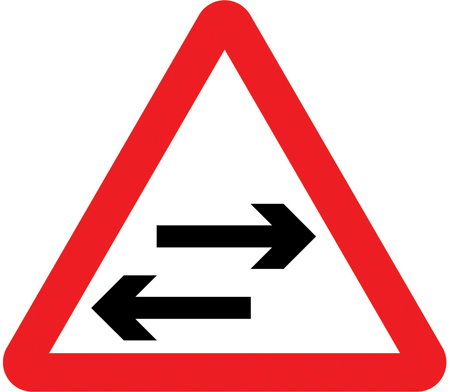
Two-way traffic crosses a one-way street or ends a one-way section.
Read full guideSign images © Crown copyright, reproduced from GOV.UK traffic sign images under the Open Government Licence v3.0.
The theory test often shows a warning sign with a plate below. Read both together. The triangle tells you the hazard; the plate tells you when or how far. For circle orders, see our guide to red circle signs.
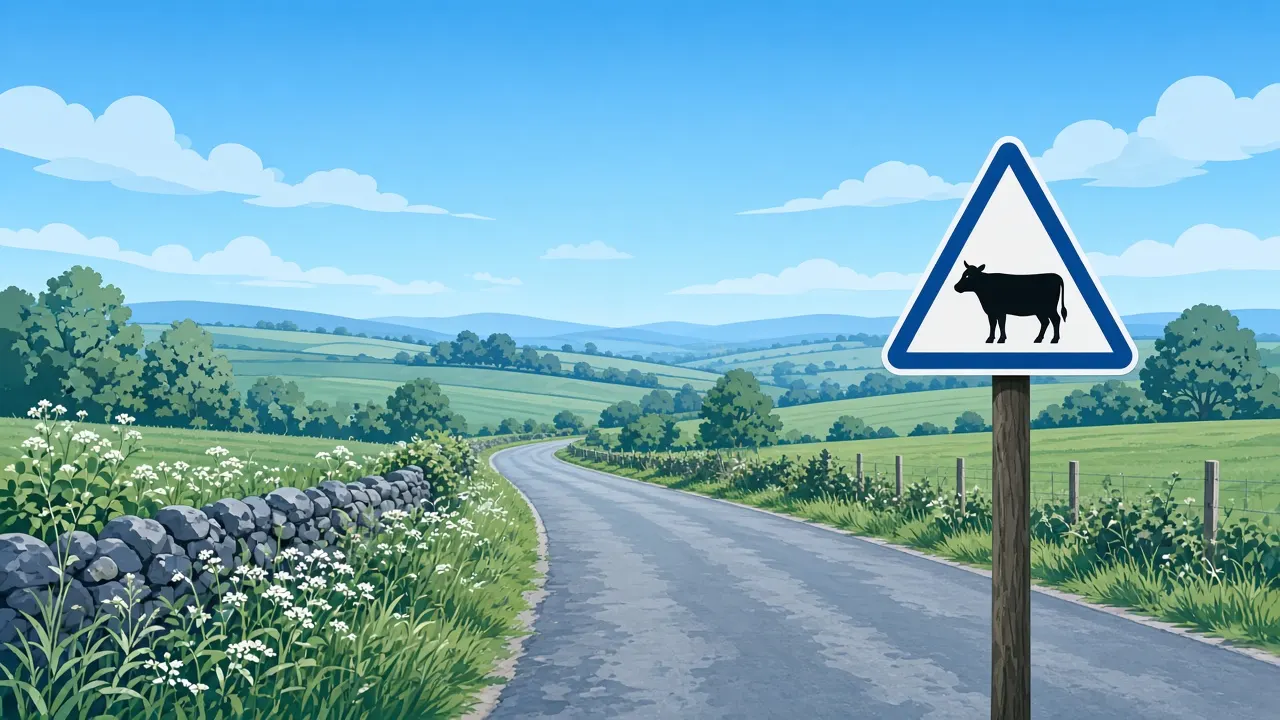
Question: You are driving on a country road and see a red triangle with a picture of a cow. What should you do?
Answer: Slow down and be ready to stop. The sign warns that cattle may be crossing or walking beside the road ahead. It does not set a speed limit. You must judge the safe speed.
This is how DVSA tests warning signs. They do not ask you to name the sign. They ask what you should do when you see it. Revision is not about memorising shapes. It is about connecting each triangle to the correct driving action.
When you finish this page, take a mock test and watch how often sign scenarios appear in the road and traffic signs category.
Warning triangles sit inside the DVSA category called road and traffic signs. That category is one of fourteen knowledge areas in the car theory test. You need 43 correct answers out of 50 overall, not per category, but sign slips add up quickly.
Expect warning signs in roughly fifteen to twenty per cent of sign-focused questions. Wording is usually a scenario: you see a symbol, plates, or both, then choose the safest response. Pure “what is this sign called?” questions are rarer.
You do not need every symbol perfect. You need to recognise the triangle family, understand the hazard, and pick the right action. That is what the DVSA tests. Check the overall pass mark before you book so you know the buffer you need on mocks.
If signs are your weak category, drill them in isolation before full mocks. Twenty minutes on triangles alone, then twenty on circles, beats an hour of random questions that rarely repeats the symbols you keep missing. The show me tell me test is separate, but the same habit of naming hazards aloud helps both exams.
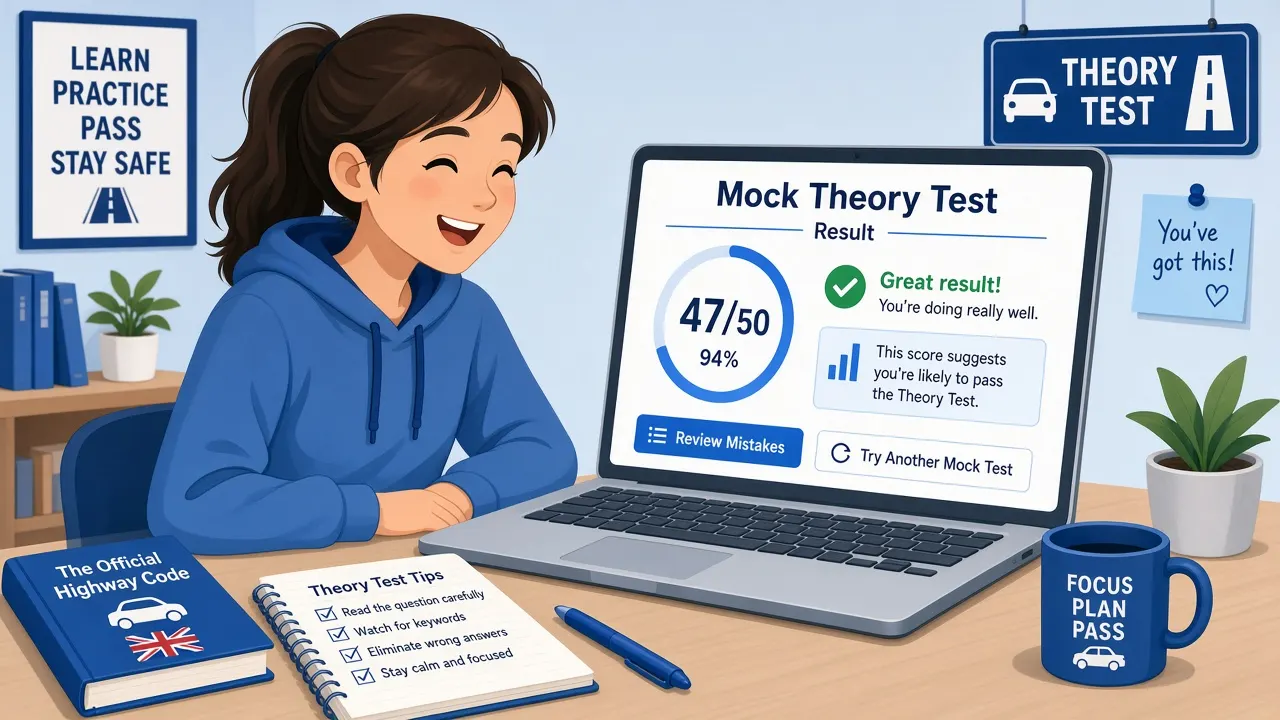
If your mock score is 45 or higher after a week, you are in a safer place to book the test. Pair sign work with hazard perception practice so both halves of the exam stay balanced.
You have seen the signs. Now prove you can recognise them under time pressure. Our mock test pulls from all fourteen DVSA categories, including road and traffic signs. Take one now and see how you score.
They are red-bordered equilateral triangles with a white centre and a black symbol. The point faces upward. Plates below can add distance or time information.
Warning signs are triangles. Regulatory orders use circles, and information signs use rectangles or other shapes. Triangles never set a speed limit on their own.
The official GOV.UK image set includes dozens of warning triangles for hazards from bends to level crossings. This page lists fifty common signs learners meet in theory questions.
No. Triangles warn of hazards ahead. Red circles usually give orders such as speed limits or turning bans. You must obey both, but they work differently.
A give way sign is an inverted red triangle on a white background and is regulatory: you must yield. A warning triangle only alerts you to a hazard such as a junction or bend.
Yes, within the road and traffic signs category. Questions often describe a scenario and ask what you should do, not simply to name the sign.
Bend and junction triangles appear frequently in rural mock questions. School and pedestrian warnings are common in urban scenarios. Revise categories, not just individual symbols.