
Last updated: October 2026 · Checked against Highway Code
Road Narrows Right Sign: meaning, rules and what to do
Two black carriageway lines inside a red warning triangle show that usable width will shrink on the right ahead, so you should slow early and hold a safe position for oncoming vehicles.
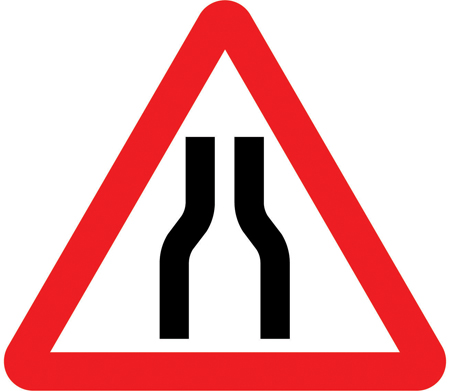
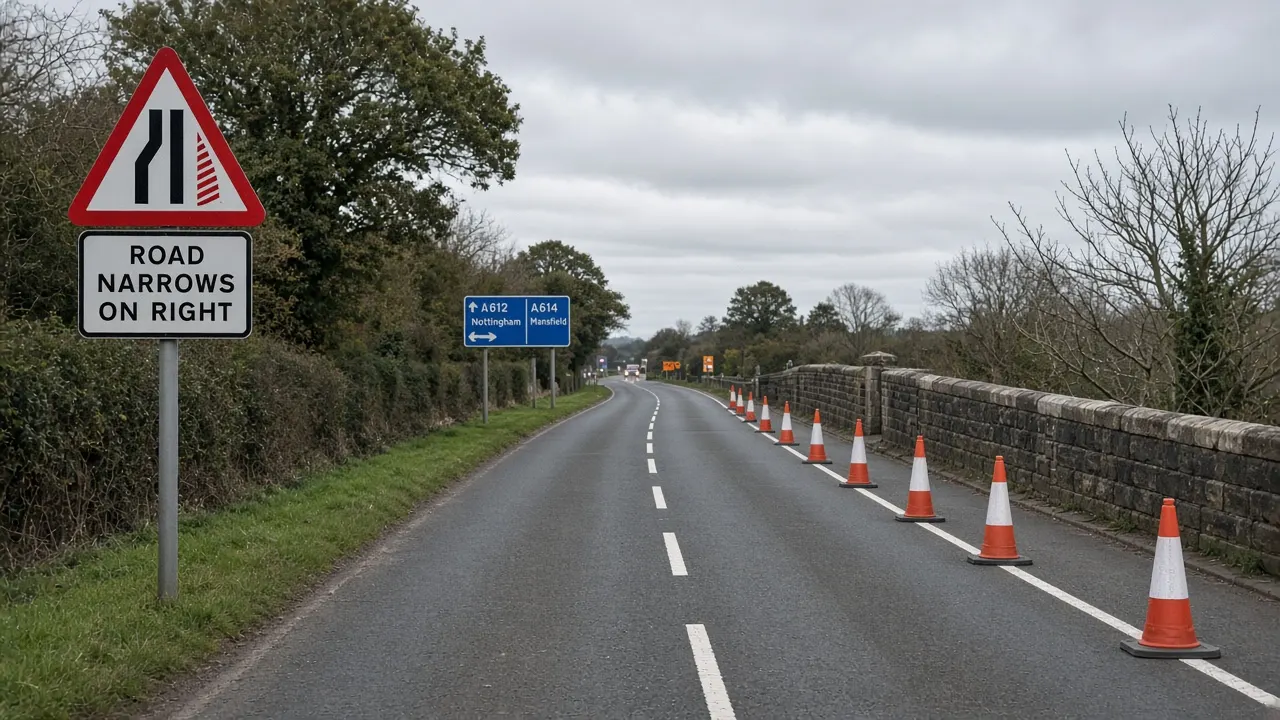
Sign image © Crown copyright, reproduced from GOV.UK traffic sign images under the Open Government Licence v3.0.
What the Road narrows on the right Sign Looks Like
The board is the standard upward-pointing warning triangle with a thick red border and white centre. The symbol is a pair of vertical black lines representing the nearside and offside edges of the carriageway. The right-hand line angles inward toward the middle, while the left edge stays straighter, so you read the pinch as losing width on the right.
You will usually meet the post on rural B-roads before a bridge parapet, a rock cutting, or parked trade vehicles that habitually encroach. Distance plates may sit underneath, quoting yards to the narrowest point. At night the retroreflective triangle often appears before you can judge how tight the white edge lines feel.
Do not confuse it with the “both sides” version, where both black lines taper inward symmetrically. The left-narrowing triangle mirrors this plate. Blue circular priority signs at chicanes order who must reverse; they are regulatory and smaller, not a substitute for the advance width warning.
Temporary works sometimes add cones that steal more space than the permanent layout suggests. Read any “road narrows” plates together with fresh line markings, because resurfacing can shift the usable track even when the pictogram on the post stays unchanged.
The left-narrowing triangle mirrors the taper on the other verge. The both-sides warning shows two inward angles. At some pinch points a blue “give priority to oncoming vehicles” circle appears at the throat; that plate settles disputes, while the triangle only announces geometry.
What the Road Narrows Right Sign Means
The symbol appears where engineers expect drivers to misjudge lane width after a comfortable straight. It carries no standalone penalty, but it supports the general duty in The Highway Code to drive at a speed from which you can stop within the distance you can see to be clear.
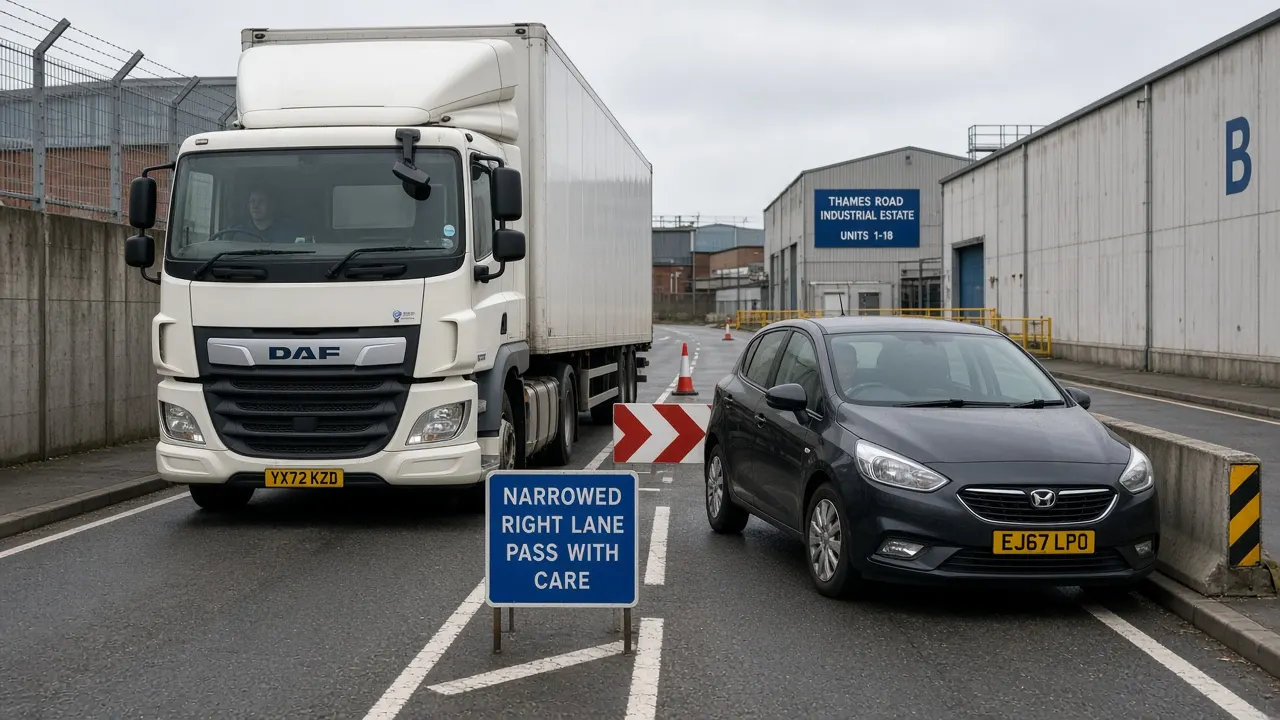
Rule 134 applies on many approaches: on single-track roads use passing places on your left, and be prepared to reverse to a wider bay if the other driver cannot pass safely. When the right verge drops away or a wall closes in, your effective lane may be narrower than the centre line suggests.
Rule 125 reminds you that posted limits are maximums, not targets. Through a wet pinch behind a wide van, the safe speed may sit well below the national limit repeater you passed a mile back. The triangle buys time to cover the brake before mirrors clash.
Right-side narrowing often follows hump bridges, cattle grids, or village pinch points where the pavement and kerb rise on the left but the bank eats the offside. Cyclists may need the centre of the lane; overtaking them inside the squeeze risks a handlebar strike against the wall.
HGVs and coaches may need the full width and can straddle the centre line legally when their size demands it. Hugging the right kerb to “help” oncoming traffic can scrape your nearside on protruding branches or parked wing mirrors. A modest left position with low speed usually works better.
Two-way flow after a one-way diversion makes the pinch feel worse because habits drift toward the middle. If an opposing-arrow warning appeared earlier, treat the narrowing as part of the same meeting-traffic story rather than as an isolated hazard.
Winter mud, fallen fruit, and frost on shaded cuttings reduce grip where camber pushes you toward the wall. Summer tourism adds pedestrians stepping between parked cars on the nearside while you steer away from the offside pinch. The plate does not list those extras; it simply gives you a few seconds to scan.
Read the taper direction, not your usual habit line. When the right line angles inward, plan to sit slightly left in your lane while still clearing parked vehicles and drain covers on the nearside.
Before entering a single-track throat, identify the next passing place on your left. Stopping there beats reversing uphill with a trailer while another driver waits in the narrowest section.
If you drive a wide SUV, fold mirrors proactively when signs warn of pinch points ahead of bridges. Scraping a mirror still counts as damage even at walking pace.
Motorcyclists may take a central line for sight lines through the squeeze. Do not attempt to share the same strip of tarmac; hold back until the layout widens.
Horse riders often prefer the outer track where the wall falls away. Pass wide and slow, and avoid sounding the horn where echoes startle animals between close verges.
Sat navs may still show a generous lane width because map geometry lags roadworks. Trust live cones, fresh white lines, and the triangle over an optimistic blue route line.
After dark, dip headlights before the pinch so you do not dazzle anyone threading the gap toward you. Use reflective posts and cat’s eyes to judge how quickly the offside wall closes in.
Highway Code rules 125, 134 and 153 (speed, narrow roads and country lanes)
Road narrows on the right vs Similar Signs
| Sign | Meaning | Legal or warning? |
|---|---|---|
| Road narrows on the right | Width lost on the offside ahead | Warning triangle |
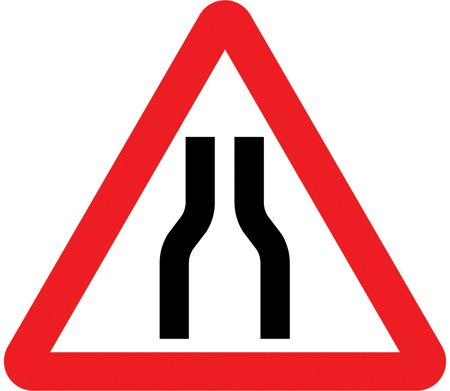 Road narrows on the left | Width lost on the nearside ahead | Warning triangle |
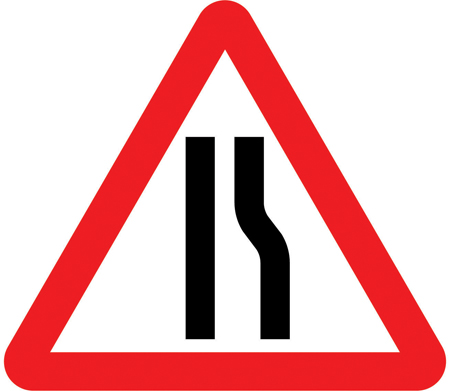 Road narrows both sides | Carriageway tightens from both verges | Warning triangle |
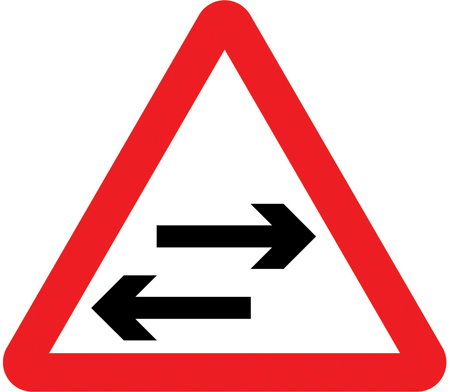 Two-way traffic | Opposing flows share one surface | Warning triangle |
Rules and Penalties
Ignoring a warning triangle is not a separate endorsable offence, because the board advises rather than orders. Enforcement instead targets careless or dangerous driving when speed, lane position, or refusal to reverse causes a crash or forces others to swerve.
Wing-mirror strikes against stone walls or oncoming lorries are common insurance claims through rural pinches. Investigators ask whether each driver slowed after the advance warning and whether a passing place was available.
Failing to give way at a signed priority narrowing can support a careless driving report if you block oncoming traffic rather than reversing to the marked gap. The width warning shows the squeeze was foreseeable.
Driving tests mark serious faults for rushing pinches, brushing the kerb, or mounting the verge to avoid oncoming vehicles without proper observation. Examiners want early speed reduction and calm sharing of space.
Commercial drivers face fleet review after repeated damage on the same signed stretch. Tachograph data showing harsh braking at a known narrowing can trigger coaching even when police issue no ticket.
Check the latest theory test pass mark and book when you are ready via our booking guide.
Road narrows on the right in Practice
Owen commutes along a lane where a new triangle appeared before a right-side cutting. He used to hold the centre through the straight; now he lifts off when the red border flashes in his headlights.
At the pinch he drops to about 20 mph, checks the nearside for cyclists, and leaves a gap for an oncoming delivery van that needs the crown of the road. The van passes without folding mirrors because Owen stopped short of the narrowest stone face.
On his driving test the examiner routes him through the same squeeze in daylight. Owen names the board as a right-side narrowing warning, selects second gear, and keeps both hands on the wheel without grazing the kerb on the left.
The following month, storm debris hides the edge line on the right. Because he already slowed at the post, he feels the slide and eases off rather than snatching the wheel toward oncoming space.
His instructor later asks why the plate matters when the wall is visible. Owen explains that locals still misjudge speed there each winter; the sign marks a recorded pinch where meeting traffic needs predictable positioning, not last-second swerves.
How This Sign Appears on the Theory Test
Picture questions show the asymmetric lane lines and ask which side loses width. Choose the right-hand taper, not the mirrored left version or the both-sides symbol.
Some items pair the triangle with a meeting-traffic scenario. Remember the sign warns about geometry; only separate plates or markings set priority or speed.
Differentiate from bridge height or weight limits, which use different pictograms. If the symbol is only narrowing lines, ignore answer options about headroom unless another sign appears in the clip art.
Hazard perception training rewards early braking when tree lines pinch, even when the post is off-screen. Treat narrowing verges like any other closing hazard.
When revising, sketch three variants: right taper, left taper, and both sides. Examiners expect instant recognition under time pressure.
Take a free mock theory test and filter questions on road and traffic signs. Pair that with the warning signs guide for triangle symbols.
Related Road Signs
Two-way traffic
Oncoming flow on lanes that pinch after one-way sections.
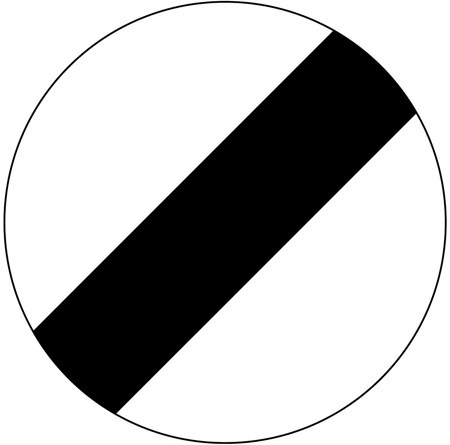
National speed limit
Default limit on many rural approaches to narrow bridges.
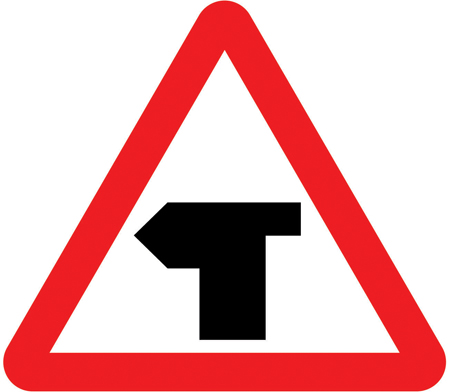
T junction sign
Junction geometry sometimes follows a tight pinch point.
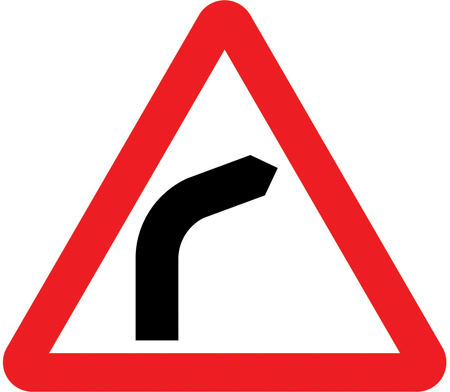
Bend right sign
Curves that often combine with offside narrowing on hills.
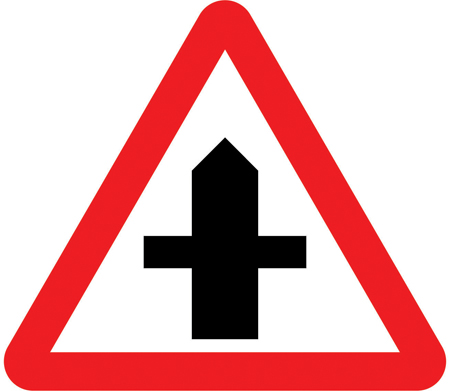
Crossroads sign
Junction warnings where lane width may change abruptly.
Test Yourself on UK Road Signs
Treat the narrowing warning as early notice to drop speed, choose a steady lane position, and plan how you will meet oncoming traffic before the wall closes in. Calm sharing through the pinch keeps you inside Highway Code expectations and gives examiners fewer reasons to mark a serious fault.
Frequently Asked Questions
Does the road narrows right sign set a speed limit?
No. It warns about layout. You must still obey limit signs and drive below the maximum when grip or width demand it.
How is it different from the left-narrowing triangle?
Only the taper direction changes. The left version shows width lost on the nearside; this plate shows the pinch on the right.
Should I move right or left when I see this sign?
Usually hold slightly left in your lane so oncoming vehicles have room past the offside pinch, while clearing parked cars and pedestrians on the nearside.
Who gives way at a narrow bridge?
Follow any blue priority circles, passing-place customs, and Rule 134. If no sign orders priority, use common sense and reverse to the nearest gap when needed.
Will this appear on my theory test?
Yes. Width warnings are core triangle knowledge. Expect image questions naming which side narrows or choosing a safe response.