
Last updated: October 2026 · Checked against Highway Code
National Speed Limit: meaning, rules and what to do
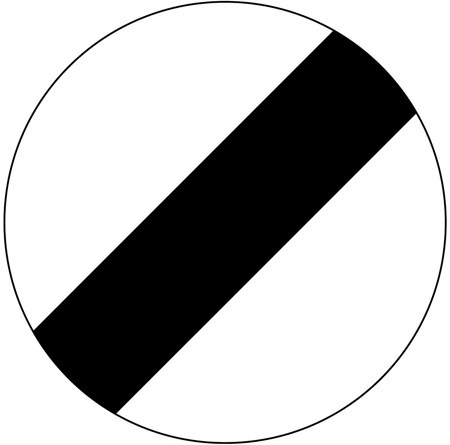
In the Department for Transport schedule the white disc with a single black diagonal band is diagram 671: it marks where a posted number ends and the national maximum for that road class begins again.
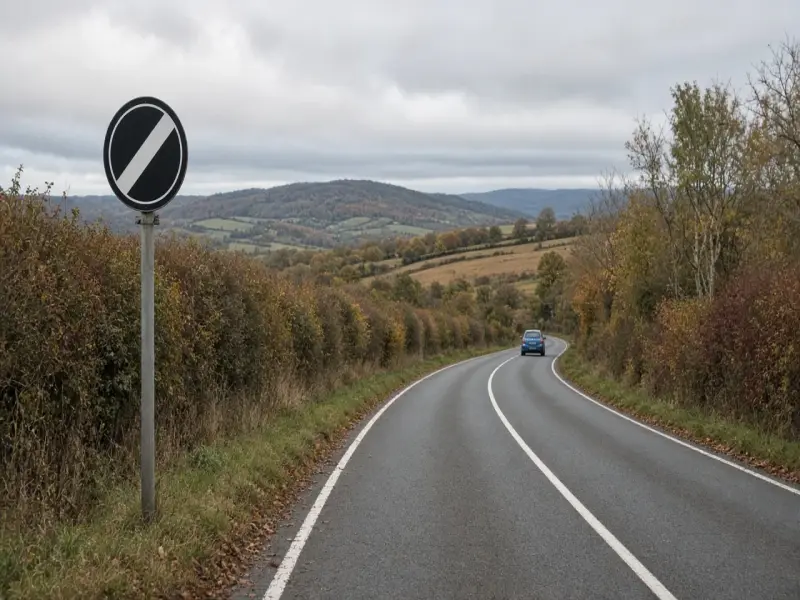
Sign image © Crown copyright, reproduced from GOV.UK traffic sign images under the Open Government Licence v3.0.
What the National limit Sign Looks Like
Catalogue artwork shows a perfect circle: white field, one wide black band running from upper right to lower left. The bar is not a “no entry” slash; it is thicker and centred inside the disc. GOV.UK traffic sign image packs label this layout diagram 671, scaled for permanent posts and for repeaters on long rural routes.
Sign auditors check retroreflectivity class, border absence, and bar angle against the authorised drawing. Temporary versions at roadworks reproduce the same geometry on yellow backing. If a plate shows a digit inside a red ring, it is a different family entirely, no matter how similar the circle feels at a glance.
Repeaters are smaller copies mounted mid-section on fast singles where drivers might forget a village 30 has ended. The catalogue treats them as reminders, not new orders. Their spacing appears on the signing plan in metres from the primary post at the boundary.
Pairing matters in the schedule. Engineers often place diagram 671 beside an “end of restriction” plate that cancels a 40 or 50 bypass limit. Learners should read the pair as one message: the numeric cap is finished and defaults return until the next number or lighting rule applies.
Motorway gantries may flash a white slash on a matrix after a variable limit ends. The electronic face mimics the static catalogue shape so drivers recognise the same legal idea at seventy miles per hour as they do leaving a market town.
Numeric limits use red rings; minimum speeds use blue circles; end-of-zone plates use a black diagonal on white. Catalogue revision should sort silhouettes first: only diagram 671 restores national defaults without showing a number. Our junction-focused guide at national-speed-limit-sign explains driving choices once you recognise the plate.
What the National Speed Limit Means
Scheduling diagram 671 starts with a traffic regulation order that names the road chainage where a local limit ends. Highway authorities choose the post when a bypass rejoins a single carriageway, when a village 30 zone closes, or when smart motorway software returns to an open limit. The catalogue entry binds from the sign plane onward along the carriageway it faces.
Because the plate carries no figure, the legal speed comes from vehicle class plus road layout. Rule 124 in The Highway Code lists the table; the sign simply tells you that table applies again. Built-up areas with three or more street lamps in a row can still imply 30 mph even seconds after a slash, which catches drivers who treat the plate like a throttle pedal.
Dual carriageways in law need a physical separation between directions. A wide painted hatch is not always enough. Catalogue training for transport students stresses measuring central reserve width and barrier type before selecting seventy on a photo question.
Goods vehicles, buses, and cars towing trailers carry lower national caps on the same black-and-white face. The board does not list those figures; your licence category and trailer weight do. Fleet compliance officers store the table beside diagram 671 in audit folders because telematics alarms still fire when a van hits sixty-one on a single.
Northern Ireland uses the same circular slash on public roads, with separate enforcement guidance. Theory artwork matches GB packs, but always read local press for temporary orders during events. The catalogue shape is identical even when the speed table context differs.
Repeaters do not change the limit; they reduce sign blindness on moorland approaches. If you pass one without remembering the last boundary post, treat the repeater as proof you already left the numeric zone, not as permission to accelerate before checking mirrors and side roads.
For indexation on regulatory hubs, diagram 671 sits beside speed twenties and forties as the “cancel” key. Understanding that role helps you parse long strings of plates on orbital routes without re-reading every digit.
College transport modules ask students to sketch chainages: where diagram 671 sits relative to lamp columns, side roads, and camera pairs. That exercise mirrors how councils justify repeater spacing to safety auditors.
Sign workshops compare bar width on faded posts with the PDF drawing. A tourist souvenir with a thin slash is not a lawful order. Report non-standard boards through the council fault line.
When you audit a route for a driving school, note whether a 50 repeater was followed by diagram 671 or by an unlit stretch that still behaves like thirty because of housing frontage. The catalogue plate is only one clue in a sequence.
Sat-nav databases sometimes label roads “NSL” without showing the post. Treat the icon as a hint, then confirm with the last regulatory face you passed and the layout through the windscreen.
Before booking your theory appointment through gov.uk, rehearse diagram 671 beside photos of singles, duals, and lit terraces. Mix items from our mock theory test with the regulatory signs index so shape memory survives under exam pressure.
Smart motorway training videos pause on the slash glyph after a red ring clears. Watch those frames as catalogue revision: the electronic symbol is diagram 671 in miniature, not a new speed by itself.
When you leave a 40 or 50 bypass, glance at the mirror and check your speedometer before accelerating. The slash restores headroom quickly, but side roads and driveways remain.
Street lighting can keep you at 30 mph inside a built-up area even moments after the national plate. Count lamps and read the character of the housing, not only the last sign you passed.
National limit vs Similar Signs
| Sign | Meaning | Legal or warning? |
|---|---|---|
| National speed limit (diagram 671) | Default maximum for road and vehicle class | Regulatory black disc, white slash |
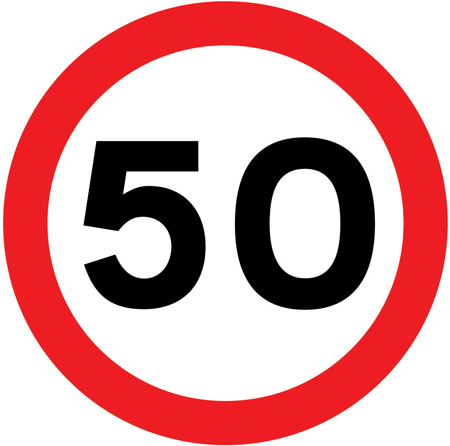 50 mph limit | Fixed numeric cap until cancelled | Regulatory number in red ring |
 End of 40 mph | Leaves posted forty; check next order | Regulatory black diagonal on white |
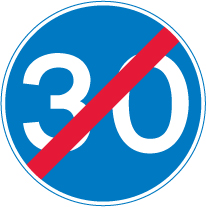 Minimum speed | Do not drive slower than shown | Regulatory blue circle |
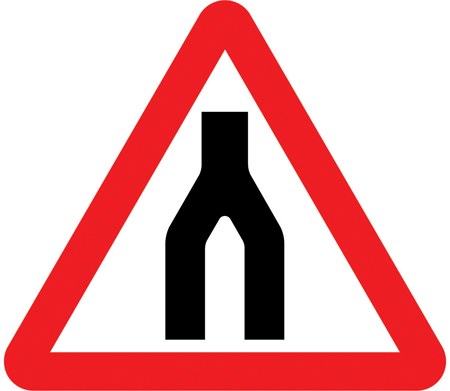 Dual carriageway ends | Layout change; national cap may drop | Warning triangle |
Rules and Penalties
Exceeding the restored national maximum is standard speeding. Penalties scale with how far over you were, including fixed penalties, speed awareness courses, or court for high readings on singles after diagram 671.
Average-speed cameras on dual carriageways enforce seventy for cars over long sections. A slash plate at the start of a zone does not switch cameras off; it only changes the lawful cap they measure against.
New drivers who collect six points within two years of passing can lose their licence. Two moderate speeding offences after leaving a bypass are enough.
Police can prosecute driving too fast for conditions below the legal maximum. Ice on a sixty single still demands much lower speeds even when the catalogue plate is fresh in the mirror.
Fleet vans with factory limiters may stay below the legal maximum after diagram 671. The plate cancels a signed order but not a manufacturer governor fitted for compliance schemes.
Check the latest theory test pass mark and book when you are ready via our booking guide.
National limit in Practice
Morgan audits a signing plan for a county college project. The PDF lists diagram 671 at chainage 4.2 km where a 50 mph distributor meets an open single carriageway toward the Pennines. Lamp columns stop two hundred metres before the post, but a terrace row continues on the left.
Morgan marks a note: drivers may still be in a default thirty until housing thins, even though the numeric fifty ends. The catalogue plate restores sixty for cars on the single only when the built-up rule no longer applies.
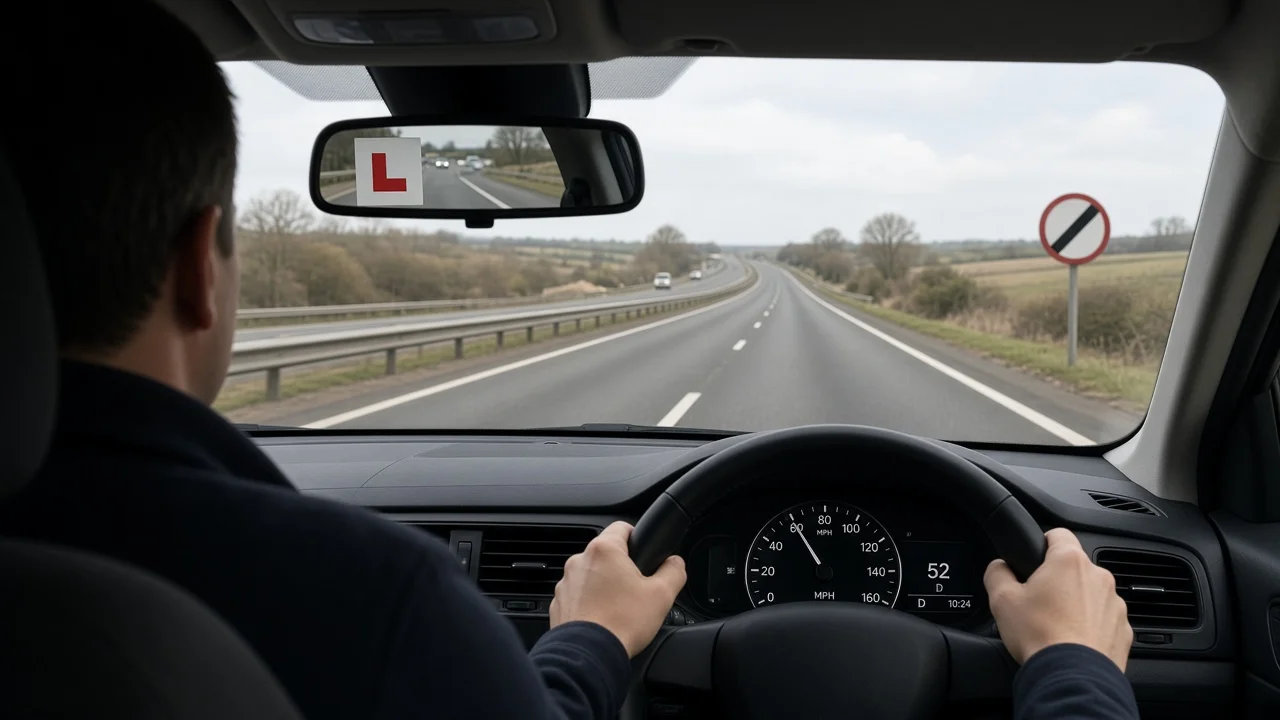
On a lesson the same week, Morgan sits beside a pupil leaving that boundary. They pass the slash, check mirrors, and rise smoothly to fifty-five mph because rain and sheep grids ahead cap safe speed below the legal sixty.
A following car hits seventy before the dual section begins. Morgan uses the moment to explain that singles stay at sixty for ordinary cars until a central reserve proves a dual. The pupil photographs the reserve width for their portfolio folder beside a printout of diagram 671.
How This Sign Appears on the Theory Test
Car theory papers include fifty multiple-choice questions; you need forty-three correct within fifty-seven minutes. Items often show diagram 671 and ask the limit on a single, dual, or lit street. Memorise thirty built-up, sixty single, seventy dual or motorway for standard cars.
Hazard perception is scored separately at forty-four out of seventy-five clips for a car licence in Great Britain. Smooth acceleration after a slash still matters when a clip shows a side road or tractor ahead.
Picture questions may crop the plate behind foliage. Look for central reservations, lamp spacing, and carriageway width before you tap an answer.
Wrong options sometimes quote seventy on every rural road. Eliminate those when the image shows one lane each way without a barrier.
Comparison stems pit diagram 671 against red-ring forties and blue minimum circles. Ask which silhouette cancels a number without showing a digit; only the black slash qualifies.
Take a free mock theory test and filter questions on road and traffic signs. Pair that with the warning signs guide for triangle symbols.
Related Road Signs
National speed limit (driving rules)
Long-form guide to defaults, towing, and test traps.
Dual carriageway ends
Layout change where seventy may drop to sixty.
30 mph limit
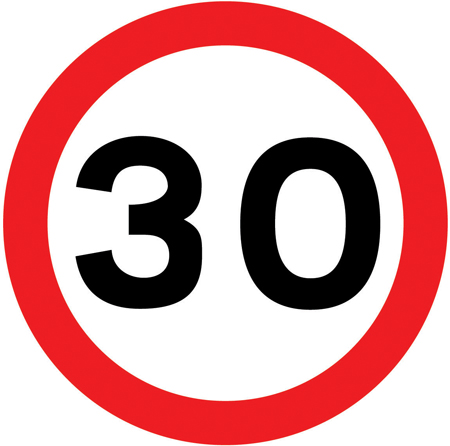
Numeric cap that diagram 671 often follows.
No overtaking
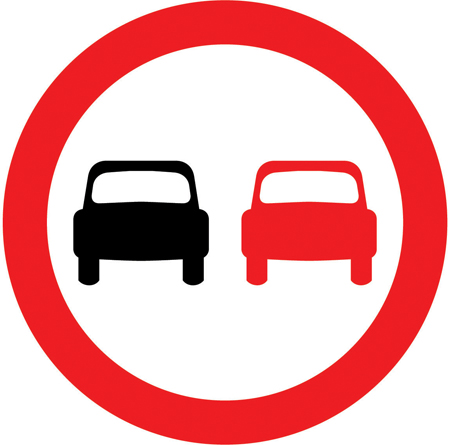
Still applies on national-limit singles.
Ring road
Orbital routes with mixed limit sequences.
Test Yourself on UK Road Signs
Treat diagram 671 as the catalogue key that hands speed limits back to the national table. Learn the shape for theory papers, then read road type, lamps, and vehicle class before you change pace on real journeys.
Frequently Asked Questions
What diagram number is the national speed limit sign?
The static plate is diagram 671 in the Traffic Signs Regulations and General Directions schedule: black circle, single white diagonal, no digits.
Does diagram 671 show the speed in miles per hour?
No. You must know national defaults from The Highway Code and from whether the road is single, dual, lit built-up, or motorway.
Why do repeaters copy the same slash on long rural roads?
They remind drivers that a numeric zone ended earlier. They do not create a new limit or move the boundary.
How is the catalogue plate different from an end-of-40 sign?
An end plate cancels a specific posted forty. Diagram 670 restores the national framework for the road class until another regulatory order appears.
Where should I read merging and camera detail after learning diagram 671?
Use our national speed limit sign driving guide for scenarios, penalties, and examiner expectations once you can spot the slash instantly.