
Last updated: October 2026 · Checked against Highway Code
Dual Carriageway Ends Sign: meaning, rules and what to do
The dual carriageway ends sign is a red triangle pictogram where the central divider stops, warning that separated lanes ahead become one shared surface so you must expect oncoming vehicles in the same carriageway and adjust speed early.
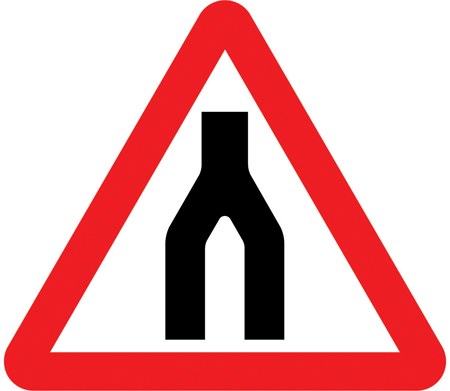
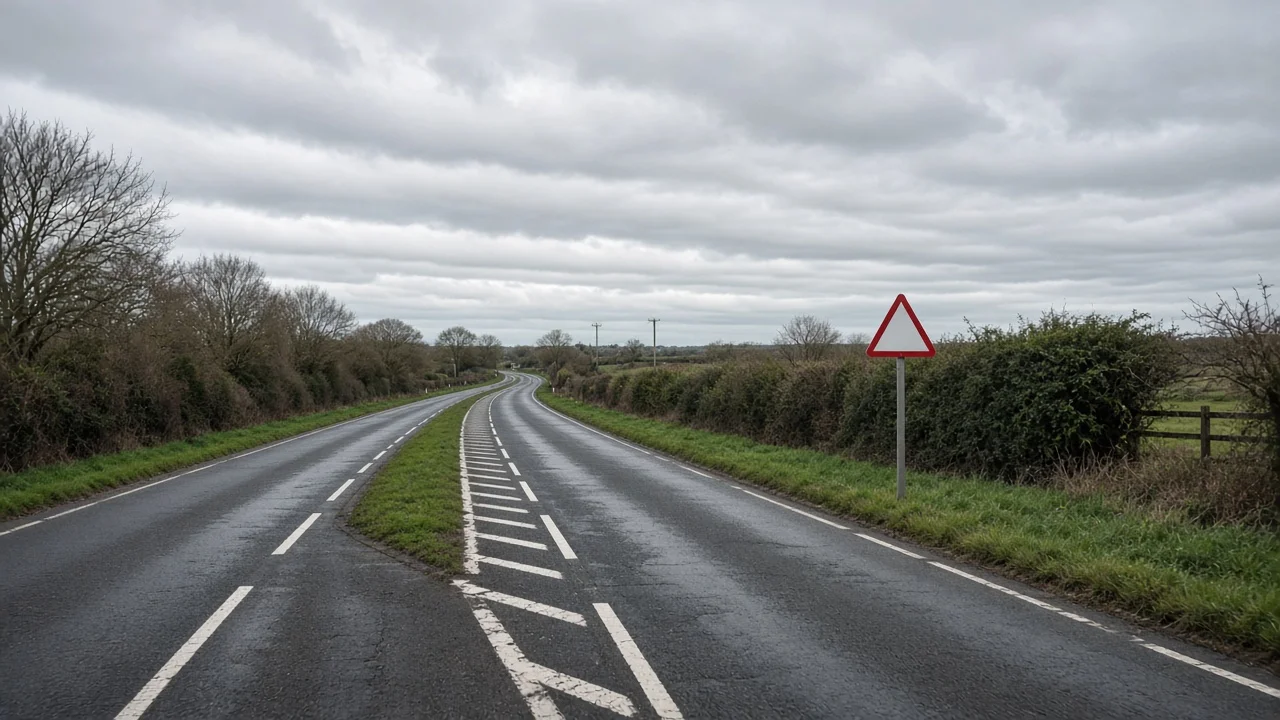
Sign image © Crown copyright, reproduced from GOV.UK traffic sign images under the Open Government Licence v3.0.
What the Dual carriageway ends Sign Looks Like
The board is the standard hazard triangle with a red border and white centre field. The black symbol is a plan view: two lanes that were divided by a central reservation or hatching run together into one width, often with small arrows showing traffic from both directions on the same tarmac. The graphic is about layout change, not about a numeric speed or a give-way order.
Distance plates may sit beneath the triangle, quoting yards or metres to the point where the reservation ends. On faster A-roads you sometimes see repeaters after side junctions so joining drivers still get notice before the divider disappears around a bend.
Do not confuse it with the two-way traffic warning that shows a pair of vertical arrows pointing up and down. That plate announces opposing flow on a lane that was already single width. The end-of-dual pictogram shows the central gap closing first; oncoming traffic follows because the barrier no longer separates you.
Motorway ends plates and blue direction signs answer different questions. A motorway termination uses its own symbols and often pairs with distance to the next junction. This warning triangle applies on ordinary dual carriageways where the reservation simply runs out into a wider single surface or a village approach.
Temporary cones can shift where the taper finishes while the permanent triangle remains on the nearside post. Read the live white lines and hatched centre as well as the board. At night the retroreflective rim stays bright while the black merge symbol can look faint until your headlamps square on the face.
Road narrows signs show both edges pinching inward on one continuous surface. Traffic merges warnings describe a side lane blending in. The dual carriageway ends plate means the central reservation or dual layout stops, so your next task is position, speed, and mirror work for oncoming traffic, not yielding at a crossroad.
What the Dual Carriageway Ends Sign Means
In UK law a dual carriageway is defined by physical separation between directions, not merely two lanes of paint. When that separation ends, the national speed framework may change for your vehicle class even if no fresh numeric plate appears immediately. The warning triangle gives you time to rethink speed and overtaking before the divider disappears.
Rule 134 in The Highway Code covers meeting oncoming traffic where width is tight. Rule 153 reminds you that parked vehicles, cyclists, and pedestrians shrink the usable lane. After the reservation ends you share one carriageway with opposing flow, so those meeting rules apply even if the road still feels wide for a mile.
Drivers who have travelled miles on a fast dual often drift toward the centre out of habit. The pictogram is your cue to hold a disciplined nearside line and to cancel any overtaking plan that relied on a barrier between you and oncoming headlights.
National speed limit repeaters may still show 70 mph on the approach while the layout is legally dual, then 60 mph becomes the default for cars on a single carriageway once the reservation ends and no lower order follows. The triangle warns about geometry; repeater numbers still need reading in context.
Large goods vehicles, coaches, and cars towing wide trailers may straddle the old nearside lane line as the taper narrows. Give them space rather than accelerating alongside into the merge. Smart motorway habits die hard; on a rural dual ending at a village, the hazard is often a van meeting you with inches to spare.
Overtaking just before the reservation ends is a common test and insurance failure point. If you cannot see the full overtaking path and a safe return gap before the divider stops, hold position. Oncoming drivers may also be overtaking slower traffic in the opposite direction on the last stretch of dual.
Cyclists may use the nearside lane throughout the taper. Check mirrors before you move right to pass a queue. The warning does not remove their entitlement to the lane; it adds oncoming cars to the same width.
Pedestrians crossing between lay-bys appear where the reservation used to block foot traffic. Village approaches after a fast dual catch walkers who misjudge your closing speed. Cover the brake when the triangle appears, not when someone steps between parked cars.
Wet nights make the last metres of central hatching hard to read. Tyre spray from lorries hides oncoming beams until both vehicles share one surface. Ease off when you see the board so dipped headlights and mirror checks happen before the gap closes.
Roadworks sometimes remove the reservation early while the permanent sign stays in its old position. Trust cones, temporary markings, and the live triangle location before you assume the merge still happens where it did last year.
When the triangle appears, check the offside mirror and centre of the road as often as the nearside kerb. The first oncoming vehicle often arrives just after the hatching ends.
Cancel cruise control before the taper. Automatic systems may hold 70 mph until you intervene, which feels harsh when the layout narrows and opposing flow appears.
If you are unsure whether the road is still legally dual, treat approaching traffic as if the reservation already ended once you pass the warning. A cautious nearside line beats guessing from lane count alone.
Lorries need the full width through the merge. Hang back where you can see their mirrors rather than sitting in their blind spot beside the disappearing divider.
Sat-nav maps sometimes draw a dual line after the real world merge. Trust signage and markings over a cached route when holiday traffic is heavy.
After snow, the old reservation may be buried while the sign remains. Reduce speed and use the triangle as proof that opposing traffic shares your lane even when white paint is missing.
Electric cars are quiet at merge speed. Mirror checks matter more than listening for engine note when a joiner appears beside you at the taper.
If you are the driver joining from a side road near the merge, do not assume main-line traffic will move over. The warning on their side does not grant you priority; match speed and find a gap without stopping on the slip unless the main line is blocked.
Highway Code rules 124, 134, 153 and 155 (limits, narrow roads, and meeting traffic)
Dual carriageway ends vs Similar Signs
| Sign | Meaning | Legal or warning? |
|---|---|---|
| Dual carriageway ends | Central reservation or dual layout stops | Warning triangle |
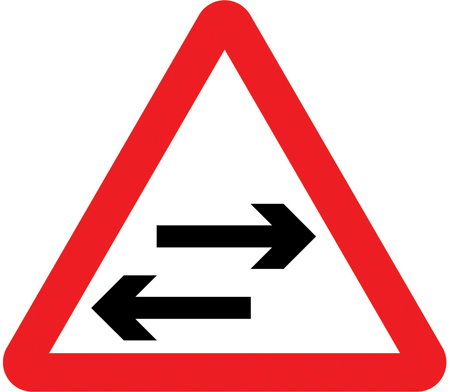 Two-way traffic | Opposing flows on one carriageway | Warning triangle |
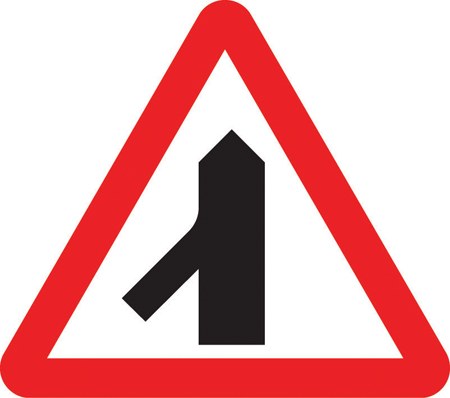 Traffic merges | Lane from the left joins main flow | Warning triangle |
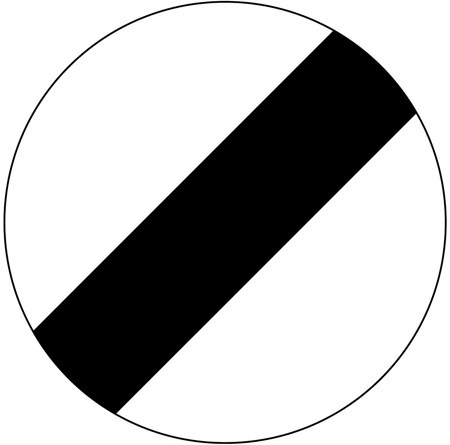 National speed limit | Default max for road class | Regulatory black and white |
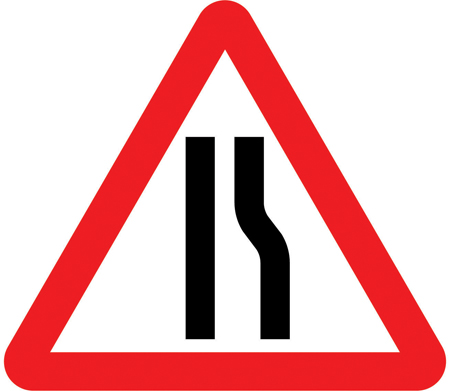 Road narrows both sides | Width pinches from both verges | Warning triangle |
Rules and Penalties
There is no fixed penalty for ignoring a warning triangle alone, but continuing to treat the road as a dual after the reservation ends supports careless driving allegations if you force oncoming traffic to brake or swerve. Investigators compare tyre marks with the sign position and centre-line history.
Overtaking across the fading hatching into oncoming traffic is a classic dangerous driving scenario on A-roads. Cameras are rare on rural merges, but head-on collisions attract serious charges and long insurance consequences.
Tailgating on the last stretch of dual leaves no room to ease off for a hesitant joiner from a side road at the taper. Rear shunts still happen when the lead driver lifts off for the layout change.
Driving tests fail candidates who charge past the triangle still straddling lanes or who attempt a last-second overtake as the reservation ends. Examiners want early mirror checks, nearside discipline, and speed that matches shared carriageway risk.
Theory items show the merge pictogram and ask what changes ahead. Learning the symbol saves picking “motorway ends” or “end of national speed limit” when the DVSA explanation mentions oncoming traffic on one carriageway.
Check the latest theory test pass mark and book when you are ready via our booking guide.
Dual carriageway ends in Practice
Priya drives the nearside lane of a 70 mph dual toward a market town. The dual carriageway ends warning appears with a 400-yard plate. She lifts off the accelerator, checks the offside mirror, and drops to 55 mph while the central reservation is still visible.
The hatching tapers to a broken centre line. A tractor ahead signals right to turn into a farm entrance. Priya holds the nearside lane instead of overtaking on the last metres of dual, because oncoming traffic is already visible beyond the divider gap.
A blue national speed limit repeater follows the merge. She settles to 60 mph on the single carriageway, keeps left around a bend, and lets a coach pass without brushing parked vans that hide pedestrians.
In her theory app she recognises the reservation-ending pictogram and rejects answers about motorways or plain two-way arrows. She selects the option that mentions oncoming traffic using the same carriageway, matching the official explanation for the photograph.
On a later night lesson the same board appears in rain. Priya dips headlights early, covers the brake before the taper, and avoids a last-second lane change when headlights from the far side appear sooner than on the open dual.
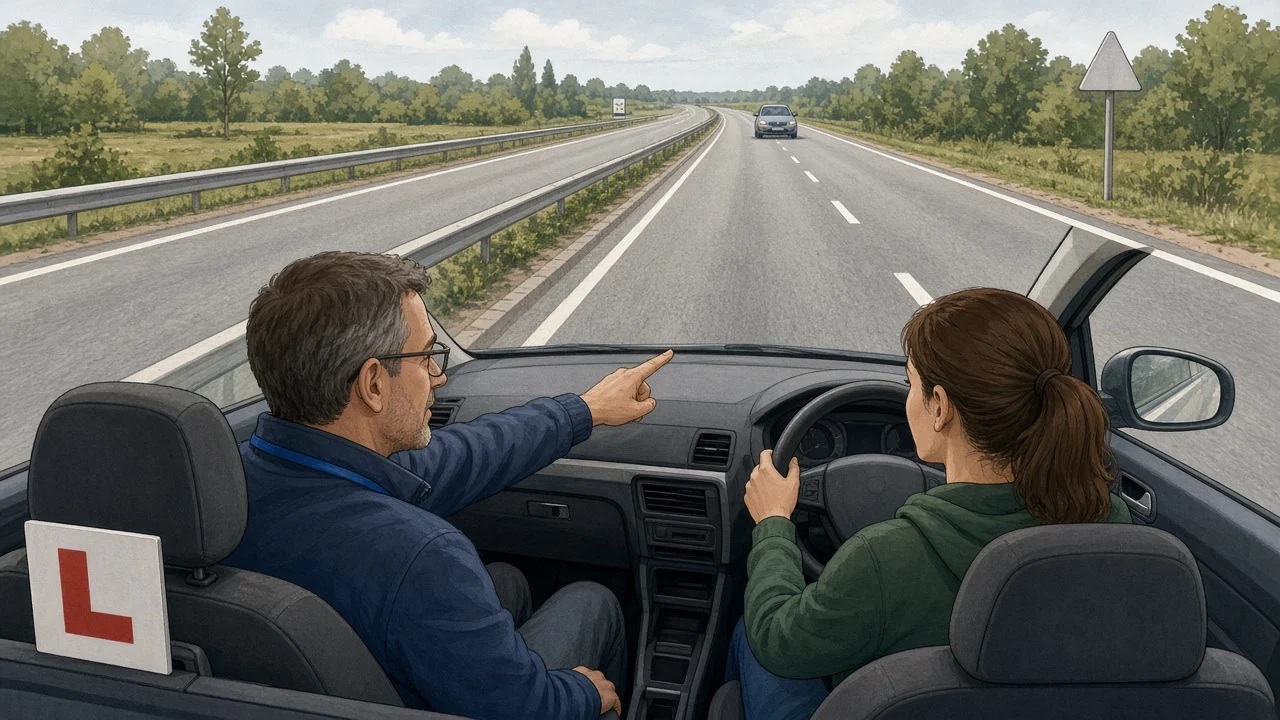
How This Sign Appears on the Theory Test
Match the reservation-ending pictogram to layout change, not to a regulatory speed order. Reject “motorway ends” unless the image set changes to motorway-specific symbols.
Contrast with the two-way traffic triangle that uses up-down arrows on one lane width. The end-of-dual graphic shows the central gap closing before opposing flow shares the surface.
Hazard perception clips on fast roads sometimes reward early clicks when a car drifts toward the fading hatching. Anticipate conflict when you know the reservation is ending, not only when the sign fills the screen.
When two answers both say “slow down”, choose the one that includes staying left and expecting oncoming traffic on one carriageway, not merely easing the throttle while staying mid-lane.
Picture questions may pair the warning with a national speed limit repeater. Remember that speed plates and layout warnings answer different questions; both may appear in sequence after the merge.
Sketch the symbol and label where the reservation stops. Examiners assume you can connect the image to a real meeting scenario without confusing it with lane-reduction or merge-from-left plates.
Take a free mock theory test and filter questions on road and traffic signs. Pair that with the warning signs guide for triangle symbols.
Related Road Signs
Two-way traffic sign
Opposing arrows when flow was already single width.
Traffic merges sign
Side lane joining, not reservation ending.
National speed limit sign
Defaults after dual layout ends.
Road narrows both sides
Width pinches without losing a divider first.
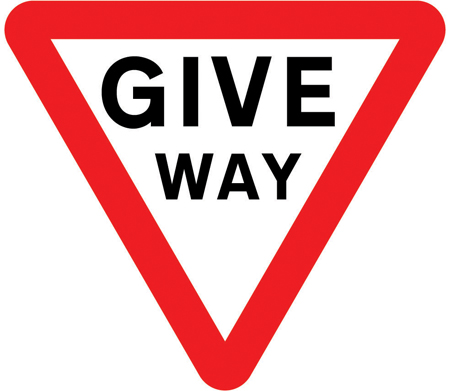
Give way sign
Yield orders at junctions after the merge.
Test Yourself on UK Road Signs
Treat the reservation-ending triangle as a layout reset: slow early, stay left, cancel risky overtakes, and read the next speed repeater so you meet oncoming traffic on one carriageway with room to stop on your side of the road.
Frequently Asked Questions
What does the dual carriageway ends sign mean on the theory test?
It warns that the central reservation or physical separation between directions is ending. Oncoming traffic will soon use the same carriageway, so you should adjust speed and position before the taper finishes.
How is it different from the two-way traffic sign?
The two-way traffic triangle shows up-down arrows on a lane that was already single width. The end-of-dual pictogram shows the central divider stopping, which is why opposing flow will share your surface.
Does the sign change the speed limit by itself?
No. It warns about layout. When the road becomes a single carriageway, national limits for your vehicle class may apply, but separate repeater or regulatory plates confirm the numbers.
Should I stop when I see the triangle?
Not unless the road ahead is blocked. Slow, keep left, and be ready to wait in a lay-by if you meet oncoming traffic where width is tight after the reservation ends.
Will this appear on the car theory test?
Yes. DVSA road-sign questions show the photograph and ask what to expect. Link the image to the central reservation ending and oncoming traffic on one carriageway, not to motorway termination.