
Last updated: October 2026 · Checked against Highway Code
Give Way: meaning, rules and what to do
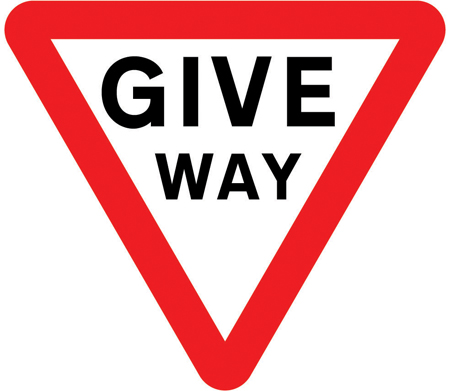
Britain’s downward-pointing triangle is a legal yield order: enter the junction or merge only when you will not inconvenience traffic that already has the right of way.
Sign image © Crown copyright, reproduced from GOV.UK traffic sign images under the Open Government Licence v3.0.
What the Give way Sign Looks Like
The give way sign is an equilateral triangle mounted point-down on a post or gantry. The face is white with a wide red border and no symbol inside. That empty centre is deliberate: the shape itself is the command, which is why theory papers show it beside photos of real junction mouths rather than asking you to read lettering.
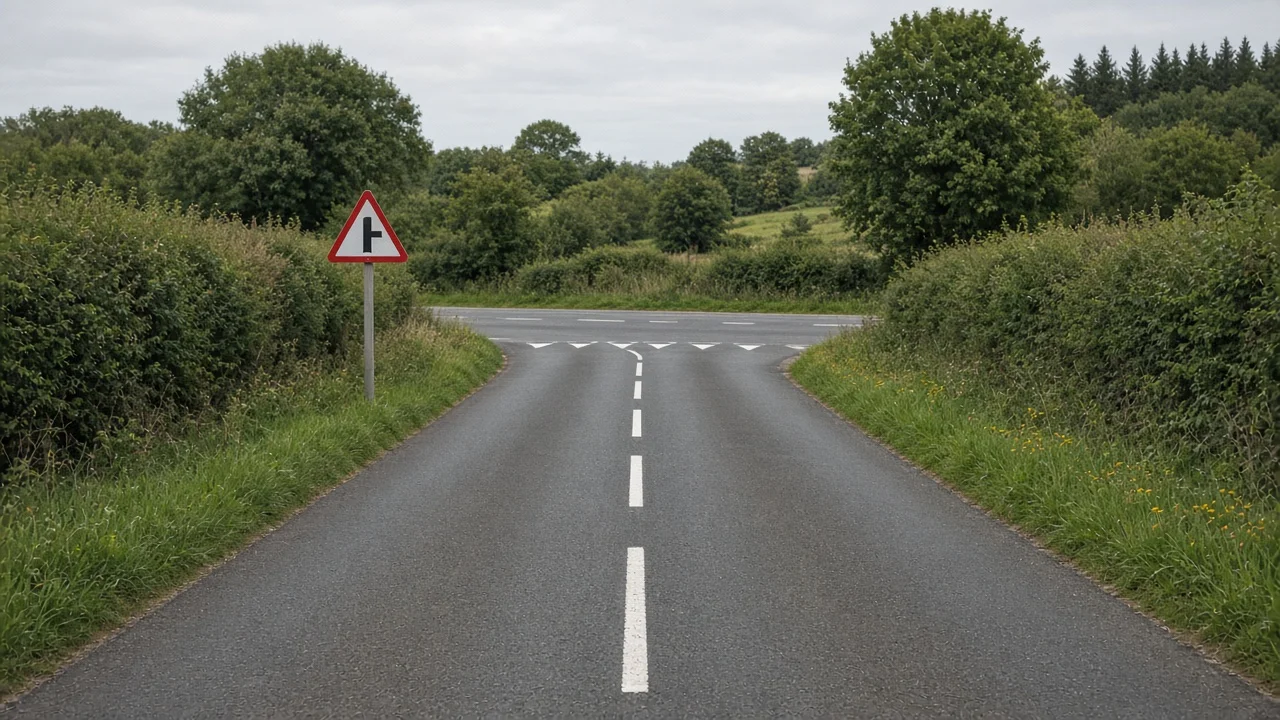
On the carriageway you will usually see short white dashes across your lane, often called a yield line or give-way line. The plate sits upstream, sometimes with a distance plate in yards or metres. Repeat triangles appear on fast approaches where drivers might otherwise miss a side road behind a hedge.
Motorway and dual-carriageway slips use the same triangle where an acceleration lane joins the main flow. The geometry differs from a village T, yet the regulatory message matches: do not enter the live lane until you can match speed without forcing a swerve. Temporary versions on metal frames keep the red rim even when the background is yellow for works traffic.
Do not confuse this plate with hazard warning triangles, which point upward and carry black pictograms. Blue direction signs never replace a yield order. A “Give way ahead” warning triangle is advance notice only; the white inverted plate at the mouth still defines the legal duty.
Yield triangles sit with stop lines, priority arrows, filter lights, and roundabout circulatory markings. Warning boards describe bends, floods, or school routes; they do not cancel a regulatory yield where engineers have installed one.
What the Give Way Means
A give way sign creates a priority rule at open junctions, estate exits, car-park mouths, and many roundabout entries. You may proceed without a full halt when every approach is safe, yet you remain guilty of careless driving if you gamble on a closing gap. The duty survives even when you think cross traffic is speeding.
Highway Code rules 103 and 174 describe open junctions: look right and left on the major road, judge each lane separately, and remember that pedestrians stepping from pavements near the corner still count as traffic you must not cut across. Zebra or puffin crossings a few metres away can pull people into your path after you have checked the carriageway.
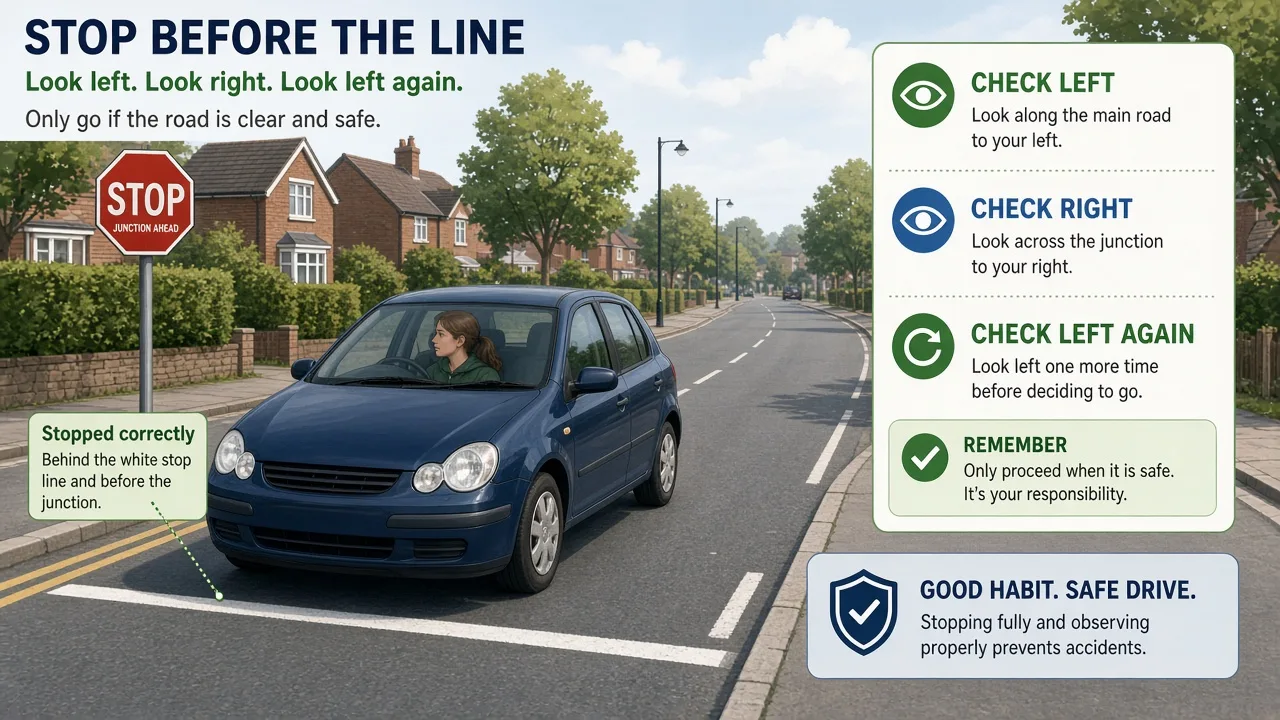
The broken line is the practical stopping point. Wheels should stay behind it until your observation proves you can enter without blocking the crossing space. If paint is worn, use the kerb radius and sight lines as your guide, but never place the bonnet over the conflict point while you “nose” for a view.
Filter lights and lane-specific signals can change who yields without removing the triangle. A green arrow for your lane does not excuse blocking box junction hatchings or advanced stop lines for cyclists. Read the whole approach: signs, lights, surface arrows, and any police direction.
On hills, gravity works against you. Hold the car with the footbrake or handbrake while you look, then move off smoothly so you do not roll backward into following traffic or forward into cross flow. Automatic drivers should avoid creeping in drive; a deliberate pause behind the dashes looks better on test than a slow drift.
Dual carriageways demand lane-by-lane decisions. A courteous gap in lane one can hide a motorcycle in lane two. Large vehicles need wider arcs; their rear wheels may track closer to your lane than the cab suggests. Listen for sirens before you commit, because emergency vehicles on the main road keep priority.
At mini-roundabouts the painted island and circulate arrows work with yield duty: enter only when the circulatory path is clear, keep left of the island, and signal exits clearly. At larger roundabouts the same inverted triangle may sit beside “Give way” wording on the surface; the legal idea is unchanged even when the layout feels unfamiliar.
Private drives and supermarket car parks often lack a facing plate on the minor arm, yet general priority law still expects you to yield to pavement and carriageway users. The triangle on the main road warns through drivers that traffic may emerge; your responsibility comes from joining a busier space, not from whether you personally saw a post.
Rain and diesel spills lengthen stopping distances after you pause behind the line. Leave enough space to accelerate cleanly into a gap without wheelspin, especially in front-wheel-drive tuition cars on cambered exits.
Night glare from main-road headlights can hide cyclists without reflectors. Dip your beams when waiting so oncoming drivers are not blinded, then make a second head turn before you move because contrast drops when everyone uses high beams on unlit routes.
Bus stops and delivery bays beside yield mouths create moving hazards. A stationary coach can mask a child running between parked cars. Slow before the triangle on the through road, not only at the dashes on the minor arm.
Box junction yellow cross-hatching means you must not enter unless your exit is clear, even if a yield gap tempts you to queue across the mouth. The triangle does not override that separate restriction.
When traffic lights fail, treat the junction as unsigned unless police direct you. Flashing amber at a pelican crossing is not the same thing: there you yield to people on the crossing, but other arms may still run under ordinary priority.
Sat-nav audio sometimes announces “yield” because American maps use that word. On UK roads the plate still reads “Give way” in text books and test banks, yet the triangle shape is what you must recognise instantly in photo questions.
Narrow bridges sometimes pair a yield triangle with a priority arrow plate showing which direction keeps right of way. Read both before you decide whether a pause is needed; the arrow can override your assumption about the wider road.
When traffic lights fail, police may direct traffic as if every arm were an open junction. That is different from flashing amber at a pelican crossing, where you yield to people on the crossing but do not treat the whole junction as unsigned.
Highway Code rules 103, 146, 174 and 185 (junctions, roundabouts and merging)
Give way vs Similar Signs
| Sign | Meaning | Legal or warning? |
|---|---|---|
| Give way | Yield; stop only if the junction is not clear | Regulatory (inverted triangle) |
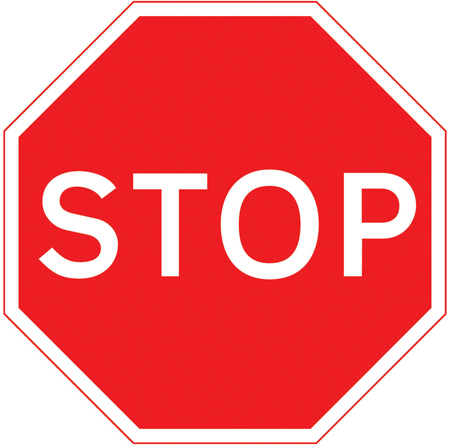 Stop | Wheels must cease moving at the solid line | Regulatory (octagon) |
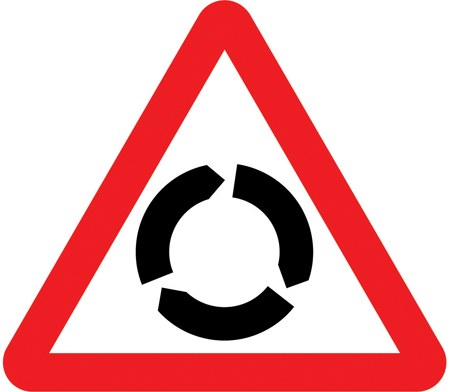 Roundabout ahead | Circulating junction warning upstream | Warning triangle |
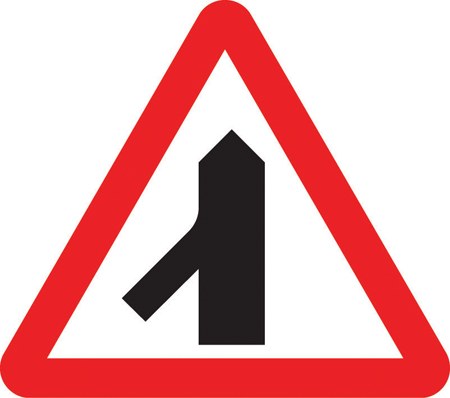 Traffic merges | Lanes combine; adjust speed and position | Warning triangle |
Rules and Penalties
Collisions where the entering driver failed to yield are among the commonest insurance disputes at side roads. Fault usually attaches to the person who left the minor arm, even when the other motorist was above the speed limit, because priority was already defined.
Police can report careless driving when a near miss involves forced braking on the main road. Fixed cameras rarely enforce plain yield junctions, yet dashcam footage from buses increasingly supports prosecution where witnesses are scarce.
Driving tests treat rolling into cross traffic as a serious fault. Examiners also mark hesitation that blocks the junction for following learners on the minor arm, because effective yielding includes choosing a gap promptly once it exists.
Company telematics may flag harsh braking caused by late merges from slips. Building a habit of stopping behind the dashes, then accelerating once, reduces both licence points risk and fleet penalty scores.
Civil claims can cite Highway Code breaches even when no criminal charge follows. Document the layout with photos after any shunt: yield line position, vegetation cover, and supplementary plates all matter when insurers argue about contributory negligence.
Check the latest theory test pass mark and book when you are ready via our booking guide.
Give way in Practice
Jonas joins a distributor road from a housing estate marked with a downward triangle and dashed line. Rush-hour queues fill both lanes of the main carriageway. He stops behind the paint in first gear, window slightly open to catch scooter noise from the blind side.
A refuse truck occupies the outer lane while a nurse on a bicycle approaches in the nearside lane. Jonas waits until both streams pass, ignoring a horn from a car behind him on the estate road. When the nearside lane stays empty and the outer lane shows a steady gap, he merges without crossing the dashes early.
Had he entered after the cyclist but before confirming the truck, he could have caused a secondary rear-end crash. The give way sign required separate lane checks, not acceptance of the first partial gap.
Later he uses the same skill on a wet motorway slip. The triangle sits beside a long acceleration lane. He matches the speed of lane one before signalling, yields to a coach in lane two, and only then straightens in the live lane. The plate meant the same legal duty even though the geometry felt different from the estate exit.
On his theory test a photograph shows the inverted triangle next to a roundabout. He picks the answer that mentions yielding to traffic from the right on entry, because the regulatory shape outranks a vague “slow down” option that omits priority.
How This Sign Appears on the Theory Test
Recognition items pair the inverted triangle with junction photos. If the stem mentions a broken white line and no mandatory halt, regulatory yield beats warning triangle every time.
Multiple-choice distractors often say “stop completely” when only an octagon and solid line would demand that. Read whether the image shows dashes or a continuous bar before you tap give way.
Scenario questions describe queues blocking the mouth. They check you know that inching forward without a gap still breaks the yield duty, even if no collision happens during the exam narrative.
Hazard perception clips sometimes include side traffic at yield mouths. Anticipate early by easing off the accelerator when the triangle passes your door mirror, not when your bumper reaches the dashes.
When two answers mention observation, choose the one that includes all lanes and vulnerable road users. Partial checks are the trap laid for drivers who only glance left once on a one-way major road.
Take a free mock theory test and filter questions on road and traffic signs. Pair that with the warning signs guide for triangle symbols.
Related Road Signs
Stop sign
Mandatory halt at the solid transverse line.
Give way sign guide
Companion page on the same regulatory triangle.
Roundabout ahead
Advance warning before circulatory priority applies.
Traffic merges
Lanes combine; yield duty may still apply at the end.
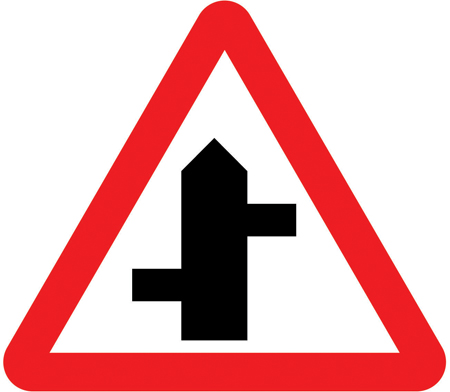
Staggered junction
Two side roads join the main route at different points.
Test Yourself on UK Road Signs
Learn the downward triangle as a yield promise, not a vague suggestion to slow down. Practise stopping behind dashed lines on quiet routes until the sequence feels automatic, then rehearse the same discipline on slips and roundabouts before test day.
Frequently Asked Questions
Is give way the same as yield on UK roads?
Yes in practice. Highway Code and test materials use “give way”, while some sat-nav voices say “yield”. The inverted white triangle with a red border is the legal order either way.
Can I be penalised without a camera at the junction?
Yes. Police can charge careless driving after a crash or a witnessed near miss, and insurers decide fault using priority rules even when no device recorded the junction.
What if vegetation hides the give way sign?
You must still obey lawful road markings. Report overgrown shrubs to the local highway authority, but do not treat a hidden plate as permission to merge without yielding.
Do cyclists use the same give-way line as cars?
Cyclists should follow the same priority at junction mouths unless signs or markings create a separate path. Drivers must still yield to riders already on the carriageway you are joining.
Is it wrong if both drivers wait and wave each other on?
Courtesy is fine only after you have both confirmed priority law. At a signed yield junction the minor-arm driver must still wait for a safe gap; waving cannot replace observation of live traffic.