
Last updated: October 2026 · Checked against gov.uk
Theory Test Pass Mark — Scores for Every Vehicle Type (2026)
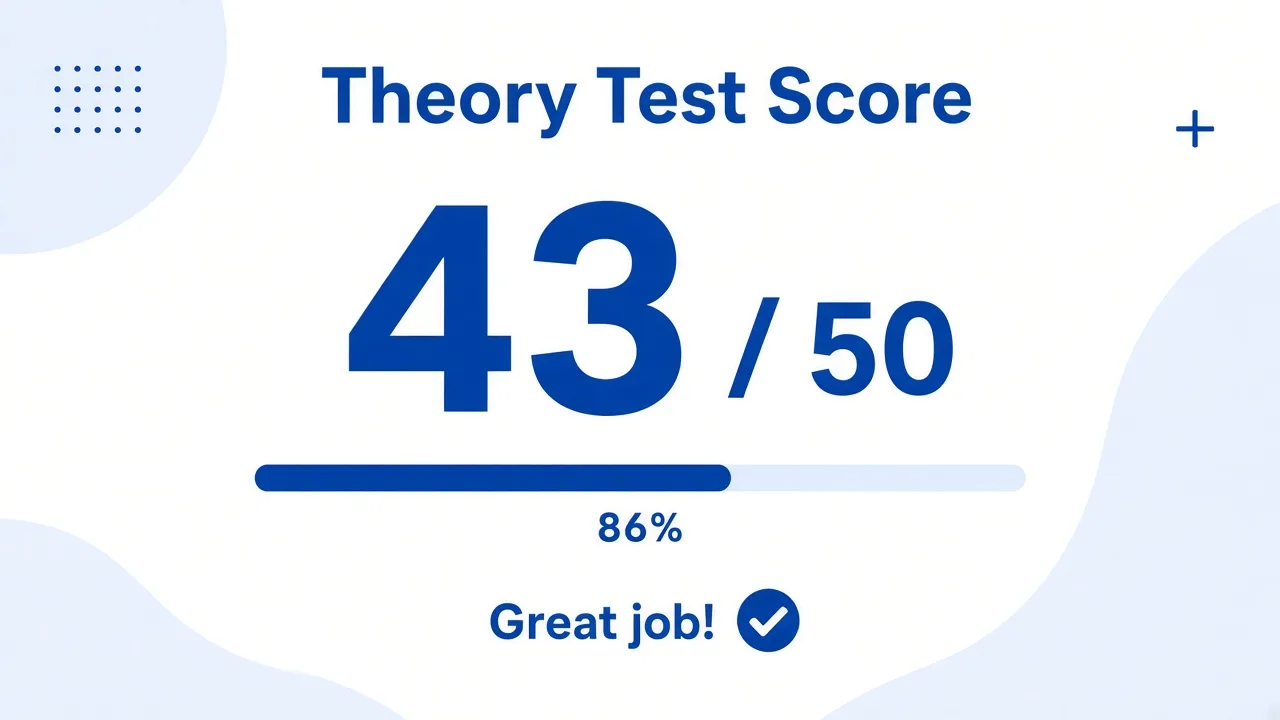
The UK theory test pass mark is 43 out of 50 for car and motorcycle. HGV, PCV and ADI need 85 out of 100. Here is how scoring works and what happens if you fail.
✓ Free to read ✓ Updated for 2026 ✓ Checked against gov.uk

Pass Mark by Vehicle Type
Every DVSA theory test uses a different pass mark depending on the vehicle. Here are the current figures. If you are comparing the theory test pass mark across categories, read the hazard column as carefully as the multiple-choice column; both must pass together.
| Vehicle | MCQ questions | MCQ pass mark | Hazard clips | Hazard pass mark |
|---|---|---|---|---|
| Car | 50 | 43 | 14 | 44 / 75 |
| Motorcycle | 50 | 43 | 14 | 44 / 75 |
| HGV / LGV | 100 | 85 | 19 | 67 / 100 |
| PCV (bus / coach) | 100 | 85 | 19 | 67 / 100 |
| ADI Part 1 | 100 | 85 | 14 | 57 / 75 |
You must pass both sections in the same sitting. Passing one does not carry over to your next attempt.
How Theory Test Scoring Works
The pass mark driving theory candidates worry about splits into two separate scores. Neither section is optional, and the centre prints your result only when both clear the minimum.
Multiple-choice section
Car and motorcycle tests present 50 questions, each worth one mark. There is no negative marking: a wrong answer simply scores zero for that item, and you cannot earn partial credit on a multi-part question. You should answer every question before time runs out. The on-screen timer covers the full 57 minutes, and you can flag tricky items and revisit them before you submit.
The pass line for cars sits at 43 marks. That figure is fixed by the DVSA. It does not rise when pass rates are high or fall when more people struggle. Your score is yours alone; you are not ranked against other candidates in the room.
Hazard perception section
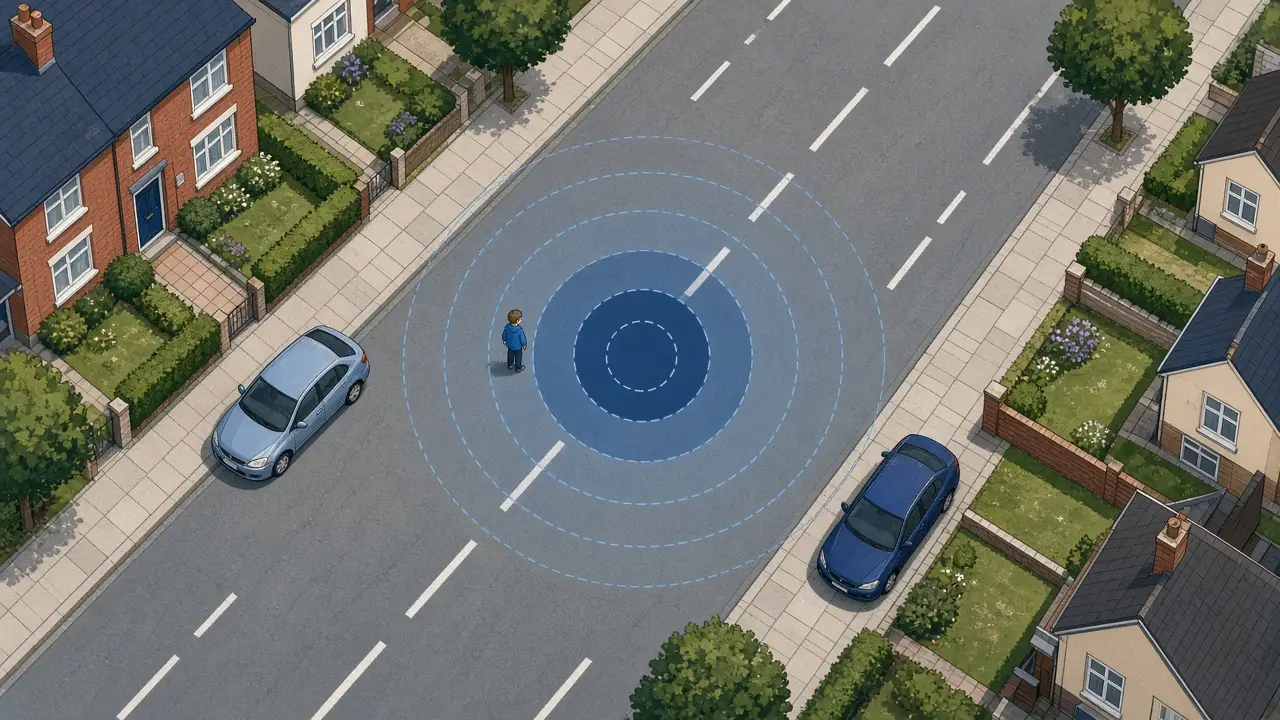
After a short break you watch 14 video clips on the same computer. Fifteen hazards are scoreable because one clip contains two developing hazards. Each hazard pays up to five points depending on how early you respond once the risk becomes clear. The maximum total is 75, and car riders need 44 to pass.
Clicking in a rhythm or spamming the mouse triggers the anti-cheat filter. When that happens you can score zero for that clip even if you spotted the hazard. Practise with varied clips so your clicks follow what you see, not a pattern you memorised.
Both sections together
You book one appointment and sit both parts back to back. Staff check you in once, and your result slip shows two numbers. If either number sits below the pass line, the visit counts as a fail. A strong multiple-choice score does not excuse a weak hazard result, and the reverse is also true.
When both scores pass, you receive a certificate number valid for two years. That certificate unlocks practical test booking. Until both sections pass, you have no certificate to show an instructor or insurer, only a fail letter to learn from.
Staff at the centre do not tell you your marks aloud during the test. You see results on screen after hazard perception ends. If you are unsure whether you cleared the line, the summary screen states pass or fail for each part. Take a moment to read it before you leave; you cannot appeal a mark because you misread the numbers in a hurry.
Why the Pass Mark Doesn't Change
The pass mark is fixed by the DVSA. It does not go up if lots of people pass, and it does not go down if lots fail. Unlike some exams, such as graded music performances or professional certifications with quotas, there is no curve on the theory test.
You either hit 43 on multiple choice and 44 on hazard perception, or you do not. That removes luck from the equation. The only reliable way through is knowing the Highway Code well enough to score above the line under time pressure.
That is why timed mock tests matter. They show whether you consistently clear the pass mark before you pay for a real slot. One lucky run at home is not enough; three stable scores with a small buffer is a safer signal.
When Should You Book Your Test?
A practical rule is to book only after you score 45 or higher on three consecutive mock tests. That two-mark cushion absorbs a wobble on test day. If your mocks sit at 43 exactly, wait. You are one question away from failing the real thing.
Most learners need roughly 15 to 25 hours of revision before scores stabilise above 45. If you use our mock tests daily, aim to book within two to four weeks of hitting that streak. Booking earlier often means paying twice.
Hazard perception needs its own booking rule. Aim for steady scores above the 44 line in practice before you commit to a date. Learners who only mock the multiple-choice half often discover too late that perception was the weak link, which is harder to fix in a single week.
What Happens If You Fail
Failing feels rough, but it is common. There is no cap on attempts. You simply wait, pay again, and retake both sections. The process is the same whether you missed multiple choice, hazard perception, or both.
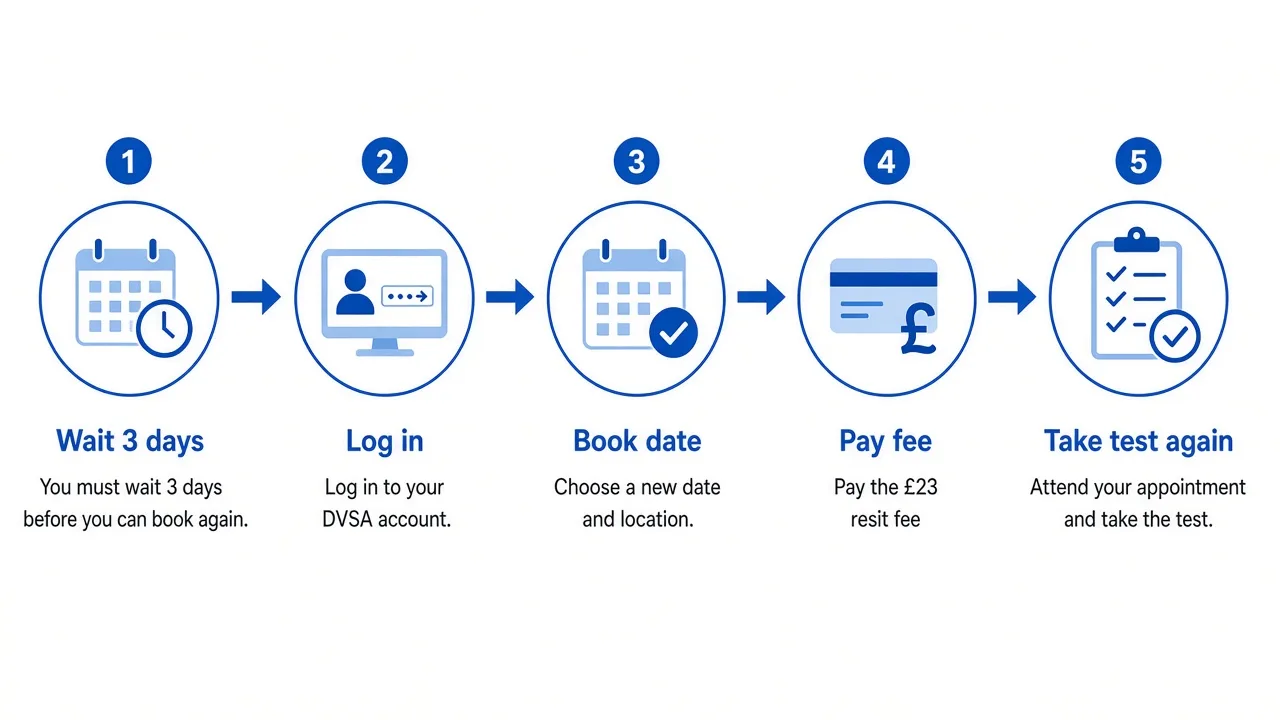
- Wait three working days from your test date.
- Log into the gov.uk booking service.
- Pick a new date and centre.
- Pay £23 by card for car or motorcycle (higher for HGV and PCV).
- Take the full test again, both sections, in one visit.
If you have failed twice, change how you revise instead of repeating the same cram. Read the Highway Code topic by topic, then run shorter quizzes before full mocks. Note which categories cost you marks: signs, vulnerable road users, and motorway rules catch people who only practise random 50-question runs.
You cannot rebook after 3 working days from the fail date, even if slots look empty sooner. Each attempt costs £23 for car theory as of 2026, so treat a retake like a fresh exam, not a quick retry. HGV and PCV fees are higher; check gov.uk before you pay.
Most learners pass on their second or third attempt. If you have failed twice, do not simply rebook with the same PDF notes. Change your study method. Read the Highway Code section by section, then take topic quizzes before trying full mocks. Bring your fail sheet home; it lists categories where you lost marks even though the centre does not show individual question answers.
Car, HGV and ADI: what the pass mark leaves out
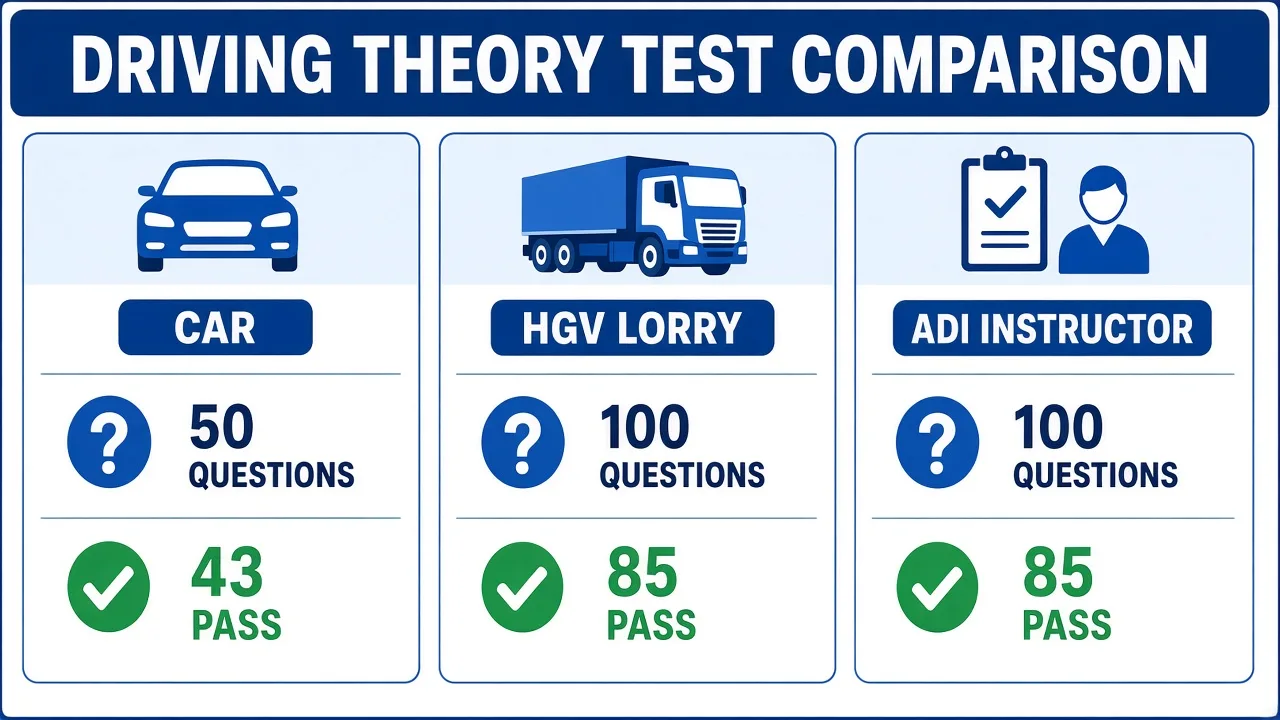
HGV and ADI papers look intimidating because they carry 100 multiple-choice questions. The pass percentage is the same idea as the car test: 85 correct answers from 100. The extra difficulty for lorry drivers is topic depth. Drivers' hours, load security, and tachograph rules sit on top of standard road knowledge.
ADI Part 1 splits the 100 questions into four bands of 25. You need 85 overall and at least 20 in each band, or you fail even with a high total. The multiple-choice limit is 1 hour 30 minutes. Lorry and bus papers get 1 hour 55 minutes, and those two parts are booked separately. Motorcycle and car tests share the 43/50 and 44/75 pairing, so bike learners face the same pass score as car learners with bike-specific questions.
For most people the car test is the simplest entry point. Passing it teaches you the centre routine. If you later move to coaching or commercial driving, you can tackle an HGV theory test or ADI theory test with format experience already behind you.
Worked Example — A Learner's Day at the Test Centre
Aisha arrives early at a suburban theory test centre with her provisional licence and booking confirmation. She breezes through multiple choice, finishing with 47 out of 50. That is four marks above the pass line and she feels relieved.
Hazard perception is next. She clicks confidently on the first few clips but mis-times a school crossing and taps too late on a parked van scenario. Her hazard total lands at 41 out of 75. She needed 44. The desk prints a fail notice because both sections must pass together.
Aisha passed multiple choice by four marks but missed hazard perception by three. She does not receive a certificate. She does not receive a partial pass. She books a new test for two weeks later and spends those two weeks on hazard perception clips instead of rereading signs she already knows.
This pattern is the most common fail mode we hear about: strong on MCQ, weak on hazard. Treat perception as half the exam, not a short add-on after the "real" questions.
On her second visit Aisha scores 45 on multiple choice and 48 on hazard perception. Both numbers clear the pass line. She leaves with a certificate reference she can use to book her practical test. The lesson is not that hazard is impossible; it is that the minimum score applies to both halves every time you walk in.
Common Mistakes About the Pass Mark
- Assuming one wrong answer is fine. On a bad day a single slip can drop you from 44 to 43 and fail you. Build a buffer in mocks instead of aiming for the minimum.
- Passing MCQ but ignoring hazard perception. Both sections must pass on the same day. A perfect 50 on questions still fails if hazard perception scores 43.
- Thinking a longer paper means a higher percentage. HGV uses 100 questions but still needs 85%, the same ratio as 43 from 50 on a car test.
- Rebooking the morning after a fail. DVSA rules require three working days before the system lets you pay again.
- Booking before scores stabilise. Wait until three mocks in a row show 45 or more, not a single lucky run.
Theory Test Pass Mark in Northern Ireland
Pass marks in Northern Ireland match Great Britain: 43 out of 50 for car and motorcycle, 85 out of 100 for HGV and PCV. Booking runs through nidirect.gov.uk rather than gov.uk, and the fee is £23, the same as GB at the time of writing.
If you live in NI, read our guide to the theory test in Northern Ireland for booking links and centre tips before you travel across the border for a GB slot.
Check Your Score Before Test Day
You do not have to guess whether you are ready. Take a timed mock test and see if you consistently hit 45 or above. That is the safest sign you will clear the pass mark driving theory centre staff print on your result slip.
Frequently Asked Questions
What is the theory test pass mark for car?
For a standard car licence you need 43 correct answers out of 50 on the multiple-choice section. That is 86%. You also need 44 out of 75 on hazard perception. Both parts count on the same visit.
What is the hazard perception pass mark?
Car and motorcycle candidates need 44 points out of a maximum of 75 on hazard perception. Lorry and bus tests use 19 clips and a pass line of 67 out of 100. ADI Part 1 hazard scoring is out of 75 with a pass mark of 57.
Can I pass the theory test with 42 out of 50?
No. Forty-two is one mark below the car multiple-choice pass line. You would fail that section even if hazard perception was strong. Book again only after mocks show a comfortable buffer above 43.
Do I have to pass both sections on the same day?
Yes. The DVSA records one result for the visit. If you pass multiple choice but miss hazard perception, you retake both sections next time. There is no carry-over of a pass from one section to a later booking.
Is the pass mark different for automatic cars?
No. Automatic and manual learners sit the same theory test at the centre. The multiple-choice pass mark stays 43 out of 50 and hazard perception stays 44 out of 75. Only the practical driving test differs by gearbox type.
How long is the theory test certificate valid?
Your pass certificate lasts two years from the date you pass both sections. You must pass the practical driving test within that window or sit the full theory test again. Fees and pass marks apply as for a first attempt.
What's the highest score you can get?
You can score 50 out of 50 on multiple choice and 75 out of 75 on hazard perception. Centres do not publish league tables. A pass is a pass; what matters is clearing both pass lines on the day.