
Last updated: October 2026 · Checked against Highway Code
Stop Sign: meaning, rules and what to do
In the national sign catalogue the red octagon with white STOP lettering is the only regulatory plate that uses eight sides, so recognising the geometry is as important as reading the word.
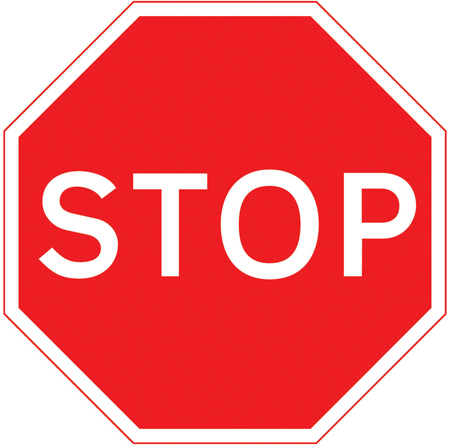
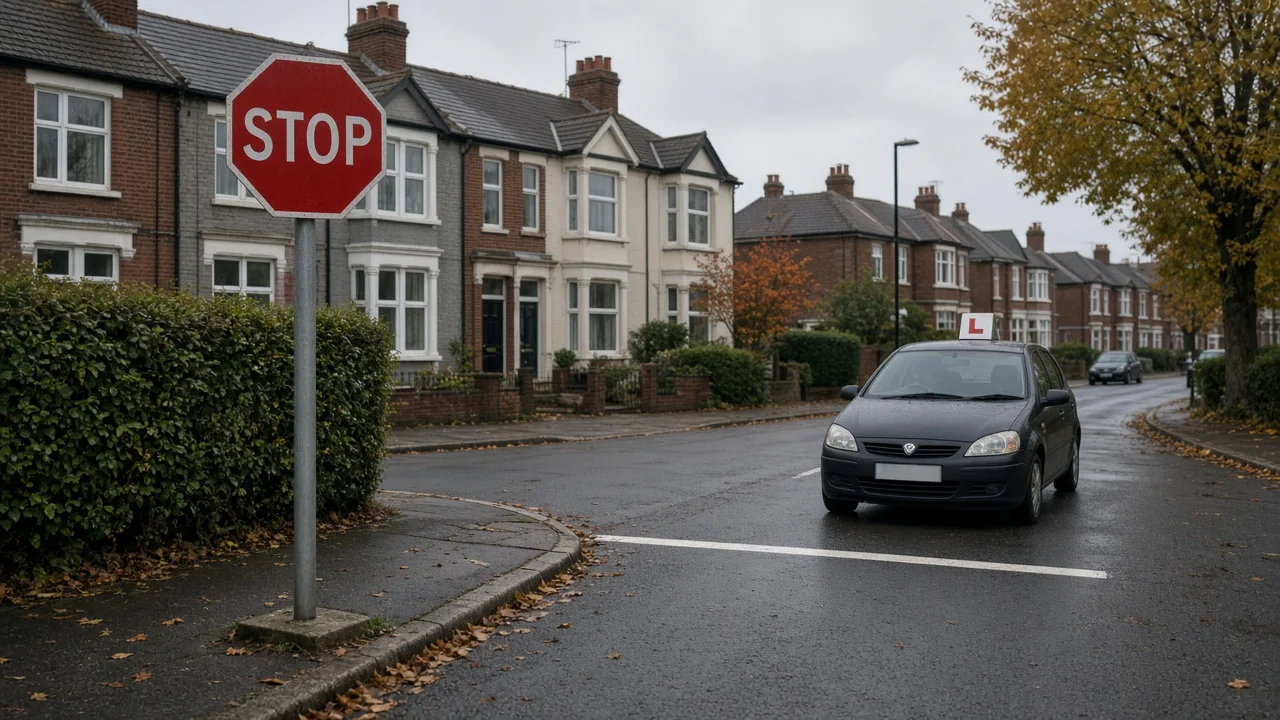
Sign image © Crown copyright, reproduced from GOV.UK traffic sign images under the Open Government Licence v3.0.
What the Stop Sign Looks Like
The authorised face is a regular octagon: eight equal sides, signal red field, white border, and white capitals spelling STOP. Department for Transport artwork matches diagram 601 in the Traffic Signs Regulations and General Directions, scaled for posts beside the carriageway or on the nearside verge.
Unlike circular speed limits or triangular warnings, the octagon has no pictogram inside. Colour and geometry carry the message, which is why international drivers who cannot read English still understand the order when they meet it at a British side road.
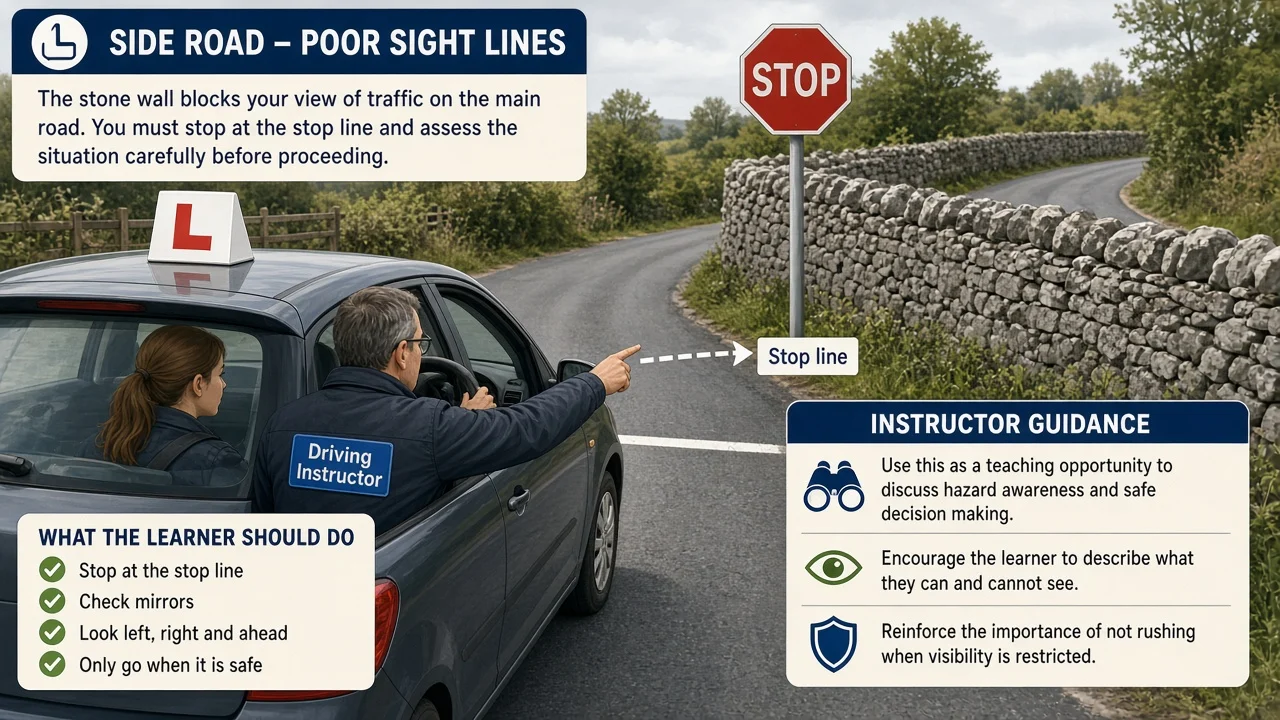
Engineers pair the plate with a solid white transverse line across the lane you are leaving. The line is part of the same regulatory package: the board announces the duty, the marking shows where wheels must cease movement. Repeat octagons sometimes face the other arm of a junction so every approach sees the same grammar.
Retroreflective sheeting makes the rim glow under headlights, yet snow, diesel spills, or resurfacing can hide the paint. When the line is faint, use the post position and any tactile paving near the mouth as secondary clues, but still plan a full halt before the conflict point.
Temporary works versions copy the same silhouette on yellow backing. They remain regulatory when they reproduce the red octagon and STOP word, not when a plain text board merely says “Stop works vehicles only,” which is site management rather than a junction order.
Advance “Stop ahead” triangles warn that a halt order is coming; they do not replace the octagon. Give-way triangles allow rolling through clear gaps. Red circles ban actions. Blue circles mandate movement. In catalogue study, learn the octagon first because no other UK order shares its outline.
What the Stop Sign Means
Cataloguing the plate begins with its legal family. It sits among circular regulatory orders and inverted triangular yield commands, yet the octagon is unique: traffic authorities may not use the shape for speed limits, parking bans, or weight restrictions. That exclusivity is deliberate so a glance at the silhouette tells you a halt is required even when mud splashes obscure the letters.
Installation policy explains why Britain keeps the plate rare. Highway engineers prefer give-way control where sight lines are adequate because it keeps main-road flow smoother. An octagon appears where collision history, restricted views, or awkward geometry mean a mandatory pause must be unambiguous. Seeing one on a map of your test centre therefore flags a high-risk mouth rather than a routine estate exit.
The order binds at the stop line, not at the post. Rule 175 in The Highway Code restates what the sign schedule already says: stop before the line, then give way to traffic on the road you are joining. Peering past the line while the vehicle still creeps forward fails both the legal test and the catalogue definition of a stop, which requires wheels to stop turning.
Marking schedules distinguish this layout from yield dashes. A solid bar demands a complete cessation of movement; broken dashes invite a yield without halting when gaps allow. Examiners and insurers increasingly rely on dashcam footage that shows whether the bar was crossed without a pause, so the catalogue pairing of octagon plus solid line is evidential as well as instructional.
All-way stop layouts are uncommon in the UK but appear at some housing schemes and campus roads. Each arm may carry an octagon, and drivers take turns after halting. The catalogue entry does not change: every facing plate still means halt at your line before you assess who proceeds next.
Railway level crossings use separate signal heads and St Andrew’s cross boards; they do not borrow the road junction octagon. Learners who lump every red “stop” message together miss that the eight-sided plate is specific to road junction priority, while trains rely on lights, barriers, and telephones.
For theory revision, treat the octagon as a shape question as often as a word question. DVSA banks show cropped plates, distant posts, and mirror reflections. If eight sides are visible, select the answer that mentions a mandatory halt at the line, not merely slowing for a hazard.
Sign auditors photograph plates from four compass points to confirm diagram compliance: correct red tone, border width, and letter font. Driving instructors rarely quote diagram numbers aloud, yet knowing the plate is diagram 601 helps you spot counterfeit or faded tourist souvenirs that are not lawful orders.
Urban designers sometimes mount the octagon on the same post as a street name plate. The regulatory face must remain unobstructed; a blooming rose bush is not an excuse for rolling through. Trimmed vegetation is a council task, but the halt duty stays with the driver.
Dual carriageway slips may show the octagon where a feeder lane meets fast traffic. Catalogues list these beside national speed limit zones, so your speedometer might still read sixty while the geometry demands a near-zero speed at the bar.
Cyclists approaching the plate on a shared-use approach must also halt when the order faces their lane. Filter lanes that bypass the line are unlawful unless markings create a separate path; if the octagon points at your tyre track, the bar applies to you.
Night driving courses use octagon locations to practise stopping by reference points when glare hides paint. Count house numbers or kerb stones from the post to the line so your halt stays legal when the surface is wet chrome.
Fleet telematics sometimes flag harsh braking events near octagons. Smooth early braking that finishes with a still car at the line reads better than a late stamp that triggers ABS beyond the marking.
On a steep gradient, use the handbrake after the initial halt so your foot can move to the accelerator without creep. Examiners listen for the brake release and watch whether the car rolls before you choose a gap.
Hybrid and electric cars are almost silent at low speed. Pedestrians may step off the kerb assuming you will remain still. After your lawful halt, move off only when your observation confirms it is safe.
Highway Code rules 174 and 175 (junction stopping and lines)
Stop vs Similar Signs
| Sign | Meaning | Legal or warning? |
|---|---|---|
| Stop (octagon) | Mandatory halt at solid stop line | Regulatory diagram 601 |
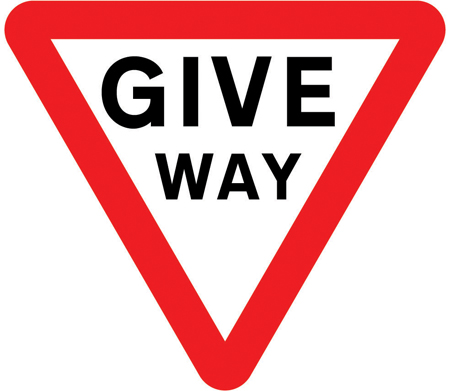 Give way | Yield; halt only if needed | Regulatory inverted triangle |
| Stop ahead | Warning that halt order follows | Warning triangle |
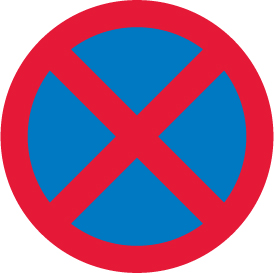 No stopping | Waiting ban along a length | Regulatory circle |
Rules and Penalties
Failing to obey the order is an endorsable offence when police witness wheels crossing the line without a pause. Fixed cameras seldom enforce plain junctions, yet mobile patrols still target side roads after resident complaints.
Civil claims after side impacts often hinge on whether the entering driver performed a catalogue-correct halt. Insurers treat a rolling approach as negligence even when the main-road speed looked excessive.
Driving tests record serious faults for inadequate stops at signed mouths. Examiners distinguish between a firm halt behind the bar and a slow creep that never settles the suspension.
Highway authorities can remove a plate after safety improvements, but until the octagon and line are formally taken away, the schedule in force at installation continues to bind traffic.
Check the latest theory test pass mark and book when you are ready via our booking guide.
Stop in Practice
Priya builds a revision wall for her college transport course. She sorts regulatory plates by silhouette: circles for bans, triangles for yield, octagon for halt. Diagram 601 sits at the top because no other UK order shares the shape.
On a site visit her tutor points to a estate exit where hedges hide a dual carriageway. The octagon faces the feeder lane and a solid bar crosses the tarmac. Priya notes that the warning triangle further back only announces the plate; it does not replace the halt duty.
She photographs the pairing for her portfolio: board height, retroreflectivity, and line width. Her report explains why give-way control was rejected here after two injury collisions, matching the catalogue guidance on restricted sight.
During her own driving lessons she meets the same layout at night. She stops at the bar using the post as a distance cue, then edges only after a second look for motorcycles in the nearside lane. The cataloguing exercise turned shape recognition into muscle memory.
How This Sign Appears on the Theory Test
Flashcard drills should show the octagon without text to test shape memory. If candidates identify it as a speed limit, revisit diagram 601 until the eight sides feel automatic.
Multiple-choice stems that mention a solid white line across your lane usually point to a halt answer, not yield. Pair that clue with the plate image before you tap the screen.
Hazard perception clips may not zoom on the post; learn to expect octagons where side roads meet fast distributors, even when the first frame shows only moving traffic.
Comparison questions pit the octagon against inverted triangles and circular bans. Ask which silhouette always means halt at the line; only the eight-sided plate qualifies.
Take a free mock theory test and filter questions on road and traffic signs. Pair that with the warning signs guide for triangle symbols.
Related Road Signs
Stop sign (junction rules)
Long-form guide to halting, merging, and test faults.
Give way sign
Yield triangle when a pause is not mandatory.
No stopping
Circular waiting ban, not a junction halt.
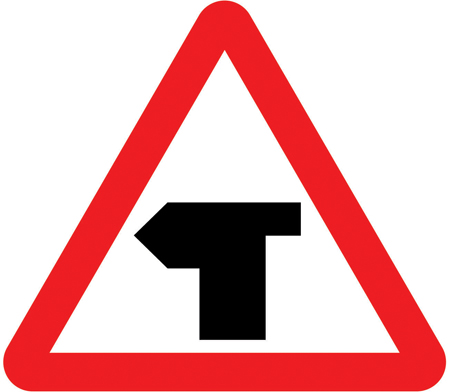
T junction warning
Geometry alert; priority still from regulatory plates.
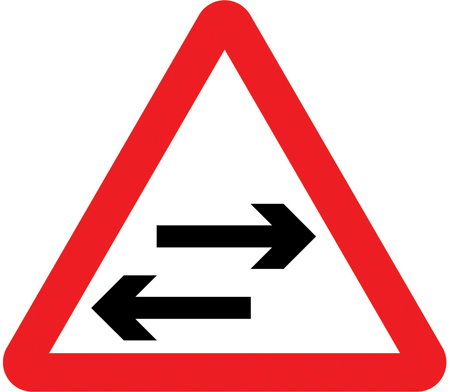
Two-way traffic
Flow resumes; halt orders may still follow.
Test Yourself on UK Road Signs
Learn the octagon as Britain’s sole eight-sided regulatory order, pair it in your mind with the solid stop line, and practise halting before you worry about who has priority on the main road. Shape recognition from the catalogue keeps theory scores high and real junctions safer.
Frequently Asked Questions
Why is the UK halt order an octagon?
Eight sides are reserved exclusively for this command so drivers can recognise the duty from shape alone, including at night when only the rim reflects.
How is diagram 601 different from a “Stop ahead” warning?
Diagram 601 is the regulatory halt plate at the junction. A Stop ahead triangle only warns that the octagon and line are approaching.
Must the word STOP be readable for the order to apply?
Yes for a lawful plate, but the unique octagon outline still tells you what to expect. Report vandalised or non-standard boards to the local highway authority.
Can the octagon appear without a stop line?
Routine installations include a solid bar. If markings are missing through resurfacing, halt before entering the junction as if the line were still there until the council renews paint.
Where do I study manoeuvres after learning the catalogue shape?
Use our junction-focused stop sign guide for merging, examiner faults, and edge cases once you can spot diagram 601 instantly.