
Last updated: October 2026 · Checked against Highway Code
Two-Way Traffic Sign: meaning, rules and what to do
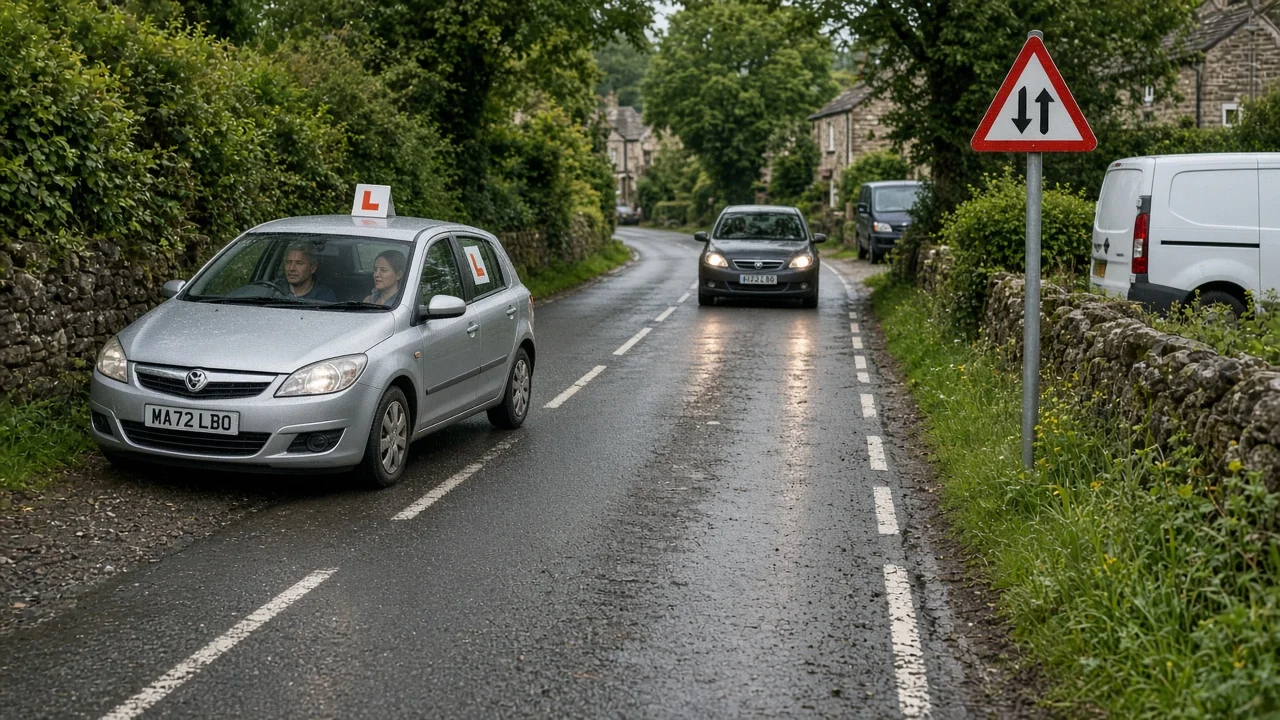
Black arrows pointing up and down inside a red warning triangle tell you that lawful oncoming traffic will share the same carriageway ahead, often where a one-way order has just ended or where a wide single lane resumes normal two-way flow.
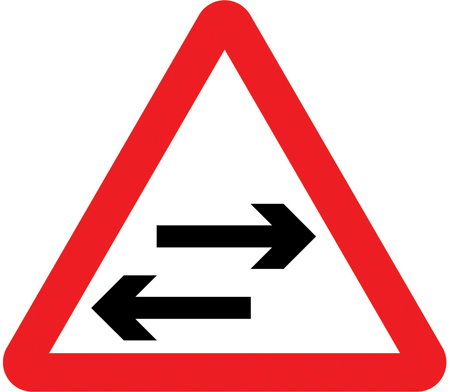
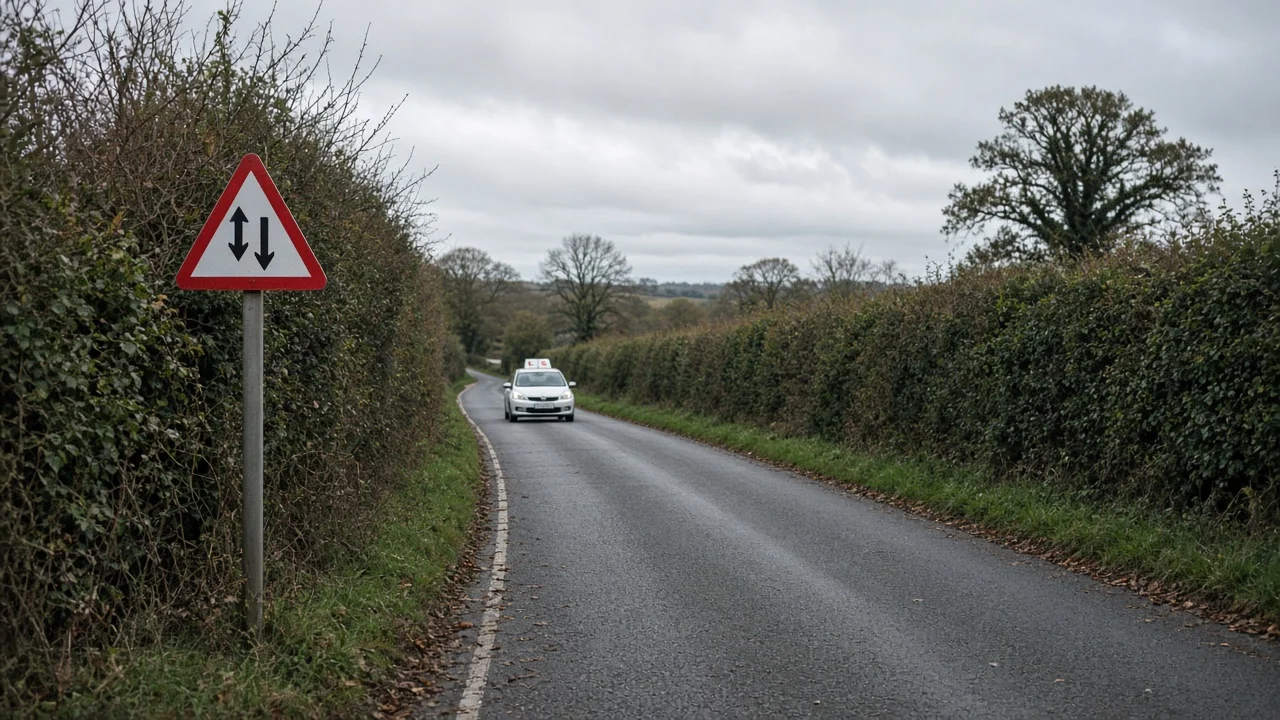
Sign image © Crown copyright, reproduced from GOV.UK traffic sign images under the Open Government Licence v3.0.
What the Two-way traffic Sign Looks Like
The plate follows the standard hazard triangle: red border, white centre, black pictogram. The symbol is a pair of vertical arrows, one aimed up the road and one aimed down. The symmetry is deliberate so you read opposing flows on one surface rather than a junction stem or a slip road.
Engineers mount it on the nearside verge, on a central island at the mouth of a reopened link, or beside temporary traffic management when cones are about to end. Supplementary plates may quote yards to the change, show "End of one-way", or pair with roadworks diagrams when contraflow finishes.
Learners often mix it up with dual carriageway information that shows a central reservation or two separated carriageways. Those layouts physically divide directions. The opposing-arrow triangle only promises oncoming vehicles in your lane, without a barrier between you.
Blue one-way arrows are regulatory and circular or rectangular. Priority narrowing discs may appear later with "Give priority to oncoming vehicles" text. The warning triangle alone announces two-way flow; it does not assign who must reverse at the pinch.
At night the retroreflective rim stays bright while the arrow shafts can look thin until your beams square on the board. Rain and mud spray from lorries may hide a repeater; trust the first triangle you see and adjust speed before the layout change, not after the first bonnet appears.
End-of-one-way plates cancel a previous direction order but do not replace the opposing-arrow warning. Road narrows triangles describe width; give-way and stop plates assign priority at junctions. Read each board for its own job instead of assuming one triangle covers every hazard ahead.
What the Two-Way Traffic Sign Means
The two way traffic sign appears where drivers have grown used to a single stream. Festival one-way loops, town-centre bus gates, bridge repairs, and long contraflows all train you to ignore the centre line. The paired arrows snap attention back to lawful oncoming traffic before a head-on meeting on a narrow crown.
Rule 134 in The Highway Code covers meeting traffic on narrow roads: use passing places on your left and wait if the other driver cannot pass. Rule 153 reminds you that parked cars, pedestrians without footways, and cyclists reduce the space you can share. This warning is the cue to apply those rules before you commit to an overtake.
National speed limit repeaters may still apply on rural singles, yet they do not widen the road. Rule 125 ties speed to what you can see and stop within. After the triangle, drive at a pace that lets you halt on your side within the distance you can see clear, especially over brows and through village chicanes.
Wide loads, coaches, and tractors may need the centre line through bends. Hugging the kerb to avoid oncoming vans can clip wing mirrors on parked cars or strike protruding door handles. A calm nearside position with modest speed usually beats brushing paintwork to win a few seconds.
Cyclists and horse riders use the same links. Overtake only when you can give the clearance described in Rule 163 and when opposing traffic will not force you to squeeze past. Tourist lanes after a one-way summer scheme often carry riders who assume cars still face one direction only.
Pedestrians crossing between parked vehicles are easy to miss when you stare at distant headlights. Scan nearside gaps as the road opens to two-way use. School pick-up zones beside reopened streets add small children below bonnet height who may step out without looking.
Smartphone sat-nav may still describe a one-way segment until map data updates. Trust live signs, cones, and fresh white lining over a cached route line. Contractors sometimes leave the triangle standing for a week after paint dries so habitual commuters relearn opposing flow.
Northern Ireland uses the same triangular warning family for opposing flow after one-way sections. Local passing-place customs on glens roads match GB courtesy, but always obey posted priority discs where they appear. If you are unsure, yield in the nearest lay-by on your left rather than debating at a blind crest.
Night driving feels unfamiliar when headlights approach in a space that felt like a funnel for months. Dip beams early and watch for unlit pedestrians on the nearside. Fog compresses depth cues, so the triangle may be the last readable clue before you meet a slow tractor without rear lighting.
Ice and wet leaves collect on shaded bends where camber changes when one-way working ends. Meeting traffic while braking for a hidden bend can push the nose wide. Reduce speed when the board passes your mirror, not only when the first oncoming tyre crosses the centre line.
Reset your scan pattern after contraflow: centre line, nearside mirror, far headlight. The first opposing vehicle often appears one bend after the triangle, not beside the board itself.
If you meet a wide load on a gradient, stop in the passing place on the left when you are the downhill driver. Reversing uphill with a trailer blocks everyone behind you and earns a driving-test serious fault.
Open a window near campsites and pubs when hedges hide foot traffic. You may hear bicycles without lights before you see them, especially when drivers still treat the link as one-way in their heads.
Electric cars are quiet at meeting speeds. Do not rely on engine noise; use mirrors and a shoulder glance before you pull out around a parked delivery van.
After snow, passing places fill with drifts first. Identify a usable bay before you commit to a meeting, not when bonnets are already close enough to read number plates.
Bus drivers reversing off a one-way stand into two-way flow need time. Hold back rather than squeezing past; their mirror view is worse than yours and the swing encroaches on your lane.
Pair revision with a mock theory test session filtered to road signs, then skim the warning signs hub for triangle symbols that often sit near this plate.
After long contraflows, reset your mirror routine: check the centre of the road as often as the nearside kerb. The first oncoming vehicle often appears just after the triangle.
If you meet a wide load on a hill, stop in the passing place below the crest when you are the downhill driver. Reversing uphill with a trailer is slow and dangerous for everyone behind you.
Highway Code rules 125, 134, 153 and 155 (speed, narrow roads, and meeting traffic)
Two-way traffic vs Similar Signs
| Sign | Meaning | Legal or warning? |
|---|---|---|
| Two-way traffic | Opposing flows share one carriageway | Warning triangle |
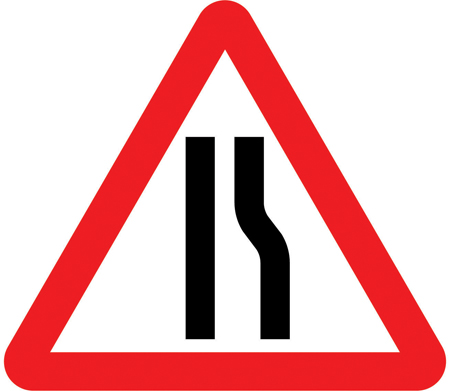 Road narrows both sides | Width reduces ahead | Warning triangle |
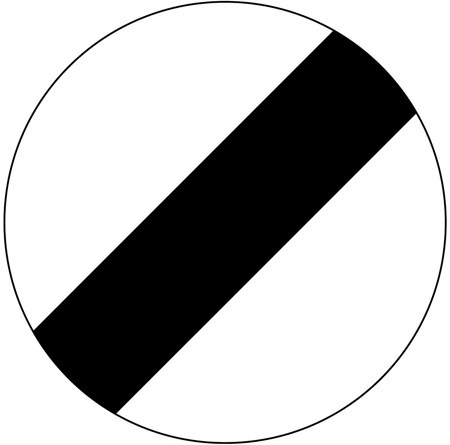 End of dual carriageway | Central reservation ends | Warning triangle |
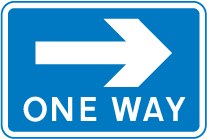 One-way street | Single direction order | Regulatory blue arrow |
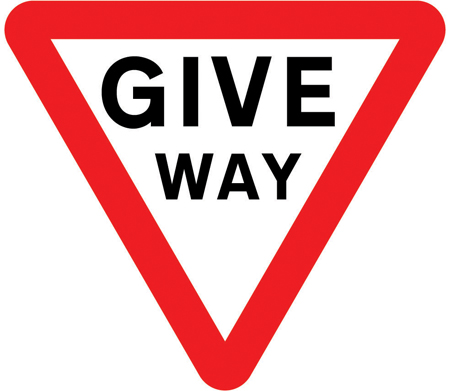 Give priority to oncoming | Who yields at a pinch | Blue circle |
Rules and Penalties
Head-on collisions on narrow two-way sections attract serious driving investigations when overtaking or centre-line crossing is involved. Investigators study tyre marks, dashcam footage, and whether either driver could have used a passing place shown on maps or signed lay-bys.
Careless driving reports often follow close passes against cyclists after a driver assumes the lane is still one-way. The opposing-arrow warning is evidence that oncoming traffic and vulnerable road users were foreseeable.
Failing to use passing places on single-track links can obstruct others. Police may direct you to reverse to a gap, and persistent blocking can support unnecessary obstruction attention in tourist hotspots.
Insurance claims for wing-mirror strikes on parked cars rise where drivers hug the kerb to avoid oncoming vans. Speed and position are judged against what a careful driver would do after seeing the paired-arrow board.
Driving tests mark serious faults for poor meeting discipline, including peeping over the centre line on blind bends. Examiners expect you to choose a passing place before the conflict, not when the other bonnet fills your windscreen.
Check the latest theory test pass mark and book when you are ready via our booking guide.
Two-way traffic in Practice
Marcus leaves a summer one-way loop around a market town and meets the opposing-arrow triangle beside a fresh "End of one-way" plate. He moves to his nearside and drops from 30 mph to 18 mph on a damp lane with parked vans on both sides.
A refuse truck crests a brow in his lane. Marcus stops in a signed passing place on the left, folds his mirrors, and waits until the rear wheels clear the pinch point. A following car had room because he eased off at the warning, not at the last metre of paint.
Last week he had drifted toward the centre while replying to a message. His instructor replayed dashcam footage showing how the triangle should trigger hands on wheel and eyes on the crown line before any phone check.
On a night lesson the same board appears after bridge works. Headlights from the far lane arrive sooner than Marcus expects because the road no longer feels like a funnel. He keeps dipped beams and delays any pass until the straight is visible past a queue of taxis.
In a theory app he matches the up-down arrows to "expect oncoming traffic" and rejects a dual carriageway answer about a central reservation. Linking the pictogram to shared-lane meetings, not motorways, saved a mark on a signs category drill.
How This Sign Appears on the Theory Test
Picture items show the paired arrows beside short stories about cones ending. Choose answers that mention oncoming traffic in the same carriageway, not separated motorway lanes.
Hazard perception clips sometimes show a car drifting toward the centre after one-way working. Click when the meeting risk develops, not when the distant triangle first flashes.
When two answers both say "slow down", prefer the one that includes keeping left and expecting opposing flow, not merely lifting off the throttle without changing position.
Combine revision with give-way and stop plates at junctions on narrow links. The direction warning does not cancel regulatory orders at side roads.
Sketch the arrows and label which points with you and which points against you. Examiners assume you can connect the symbol to a real meeting on a single width road.
Category B pass mark is 43 correct from 50 multiple-choice questions in 57 minutes. Signs questions are quick wins if you recognise this triangle instantly instead of guessing from wordy distractors.
Take a free mock theory test and filter questions on road and traffic signs. Pair that with the warning signs guide for triangle symbols.
Related Road Signs
Road narrows both sides
Width pinch often follows two-way reopening.
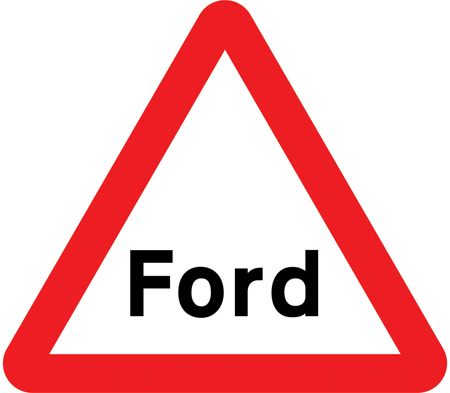
Ford sign
Shallow water on narrow two-way links.
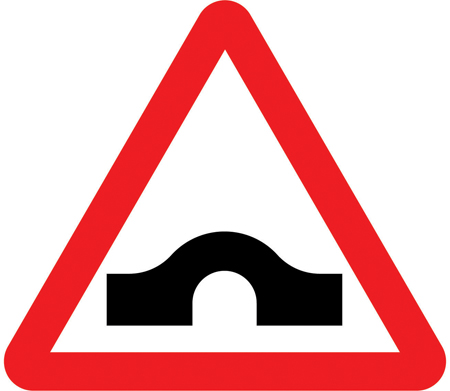
Hump bridge sign
Blind crest meetings on narrow bridges.
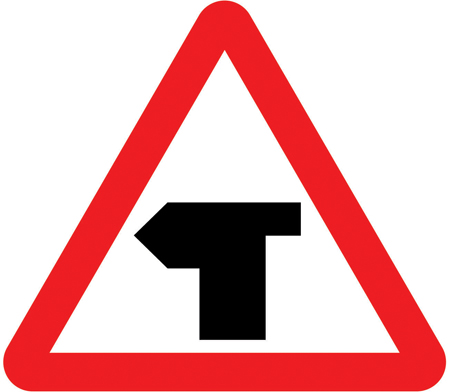
T junction sign
Junction mouths at the end of narrow routes.
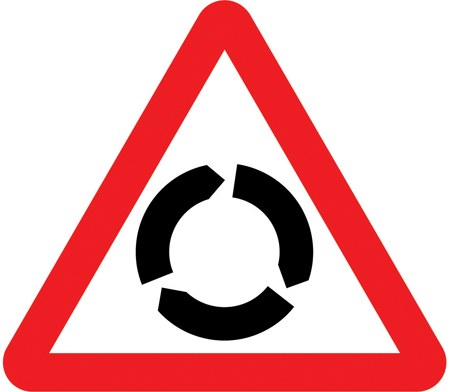
Roundabout ahead
Circulation where two-way flow would be unsafe.
Test Yourself on UK Road Signs
When the paired arrows appear, reopen your mental model to lawful oncoming traffic: slow early, stay left, and use passing places generously before you commit to an overtake or a centre-line squeeze. Drill the symbol in a mock session, then browse related warning triangles on the same rural link.
Frequently Asked Questions
What does the two way traffic sign warn about?
It warns that vehicles will travel in both directions on the same carriageway ahead. Expect oncoming traffic in your lane width, especially after one-way working or a wide single section.
Where is the opposing-arrow triangle usually placed?
Often where one-way traffic management ends, where a bus gate reopens to normal flow, or before a village street resumes two-way use. Distance plates may show how far the change lies ahead.
Does the sign show who must reverse at a narrow point?
No. It only announces opposing flow. Separate blue priority circles, give-way markings, or local courtesy at passing places decide who waits.
How is it different from a dual carriageway?
Dual carriageways separate directions with a central reservation or barrier. The warning triangle with up-down arrows means both directions share one surface without that divide.
Will this symbol appear on the car theory test?
Yes. Category B questions show the paired arrows and ask what to expect. Link the image to oncoming vehicles on a single carriageway, not to one-way streets or motorways.