
Last updated: October 2026 · Checked against Highway Code
Hump Bridge Sign: meaning, rules and what to do
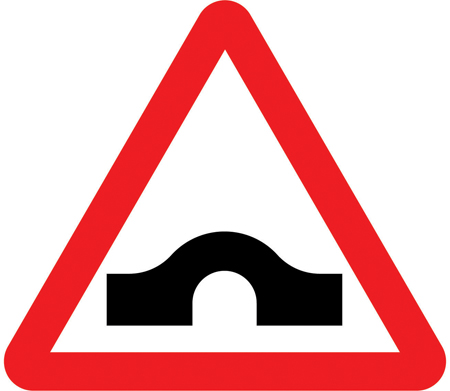
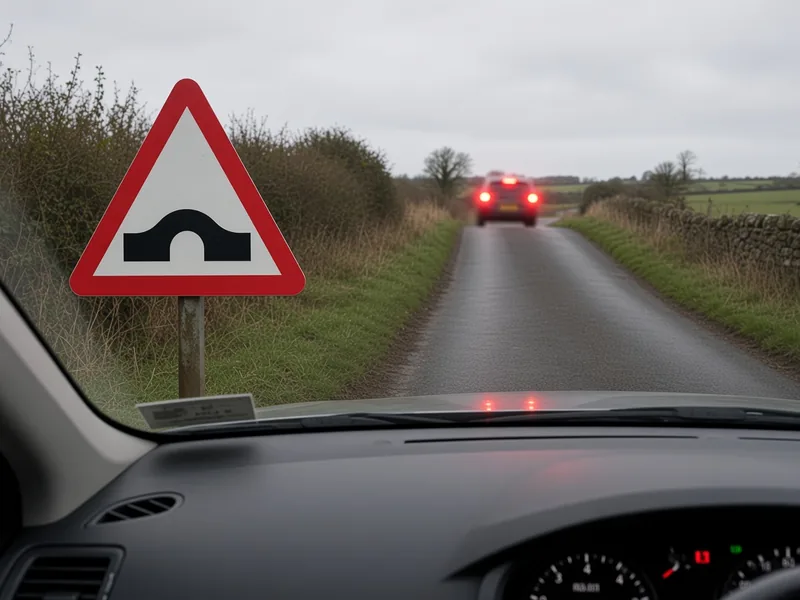
The hump bridge warning is a red-bordered triangle with a black pictogram of a car riding over a sharp arch, telling you the deck ahead rises steeply so you should ease off speed, keep left where possible, and expect limited sight over the crown before you meet oncoming traffic.
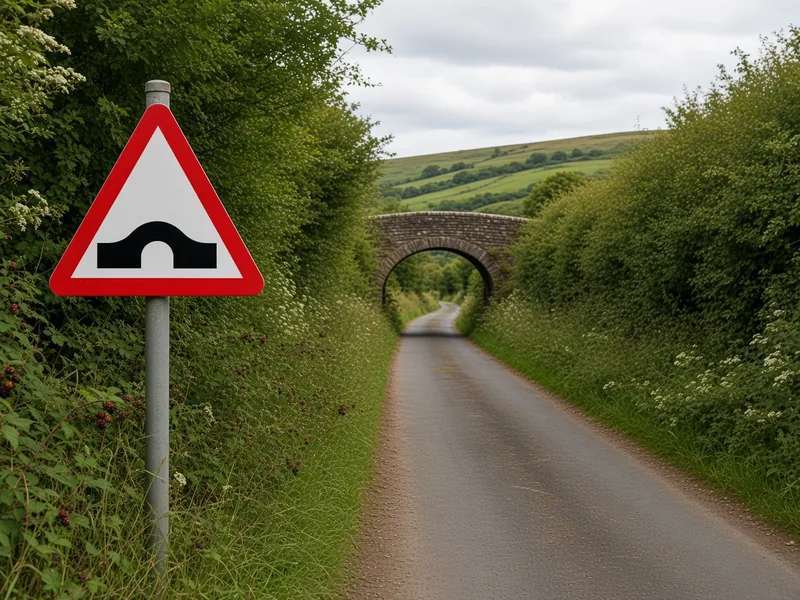
Sign image © Crown copyright, reproduced from GOV.UK traffic sign images under the Open Government Licence v3.0.
What the Hump bridge Sign Looks Like
The official GOV.UK warning follows standard UK triangle grammar: upright red border, white centre, black symbol. The pictogram shows a side-view car with its wheels climbing a single sharp hump that includes a semi-circular gap beneath, suggesting an arched deck rather than a long ripple along the carriageway. There are no numbers, blue circles or prohibition bars inside the frame.
Posts usually stand on the nearside verge on the final straight before the bridge, sometimes with a distance plate in yards or metres beneath. On fenland drains and canal crossings you may see the triangle repeated after a farm track so joining traffic still receives the same heads-up. Retroreflective sheeting keeps the red edge readable in drizzle long before the masonry arch fills your windscreen.
Learners often confuse it with the uneven road triangle, which shows a wavy baseline under the car for repeated surface faults, or with the separate road hump plate used where a deliberate speed cushion crosses an urban street. Opening bridge artwork shows a split deck for shipping. The hump bridge graphic is the one with one pronounced crest and the arch void drawn under the summit.
Temporary boards may cover the permanent post during parapet repairs, yet the symbol stays the same when engineers scaffold the span. Portable lights sometimes appear while weight limits are enforced. Even then the triangle remains the static reminder that geometry here steals sight lines and ground clearance within a few car lengths.
Uneven road warnings flag rippled tarmac along a lane, not a single sharp deck crest. Road humps mark deliberate cushions in built-up areas. Opening bridge plates warn that the road may lift for boats. When width narrows as well, read the hump bridge triangle together with road narrows plates rather than assuming the bridge is the only hazard.
What the Hump Bridge Sign Means
Highway authorities install the warning where a fixed arch or steep hump bridge still carries everyday traffic yet creates a blind summit. Drivers on the crown cannot see oncoming cars, cyclists or horses until both bonnets are close. The triangle does not close the bridge; it tells you that routine speed may be unsafe even when the legal limit sign has not changed.
Rule 125 in The Highway Code reminds you that speed limits are maximums, not targets. On a narrow hump the safe speed may sit well below the posted or national limit because vertical movement steals attention from steering and because meeting traffic leaves no room to swerve. The warning buys time to lift off the throttle before the bonnet lifts, rather than when you are already straddling the crown.
Ground clearance is the hidden lesson. A low sports car or heavily loaded estate can strike the deck centre even when tyres still grip the slopes. Long-wheelbase coaches and artics need to consider mid-chassis hang as well as bumpers. The pictogram is a prompt to picture the underside of your vehicle, not only the view through the glass.
Meeting priorities on single-carriageway bridges follow ordinary give-way discipline unless signs or road markings say otherwise. If the bridge is too narrow for two cars to pass, one driver must wait on the approach. The triangle is your cue to decide who waits before either vehicle commits to the blind crest, instead of negotiating halfway when neither can reverse easily.
Cyclists and motorcyclists suffer most on camber changes. A ridge that feels mild in a saloon can unload a front tyre or throw a rider off line. Giving vulnerable road users room on the approach is part of treating the warning seriously rather than treating it as countryside decoration.
Pedestrians sometimes use hump bridges where pavements are missing or too narrow. Scan parapets and refuges before you crest, because people may step into the carriageway assuming you will remain slow. School walking routes occasionally cross historic packhorse bridges signed with the same triangle.
Night driving turns shallow crests into sudden glare. Dipped headlights show the arch late; the red edge of the triangle is often the first reliable clue on an unfamiliar parish route. Keep thumbs outside the steering wheel rim so a kick from a deck joint does not wrench your wrists.
After frost or flooding, approaches may be muddy while the deck stays wet. Grip can change between brick, stone setts and modern asphalt overlays. The static warning still applies in winter when leisure traffic is quiet but maintenance lorries still cross.
Electric cars are heavy on their tyres. Momentum carries quietly toward a crest that would have slowed a smaller petrol hatchback. Regeneration and one-pedal driving can mask how fast you are travelling until the bonnet lifts; use the triangle as a prompt to check speed even when the cabin feels calm.
Sat navs optimise for distance, not crest severity. A “faster” route over a signed hump may cost bodywork and tracking. When the pictogram appears, trust local geometry over an optimistic arrival time.
Read distance plates as time to think, not as a new limit. Use them to cancel cruise control and to open a gap from the vehicle ahead so you are not forced to stop astride the crown when oncoming traffic appears.
Select a lower gear on manual cars before the climb so engine braking holds speed on the downslope beyond the bridge. Automatic drivers can use manual mode or brake gently on the approach rather than coasting over the hump.
If you tow, check hitch height and nose weight before a signed span. Pitch at the coupling can unload the tow car’s rear tyres exactly when you need grip to steer around a camber twist at the apex.
Do not overtake on the approach unless the road is wide, sight lines are clear, and you can complete the pass before the bridge mouth. Many serious meetings happen when one driver assumes the crest is empty.
HGV drivers should note weight and width plates that often sit beside the warning. Your cab height may clear the arch while trailer roof equipment does not. When in doubt, use a fixed crossing with posted headroom instead of guessing.
During driving tests, examiners may use lanes where the triangle appears to test whether you read advance warnings and adjust speed without prompting. Rolling over the crown too quickly while straddling the centre line is a common serious fault.
After striking the deck sharply, pull over safely when the road allows and check for tyre bulges or fluid leaks. A violent impact can damage sumps even when no crash occurs with another road user.
When sheep or cattle grids sit beside canal bridges, expect mud on the slopes. Treat the triangle as part of a hazard cluster rather than an isolated symbol.
Highway Code rules 122 to 125 and 146 (control, speed, and road surfaces)
Hump bridge vs Similar Signs
| Sign | Meaning | Legal or warning? |
|---|---|---|
| Hump bridge | Sharp crest on a bridge may limit sight and clearance | Warning triangle |
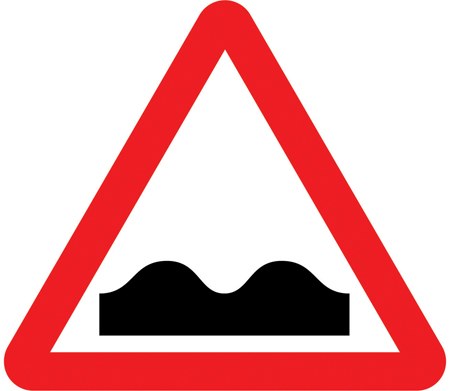 Uneven road | Repeated ridges or rough surface along the lane | Warning triangle |
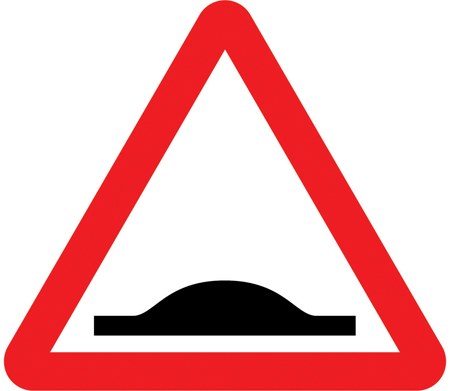 Road hump | Deliberate speed cushion across the carriageway | Warning triangle |
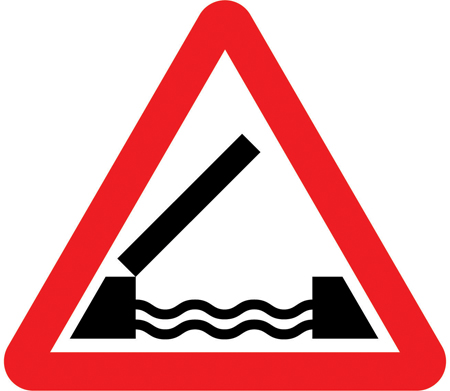 Opening bridge | Movable deck may open for shipping | Warning triangle |
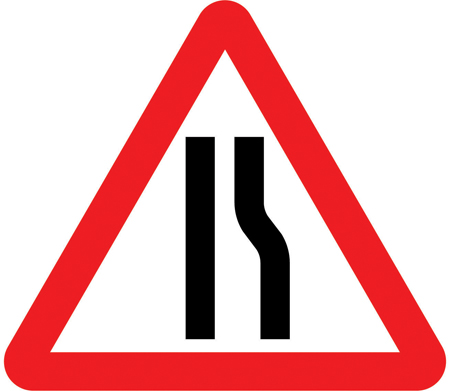 Road narrows | Width reduces on the approach or deck | Warning triangle |
Rules and Penalties
The warning triangle itself creates no fixed penalty because it is advisory. Enforcement instead targets careless or dangerous driving when speed, meeting traffic, or loss of control contributes to a crash on a known hump bridge.
Colliding head-on after cresting too quickly can lead to dangerous driving attention when injuries are serious, even if oncoming traffic also misjudged the gap. Insurers treat the driver who could not stop within sight as at fault in many meeting scenarios.
Grounding a low vehicle and blocking the deck can obstruct emergency routes and attract police attention for careless driving if others must reverse into blind bends. Recovery costs fall to the driver who misjudged clearance.
Driving tests mark serious faults for approaching signed humps too quickly, cutting the crown line, or failing to give way when a narrow bridge clearly needs one vehicle to wait. Examiners want gentle speed reduction before the slope steepens.
Vehicle damage alone rarely creates a motoring offence, yet driving with a known unsafe defect such as a dragging exhaust after grounding can attract construction and use attention at a later stop. The warning does not excuse skipping a post-journey check when the scrape sounded loud.
Check the latest theory test pass mark and book when you are ready via our booking guide.
Hump bridge in Practice
Priya drives a medium hatchback along a Suffolk lane she uses monthly to reach a canal mooring. A red triangle with the car-over-hump symbol appears with a plate reading three hundred yards. She cancels adaptive cruise, checks mirrors for a tractor close behind, and lets speed fall toward twenty miles per hour while the approach still looks flat.
The stone parapets rise and the bonnet begins to climb. Priya keeps left, dips headlights because dusk is falling, and pauses before the crown when a white van nose appears from the far slope. She holds on the near side until the van clears, then crosses without straddling the centre hump.
On her driving test later that season, the examiner routes her on a different county bridge where the same pictogram stands before a brick arch. Priya names the plate aloud as a hump bridge warning, slows before the first slope, and does not flirt with the national limit when the crest hides oncoming flow. The examiner notes steady steering rather than a late stamp on the brake.
After the journey she walks back to read a weight limit plate she had never noticed in daylight. Her instructor asks how the symbol differs from uneven road artwork; Priya explains that one sharp crest with an arch gap means bridge geometry, not a wavy baseline along the lane.
The following month she meets the layout at night after rain. Reflections hide the crown until she is close, but the retroreflective triangle still glows on the verge. She repeats the same slow approach and refuses to follow a faster car that overtakes on the blind climb, keeping her bonnet out of a potential head-on meeting.
How This Sign Appears on the Theory Test
Picture items show the car above a single sharp hump with an arch cut-out and ask what hazard to expect. Choose hump bridge or steep crest on a bridge, not uneven road, road hump alone, or opening bridge unless the deck split pictogram appears.
Scenario stems may describe a narrow arch with limited sight. The correct pattern is slow down, keep left where safe, and be prepared to give way to oncoming traffic rather than maintaining the national limit.
Distractors sometimes show a wavy line under the car for uneven road artwork. Compare symbols carefully: one pronounced arch means bridge crest; continuous ripples mean rough carriageway along the lane.
Hazard perception clips sometimes feature rural lanes without zooming on the post. Training yourself to ease off when the ride begins to climb helps you score even when the plate is off-screen.
When revising warning triangles, sketch the car and arch hump inside a frame and label bridge crest versus road cushion. Examiners expect instant recognition without confusing surface types.
Take a free mock theory test and filter questions on road and traffic signs. Pair that with the warning signs guide for triangle symbols.
Related Road Signs
Uneven road sign
Wavy baseline warns of rippled tarmac, not a single bridge crest.
Opening bridge sign
Movable spans and signals, not a fixed masonry hump.
Road narrows
Width pinch points often pair with blind bridge crowns.
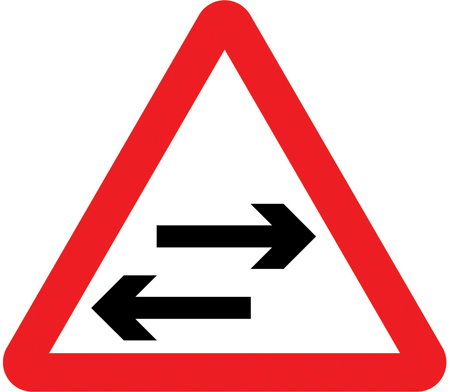
Two-way traffic
Oncoming flow resumes where lanes merge before a span.
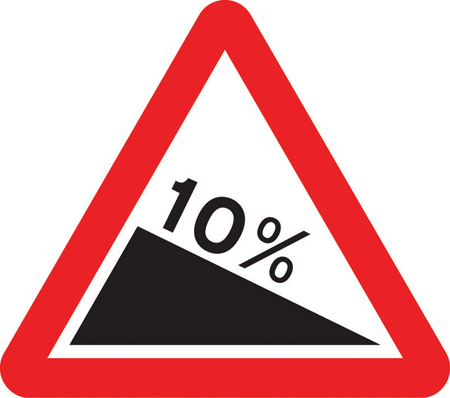
Steep hill down sign
Descents beyond the bridge where gravity and camber combine.
Test Yourself on UK Road Signs
Let the triangle start your routine early: slow on the approach, keep left where the bridge allows, and treat the crest as blind until you can see the far slope is clear. Hump bridges are common on rural theory clips even when they are rare on your daily commute, so recognising the pictogram keeps you calm when a parish arch interrupts an otherwise ordinary route. A free mock theory test helps you practise warning triangles before the exam swaps artwork.
Frequently Asked Questions
What should I do when I see the hump bridge warning?
Ease off speed, keep both hands on the wheel, and be ready to give way on narrow decks. The triangle warns of a sharp crest and limited sight, not a mandatory stop.
How is this different from the uneven road sign?
Uneven road shows a wavy line under the car for repeated surface faults. The hump bridge pictogram shows one sharp crest with an arch gap beneath, meaning bridge geometry ahead.
Does the warning set a speed limit?
No. It is advisory. You must still obey posted limits and drive slowly enough to stop within the distance you can see to be clear over the crown.
Can low cars use hump bridges?
Many can if you approach slowly and straight. Check headroom and ground clearance plates beside the span. If your vehicle scrapes, choose another route rather than forcing the deck.
Will this appear on my theory test?
Warning triangles are core knowledge. Expect image questions that ask you to name bridge crest hazards or to pick the correct response when sight over the hump is limited.