
Last updated: October 2026 · Checked against Highway Code
Steep Hill Down Sign: meaning, rules and what to do
A black lorry silhouette running downhill on a red-bordered triangle warns that the road drops sharply ahead, so you should select a lower gear early and control speed without riding the brakes.
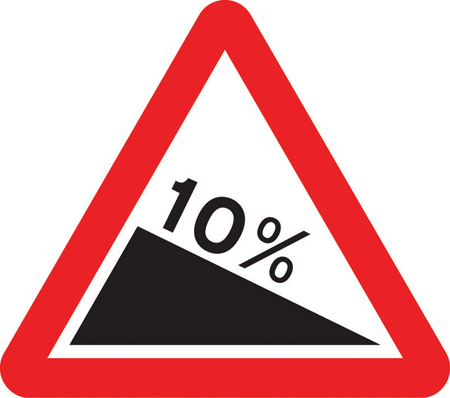
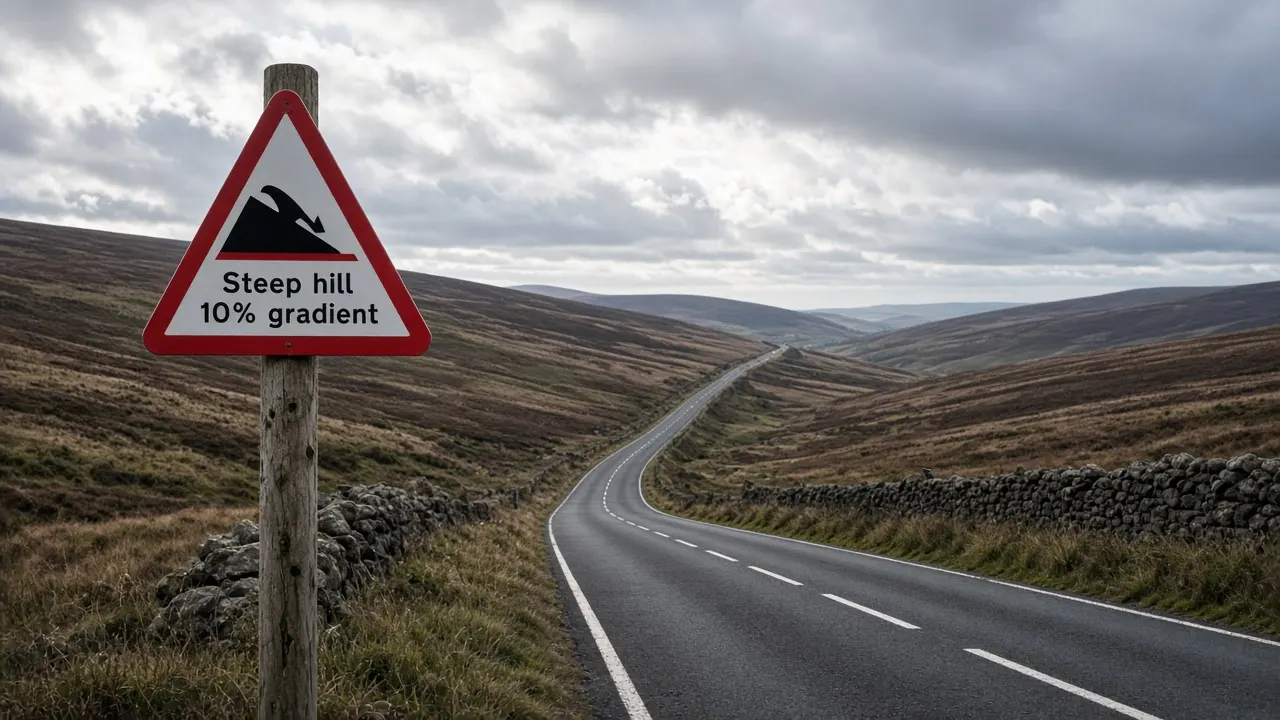
Sign image © Crown copyright, reproduced from GOV.UK traffic sign images under the Open Government Licence v3.0.
What the Steep hill downwards Sign Looks Like
The plate is a standard UK warning triangle: thick red border, white centre, and a black pictogram of a goods vehicle on a downward slope. The cab sits higher on the left and the trailer drops toward the right, mirroring how engineers draw a falling gradient on paper. It belongs to the same family as bend and junction warnings: red rim, white field, black symbol, no numbers.
You will usually see it on a post at the roadside before the hill opens out, sometimes with a distance plate in yards or a gradient percentage on a separate white rectangle. On moorland passes and coastal descents the same triangle may repeat after a lay-by so drivers who stopped can re-read the hazard. Retroreflective sheeting makes the red edge visible in dipped headlights long before you feel the camber change.
Do not confuse it with the steep hill upwards triangle, which shows the lorry climbing. Soft verges and quayside warnings use different symbols entirely: one suggests unstable edges, the other water beside the carriageway. Learners who skim the pictogram often pick the wrong hill direction in multiple-choice papers, so look at whether the trailer end points down or up.
Temporary works may hide the post behind cones during resurfacing. If a diversion sends you onto an unfamiliar descent, any repeated triangle still counts. Chevrons painted on the road surface are separate aids; the triangle is the advance notice that gravity will start doing more of the work.
The steep hill upwards plate mirrors the lorry on a climb. Gradient percentage plates give numbers but not the triangle. Escape lanes on extreme hills use different wording and chevron boards. All warn about slope; only the downhill symbol shows the trailer dropping away.
What the Steep Hill Down Sign Means
The sign appears where the vertical profile surprises drivers who have been cruising on a gentle incline or a false flat. It does not create a new offence by itself. Instead it supports the general duty in The Highway Code to drive at a speed that lets you stop within the distance you can see to be clear, and to use gears and brakes in a way that keeps the vehicle under control.
Rule 125 reminds you that speed limits are maximums, not targets. On a long descent in rain, the safe speed may sit well below the posted or national limit because tyre grip and brake temperatures matter more than the number on the last repeater. The warning buys time to change down before the gradient steepens, rather than when you are already gathering momentum.
Engine braking is the core lesson the theory test expects. In a manual car, selecting a lower gear before the nose drops lets the engine resist acceleration so foot brakes handle only fine adjustments. In an automatic, use the mode or paddle shift your handbook recommends for sustained downhill running; freewheeling in neutral removes that help and is poor practice on steep roads.
Riding the brake pedal for minutes heats friction material and can cause fade, where stopping power falls away just when you need it most. The triangle is the cue to plan intermittent braking: slow on the straighter sections, release on tighter bends if sight allows, and never drag the pedal because the road feels familiar from a summer holiday.
Heavy lorries and coaches may descend at walking pace in low gears with hazard lights flashing. The sign warns you before you close rapidly on a radiator grille that fills your windscreen. Overtaking on a blind downhill bend is rarely wise; patience keeps you out of oncoming traffic that cannot see you either.
Gradient changes grip. A damp forest descent can hide leaves and mud across the lane; a sunny chalk hill may glare into your eyes at the crest before the drop. Frost lingers in shaded gullies when the valley floor looks dry. The triangle does not list every surface hazard; it tells you to scan and to cover the brake without panic.
Weight matters for electric cars and loaded estates. Momentum builds quietly when regeneration caps out on a long slope. Treat the warning like a reminder to check speed and following distance even when the powertrain feels calm.
Single-track lanes in Wales and Scotland often combine steep drops with passing places on the uphill side. Whoever reaches the bay first should wait rather than meeting mid-gradient where reversing is frightening. Tourist traffic unfamiliar with left-hand verge drops benefits from the same early gear choice locals use every market day.
Read the lorry as direction of slope, not a ban on trucks. Carriageways remain open to lawful traffic; the symbol simply illustrates gravity.
Before the crest, glance at mirrors and drop a gear while the road is still nearly level. Changing down mid-slope can unsettle the car if the revs spike.
In rain, double following distance at the triangle. Spray from a coach ahead can hide a cyclist in the gutter until your speed is already too high to brake gently.
Motorcyclists use engine braking aggressively; give them room rather than tailgating on the approach to a hairpin drop.
Sat navs sometimes underestimate descent time because the database ignored gradient. When the red triangle appears, trust the plate over an optimistic ETA.
After dark, use dipped headlights before the brow so you do not dazzle anyone climbing. Use verge reflectors to judge how quickly the road falls away.
If your car smells hot brakes at the bottom, pull into a lay-by and let them cool before continuing. Driving on with faded linings risks complete loss of retardation on the next hill.
Caravans and trailers push you faster than solo cars feel. The warning is your cue to check the hitch, engage a lower ratio early, and resist the urge to ride the brakes all the way to the village.
Highway Code rules 122 to 125 and 160 (control, speed, and hills)
Steep hill downwards vs Similar Signs
| Sign | Meaning | Legal or warning? |
|---|---|---|
| Steep hill downwards | Sharp or sustained descent ahead | Warning triangle |
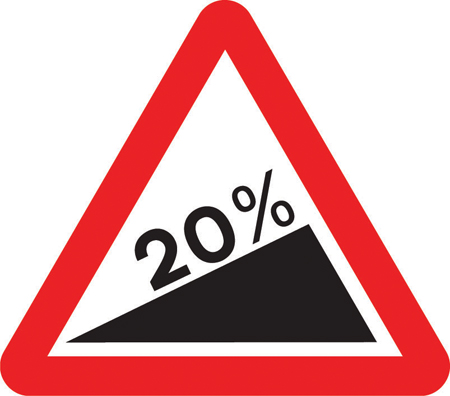 Steep hill upwards | Sharp or sustained climb ahead | Warning triangle |
| Gradient plate | Percentage slope on a supplementary plate | Warning information |
| Escape lane | Run-off for vehicles that lose braking on extreme hills | Direction and warning plates |
Rules and Penalties
There is no fixed penalty for passing a warning triangle because it is not a regulatory order. Enforcement instead targets careless or dangerous driving when speed, following distance, or brake failure contributes to a crash.
Losing control on a descent after excessive speed can lead to careless driving charges, especially if injury or serious damage follows. Insurance assessments often treat the driver who could not stop in the distance as at fault even when the hill felt routine.
Commercial vehicle operators face maintenance rules on braking systems. An HGV with faded brakes on a signed hill strengthens an investigation after an incident, even when no speed camera was present.
Driving tests mark serious faults for coasting downhill in neutral, approaching too fast, or leaving too little space behind a slow lorry. Examiners want controlled braking before the steepest section and steady steering without crossing the centre line on bends.
Parking on a steep downhill without curb wheels turned and the handbrake secured can roll into traffic; that is a separate offence when it endangers others, not a direct response to the triangle itself.
Check the latest theory test pass mark and book when you are ready via our booking guide.
Steep hill downwards in Practice
Marcus drives a manual estate through the Peak District after rain. A steep hill down triangle appears before a mile-long descent into a village.
He lifts off the throttle on the approach, checks mirrors, and selects third gear while still on the gentler upper slope. Speed settles near thirty miles per hour without constant pedal pressure.
A timber lorry ahead runs hazards in second gear. Marcus holds back, using short brake applications before straight sections rather than dragging through the bends. A cyclist appears on a left-hand switchback; his earlier spacing leaves room to wait without swerving.
On his driving test the examiner routes him down the same hill in summer. Marcus names the sign aloud as a steep descent warning, changes down before the brow, and keeps both hands on the wheel through the curves. The examiner notes that he did not coast in neutral.
The following winter, frost lingers in a shaded cutting the sign warned about. Because he already slowed at the triangle, he feels a brief slide and eases off rather than stamping the brake, which would have locked the front wheels on the camber.
His instructor later asks why the plate matters when the valley is visible from the top. Marcus explains that the sign marks a recorded gradient where drivers still misjudged gears after stopping for photos; it reminds him to treat the drop as new every time.
How This Sign Appears on the Theory Test
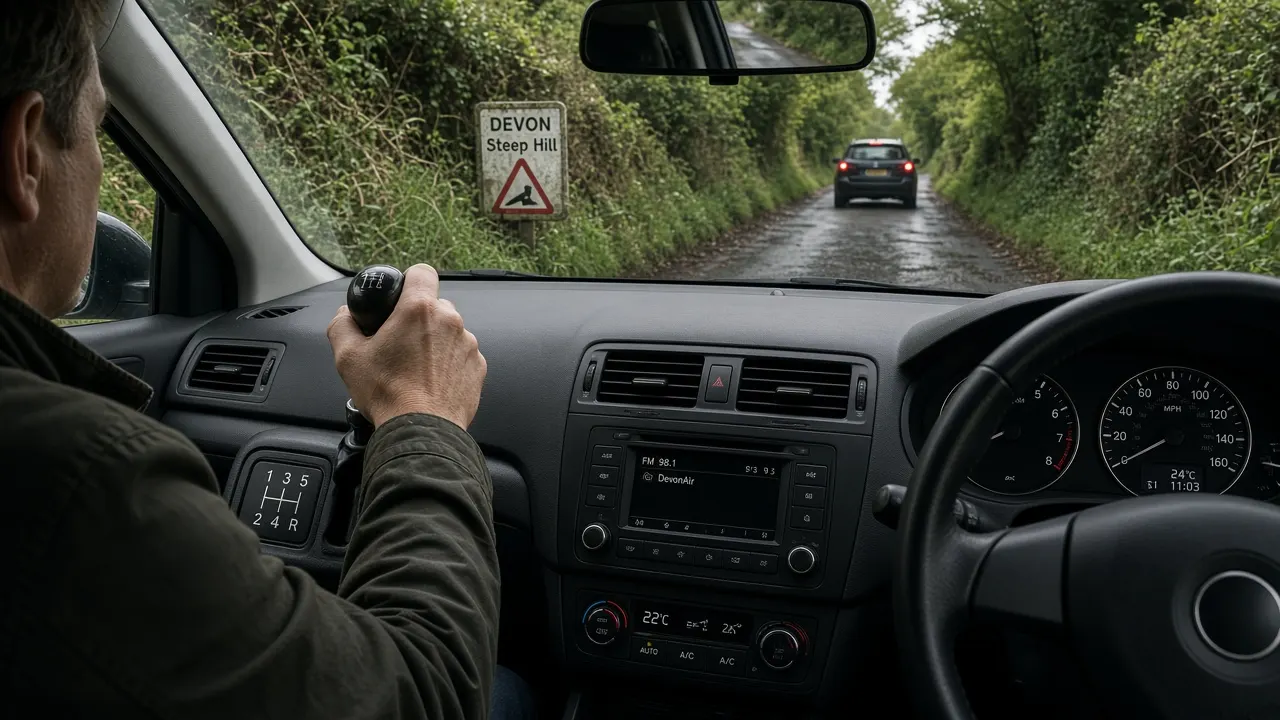
Picture items show the downhill lorry and ask what hazard to expect. Choose steep hill downwards, not soft verges, quayside, or steep hill upwards.
Some questions pair the triangle with a gear scenario. Remember the official explanation: use a lower gear on long descents to control speed and reduce brake fade.
Differentiate from the uphill symbol by checking whether the trailer end points down or up. Examiners assume you can mirror the pictogram instantly under time pressure.
Hazard perception clips may feature rural descents without zooming on the post. Training yourself to ease off when the horizon drops helps you score even when the plate is off-screen.
When revising, sketch the lorry on a slope and label downhill versus uphill versions. Wrong-way answers are deliberate distractors in the car question bank.
Take a free mock theory test and filter questions on road and traffic signs. Pair that with the warning signs guide for triangle symbols.
Related Road Signs
National speed limit
Default limit on many open hill roads before gradients tighten.
Bend right sign
Downhill bends often pair with gradient warnings.
Double bend sign
Serpentine descents on moorland and coastal routes.
Two-way traffic
Narrow hills where oncoming lorries meet mid-slope.
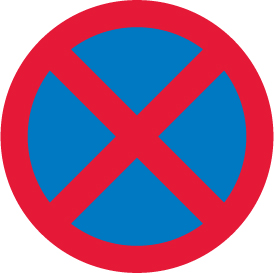
No stopping
Stopping restrictions on some urban hills and clearways.
Test Yourself on UK Road Signs
Treat the steep hill down sign as early notice to choose a lower gear, manage speed with engine braking, and leave space for slow heavy vehicles. Smooth descents keep you inside Highway Code expectations and give examiners one fewer reason to mark a serious fault on rural test routes.
Frequently Asked Questions
Does the steep hill down sign set a speed limit?
No. It warns of gradient. You must still obey any limit signs and drive below the maximum when conditions, load, or brake temperature demand.
How is it different from the steep hill up sign?
The pictogram shows the lorry descending rather than climbing. The triangle shape is the same; only the slope direction changes.
Should I brake when I see the sign?
Ease off early and change down before the steepest section. Use the foot brake for short controlled reductions rather than riding it all the way down.
Why does the symbol show a lorry?
The goods vehicle illustrates how engineers draw slope on warning plates. It does not mean lorries are banned or that only HGVs need to slow down.
Will this appear on my theory test?
Yes. Warning triangles are core knowledge. Expect image questions naming steep hill downwards or choosing the correct gear response.