
Last updated: October 2026 · Checked against Highway Code
Double Bend Sign: meaning, rules and what to do
A black S-shaped arrow on a red-bordered triangle warns that two bends follow close together, so you must slow before the first curve and stay ready for a second change of direction.
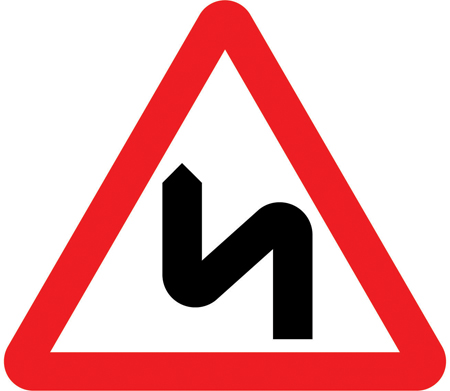
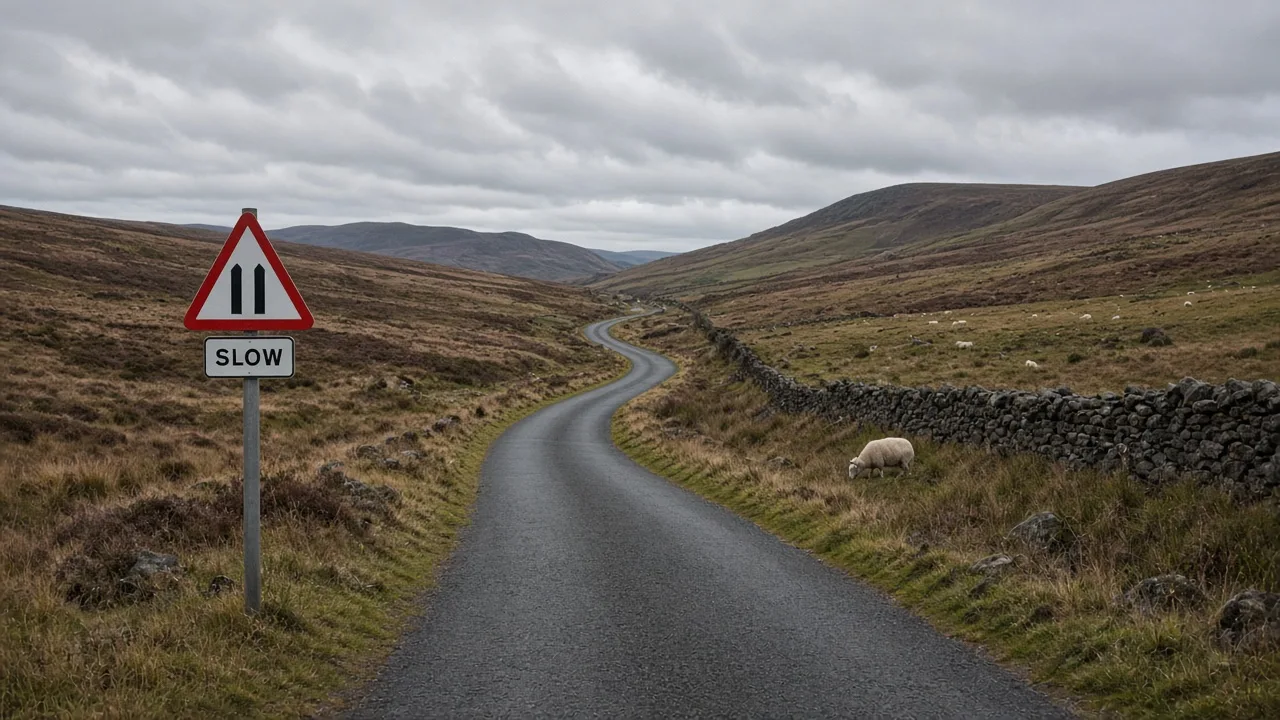
Sign image © Crown copyright, reproduced from GOV.UK traffic sign images under the Open Government Licence v3.0.
What the Double bend Sign Looks Like
The warning triangle points upward with a red rim and white centre field. The pictogram is a black curved arrow that bends one way and then the other, suggesting an S-shaped road plan viewed from above. Colour and shape match other hazard warnings: never blue, never circular.
Distance plates may sit beneath the board, showing how many yards remain before the first curve. On fast rural routes you might see a repeat triangle after a side road if drivers rejoin with high speed. Chevron boards on sharp bends are separate aids; they do not replace the advance triangle.
Direction-specific versions exist. Plates labelled for the first bend to the left or right use the same S graphic with the opening curve emphasised on that side. The generic double bend plate still tells you to expect two changes of direction even when a chevron cluster is not yet visible.
Learners sometimes confuse the symbol with a single bend arrow that shows only one arc. Count the reversals in the drawing: two distinct curves mean two steering inputs, not one long corner you can straighten through.
At night the retroreflective border catches headlights before the black arrow is obvious. Treat a glimpse of red triangle as a cue to lift off the throttle, then confirm the full symbol as you close the distance.
Single bend triangles show one arc only. Double bend plates promise a second curve soon after the first. Chevron alignment boards appear on the bend itself; the triangle is advance warning, not lane furniture.
What the Double Bend Sign Means
The plate appears where geometry still surprises drivers who know the road in dry daylight but misjudge grip, sight, or speed when conditions change. It does not set a numeric limit; it tells you to manage momentum through two steering events in short order.
Rule 125 in The Highway Code reminds you to drive at a speed that lets you stop within the distance you can see to be clear. On a double bend, that distance can shrink twice: you may exit the first curve still unable to see oncoming traffic or debris in the second.
Rural tree tunnels create strobing light that hides the second apex until you are committed. Open moorland does the opposite: cross-winds push high-sided vehicles toward the crown between bends. In both cases an early gear selection and gentle throttle beat braking mid-corner.
Wet leaves, diesel spills, and frost concentrate in the gutter line many drivers use on the first exit. A wider line on the approach, then a disciplined return to the nearside before the second bend, keeps you away from oncoming wheels that may cut the centre on their own exit.
Motorcyclists often use a different line for stability. Give them room rather than squeezing past inside the second curve. Horse riders on narrow lanes may continue straight while you are still adjusting from the first bend; check mirrors before you drift outward for sight.
HGVs and caravans need the full width. If you meet a long vehicle in the opposite direction, both drivers may need to slow to walking pace and use any passing bay marked after the warning. Sat-navs rarely announce bend severity; the triangle is your prompt to ignore ETA pressure.
Temporary signs sometimes appear when hedge cutting or landslip repairs expose a fresh camber. Treat every visit as new: read any supplementary plates, cone channels, or fresh gravel that changes grip from your last trip.
Cover the brake when the triangle first appears, not when your bonnet reaches the chevrons. The gap between warning and first curve is where you win or lose speed safely.
If the first bend is left and the second right, your steering rhythm is left then right without pausing on the centre line. Jerky corrections unsettle trailers and shift unsecured loads in vans.
Dipped headlights help oncoming drivers see you between bends; full beam can dazzle someone still negotiating the opposite curve. Daytime running lights alone may be dim in heavy rain.
Cyclists descending the second bend pick up speed quickly. Overtake only on a straight with legal clearance, not between the two curves where you cannot see far enough ahead.
After flooding, mud can wash onto the second apex while the first bend looks clean. A small slide on exit is a signal to reduce speed further before the next steering input.
Driving tests on rural routes often place the warning where examiners watch for smooth gear changes. Flapping the clutch in the first bend while hunting for second gear can count as poor control entering the second.
Highway Code rules 125, 146 and 153 (speed, bends and control)
Double bend vs Similar Signs
| Sign | Meaning | Legal or warning? |
|---|---|---|
| Double bend | Two curves in quick succession | Warning triangle |
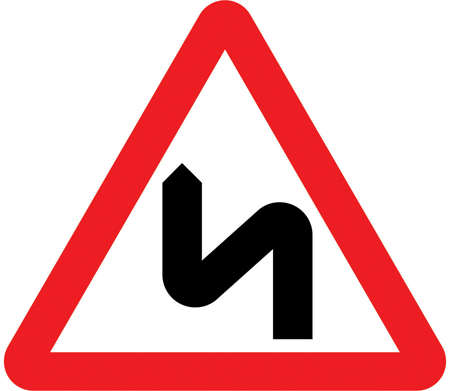 Double bend, first left | Sequence opens to the left | Warning triangle |
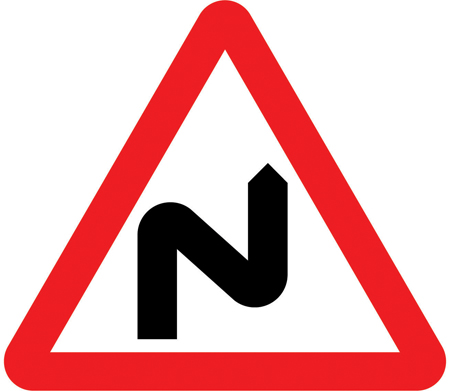 Double bend, first right | Sequence opens to the right | Warning triangle |
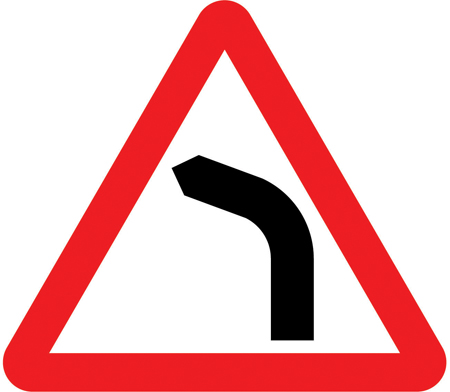 Bend to the left | Single left-hand curve | Warning triangle |
Rules and Penalties
Losing control on the second bend after carrying too much speed through the first is a common pattern in collision reports. Police may cite careless driving when another road user has to swerve or brake sharply.
Crossing the centre line between bends to overtake on a national speed limit single carriageway is only lawful when you can complete the manoeuvre without forcing oncoming traffic to react. The double warning is evidence the sight line is unlikely to support overtaking.
Driving tests mark serious faults for poor lane discipline through linked bends, especially if you clip the kerb or swing wide toward oncoming flow on the second apex.
Insurance disputes after head-on shunts on bend pairs often review whether advance warnings were visible and whether speed was appropriate for a sequence, not just the first curve.
Splashing pedestrians on the inside of the second bend after driving through a puddle on the first can still attract careless driving attention even when no collision occurs.
Check the latest theory test pass mark and book when you are ready via our booking guide.
Double bend in Practice
Mira drives a B-road she uses for weekend trips. Dry weather made the linked bends feel easy at 50 mph. After rain, the double bend triangle appears above a distance plate showing two hundred yards.
She lifts off the accelerator early, checks mirrors for a close follower, and selects third gear before the first left curve. On exit she holds the nearside rather than drifting centre for a better view, because oncoming traffic could already be in the second right-hand arc.
A tractor appears around the second bend with wheels near the white line. Mira brakes to a crawl and waits in a lay-by until it passes. Last summer she had met a car overtaking a cyclist between the bends; the warning board now triggers the same cautious routine every time.
On her theory mock, a picture question showed the S-shaped arrow with a slippery road scenario. She chose the answer about successive bends and reduced speed, not a single bend or a junction priority plate.
During a practical test the examiner noted she did not accelerate until the second exit straightened. That small habit kept her clear of loose gravel that earlier traffic had dragged across the crown.
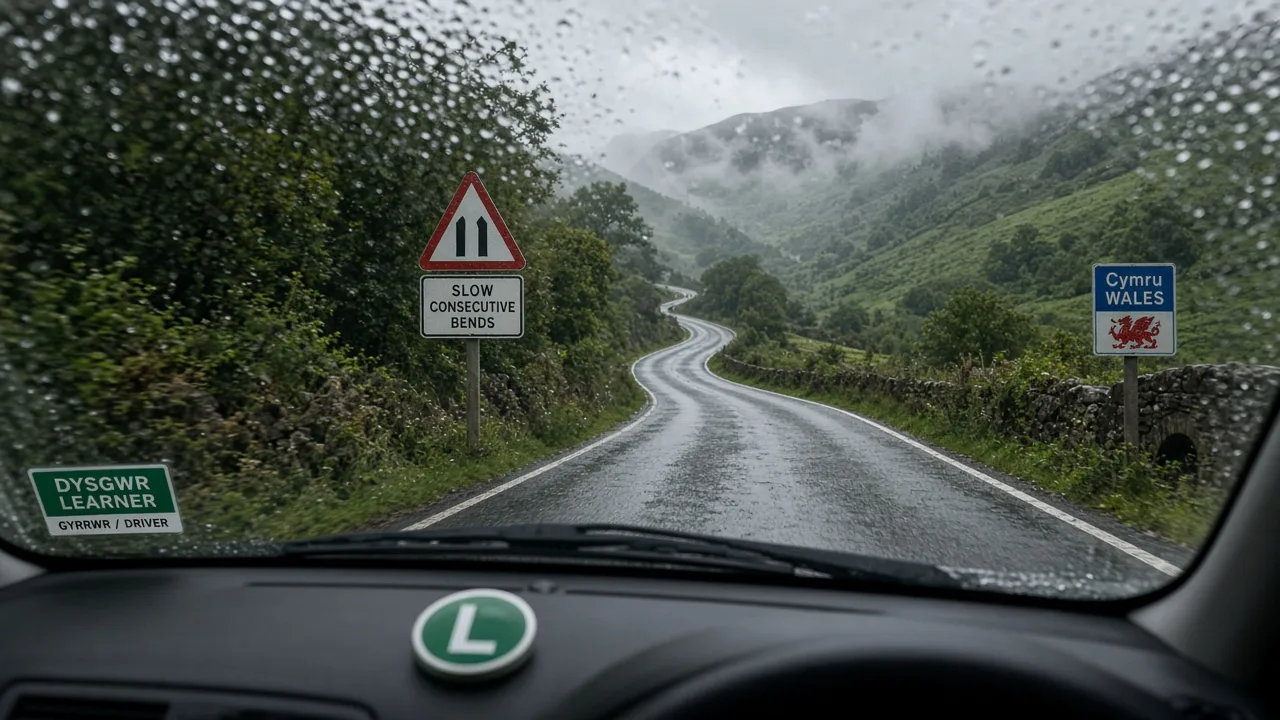
How This Sign Appears on the Theory Test
Image recognition pairs the S-shaped arrow with questions about two bends, not one. Reject options mentioning crossroads, roundabouts, or give-way orders unless the picture changes.
Directional variants in the bank may ask whether the first curve is left or right. Read the opening arc of the black arrow carefully; mirror images are deliberate traps.
Hazard perception clips sometimes show a car drifting wide on the second bend after entering too fast on the first. Click when the hazard develops, typically when speed or line becomes unsafe, not when the distant triangle first flashes.
Scenario text may describe trees hiding oncoming traffic between curves. Link that wording to linked bends and reduced speed, not to a single chevron board alone.
When revising, sketch the road as two consecutive arcs on paper. Examiners assume you can translate the flat symbol into steering rhythm without hesitating.
Combine revision with national speed limit and stopping distance topics. The sign does not cancel the limit, but it strongly implies your safe speed may be far below the posted maximum.
Take a free mock theory test and filter questions on road and traffic signs. Pair that with the warning signs guide for triangle symbols.
Related Road Signs
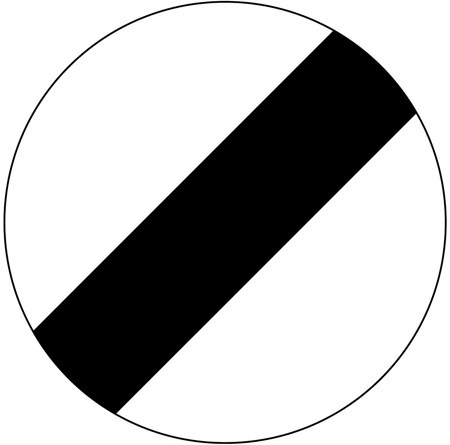
National speed limit sign
Default limits on rural bends still need judgment.
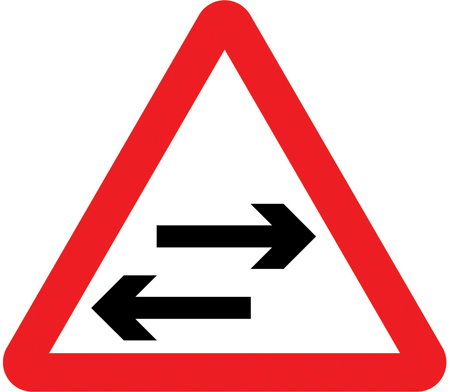
Two-way traffic
Oncoming flow on narrow bend pairs.
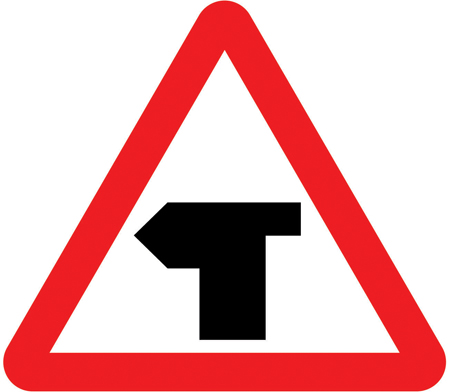
T junction sign
Junctions sometimes follow sharp bend sequences.
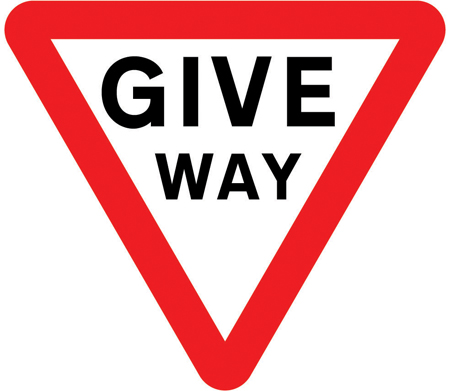
Give way sign
Yield where side roads join bend corridors.
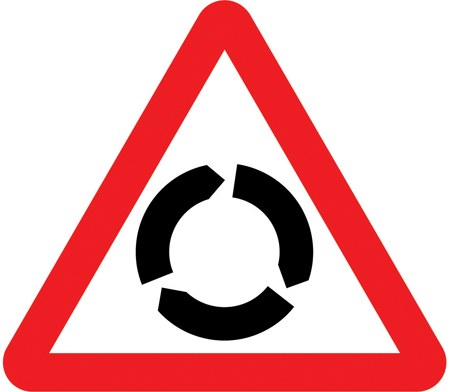
Roundabout sign
Circulation after fast bend approaches.
Test Yourself on UK Road Signs
Treat the S-shaped arrow as a rhythm warning: slow early, steer smoothly through the first curve, and stay patient until the second exit opens. Linked bends punish rushed speed more than single corners because sight and grip can change twice within a few car lengths.
Frequently Asked Questions
What does a double bend sign mean?
It warns that two bends follow in quick succession. Slow before the first curve and stay ready to steer again immediately after.
How is it different from a single bend sign?
A single bend triangle shows one arc. The double bend symbol reverses direction, showing an S-shaped path ahead.
Should I brake in the first bend?
Set your speed before you enter. Braking hard mid-corner can unsettle the car before the second bend.
Can I overtake after this warning?
Only if the road stays clear for the entire manoeuvre through both bends. The warning usually means sight lines are too short for safe overtaking.
Do left-first and right-first signs change the rules?
They clarify which way the sequence opens. You still reduce speed and drive for two curves, not one.