
Last updated: October 2026 · Checked against Highway Code
T-Junction Sign: meaning, rules and what to do
The warning triangle with a black T marks where a minor road will meet a through route head-on, so you must read give-way paint and regulatory plates before you choose a speed.
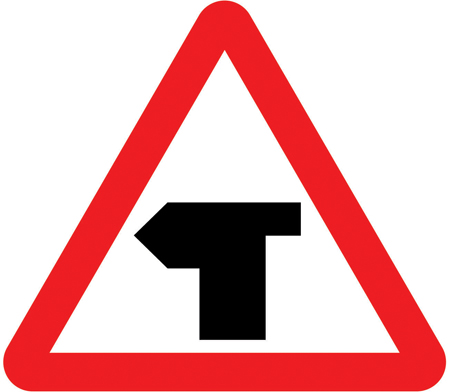
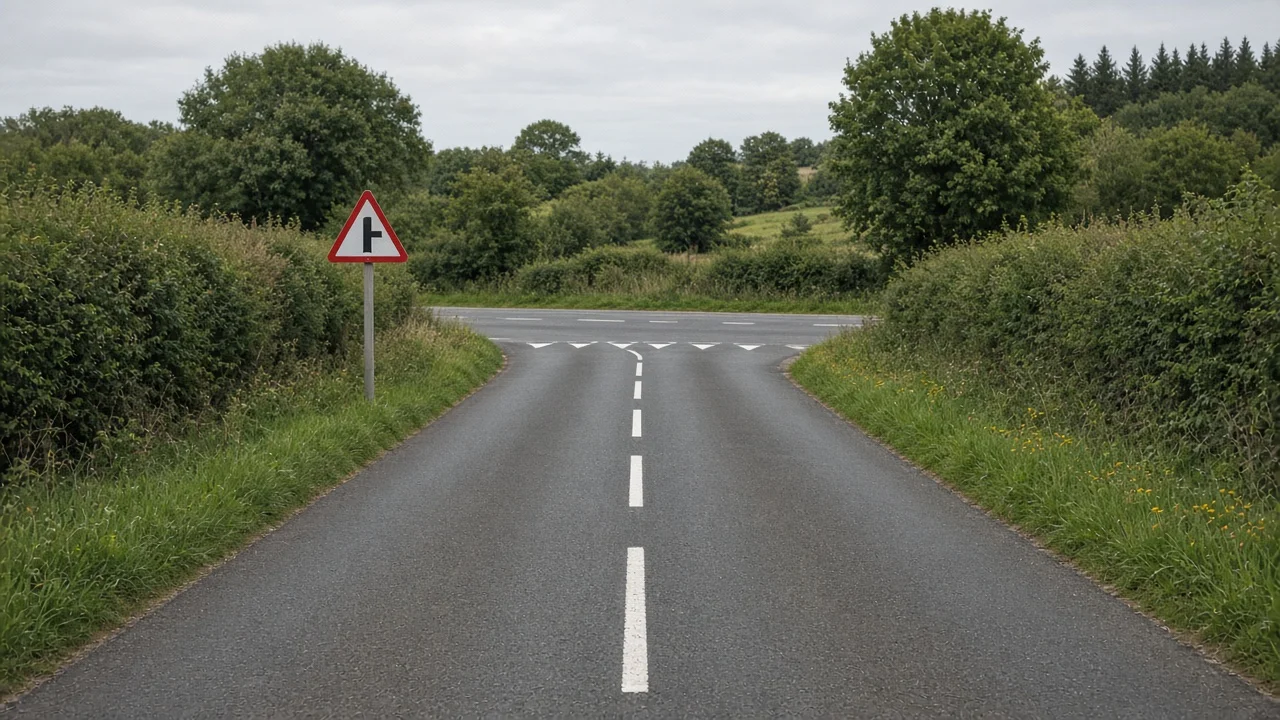
Sign image © Crown copyright, reproduced from GOV.UK traffic sign images under the Open Government Licence v3.0.
What the T-junction Sign Looks Like
The plate is an upright isosceles triangle with a thick red border and a white centre. Inside sits a black capital T: a vertical stem topped by a horizontal bar, like a map view where one road ends against another. Variants sometimes thicken one side of the bar to suggest the heavier flow, but the theory test expects the standard symmetrical symbol.
Engineers place the triangle on the stem approach, on the through road when sight lines are poor, or on both arms at complex mouths. Supplementary distance plates may show yards or metres to the junction. The colour scheme matches every other hazard warning: never blue, never circular, always red rim plus black pictogram on white.
Learners confuse it with the information no-through-road plate, which adds a red slash across the stem to mean a dead end. Crossroads warnings use a plus or cross for four meeting arms. Staggered junction triangles break the bar so the side roads join at different points along the main carriageway.
Regulatory give-way and stop signs sit closer to the conflict point than the warning triangle. Traffic-light heads, if installed, override memory about which arm used to feel dominant. Temporary roadwork boards can duplicate the T graphic on a yellow background; treat those as fresh instructions, not background decoration.
Crossroads plates show four live arms. Staggered junction signs offset the side connections. The plain T focuses on one road terminating at another, which is why your next task is to locate dashed give-way lines, solid stop bars, or signal heads on the stem.
What the T-Junction Sign Means
A t junction sign tells you geometry is about to change, not who wins priority. That order comes from inverted yield triangles, octagonal stops, surface markings, or phased lights. The warning simply buys time to mirror, drop speed, and plan where your wheels will stop if the gap closes.
Highway Code rule 146 expects you to adjust pace for every junction. On the stem, assume you will halt at the mouth unless a clear gap exists in both directions along the bar. On the through road, scan the minor arm for partial bonnets, cyclists in the gutter, and pedestrians using the corner as a shortcut between fields or shop fronts.
Many rural Ts carry no street lighting. Hedge height, parked vans, and camber can hide a waiting car until its nearside wheel crosses the give-way line. Open windows help you hear gravel under tyres when vision fails. Summer dust on the bar can erase skid marks that would otherwise warn you someone braked late yesterday.
Urban Ts beside bus stops create double hazards: passengers stepping between parked coaches and stem traffic creeping for a view. Keep a door-width buffer when passing stationary buses even if your lane feels wide. School-run periods add small pedestrians below bonnet height who may run from the stem without looking.
Dual-carriageway bars split the stem driver’s task into two separate gaps. You must judge near-side and far-side lanes independently because a polite gap in lane one can hide a fast mover in lane two. Mirror checks alone are not enough; a physical head turn clears the blind spot created by the door pillar.
Right turns from the stem across the bar are the highest-risk move at a T. You cross two streams of traffic and often block the mouth while waiting. Signal early, keep wheels straight until you commit, and avoid inching forward into the path of bar traffic that assumed you would stay put.
Left turns from the stem merge into nearside traffic and feel easier, yet examiners still fail candidates who enter without a lifesaver glance. A motorcycle filtering on the inside of a queue can arrive silently beside your passenger door. Electric vehicles at walking pace are equally easy to miss if you rely on engine noise.
Gradient changes the picture. A stem climbing toward the bar lets you see over low bonnets; a stem dropping away may hide an articulated lorry until your bumper crosses the crown. HGVs turning right from the bar need extra space because the trailer cuts the corner and sweeps across your lane.
Night-time glare from bar traffic can silhouette stem vehicles without showing their intent. Dip early, watch for a single headlamp that may mean a moped, and expect wet roads to double reflection clutter. Fog compresses depth cues, so the warning triangle may be the last readable clue before paint appears under your beams.
Winter salt and frost alter stopping distances on the stem approach. Cover the brake when the triangle passes your mirror, not when the give-way dashes arrive under the wheels. Black ice on a shaded minor arm catches drivers who merged successfully in summer but forget the camber holds water all day.
Roadworks often flip which arm carries give-way dashes. A temporary plate on the through road overrides years of habit, so read every yellow board on your commute.
Agricultural combinations emerge slowly from muddy stems after harvest. Lower gear and cover the brake when the triangle appears, not only when hedges end.
Sat nav may call for a sharp right from the bar across stem traffic. Signal early and choose lane position before the warning board so you are not changing lines at the mouth.
Horse riders waiting in a farm entrance on the stem need time to decide. Hold back rather than edging forward; a spooked horse can lunge into the bar lane.
Following traffic on the stem pushes impatient drivers to peer early. Keep your wheels behind the line until the gap is real, even if horns sound behind you.
Open-top sports cars sit low enough that stem drivers misjudge speed. If you cannot see the driver’s eyes, assume they are closer than they look.
Filter lanes on the bar can hide motorcycles between cars. Before merging from the stem, glance twice at the nearside gutter where bikes queue.
Residential Ts with parked cars on both verges create tunnel vision. Wind down a window at low speed to hear cross traffic when mirrors show nothing.
Priority at a T junction may flip during roadworks. Temporary give-way plates on the through road override memory, so read every board even on a commute you know well.
Hidden agricultural traffic emerges slowly from minor legs. The triangle is your cue to cover the brake before the mouth, not only when you reach the dashed line.
T-junction vs Similar Signs
| Sign | Meaning | Legal or warning? |
|---|---|---|
| T junction | Side road ends at through route | Warning triangle |
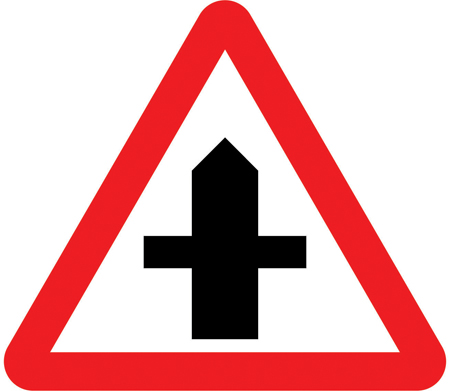 Crossroads | Four roads meet ahead | Warning triangle |
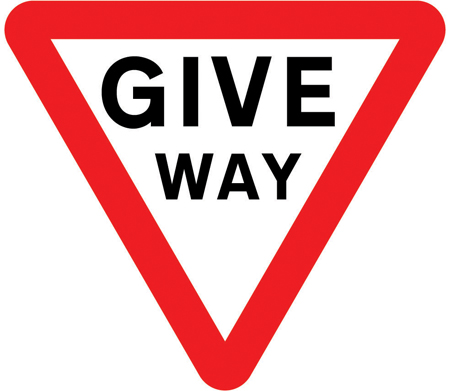 Give way | Regulatory yield order | Inverted triangle |
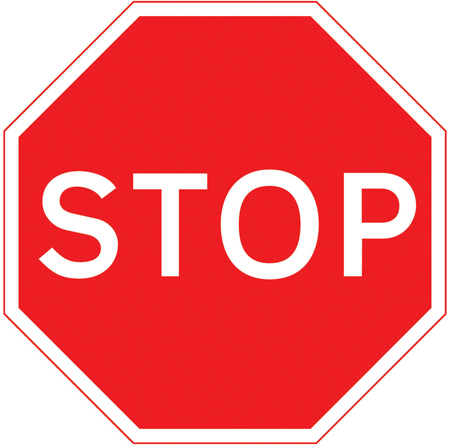 Stop | Mandatory halt at line | Octagon |
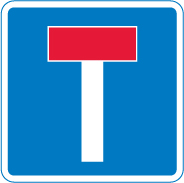 No through road | Dead end for through traffic | Information rectangle |
Rules and Penalties
Emerging from the stem without yielding causes side-impact collisions at the mouth. Injury reports often record failure to give way, and insurers commonly treat the entering driver as liable even when the other party was speeding.
Rolling a stop line where an octagonal stop plate faces the stem can support a careless driving report if other road users brake sharply. The warning triangle never replaces a mandatory halt.
Blocking the crossbar after a wide right turn from the stem obstructs following traffic and buses. Town-centre enforcement sometimes targets unnecessary obstruction when you stop across a yellow box or bus lane mouth.
Driving tests mark serious faults for ineffective observation at Ts, including peeping without a full stop when sight lines are blind. Examiners expect mirror-signal-position-speed-look with both directions checked at least once.
Assuming the wider road always has priority fails both theory questions and real cases where markings give the stem a surprise advantage after resurfacing. Read paint every visit.
Pedestrians who have stepped off the kerb at the corner retain priority. Zebra, puffin, or toucan crossings beside the junction still bind you after you merge, regardless of the upstream warning board.
Check the latest theory test pass mark and book when you are ready via our booking guide.
T-junction in Practice
Aisha drives the stem of a semi-rural T where a 50 mph dual-carriageway bar carries commuter flow. The red triangle appears after a bend; she selects third gear and covers the brake because the give-way line sits beyond a hedge gap.
A lorry in the near lane leaves a generous gap, but Aisha waits until the far lane is empty. Last month a colleague accepted the near gap only to meet a motorcycle overtaking at speed in lane two.
She stops fully behind the dashes, performs a right shoulder check for cyclists, then merges at a brisk walking pace with a right signal cancelled once her lane position is straight on the bar.
Returning home at dusk, she uses the triangle as a cue to dip headlights early. Paired headlamps on the stem once meant a car ready to emerge; a single lamp warned of a moped balancing at the crown.
On her practical test the examiner praised the full stop despite an empty-looking bar. Rolling forward would have scored a serious fault before the independent driving section on faster roads.
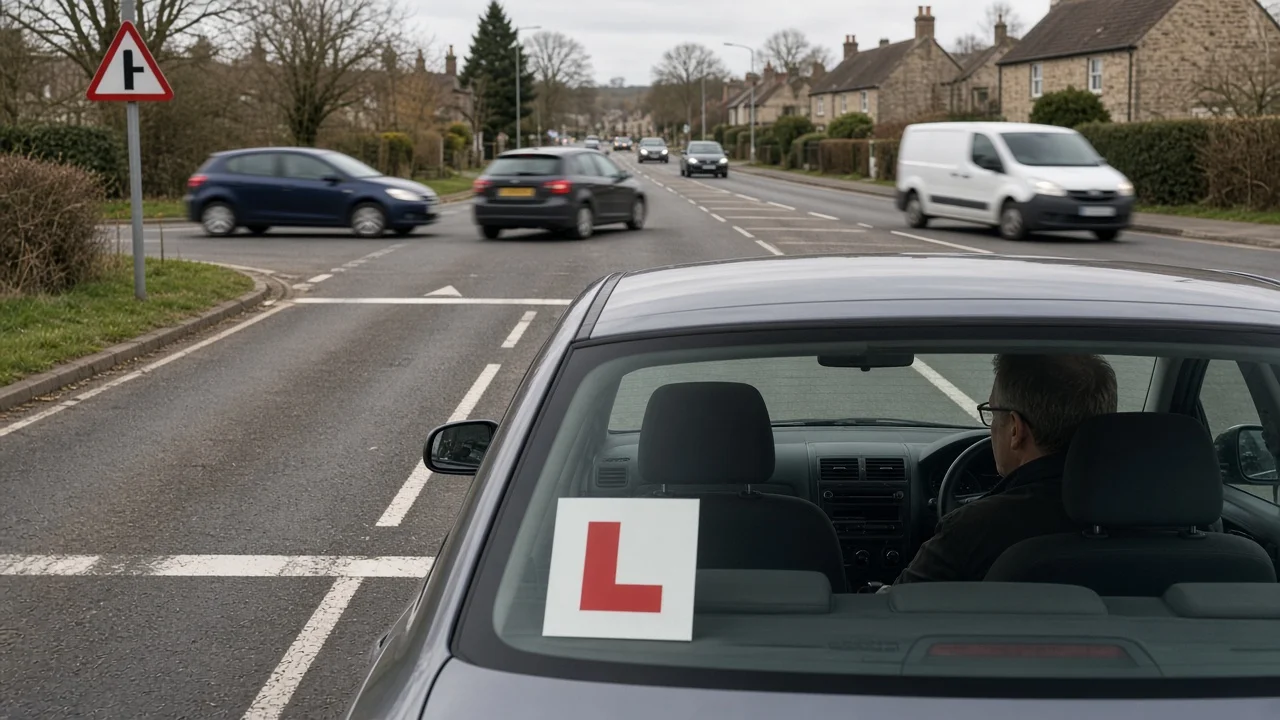
How This Sign Appears on the Theory Test
Picture questions show the T triangle beside short stories about priority. Link stem drivers to yielding unless wording mentions stop lines or signals on the through road instead.
Contrast the symbol with crossroads plus signs and with no-through-road rectangles that slash the stem. Examiners reward instant recognition of three-arm versus four-arm geometry.
Hazard perception clips may show a bonnet creeping from a minor arm. Click when the hazard develops, typically as the vehicle commits into your path, not when the distant warning board first flashes.
Multiple-choice traps describe “emerging onto a main road” without naming give way. That phrasing usually points to the stem driver, not someone already travelling on the bar.
Revision cards should label stem and bar on a sketch. Questions often ask which arm the warning most directly affects; answer the stem unless the scenario places you on the through road watching for emerges.
Rules about junctions in the Highway Code appear in several categories. Pair this warning with give-way and stop regulatory signs in your mock tests so you do not treat triangles as orders.
Take a free mock theory test and filter questions on road and traffic signs. Pair that with the warning signs guide for triangle symbols.
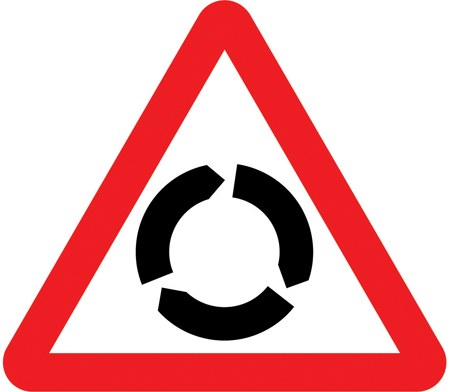
Test Yourself on UK Road Signs
Treat the t junction sign as early notice to switch on junction discipline: slow on the stem, observe both ways on the bar, and obey every regulatory plate that follows. Safe merges depend on geometry you saw in the triangle and priority you confirm at the line.
Frequently Asked Questions
What does the t junction sign warn you about?
It warns that a side road will end at a through route ahead. Slow down, read any give-way or stop controls, and be ready to yield if you are on the stem.
Who has priority at a T junction in the UK?
Usually traffic on the through road has priority and stem drivers must give way, unless signs, markings, or traffic lights say otherwise.
Is the t junction sign the same as a give way sign?
No. The red triangle only describes layout. Give way and stop signs are separate regulatory plates that tell you how to behave at the mouth.
Where is the t junction sign placed?
Typically on the minor road approach, or on both arms when visibility is limited. Distance plates may show how far the junction lies ahead.
How is it different from a no through road sign?
The warning T marks a live junction with a through route. The no through road plate shows a red bar across the stem for a dead end.