
Last updated: October 2026 · Checked against Highway Code
No Through Road: meaning, rules and what to do
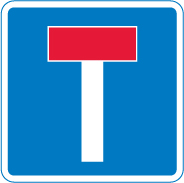
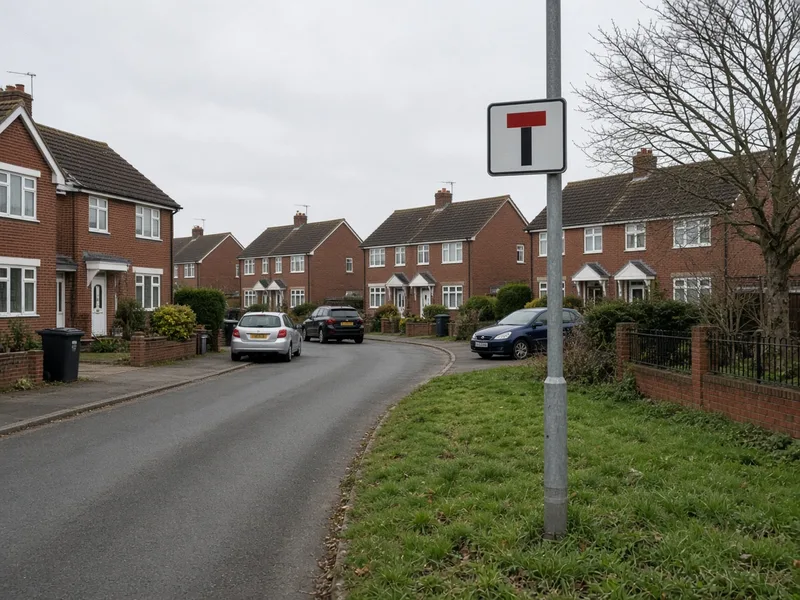
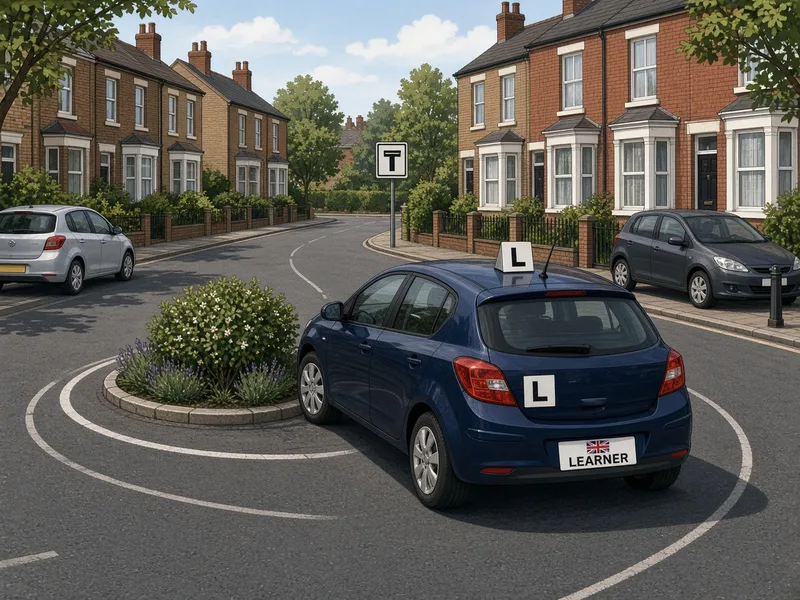
The white information rectangle with a black T and a red bar across the stem tells you the carriageway ahead is for local access only, so through traffic cannot continue to another street and you should plan your exit before you commit past the last easy turning space.
Sign image © Crown copyright, reproduced from GOV.UK traffic sign images under the Open Government Licence v3.0.
What the No through road Sign Looks Like
The standard UK plate is a horizontal white rectangle with a black T viewed from above and a red horizontal stripe across the top of the vertical stem, like a map where the route stops. Larger estate boards sometimes add the words “No through road” in black capitals beneath the symbol, though the pictogram alone is enough for theory recognition.
Colour coding follows information signs: white field, black symbol, no red circle border. That shape language separates the plate from regulatory prohibitions such as no entry, which use a red ring on white. At night, retroreflective sheeting on the red bar often catches headlights before the black stem becomes obvious.
Posts sit at the mouth of cul-de-sacs, mews lanes, business parks and industrial estates where planners want to stop rat-running while keeping deliveries and residents able to reach premises. Repeaters may face both directions on long dead-end spines so late joiners realise the geometry has not opened up ahead.
Learners confuse the barred T with the warning T-junction triangle, which shows a plain black T inside a red border without the red slash across the stem. Crossroads warnings use a plus. Staggered junction triangles offset the side arms. Read the slash: it means the stem is blocked for through motor traffic.
Blue information variants can show the same barred T with extra pictograms when cycles or pedestrians may continue where cars must turn. A brown tourist sign may sit nearby without changing the layout message. Temporary yellow boards during festivals sometimes repeat the symbol when one-way systems funnel traffic into a closed pocket.
No entry forbids entering the carriageway at all. The cul-de-sac plate allows entry but warns that the route ends for through drivers. Ring road direction panels describe long orbital routes, not local dead ends. Pair the barred T with mental images of wheelie bins, play streets and tight turning circles rather than fines for simply being present.
What the No Through Road Means
Highway authorities install the plate where the network deliberately stops: Victorian terraces that fold into a bulb, post-war estates with a single spine, or business parks where HGVs must not use a fragile service road as a cross-site link. It carries no time limit, no exemption list in the artwork itself, and no promise that sat-nav data matches ground truth.
Rule 144 in The Highway Code expects you to read information signs early enough to choose the correct arm at the previous junction. Committing past the mouth when you only wanted a cross-town shortcut wastes fuel, irritates residents, and can leave you reversing among parked school-run cars with limited sight lines.
Access rights remain for legitimate visitors: carers, trades, refuse crews, and examiners on test routes that deliberately include cul-de-sacs. The plate does not make the street private; it only states that the carriageway does not connect to another drivable outlet for through traffic.
Turning heads vary from generous painted bulbs to hammerhead lay-bys barely wider than one car. High kerbs, central planters, and shared-surface play areas shrink the space further. Articulated lorries may need to reverse the full length because the bulb cannot contain their sweep; reading the plate before entry saves a twenty-point shuffle among recycling boxes.
Some lanes end as footpaths, bridleways, or cycle cut-throughs while the barred T still faces motor traffic. A supplementary blue plate may show a bicycle continuing while cars must turn. Without reading those add-ons, drivers assume a missing fence means they can nudge through to the next street.
Gated communities sometimes place rising bollards or key fob barriers after the information board. The static plate does not authorise you to tailgate a resident; forcing a barrier can attract criminal damage or obstruction attention separate from any traffic-sign offence.
Rat-running during roadworks pushes impatient commuters into estates never designed for rush-hour volume. Neighbours may use planters, camera evidence, or civil parking enforcement when through drivers block turning heads. The plate is a courtesy warning as much as a navigation aid.
On the theory test, image items ask whether through traffic may continue; the barred T answers no unless the scenario names a separate exempt class or a different sign altogether. Practical examiners watch for unsafe reversing after drivers ignore obvious information at the corner.
Emergency services plan cul-de-sac geometry when choosing appliance size. If you block a turning head during a call-out, you may be moved on even though the plate itself imposed no stopping ban. Yellow-line waiting rules still apply independently of layout information.
Glance for the white rectangle before you turn off a main road. If your destination is not on that street, use the next side road instead of hoping the map will open up beyond the last parked van.
When visiting unfamiliar housing, note whether adjacent cul-de-sacs share a turning head. Stopping short of a full bulb during school pickup leaves room for residents to swing without boxing you in.
Sat-nav rerouting mid-journey may still send you into a dead end if live traffic data lags. When the plate appears, pull into a safe mouth or driveway entrance to replan rather than driving to the physical end and reversing the entire spine under pressure.
Delivery drivers should walk the last metres with trolleys when the bulb is full of parked cars. Idling across a turning circle blocks refuse trucks that have no alternative exit.
Motorcyclists filtering between queues must not assume a side street offers an escape route. The barred T at the corner means your filter lane may dead-end thirty metres later.
Towing outfits need extra margin: the trailer cuts the corner on a tight bulb and can mount a kerb while the car still looks centred. Unhitch only where safe and legal; do not block the only turning space.
Winter ice on shaded cul-de-sacs makes reversing harder than driving in. If the plate warned you at the mouth, consider whether you should park on the main road and walk, especially when frost lingers on estate gradients.
Cyclists may legally share the carriageway into the dead end even when you must turn. Leave passing room when they continue to a cut-through you cannot follow by car.
Before you turn into an unfamiliar side street, glance for the white rectangle at the corner. If you are already past it, use the next side road to loop back rather than hoping the map will open up ahead.
When delivering in dense housing, note which cul-de-sacs share a turning head. Reversing is easier if you stop before the bulb fills with parked cars at school pickup time.
Highway Code rules 142, 144 and 160 (junction choice and information signs)
No through road vs Similar Signs
| Sign | Meaning | Legal or warning? |
|---|---|---|
| No through road | Dead end for through motor traffic | Information rectangle |
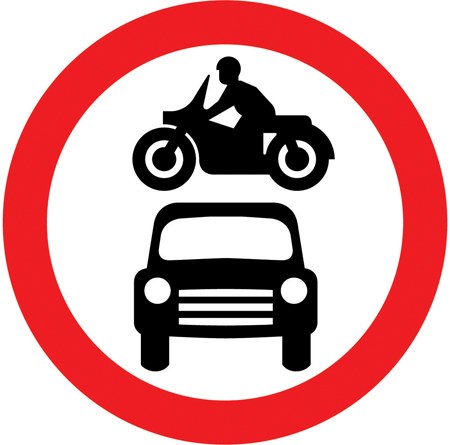 No entry | Do not enter this carriageway | Regulatory red circle |
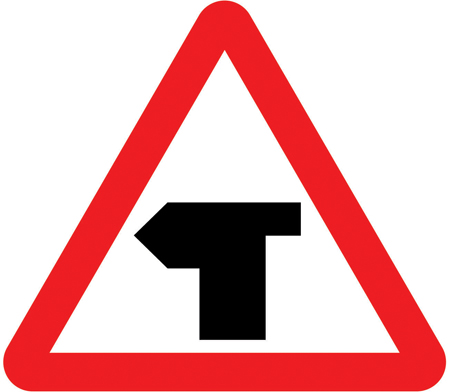 T junction | Live junction with through routes | Warning triangle |
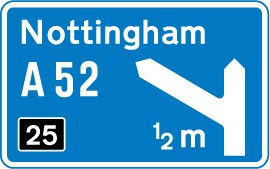 Ring road | Orbital through route | Direction panel |
| Dead end (word plate) | Similar layout message in words | Information |
Rules and Penalties
The information plate does not create a specific fixed penalty for driving the length to reach a lawful destination. Risk rises when you reverse dangerously, mount pavements, or block driveways while attempting a multi-point turn after ignoring the layout.
Waiting and loading restrictions on yellow lines or timed bays apply regardless of cul-de-sac status. Parking across a turning head during collection days can still yield a civil penalty notice from local enforcement teams.
Forcing past rising bollards, driving over a pedestrian-only section beyond the carriageway end, or using resident-only gaps without permission can attract obstruction, criminal damage, or trespass enquiries beyond routine traffic law.
Theory papers test recognition and safe response, not fine schedules. Practical tests record serious faults for uncontrolled reversing after clear information plates at the entrance.
Habitual rat-running that endangers children in play streets may be referred to community police teams even when no single sign breach is cited. Treat the plate as a signal to choose another route during peak congestion.
Check the latest theory test pass mark and book when you are ready via our booking guide.
No through road in Practice
Marcus follows a traffic app through suburban streets to dodge motorway roadworks. At a corner he spots the barred T on white and realises the next two parallel streets also fold into the same estate with no outlet to the industrial park he needs.
He indicates left, uses a marked bay before the mouth narrows, and waits for oncoming traffic to clear before reversing back to the distributor road. A repeat plate halfway down the first street confirms he was right not to commit.
A courier van behind him initially follows, then stops when the driver reads the same symbol. Had Marcus pressed on, he would have faced a tight hammerhead full of wheelie bins and a line of parents collecting children from a pocket park.
That evening he revises road-sign categories and pairs the barred T with give-way triangles at real junctions. In a hazard perception clip he scores by easing off when brake lights bunch before a side street whose mouth already showed the red bar across the stem.
On test day his examiner routes through a mews with the plate at the entrance. Marcus names the hazard aloud, confirms his destination is on that street, and proceeds at walking pace ready to use the bulb without mounting a raised planter.
How This Sign Appears on the Theory Test
Picture questions show the white rectangle among other information boards. Select the answer that means cul-de-sac or dead end for through traffic, not a ban on entering for access.
Contrast the barred T with red-circle no entry and with plain T-junction triangles. Examiners swap similar shapes to see whether you read the red slash across the stem.
Scenario stems may mention deliveries to a house along the length. Through traffic must turn back; access traffic may continue unless another sign forbids your vehicle class.
Hazard perception training links late commitment into estates with clusters of brake lights and pedestrians between parked cars. Click when the developing hazard appears, not when a distant plate first flashes.
Multiple-choice distractors sometimes describe “no access for any vehicle”. That wording usually points to stronger prohibitions than a layout plate. Trust the symbol and any accompanying regulatory circles.
Revision cards should sketch a map with a stem ending in a bar. Questions asking which sign permits reaching number forty-two but not reaching the next town expect the barred T answer.
Take a free mock theory test and filter questions on road and traffic signs. Pair that with the warning signs guide for triangle symbols.
Related Road Signs
T-junction warning
Live junction where the stem meets a through route.
T junction (regulatory context)
Triangle warning often paired with give-way order at the mouth.
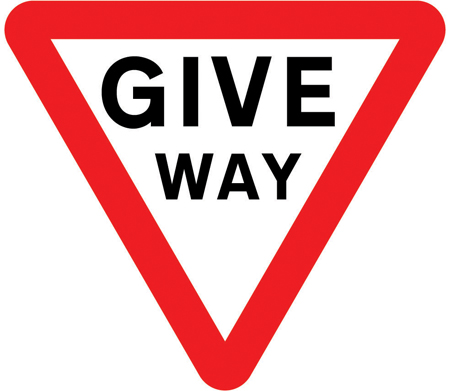
Give way sign
Priority at open junctions, unlike a closed layout.
No motor vehicles
Vehicle class ban rather than a dead-end description.
Ring road sign
Long orbital through routes instead of local bulbs.
Test Yourself on UK Road Signs
Treat the barred T as an early navigation cue: enter only when your destination lies along that spine, and decide how you will turn around before the turning head fills with parked cars. Recognising cul-de-sac plates keeps theory papers straightforward and saves neighbourly friction on the road. A free mock theory test helps you separate layout information from entry bans under time pressure.
Frequently Asked Questions
May I drive into a street marked with the barred T?
Yes, when you need to reach premises along it. The plate only warns that you cannot continue through to another drivable exit for through traffic.
How is the cul-de-sac plate different from no entry?
No entry forbids entering the carriageway. The white rectangle allows entry but tells through drivers that the route ends.
Will navigation apps avoid these streets?
Many modern maps do, but always read signs at the mouth in case data is outdated or a one-way system has changed.
Is reversing back out allowed?
Yes, when done with care and without causing danger. Watch for children, cyclists, and concealed driveways behind you.
Does this plate appear on the theory test?
Yes, usually as image recognition about dead ends and cul-de-sacs rather than absolute entry bans.