
Last updated: October 2026 · Checked against Highway Code
Bend Right Sign: meaning, rules and what to do
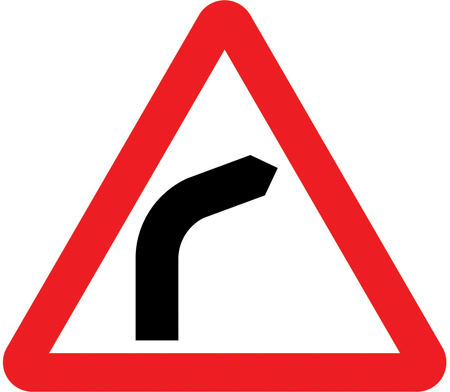
A black arrow curving to the right on a red-bordered triangle warns that the road bends right ahead, so you should slow before the curve rather than braking mid-corner.
Sign image © Crown copyright, reproduced from GOV.UK traffic sign images under the Open Government Licence v3.0.
What the Bend right Sign Looks Like
The plate is an upward-pointing equilateral triangle with a thick red border and white centre. The symbol is a single black arrow whose shaft runs up the middle and whose head turns to the right, matching the direction of the bend on the road plan. It follows the same warning family as other hazard triangles: red rim, white field, black pictogram.
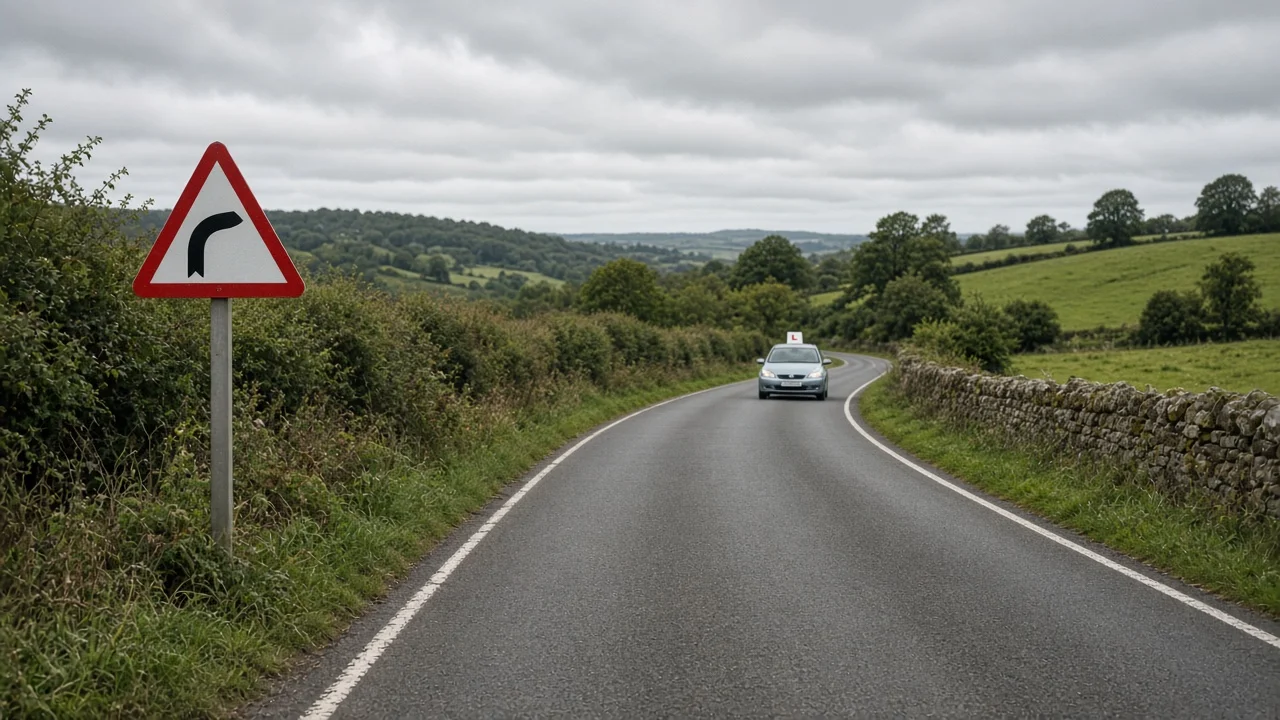
You will usually see it on a post at the roadside before the curve opens out, often paired with a distance plate showing yards to the hazard. On fast A-roads it may repeat after a side junction if drivers join mid-approach. At night the retroreflective face catches headlights long before you can read the white edge line.
Do not confuse it with the blue circular mandatory direction sign, which orders a turn rather than warning of geometry. Chevrons painted on the road surface are separate aids; the triangle is the advance notice. A left-hand version mirrors the arrow; a double-bend plate shows two kinks in one symbol.
Learners sometimes expect a speed roundel beneath the triangle. Most bend warnings stand alone. If a limit applies, a separate regulatory sign will appear, and the national speed limit may already govern the stretch unless a repeater or village gateway says otherwise.
The left-hand triangle mirrors the arrow. Double-bend signs show two curves in sequence. Chevron boards on the bend itself help at night but do not replace this advance warning. A triangular “side winds” plate describes crosswinds, not cornering geometry.
What the Bend Right Sign Means
The plate appears where the horizontal alignment still surprises drivers who have been cruising on a straight. It does not create a new offence by itself; instead it triggers the general duty in The Highway Code to drive at a speed that lets you stop within the distance you can see to be clear.
Rule 125 reminds you that speed limits are maximums, not targets. On a damp rural bend, the safe speed may sit well below the posted or national limit. The warning gives you time to shed speed before tyre grip is tested, rather than when you are already leaning into the curve.
Right-hand bends on UK roads often hide oncoming vehicles behind hedges, stone walls, or earth banks. The sign is your cue to move your vision up the road centre line and to delay acceleration until the exit straightens. Overtaking on the approach is rarely wise because you cannot see far enough around the arc.
Gradient changes the story. A bend that climbs can leave you underpowered if you arrive too fast in a high gear; select a lower ratio early so you can steer without fighting the engine. A downhill right-hander can push the car wide if you brake late; use the warning board to lift off the throttle before the camber drops away.
Single-track lanes may narrow inside the bend where the bank encroaches. Passing places sit before or after many Scottish and Welsh bends, not on the apex. When you meet another vehicle, whoever reaches the bay first should wait rather than forcing a stand-off on blind rubber.
Winter brings mud from farm tracks, wet leaves, and frost in shaded corners. Summer adds dust that hides potholes until the last second. The triangle does not list these hazards; it simply buys you a few seconds to scan the surface and to cover the brake.
Temporary layouts during resurfacing can shift the curve line. Cones may guide you wider than the old habit path. Treat every visit as fresh: read any “new road layout” plates and follow the fresh white lines even when the permanent post still shows the standard arrow.
Read the arrow as direction of travel, not which way to steer your wheel at the post. You still steer right through the bend; the sign simply tells you the road ahead curves that way.
In rain, double your following distance before the triangle. Spray from a van ahead can hide a cyclist hugging the left verge until you are mid-arc.
Motorcyclists often use the full lane for sight lines. Give them room rather than squeezing past on the inside as the road opens.
Horse riders may prefer the outer track on a right bend so they can see oncoming traffic. Slow early and pass wide once the animal is calm and the rider signals it is safe.
Sat navs sometimes call for speed on minor roads because the database missed the bend. When the red triangle appears, trust the plate over the spoken ETA.
After dark, dip headlights before the curve so you do not dazzle anyone coming the other way. Use the reflective posts and chevrons to judge how tight the radius feels.
Electric cars are heavy; momentum carries into the bend if you lift off too late. Regenerative braking can help on the approach, but a smooth pedal release beats a sudden stab that unsettles the tyres.
Highway Code rules 125, 146 and 153 (speed, bends and country roads)
Bend right vs Similar Signs
| Sign | Meaning | Legal or warning? |
|---|---|---|
| Bend to the right | Single right-hand curve ahead | Warning triangle |
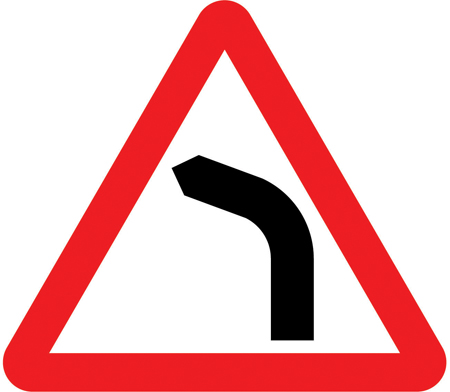 Bend to the left | Single left-hand curve ahead | Warning triangle |
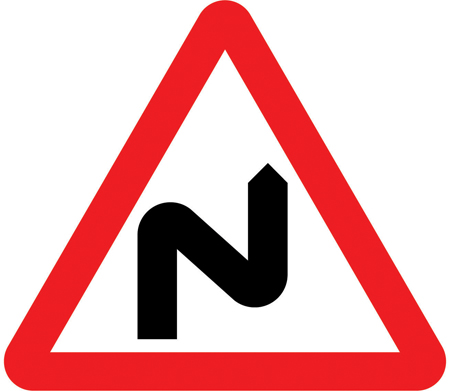 Double bend, first right | Two bends, right then left or sharper sequence | Warning triangle |
| Chevron board | Edge of curve on the carriageway | Road marking or plate |
Rules and Penalties
There is no fixed penalty for “ignoring” a warning triangle because it is not a regulatory order. Enforcement instead targets careless or dangerous driving when speed, lane position, or overtaking causes a crash or forces others to swerve.
Losing control on a bend after excessive speed can lead to careless driving charges, especially if injury or serious damage follows. Insurance assessments often treat the driver who left the lane as at fault even when the road felt familiar.
Crossing a solid white centre line to overtake on the approach to a blind right-hander is a separate endorsable offence when police observe it. The warning sign strengthens the argument that the manoeuvre was unsafe.
Driving tests mark serious faults for approaching bends too fast, cutting the corner into oncoming space, or coasting in neutral. Examiners want controlled braking before the curve and steady steering through it without clipping the kerb or verge.
HGV and coach drivers face tachograph scrutiny after incidents on rural bends. Fleet policies may treat repeated harsh braking at the same signed curve as a training issue even when no ticket was issued.
Check the latest theory test pass mark and book when you are ready via our booking guide.
Bend right in Practice
Priya drives a B-road home from work where a new warning triangle appeared after a crash. She used to carry 50 mph on the straight; now she lifts off when the red border flashes in her headlights.
At the curve she drops to roughly 35 mph, checks the centre line for a hidden van, and tracks the left side of her lane through the arc. A cyclist appears on the exit straight; her earlier braking leaves room to pass without swerving back into the bend.
On her driving test the examiner routes her down the same road in daylight. Priya names the sign aloud as a right-hand bend warning, brakes before the turn-in point, and keeps both hands on the wheel through the curve. The examiner notes that she did not drift wide toward the oncoming lane.
The following winter, leaves clog a drain at the apex. Because she already slowed at the triangle, she feels the slight slide and eases off rather than snapping the wheel. A following car also has time to brake when she lifts off early.
Her instructor later asks why the plate matters when the bend is visible. Priya explains that the sign marks a recorded hazard where locals still misjudged speed; it reminds her to treat the corner as new every time, not as background scenery.
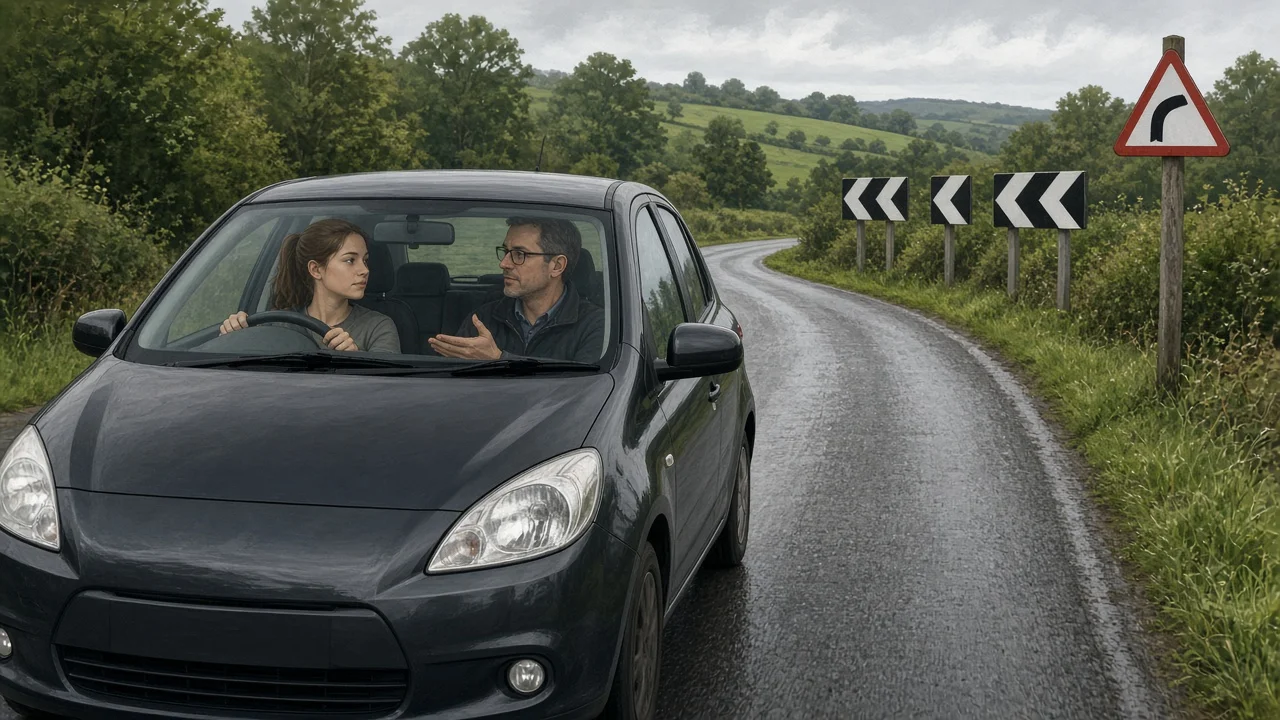
How This Sign Appears on the Theory Test
Picture items show the right-curving arrow and ask what hazard to expect. Choose a right-hand bend ahead, not a mandatory turn or a side road.
Some questions pair the triangle with a speed scenario. Remember the sign advises caution; only a separate roundel sets a numeric limit.
Differentiate from double-bend symbols, which show two kinks. If the stem bends twice, pick the double-bend answer even when the first curve is to the right.
Hazard perception clips may feature rural corners without zooming on the post. Training yourself to slow when tree lines pinch helps you score even when the plate is off-screen.
When revising, sketch the arrow direction on paper and label left versus right versions. Examiners assume you can mirror the symbol instantly under time pressure.
Take a free mock theory test and filter questions on road and traffic signs. Pair that with the warning signs guide for triangle symbols.
Related Road Signs
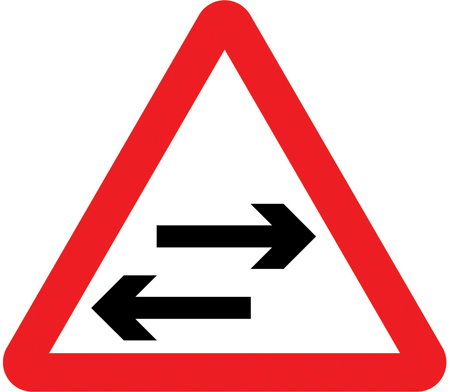
Two-way traffic
Oncoming flow on narrow bends after one-way sections.
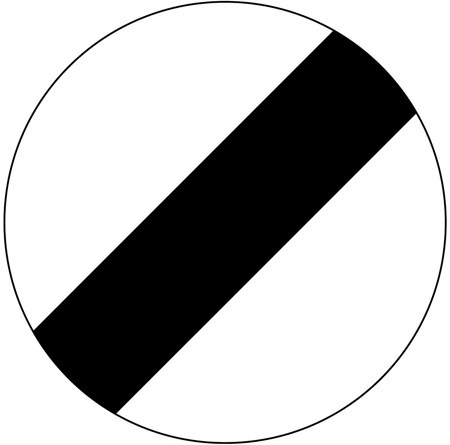
National speed limit
Default limit on many rural approaches to bends.
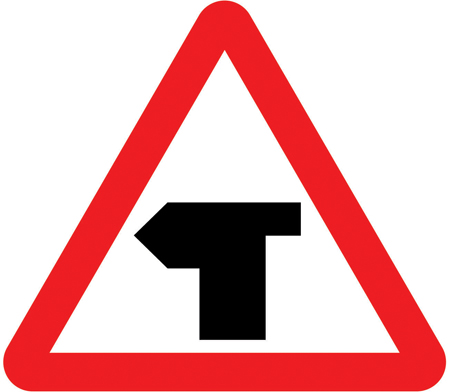
T junction sign
Junction geometry sometimes follows a sharp curve.
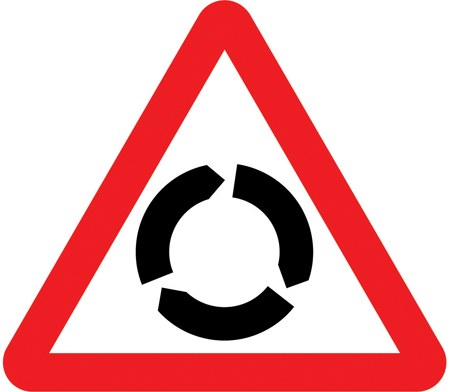
Roundabout sign
Circulating junction warned with a different triangle.
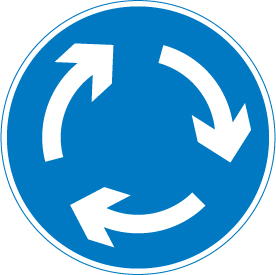
Mini roundabout sign
Tight turning islands on residential bends.
Test Yourself on UK Road Signs
Treat the bend right sign as early notice to shed speed, hold a steady line, and scan for anything hidden around the arc. Smooth approaches keep you inside Highway Code expectations and give examiners one fewer reason to mark a serious fault.
Frequently Asked Questions
Does the bend right sign set a speed limit?
No. It warns of layout. You must still obey any limit signs and drive below the maximum when conditions demand.
How is it different from the left bend triangle?
Only the arrow direction changes. The left version mirrors the curve for the opposite alignment.
Should I brake when I see the sign?
Ease off early and brake before the curve if needed. Sudden braking on the apex can unsettle the car.
Can I overtake before a right-hand bend?
Only if the road is clear, legal, and you can see far enough around the bend. Most blind curves make overtaking unsafe.
Will this appear on my theory test?
Yes. Warning triangles are core knowledge. Expect image questions naming the hazard or choosing the correct response.