
Last updated: October 2026 · Checked against Highway Code
Uneven Road Sign: meaning, rules and what to do
The uneven road warning is a red-bordered triangle with a black pictogram of a car riding over a rippled surface, telling you the carriageway ahead may be rough, ridged or poorly repaired so you should ease off speed and keep a firm grip before the wheels hit the bumps.
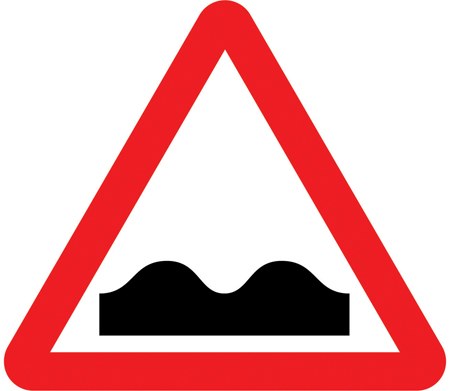
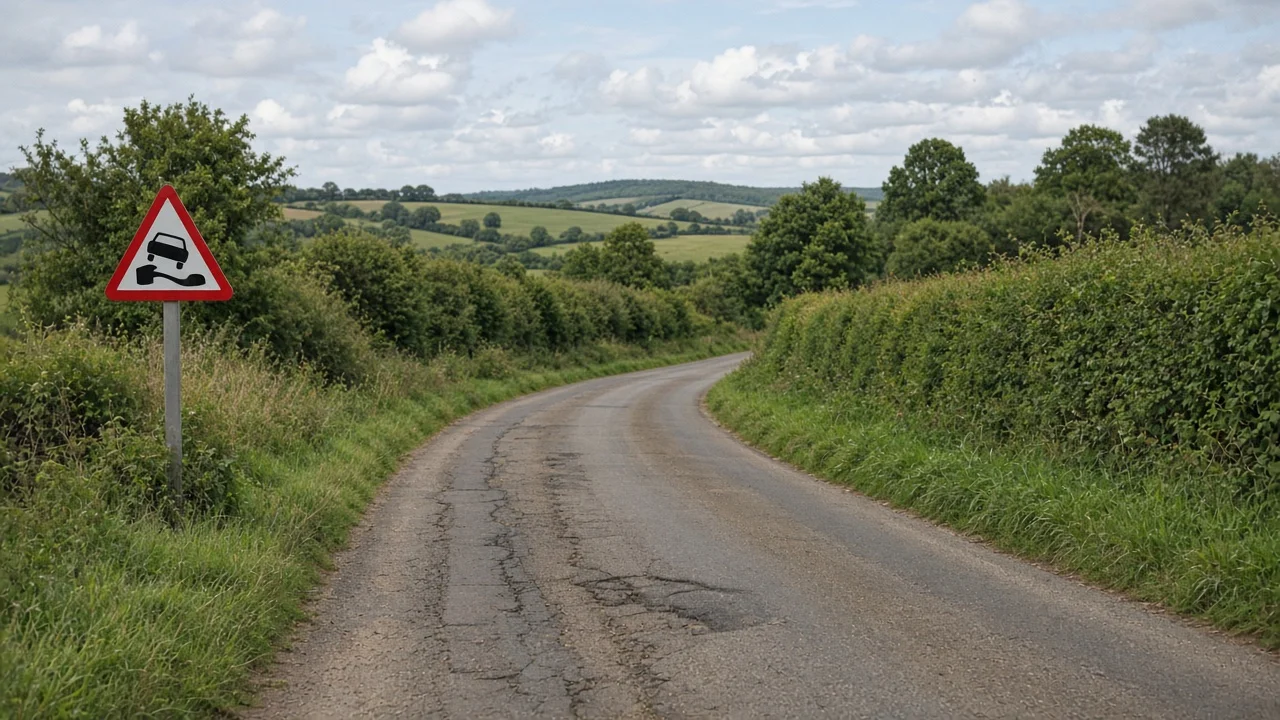
Sign image © Crown copyright, reproduced from GOV.UK traffic sign images under the Open Government Licence v3.0.
What the Uneven road Sign Looks Like
The official UK uneven road plate follows standard warning grammar: upright red triangle, white centre, black symbol. The pictogram shows a side-view car above a wavy baseline, suggesting ridges, subsidence or repeated patch repairs rather than a single sharp hump. There are no numbers, blue circles or prohibition bars inside the frame.
Posts usually stand on the nearside verge before the rough section begins, sometimes with a distance plate in yards or metres beneath. On rural B roads you may see the triangle repeated after a farm entrance so traffic joining from a field still gets the same heads-up. Retroreflective sheeting keeps the red border readable in rain long before your headlights pick out pothole shadows.
Learners often confuse it with the hump bridge triangle, which shows a sharp arch under the car, or with the ordinary road hump sign used where a deliberate speed cushion crosses the lane. Slippery road uses a skidding car; soft verges shows wheels sinking at the edge. The uneven road graphic is the one with a continuous wavy line under all four wheels.
Temporary traffic management may hide the post behind cones during resurfacing, yet engineers often leave the permanent triangle in place when only part of the lane is finished. If a diversion returns you to the same parish road, any repeated warning still counts. Cat’s eyes and white edge lines may vanish where the surface was planed; the triangle is your cue that the tarmac itself is the hazard.
Hump bridge warnings flag a single sharp crest that can scrape low cars. Slippery road covers grip loss from rain, mud or spills. Soft verges warn about weak edges, not the centre line. When chevrons or road works boards appear as well, read them together: the triangle explains why your suspension may work harder even if the legal limit sign has not changed.
What the Uneven Road Sign Means
Highway authorities place the warning where the carriageway profile changes enough to surprise drivers who have been cruising on smooth tarmac. Typical sites include old concrete slabs that have settled at joints, tree-root heave, repeated utility trenches, frost-damaged edges, and long stretches of temporary patchwork after winter gritting damage. The plate does not create a new offence by itself; it supports the general duty in The Highway Code to drive at a speed that lets you stop within the distance you can see to be clear.
Rule 125 reminds you that speed limits are maximums, not targets. On a rough lane the safe speed may sit well below the posted or national limit because vertical movement steals attention from steering and because tyres may skip across sharp edges. The warning buys time to lift off the throttle before the first ridge, rather than when the bonnet already dips.
Suspension travel is the hidden lesson. A pothole at thirty miles per hour can compress springs hard enough to bottom out, risking tyre pinching, alloy rim damage, or a tracking knock that pulls the car sideways. Slower speeds let dampers absorb each defect in sequence instead of stacking impacts that unsettle the chassis.
Following distance matters for visibility as well as braking. Dust, spray from loose chippings, and sudden swerves by oncoming traffic all rise on damaged surfaces. The triangle is the moment to open a gap so you can read the nearside camber and choose a line that avoids the deepest holes without drifting toward walkers on a missing footway.
Motorcyclists and cyclists suffer most because they cannot filter shock through a seat. A ridge that feels mild in a saloon can lift a front wheel or break traction on a powered two-wheeler. Giving vulnerable road users room is part of treating the warning seriously rather than treating it as countryside decoration.
Long-wheelbase vehicles and low sports cars need extra caution. Ground clearance and overhang mean the middle of the car may strike a hump that the tyres cleared. Caravans and trailers add pitch at the hitch; a sharp ridge can activate breakaway stabilisers or throw kitchenware forward even when no crash occurs.
After heavy rain, water hides depth. A shallow-looking ripple may be a flooded pothole. The sign does not promise dry conditions; it tells you to scan the surface texture and to cover the brake without panic when reflections make edges hard to judge.
Electric cars are heavy on their tyres. Momentum carries quietly across ripples that would have slowed a smaller petrol hatchback. Regeneration and one-pedal driving can mask how fast you are travelling until the first jolt through the seat; use the triangle as a prompt to check speed even when the cabin feels calm.
Night driving turns shallow defects into sudden impacts. Dipped headlights show texture late; the red edge of the triangle is often the first reliable clue on an unfamiliar parish route. Keep thumbs outside the steering wheel rim so a kickback does not wrench your wrists.
Sat navs optimise for distance, not ride quality. A “faster” shortcut through a signed uneven stretch may cost tyres and alignment. When the pictogram appears, trust local maintenance patterns over an optimistic arrival time.
Read the wavy line under the car as a surface warning, not a ban on larger vehicles. HGVs may still use the road but will crawl in low gears; do not close up on a trailer that is weaving to miss holes.
Before the rough band, glance at mirrors and ease off the throttle while the tarmac still feels normal. Changing down on a manual car adds engine braking on gentle downgrades toward farm valleys where subsidence is common.
Hold the steering wheel at nine and three so a sudden kick does not pull you toward oncoming traffic. Looser grips invite overcorrection when the nearside wheel drops into a trench.
In convoys, leave space for dust to settle. Overtaking on a blind ripple is rarely wise; patience keeps you out of head-on risk when the opposing driver swerves at the same defect.
After chipping repairs, loose stones can ping paintwork and windscreens. The uneven road plate sometimes appears beside fresh surface dressing; slow passes protect bodywork and help you spot cyclists on the nearside.
If you tow, check hitch height and nose weight before a signed lane. Pitch at the coupling can unload the tow car’s rear tyres exactly when you need grip to steer around a ridge.
Report dangerous potholes to the relevant highway authority with location detail. The triangle marks a recorded hazard zone; your report adds evidence when budgets decide which road gets a full rebuild.
Winter frost heaves can grow between inspections. A plate that seemed optimistic in August may feel accurate in March when joints open and edges lift.
Highway Code rules 122 to 125 and 146 (control, speed, and road surfaces)
Uneven road vs Similar Signs
| Sign | Meaning | Legal or warning? |
|---|---|---|
| Uneven road | Carriageway surface may be rough or ridged ahead | Warning triangle |
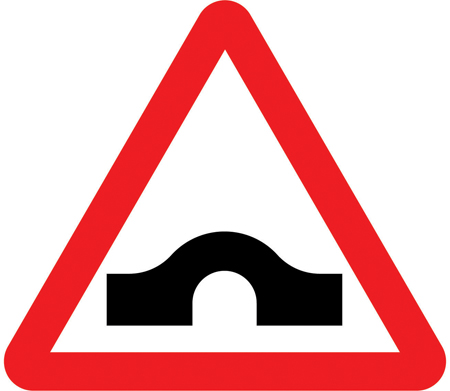 Hump bridge | Sharp crest on a bridge may reduce ground clearance | Warning triangle |
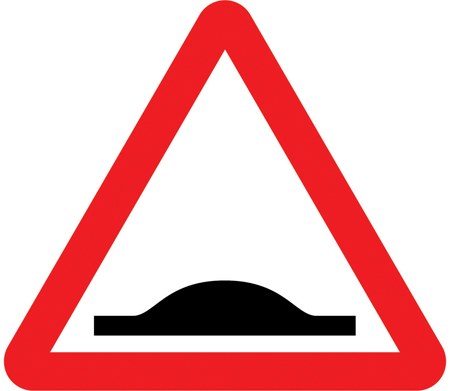 Road hump | Deliberate speed cushion across the lane | Warning triangle |
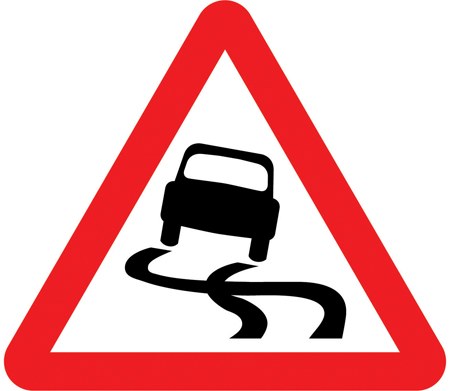 Slippery road | Grip may be poor from contamination or weather | Warning triangle |
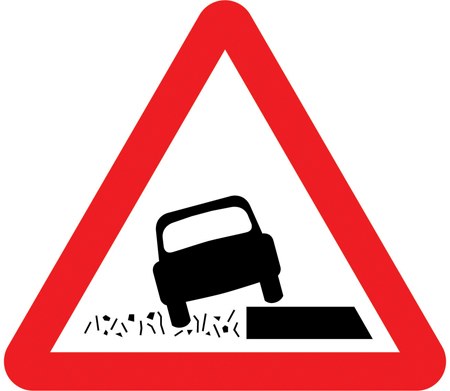 Soft verges | Verge edges may be weak; keep wheels on the carriageway | Warning triangle |
Rules and Penalties
There is no fixed penalty for passing a warning triangle because it is not a regulatory order. Enforcement instead targets careless or dangerous driving when speed, following distance, or loss of control contributes to a crash on a known rough stretch.
Losing control after striking a pothole at an inappropriate speed can lead to careless driving attention if you swerve into oncoming traffic or mount a verge. Insurers may treat the driver who could not maintain a safe line as at fault even when the council also bears maintenance responsibility.
Vehicle damage alone rarely creates a motoring offence, yet driving with a known unsafe defect such as a blown tyre after repeated impacts can attract construction and use attention at a later stop. The warning does not excuse skipping a post-journey check when the ride felt violent.
Driving tests mark serious faults for approaching signed rough roads too quickly, letting the wheel spin in your hands, or overtaking where oncoming traffic leaves no escape if you hit a ridge. Examiners want gentle speed reduction before the surface changes and steady steering without panic corrections.
Blocking a narrow lane while you inspect suspension damage can obstruct other road users; move to a safe lay-by when possible rather than stopping in the crown where tractors already struggle for width.
Check the latest theory test pass mark and book when you are ready via our booking guide.
Uneven road in Practice
Marcus drives a small estate car along a Worcestershire lane he uses monthly to visit family. An uneven road triangle appears with a plate reading four hundred yards. He cancels adaptive cruise, checks mirrors for a van close behind, and lets speed fall toward twenty-five miles per hour while the surface still looks smooth.
The first concrete joint clunks under his wheels; then a patch strip wanders across the crown. Marcus keeps both hands on the wheel, avoids the deepest puddle on the nearside, and holds back from overtaking a tractor that is picking a careful line.
A motorcyclist approaches from ahead, standing on the pegs over the worst ripple. Marcus eases further left only where the verge is firm, giving width without throwing gravel. The van behind drops back once brake lights show he is not accelerating away.
On his driving test later that season, the examiner routes him on a different county road where the same pictogram stands before a utility trench sequence. Marcus names the sign aloud as a rough surface warning, slows before the first ridge, and does not flirt with the national limit when the ride turns harsh. The examiner notes steady steering rather than a late stamp on the brake.
After the journey he checks tyre sidewalls in the driveway because two impacts felt sharp. No bulges appear, but he logs the location on the council website anyway. His instructor asks how the plate differs from a hump bridge sign; Marcus explains that the wavy baseline means repeated unevenness along the lane, not a single sharp crest on a deck.
The following month a partial resurfacing leaves a smooth band between old slabs. Marcus still eases off at the triangle because the transition lip at each end can catch low bumpers until the job is finished.
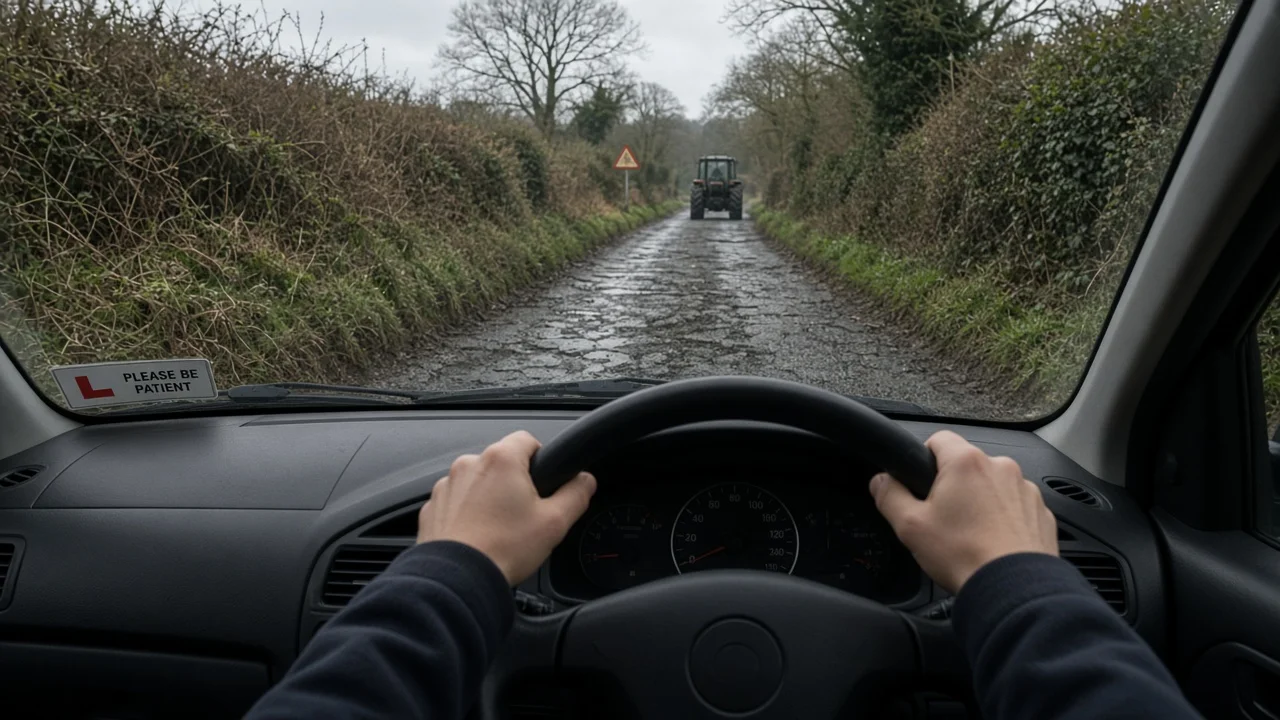
How This Sign Appears on the Theory Test
Picture items show the car above a wavy line and ask what hazard to expect. Choose uneven road or rough surface ahead, not hump bridge, slippery road alone, or soft verges unless the pictogram matches.
Some questions pair the triangle with a speed scenario. Remember the official pattern: slow down, keep control, and be prepared for the surface to affect steering and comfort.
Distractors may show a single arch under the car for hump bridge artwork. Compare symbols carefully: continuous ripples mean uneven carriageway; one sharp hump means bridge or deliberate cushion.
Hazard perception clips sometimes feature rural lanes without zooming on the post. Training yourself to ease off when the ride quality changes helps you score even when the plate is off-screen.
When revising warning triangles, sketch the car and wavy baseline inside a frame and label uneven surface versus skidding car for slippery road. Examiners expect instant recognition without confusing surface types.
Take a free mock theory test and filter questions on road and traffic signs. Pair that with the warning signs guide for triangle symbols.
Related Road Signs
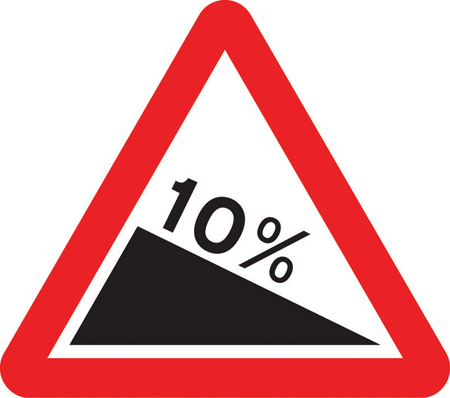
Steep hill down sign
Descents where gravity and rough patches combine on rural lanes.
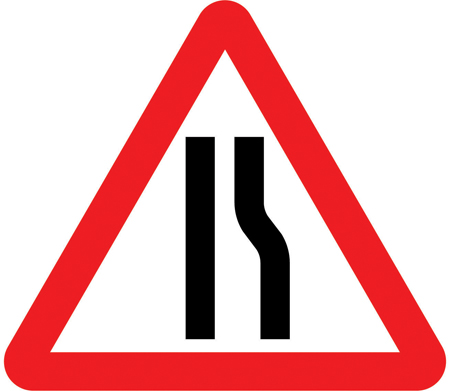
Road narrows
Width pinch points where swerving to miss holes meets oncoming traffic.
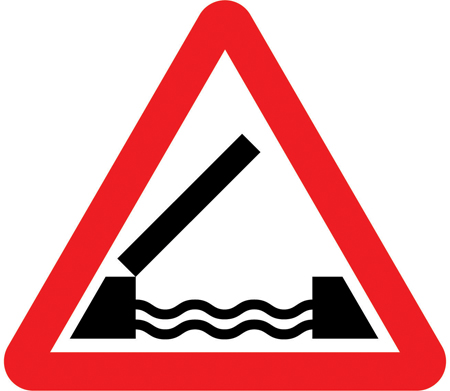
Opening bridge sign
Approaches where expansion joints and deck plates feel rough even when the span is closed.
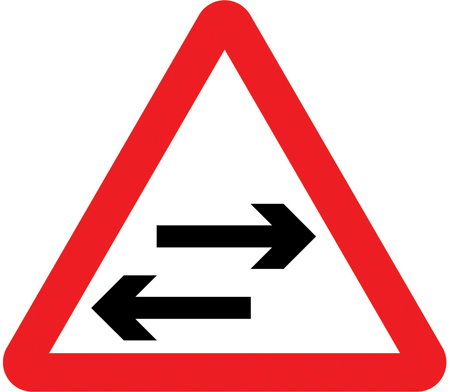
Two-way traffic
Narrow lanes where opposing drivers may wander toward the crown.
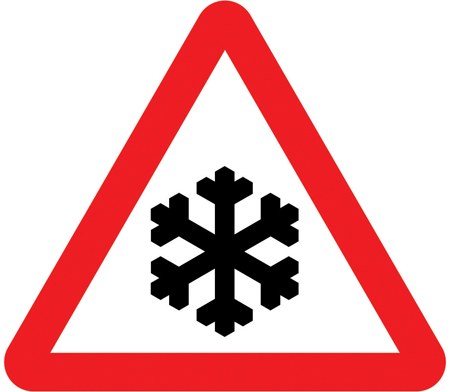
Risk of ice sign
Frost heave and hidden ice in potholes after cold nights.
Test Yourself on UK Road Signs
Let the uneven road warning start your routine early: slow before the ripples, hold the wheel firmly, and leave space for bikes and tractors that cannot absorb shocks the way your car might. Calm speed on damaged tarmac keeps you inside Highway Code expectations and gives examiners fewer reasons to mark a serious fault on rural test routes. A free mock theory test helps you practise warning triangles before the exam swaps artwork.
Frequently Asked Questions
What should I do when I see the uneven road warning?
Ease off speed before the surface changes, keep both hands on the wheel, and increase following distance. The triangle warns that the carriageway may be rough; it does not set a numeric limit.
How is it different from the hump bridge sign?
Hump bridge shows a sharp arch under the car for a bridge crest. Uneven road shows a wavy line under the wheels for repeated bumps or poor repairs along the lane.
Does the warning mean the road is closed?
No. It is advisory. Traffic may still use the route, but you should drive at a speed that keeps control on ridges, potholes and patchwork surfaces.
Can I claim for tyre damage if a pothole was signed?
The triangle shows authorities knew the surface was hazardous, but claims depend on council procedures, evidence, and whether the defect met formal reporting thresholds. Slow driving still reduces risk and repair bills.
Will this appear on my theory test?
Yes. Warning triangles are core knowledge. Expect image questions linking the wavy-line pictogram to a rough carriageway ahead and appropriate speed.