
Last updated: October 2026 · Checked against Highway Code
Opening Bridge Sign: meaning, rules and what to do
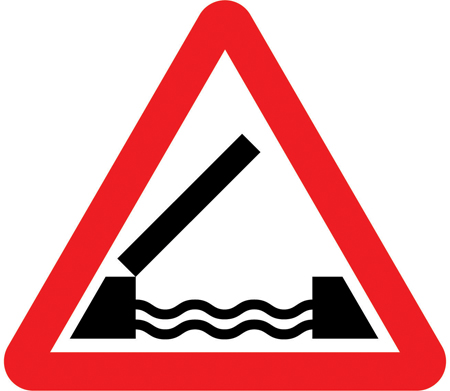
The opening bridge sign is a red-bordered triangle with a black pictogram of a lifting road deck, telling you a movable span ahead may open for shipping so you should slow, watch for traffic lights, and be ready to stop before the stop line.
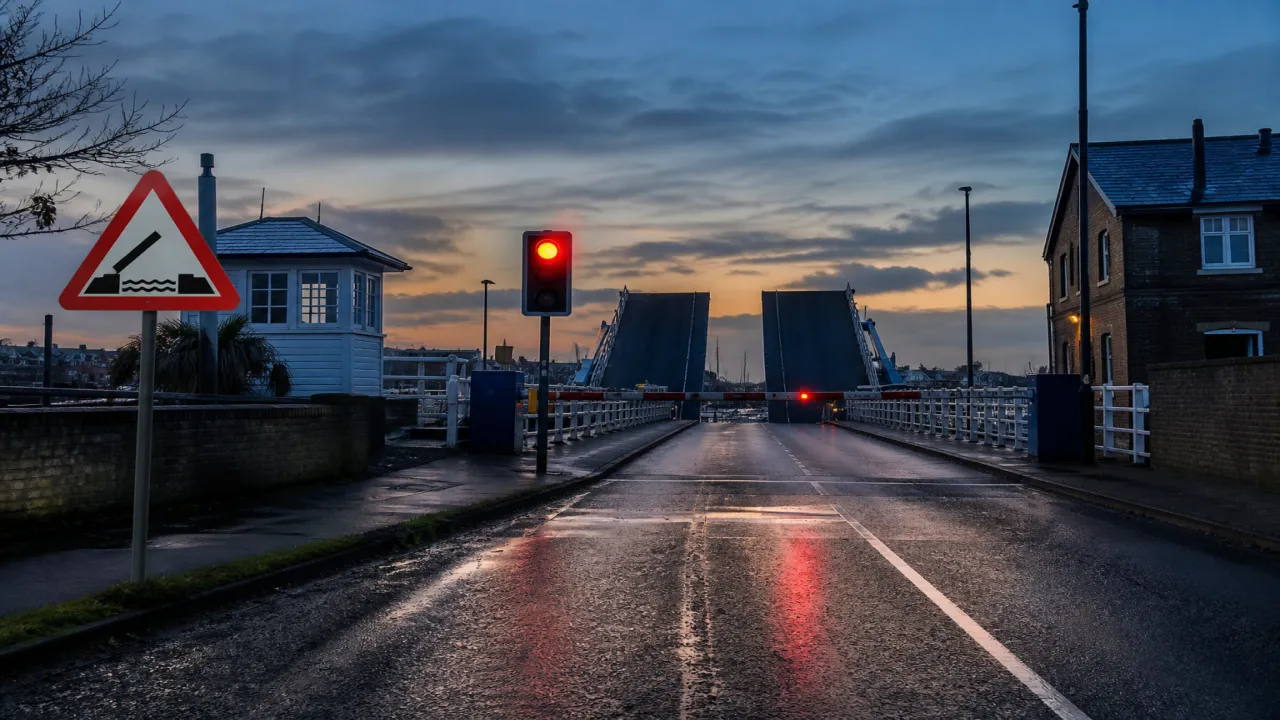
Sign image © Crown copyright, reproduced from GOV.UK traffic sign images under the Open Government Licence v3.0.
What the Opening bridge Sign Looks Like
The official GOV.UK opening bridge sign follows standard UK warning grammar: upright red triangle, white centre, black symbol. The pictogram shows a road deck split with one section raised or hinged, suggesting a bascule or lift span rather than a fixed arch. There are no numbers, speed rings, or blue mandatory circles inside the frame.
Posts usually sit on the nearside verge on the final straight before the river or dock channel, sometimes with a distance plate in yards or metres beneath. In estuary towns you may see the triangle repeated after a side road so joining traffic still receives the same heads-up. Retroreflective sheeting keeps the red border visible in rain long before the water glints ahead.
Learners often mix it up with level crossing warnings, which show a steam locomotive or barrier arms, or with the quayside triangle that marks unstable edges beside water. Ferry and punt signs use different artwork entirely. The opening bridge graphic is distinctive once you notice the gap between deck sections and the implied hinge line.
Temporary boards may cover the permanent post during maintenance, but the symbol stays the same when engineers replace gearing. Portable traffic lights sometimes appear while contractors test the span. Even then the triangle remains the static reminder that geometry here can change from road to gap within minutes.
Level crossing plates warn of trains on rails, not shipping beneath a road deck. Quayside warnings flag soft verges and sudden drops beside water without promising a movable span. When red lights show at the structure itself, obey them even if you cannot yet see the deck moving.
What the Opening Bridge Sign Means
Highway authorities install the warning where a swing, bascule, vertical-lift, or retractable bridge still carries everyday traffic yet must open for boats on a timetable or on demand. The triangle does not tell you when the next opening happens. It tells you that routine driving can be interrupted by marine priority, so rushing the approach is poor planning.
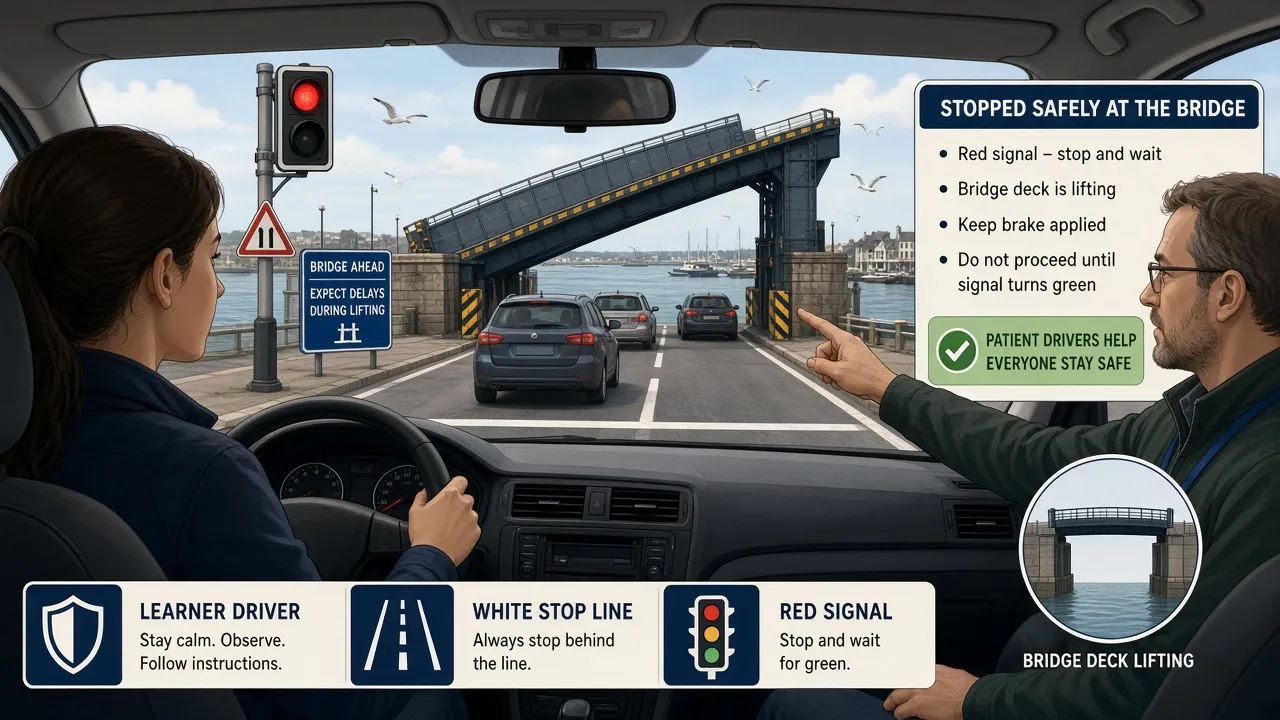
Rule 109 in The Highway Code explains that red traffic lights mean stop. Many opening bridges pair the warning triangle upstream with a signal head at the stop line, mirroring level crossing discipline without using railway symbology. Green means proceed only if the way ahead is clear and no alarm is sounding; treat flashing amber as prepare to stop unless you are already past the point of safety.
Stopping distance still follows Rule 126: your speed on the approach must let you halt before the white line when red shows. HGVs and coaches need longer gaps because their mass carries them toward a rising deck. The warning buys time to drop a gear and check mirrors before the gantry fills your windscreen.
Some sites use barriers that lower before the road lifts; others rely on lights and maritime radio alone. The triangle never replaces those devices. It aligns driver expectation with local procedure so you are not surprised when a horn sounds and traffic ahead already brakes.
Priority between road and river is set locally. You cannot infer right of way from the pictogram alone. Harbour masters may hold road traffic while a tug aligns; equally, small craft sometimes wait when rush-hour queues would block emergency routes. Your duty is to obey signs, signals, and any uniformed controller on the deck.
Narrow approach lanes, cobbles, and tight turns are common on Victorian bridges in Hull, Newcastle, Reedham, and smaller fenland crossings. The warning appears before sight lines open onto the span so you can position for oncoming traffic and avoid blocking the stop line while waiting.
Pedestrians and cyclists may share the carriageway on low-traffic bridges. When the deck opens, foot travellers must wait with vehicles. Scan pavements and toucan crossings near the mouth because people sometimes step off kerbs when green shows without checking for reversing traffic.
Night openings look dramatic: reflected lights on water, silhouetted gantries, and slow-moving deck shadows. Dip headlights so you can read signal colours accurately. Full beam can wash out red lenses and tempt you to roll forward when you should hold.
After storms or high tide, marine traffic may bunch at the channel. Expect longer closures than summer leisure traffic suggests. The static triangle still applies in winter when fewer yachts pass but maintenance openings increase.
Electric cars are quiet on the approach, which helps residents but can surprise pedestrians leaning over parapets. Use gentle braking early so following drivers see your lamps dip rather than a late stab at the pedal at the stop line.
Read distance plates as time to think, not as a speed limit. Use them to cancel cruise control and to open a gap from the vehicle ahead so you are not trapped straddling the stop line when red appears.
Sat navs may route you over a movable bridge without announcing opening times. When the red triangle appears, treat ETA estimates as guesses and watch local harbour social feeds only if you are parked safely, not while rolling toward signals.
Caravans and wide loads need the posted headroom and width plates that often sit beside the warning. If your outfit exceeds limits, a lifting deck does not solve the problem; find a fixed crossing instead.
On single-carriageway approaches, decide meeting priorities before you reach the stop line so you are not reversing blind while red holds you halfway across. Some bridges include small refuges; others do not.
Motorcyclists should avoid filtering past queued cars if the queue hides the signal head. Stay in line where deck grooves and expansion joints can snag a tyre at an angle.
If you drive for work, note that some councils fine blocking box junctions near bridge mouths even when boats delay green. Leave space beyond the line when signs mark keep-clear areas.
During driving tests, examiners rarely schedule routes that depend on a live opening, but they may use roads where the triangle appears to test whether you read advance warnings and adjust speed without prompting.
When barriers lower, wait until they rise fully and green shows before moving. Creeping under a descending barrier risks damage and careless driving attention from police who patrol popular crossings.
Highway Code rules 109, 123 and 126 (signals, control, and stopping distances)
Opening bridge vs Similar Signs
| Sign | Meaning | Legal or warning? |
|---|---|---|
| Opening bridge | Movable road span may open for shipping | Warning triangle |
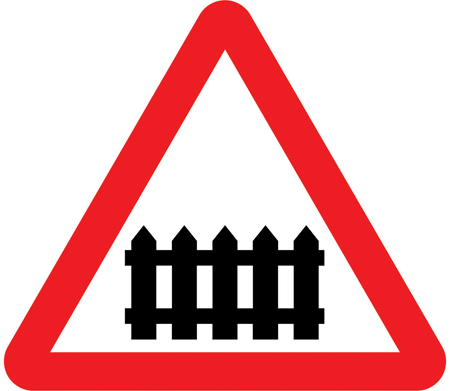 Level crossing with barrier | Trains on rails; barriers and lights control road | Warning triangle |
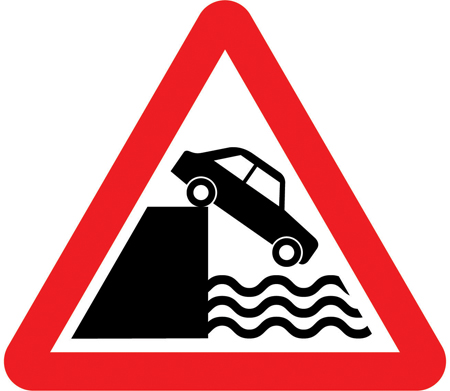 Quayside or river bank | Sudden drop or weak edge beside water | Warning triangle |
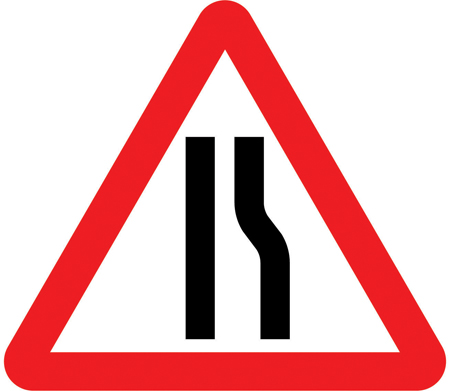 Road narrows | Width reduces on a fixed deck | Warning triangle |
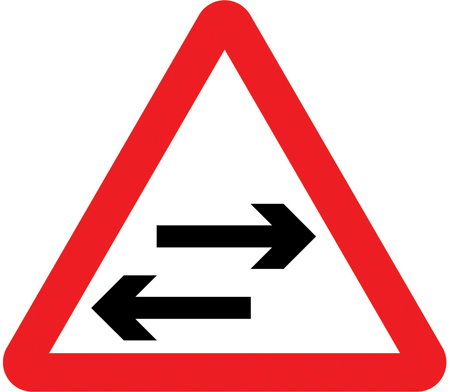 Two-way traffic | Oncoming flow on a narrow bridge approach | Warning triangle |
Rules and Penalties
The warning triangle itself creates no fixed penalty because it is advisory. Running a red light at the bridge mouth can lead to standard signal offences where cameras or officers record the breach.
Entering a raised or opening deck after red shows risks careless or dangerous driving charges if others must brake or swerve, even when no collision occurs. Insurers treat ignoring clear signals harshly.
Blocking a keep-clear zone while queued can attract penalty charge notices in some cities, separate from marine opening delays. Stay back far enough that green lets you cross fully without stopping on the span.
Damaging barriers by forcing through attracts repair costs and possible prosecution for criminal damage. Waiting patiently is cheaper than arguing with harbour engineers measuring hinge clearances.
Driving tests mark serious faults for jumping amber or rolling past stop lines when signals demand a halt, whether the hazard is a train or a rising road deck.
Check the latest theory test pass mark and book when you are ready via our booking guide.
Opening bridge in Practice
Elena drives toward a Tyne-side bascule bridge at dusk on a route she usually takes to visit family. The opening bridge warning appears with a plate reading three hundred yards. She cancels adaptive cruise, selects third gear, and checks mirrors for a van close behind.
Two hundred yards on, a red light glows above the stop line while gulls circle the channel. Elena stops with her bonnet behind the line, leaving room for a cyclist who filters legally on her left. The deck ahead tilts slowly; a horn sounds twice from the river.
A green follows, barriers rise, and traffic moves in single file because oncoming headlights already queue on the far bank. Elena keeps a steady fifteen miles per hour across expansion joints, hands light on the wheel, and does not overtake until the carriageway widens beyond the towers.
On a later theory revision session she matches the triangle pictogram to movable span rather than level crossing artwork. In a hazard perception clip she scores by easing off when brake lights bunch before a water glare, even though the post is out of frame.
Her instructor asks what she would do if green showed but a pedestrian still stood on the deck taking photos. Elena answers that she would wait until the way is clear, because signals do not cancel duty of care to people on the carriageway.
How This Sign Appears on the Theory Test
Picture questions show the split-deck opening bridge sign and ask what hazard to expect. Choose a movable bridge, not a railway level crossing or quayside drop.
Scenario stems may add red lights. The correct pattern is stop and wait; green means go only when safe, matching general signal rules rather than inventing a special bridge exemption.
Distractors sometimes show barrier arms from level crossings. Compare symbols carefully: locomotive pictograms belong to rails; hinged road decks belong to opening bridges.
Hazard perception rewards early slowing when traffic stacks before a glare of water or bridge gantries. You may not see the triangle in the clip, but the behaviour the sign teaches still raises your score.
When revising warning triangles, sketch the deck with a gap and label it shipping priority. Examiners expect instant recognition without confusing it with ferry direction signs on blue panels.
Take a free mock theory test and filter questions on road and traffic signs. Pair that with the warning signs guide for triangle symbols.
Related Road Signs
Two-way traffic
Narrow approaches where oncoming vehicles meet before the span.
Road narrows
Fixed decks that pinch even when the span does not lift.
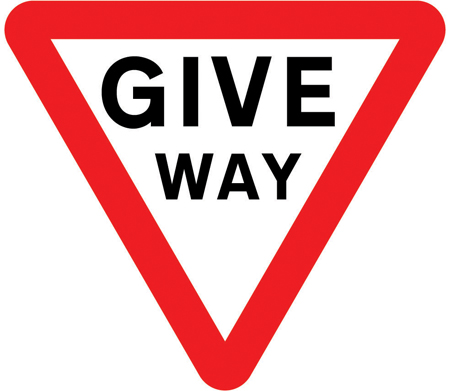
Give way sign
Priority at tight mouths where side roads join the bridge road.
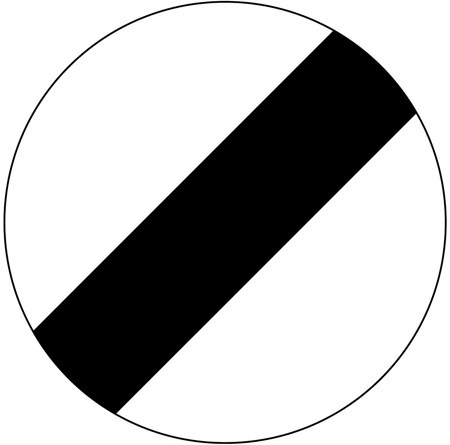
National speed limit
Default limits on open approaches still demand safe speed for signals.
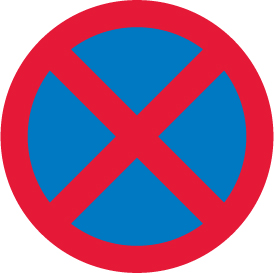
No stopping
Keep-clear lengths near busy bridge mouths and quays.
Test Yourself on UK Road Signs
Let the opening bridge sign start your routine early: slow on the approach, read lights and barriers, and stop on red even if the deck still looks level. Movable spans are rare on most test routes, yet recognising the pictogram keeps you calm when a harbour schedule interrupts an otherwise ordinary commute. A free mock theory test helps you practise warning triangles before the exam swaps artwork.
Frequently Asked Questions
What should I do when I see the opening bridge warning?
Ease off speed, watch for traffic lights or barriers at the span, and be ready to stop on red. The triangle warns that the road may close for shipping; it does not tell you the opening time.
How is this different from a level crossing sign?
Level crossing plates show trains or barrier arms on rails. The opening bridge pictogram shows a road deck that lifts or swings for boats. Signals may look similar, but the hazards differ.
Does the warning triangle set a speed limit?
No. It is advisory. You must still obey posted limits and drive slowly enough to stop when red lights show at the bridge.
Can I cross on green if the deck is still moving?
Only if the way ahead is completely clear and no alarm sounds. If you doubt clearance, wait. A green signal assumes the span is safe for road traffic.
Will this sign appear on my theory test?
Warning triangles are core knowledge. Expect image questions that ask you to name movable bridge hazards or to choose the correct response to red lights at the stop line.