
Last updated: October 2026 · Checked against Highway Code
Road Narrows on Both Sides Sign: meaning, rules and what to do
Two black lines closing in from the left and right on a white warning field tell you the usable carriageway ahead is narrower, so you should ease speed and plan how you will pass oncoming traffic.
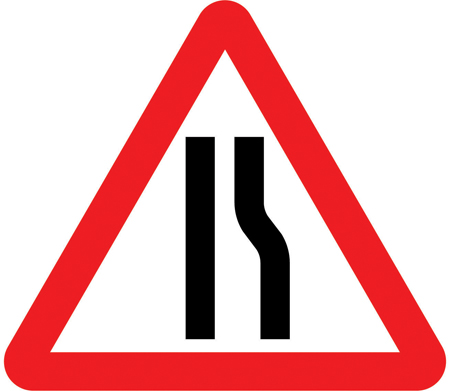
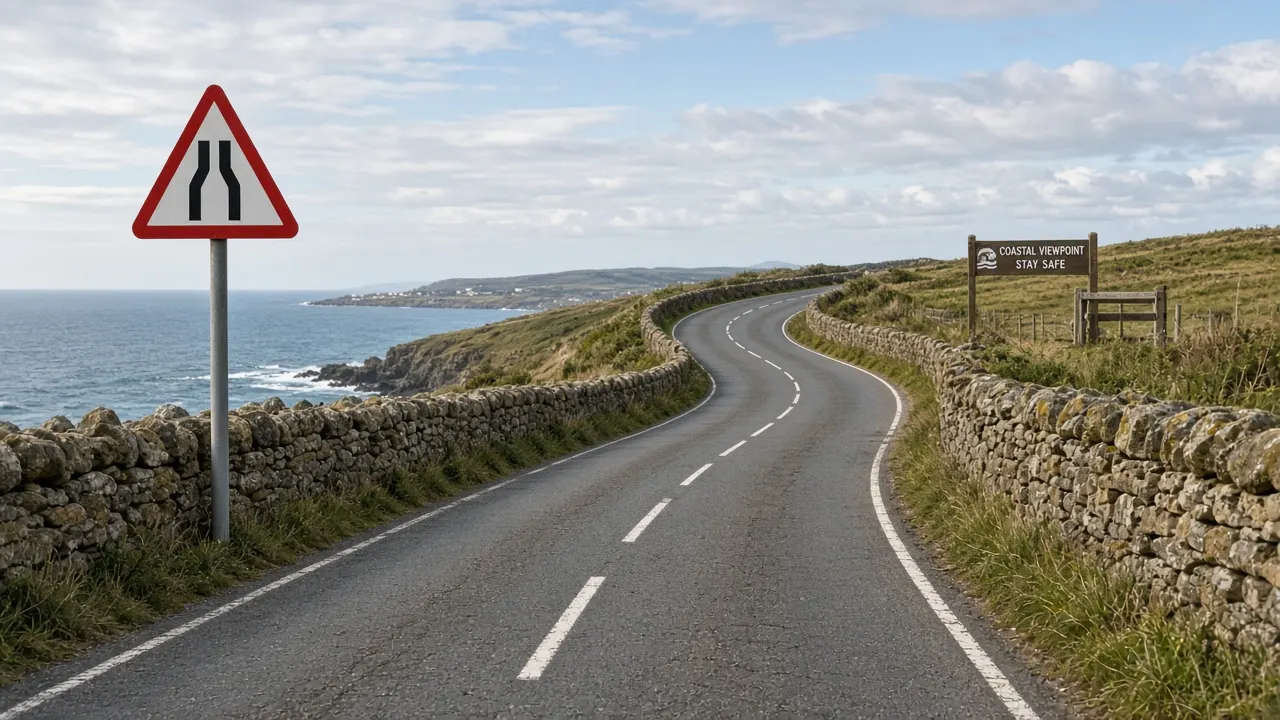
Sign image © Crown copyright, reproduced from GOV.UK traffic sign images under the Open Government Licence v3.0.
What the Road narrows both sides Sign Looks Like
The plate is the standard upward-pointing warning triangle with a thick red border and white centre. The symbol is a simple plan view: two parallel vertical lines represent the road edges, and both lines angle inward toward the top so the gap visibly tightens from both sides at once. The pictogram is black on white, matching other hazard triangles in the Traffic Signs Regulations.
You will often see it on a post at the nearside verge before a bridge parapet, a village chicane, or a lane where hedges have been cut back but the tarmac width still shrinks. Distance plates underneath may show yards or metres to the start of the narrow section. On faster roads a repeater can appear after a side junction so joining traffic still gets notice.
Do not confuse it with the variants that narrow only one side: those plates show a single edge line staying straight while the other side moves in. The both-sides symbol is symmetrical. End-of-dual-carriageway warnings use a different layout with a central reservation ending, not twin converging kerbs on one surface.
Temporary versions may appear at roadworks when lanes merge into a single width. Retroreflective faces catch headlights at night long before you can judge width from paint alone. If cones already guide you, treat the triangle as confirmation that oncoming traffic shares the remaining space.
Road narrows on the left or on the right use the same triangle but only one edge line moves inward. Priority narrowing circles may sit nearby on single-track links; they assign who yields, while this warning only describes geometry.
What the Road Narrows on Both Sides Sign Means
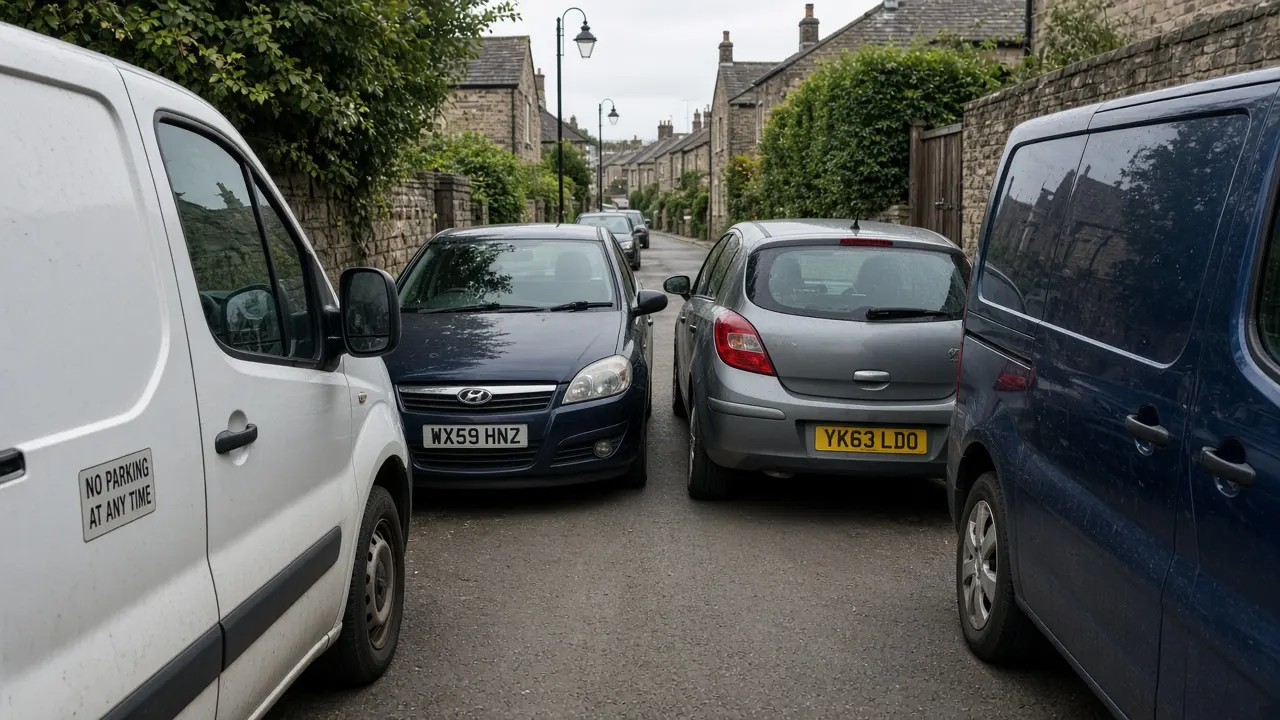
The sign appears where drivers still feel they have a full-width lane but the road ahead cannot support two vehicles passing comfortably at speed. Stone walls, bridge cheeks, parked trade vehicles, and new build-outs for traffic calming all steal width from both sides, so the symmetrical pictogram is more honest than a left-only or right-only plate.
Rule 134 in The Highway Code covers meeting traffic on narrow roads: use passing places on your left and wait if the other vehicle cannot pass. Rule 153 reminds you that parked cars, pedestrians, and cyclists reduce effective width even when the legal carriageway continues. This triangle is your cue to apply those rules before bonnets meet in the pinch.
National speed limit repeaters may still apply on the approach, but they do not widen the road. Rule 125 links speed to what you can see and stop within. After the road narrows sign both sides, drive at a pace that lets you halt on your side of the road within the distance you can see clear, especially on bends and at night.
Oncoming HGVs, buses, and wide agricultural loads may need the centre of the carriageway through the narrowest point. Holding a calm nearside line with reduced speed usually beats hugging the kerb so tightly that your mirror clips a wall or a parked car. If both drivers accelerate into the gap, neither may be able to reverse easily.
Single-track sections sometimes follow the warning without a separate “single track” plate. Passing places may be signed or may be informal lay-bys. Identify a usable gap before you commit to a meeting on a gradient; reversing uphill with a trailer is slow and dangerous for traffic behind you.
Cyclists and horse riders are entitled to use the lane. Overtake only when you can give the clearance described in Rule 163 and when oncoming traffic will not force you to squeeze past. The narrowing often coincides with tourist routes where riders are common; the sign warns you to delay the pass until the width returns.
Pedestrians without footways walk toward you in the same space. Children and dog walkers may step off the verge without looking. Scan both sides as the walls close in, and be ready to stop before the narrowest point rather than braking hard when someone appears beside a parked van.
Ice, wet leaves, and gravel collect along pinch points where drainage changes. Summer dust can hide a slippery patch after rain. The triangle does not describe surface grip, so ease off early and avoid sharp steering inputs as the effective width shrinks.
Lift off the accelerator when the triangle appears, then brake in a straight line if needed. Sudden braking inside the pinch can unsettle the car and startle oncoming drivers who are already threading a tight gap.
Pick a gear that gives gentle engine braking on downhill approaches to bridges. Riding the brake heats discs before the next hazard. Electric and hybrid cars still need a lower gear on long descents into narrow villages.
If you meet a wide load, stop in the passing place on your left before the crest when you are the downhill driver. Let the climber hold position when custom and gradient make reversing uphill impractical.
Fold mirrors on very narrow lanes when signs and experience suggest wing tips might strike walls. Check manufacturer guidance; some modern mirrors are designed to tuck on contact but scraping masonry is still best avoided with speed and position.
Sat navs may show a straight wide road while the triangle is already visible. Trust the plate, road markings, and cones over a screen that has not updated for a new chicane or bridge repair.
After snow, passing places fill with drifts first. Spot a usable bay before you commit to a meeting, not when headlights are already close in the narrowest metre of tarmac.
Open your window slightly near campsites and pubs on summer evenings. Pedestrians crossing between parked cars are easy to miss when your focus is on oncoming traffic in a pinch point.
If temporary roadworks cover the permanent sign, follow the live cone line as new geometry even on a route you know well. Contraflow finishes sometimes place a both-sides narrows warning where traffic used to enjoy a wider lane.
Highway Code rules 125, 134, 153 and 155 (speed, narrow roads, and meeting traffic)
Road narrows both sides vs Similar Signs
| Sign | Meaning | Legal or warning? |
|---|---|---|
| Road narrows both sides | Width reduces from left and right | Warning triangle |
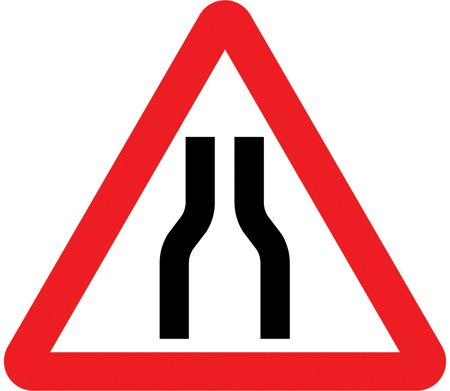 Road narrows left | Left verge or lane edge closes in | Warning triangle |
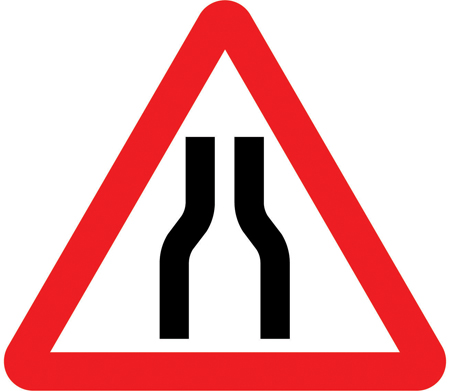 Road narrows right | Right verge or lane edge closes in | Warning triangle |
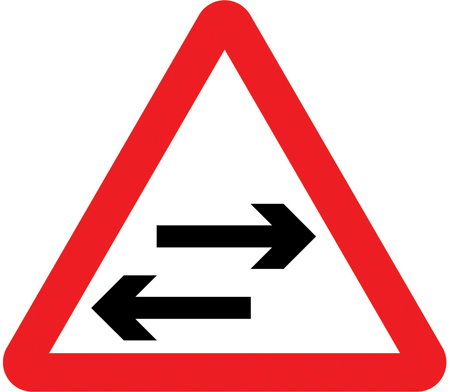 Two-way traffic | Opposing flows on one carriageway | Warning triangle |
Rules and Penalties
There is no separate offence for passing a warning triangle, but driving too fast for the pinch supports careless or dangerous driving charges if you force another road user to swerve or reverse. Head-on and wing-mirror collisions in narrow villages are investigated with reference to advertised width warnings.
Crossing the centre line to bully oncoming traffic through a gap you misjudged can amount to driving without reasonable consideration. Fixed penalties are less common than after speed-camera offences unless a crash or witness footage exists, but civil insurance claims still turn on whether you adjusted speed after the sign.
Failing to use a marked passing place when you could wait there may obstruct others. Police can direct you to reverse to a bay; persistent blocking on single-track tourist routes attracts complaints and sometimes attention for unnecessary obstruction.
Driving tests fail candidates who charge into narrow sections too quickly, clip kerbs, or meet wide vehicles without planning a stop. Examiners want early speed reduction, stable steering, and courteous use of lay-bys before the bonnets overlap.
Close passes against cyclists in chicanes are a common serious fault. The warning sign shows the hazard was foreseeable; examiners and courts expect you to hold back until width and sight lines allow a safe overtake.
Check the latest theory test pass mark and book when you are ready via our booking guide.
Road narrows both sides in Practice
Tom drives a B-road toward a stone bridge. A road narrows both sides triangle appears with a plate reading 120 yards. He checks mirrors, eases from 40 mph to 25 mph, and moves to a steady nearside position while the straight section still allows a smooth line.
A delivery van approaches from the opposite direction. Tom stops in a lay-by on the left before the parapet, lets the van pass with mirrors tucked in, then continues without brushing the wall on his side.
Later the same week he meets a horse rider in the pinch. Because he slowed early, he waits behind the rider until the bridge opens out, then passes wide and slow on the exit straight instead of squeezing past in the narrowest gap.
On his theory test he sees the converging-line triangle and rejects “end of dual carriageway” and “single file only always”. He selects the answer that mentions less width ahead and courtesy to oncoming traffic, matching the DVSA explanation in his revision app.
During a driving lesson his instructor rehearses the bridge twice at walking pace until mirror-check, brake, and gear choice happen before steering into the pinch. On test week the examiner notes the same habit and marks nothing for meeting traffic at the narrow point.
How This Sign Appears on the Theory Test
Picture items show converging edge lines inside a red triangle. Choose answers that mention reduced width on both sides and adjusting speed, not stopping unless another sign requires it.
Contrast with end-of-dual-carriageway diagrams that show a central reservation ending. The both-sides narrows sign keeps one continuous surface with edges closing in.
Left-only and right-only variants are common distractors. Read which edge line stays parallel and which angles inward; examiners expect you to match the image to the correct wording.
Hazard perception clips on village streets sometimes reward early clicks when a car drifts toward the centre in a pinch. Knowing that triangles precede those sections helps you anticipate conflict, not only when a sign fills the screen.
Scenario text may pair the warning with a national speed limit repeater. The correct attitude is to drive within the limit if conditions allow, but always be able to stop in the distance you can see clear on your side of the road.
Some items ask which sign is warning category versus regulatory. The road narrows both sides plate is always a hazard warning in DVSA classification, not an order to use one lane.
Take a free mock theory test and filter questions on road and traffic signs. Pair that with the warning signs guide for triangle symbols.
Related Road Signs
Two-way traffic sign
Oncoming flow on the same narrowed carriageway.
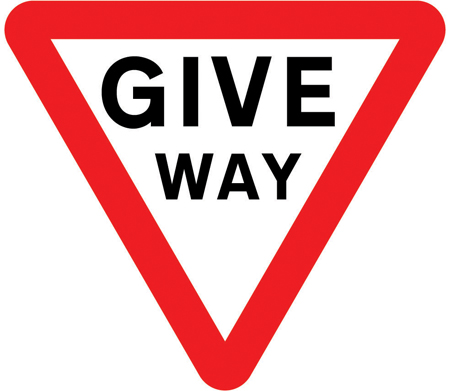
Give way sign
Yield where side roads join pinch points.
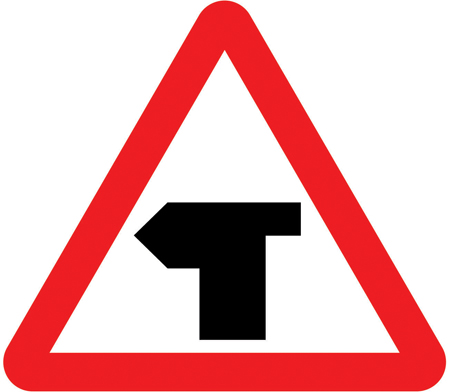
T junction sign
Junctions beyond narrow village links.
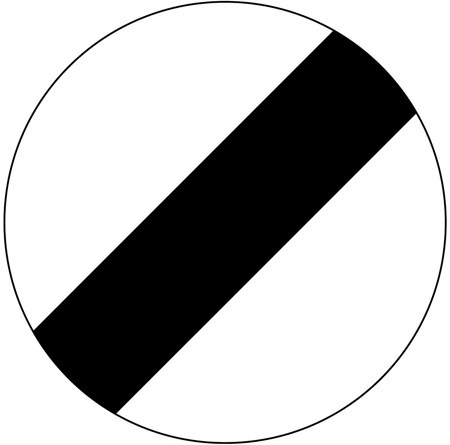
National speed limit sign
Default maximum before width tightens.
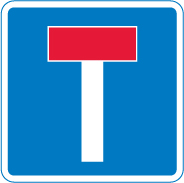
No through road
Dead ends reached through narrow lanes.
Test Yourself on UK Road Signs
Treat the road narrows both sides sign as early notice to manage speed, position, and courtesy. A calm approach through the pinch leaves room for oncoming traffic, riders, and pedestrians, and matches what The Highway Code and driving examiners expect on UK narrow roads.
Frequently Asked Questions
Does the road narrows both sides sign mean single file only?
Not always. It warns that width reduces from both edges. Some stretches still allow two vehicles to pass slowly; others need passing places. Read the road and any extra plates.
How is it different from road narrows left or right?
The both-sides symbol shows two edges converging. Left-only or right-only plates keep one edge line straight while the other moves in.
Should I stop when I see this triangle?
Only if the way ahead is blocked or you must wait for oncoming traffic. Otherwise slow, keep left, and be ready to use a passing place.
Does this sign change the speed limit?
No. It warns of geometry ahead. Obey posted limits and drive below them when visibility, grip, or width demand it.
Will this sign appear on the car theory test?
Yes. Image questions show the converging lines and ask what to expect. Link the pictogram to less width ahead and courteous meeting of oncoming traffic.