
Last updated: October 2026 · Checked against Highway Code
Ford Sign: meaning, rules and what to do
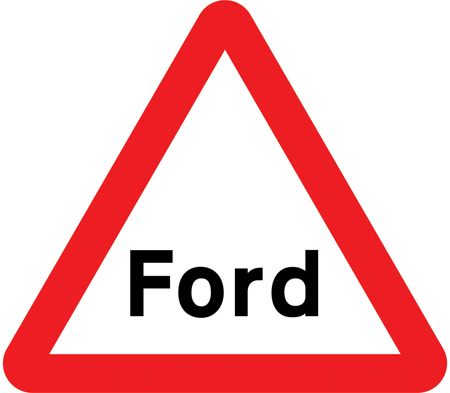
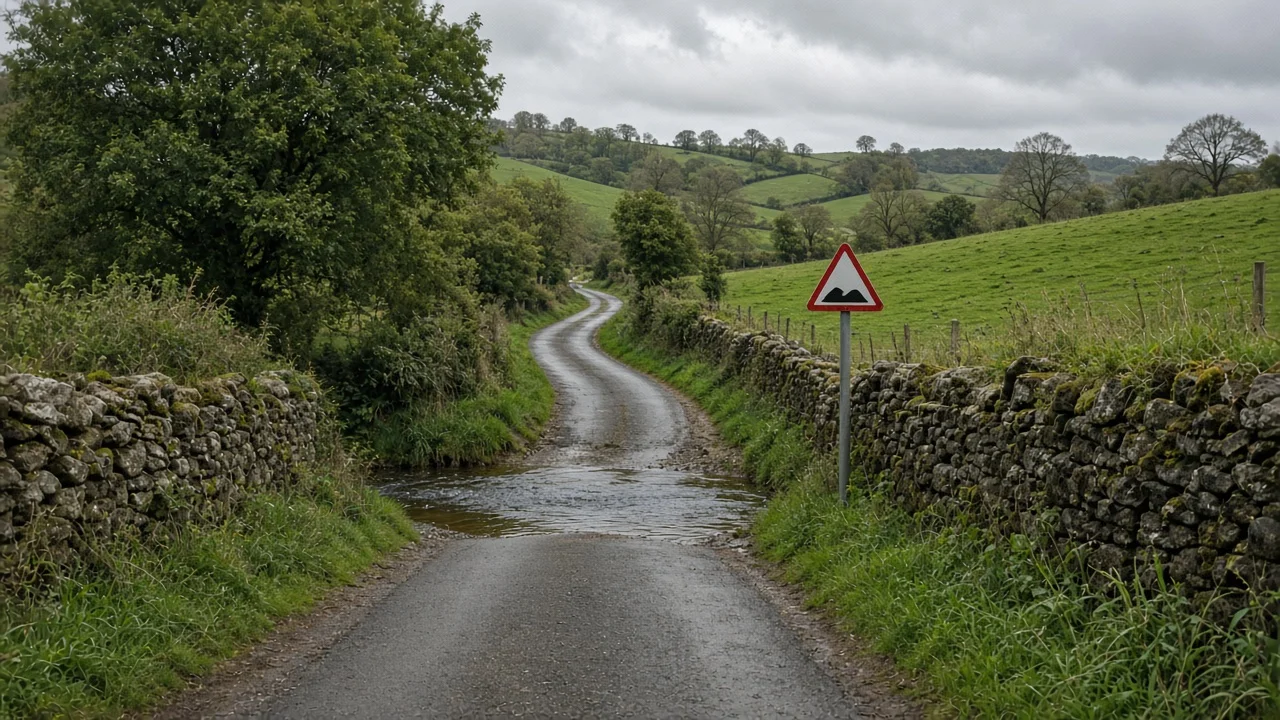
The UK ford warning is a red-bordered triangle with a black pictogram of a car wading through water, telling you the carriageway crosses a stream or shallow river channel that may deepen after rain so you should slow, assess depth and current, and avoid driving through if you cannot see a safe line.
Sign image © Crown copyright, reproduced from GOV.UK traffic sign images under the Open Government Licence v3.0.
What the Ford Sign Looks Like
The official ford plate follows standard UK warning grammar: upright red triangle, white centre, black symbol. The pictogram shows a side-view car with a horizontal water line across the wheels, suggesting a shallow ford rather than a flooded meadow or a bridge deck. There is no wording inside the frame, which helps examiners separate it from the text-led Flood triangle.
Posts appear on approaches to chalk streams in the Chilterns, moorland fords in Dartmoor and Exmoor, farm tracks that double as public lanes in Herefordshire, and historic packhorse routes where engineers chose a stream bed instead of a culvert. A distance plate in yards or metres sometimes sits beneath the board on faster approaches.
Repeaters may face both directions when the crossing sits in a valley bottom with limited sight lines. Temporary depth gauges, white posts with coloured bands, or hand-painted depth boards often appear near the waterline even though they are not part of the triangle artwork itself.
At night retroreflective sheeting makes the red rim visible before you hear the stream. Dip headlights when following traffic so spray from the ford does not blind you. Learners often confuse the wading car with slippery road artwork that shows skidding tyre marks, or with the flood word plate that names liable to flooding without a vehicle symbol.
In dry summers the channel can look like a dusty ditch and the triangle feels overcautious. After an autumn storm the same bed may carry knee-deep brown water pushed by upland rain. Councils keep the warning because hydrology changes faster than paint fades.
The ford triangle marks a routine shallow crossing that may rise, while the flood plate marks a length of road liable to submerge without a defined stream bed. Slippery road warnings talk about grip on wet tarmac, not depth through moving water. Quayside triangles flag unprotected drops beside open water rather than water on the carriageway. Read the black symbol inside the triangle; the red frame only tells you to expect a hazard ahead.
What the Ford Sign Means
Highway authorities install the warning where the metalled surface deliberately dips through a watercourse. It does not quote a depth in centimetres, a closing time, or a mandatory diversion. It tells you that everyday journeys can fail when upland rain arrives faster than the channel can carry it away, so rushing the approach is poor planning.
Rule 125 in The Highway Code reminds you that speed limits are maximums in ideal conditions. A national speed limit on a rural single carriageway may still read as sixty miles per hour on paper, yet moving water demands speeds low enough to stop before you lose the nearside camber or meet a stranded vehicle mid-stream. The triangle buys thinking time before your tyres touch the first ripple.
Rule 121 covers mechanical risk after water reaches the engine bay: stop safely, check for damage, and do not restart if you suspect ingestion. Hydraulic lock can destroy pistons in seconds. The warning exists partly to keep you from reaching that point by encouraging a U-turn while the nearside verge is still dry rather than hub-deep in the channel.
Depth is deceptive in fords because the bed is often cobbled or stepped. A gentle ripple can hide a sudden shelf that drops the nearside wheel into a pothole. Six inches of fast water can knock pedestrians off their feet; twelve inches can float many hatchbacks if the current is strong. HGVs fare better on height but still stall when air intakes suck spray, and their bow waves can flood cottage gardens beside the lane.
Electric vehicles carry high-voltage components that must stay dry. Manufacturer guidance often warns against wading unknown depths even when a combustion car might creep through on a familiar route. Treat the ford plate as a cue to check handbook limits and to prefer a metalled alternative shown on a diversion plate if one is posted after storms.
Cyclists and motorcyclists suffer first when a lane fords: they cannot wade beside the flow, and hidden rocks break wheels under brown water. Give vulnerable users room if they turn back ahead of you rather than squeezing past into oncoming spray. Rule 213 expects you to look out for two-wheeled road users in poor conditions.
Pedestrians sometimes use the same stepping stones or footbridge while vehicles queue. A visible ford warning should slow everyone, not only motor traffic. If you must stop to let walkers retreat from a narrow causeway, keep hazard lights on and position so following traffic sees you before the blind dip.
Tide and groundwater can affect coastal fords and estuary lanes even when the sky looks clear inland. A location that ran ankle-deep in July may carry salt water at spring tide in January. The triangle does not update daily; your judgement must use weather forecasts, river gauges online, and local knowledge from residents.
Sat navs may still route you through a favourite shortcut while environment agencies issue flood alerts for the same valley. When the red triangle appears, trust the road furniture and turn around at the first safe place rather than arguing with an optimistic ETA.
Read tyre-level clues before you commit: fresh weed angled downstream, foam on posts, and mud on field gates often mark the last peak. If litter bunches against a fence wire, assume the current is still moving even when the surface looks calm.
Walk the nearside edge on foot if you are unsure and the channel is narrow enough to check safely. A stick or walking pole dipped beside the wheel track often reveals a step you cannot see from the seat. Watching another SUV splash through proves nothing about your sump guard or tyre diameter.
Approach the ford in a low gear with steady throttle if you must move through shallow water at all, and test brakes gently once clear on the far bank. Spray from oncoming traffic can blind you; wait until the opposite queue clears so you are not mid-channel when a van sends a bow wave over your bonnet.
Never follow another car closely through the flow. The leader may stall mid-depth, leaving you boxed in with rising water behind. Leave enough gap to reverse if the engine note changes or the exhaust burbles.
After heavy rain, side streams join the main channel without warning. The ford warning on a descent into a valley is your cue to check the far bank before you commit; turning on the approach is easier than reversing in knee-deep flow between stone walls.
Driving tests rarely schedule deliberate ford routes, but examiners on rural circuits notice whether you adjust speed when warning triangles appear. Naming the hazard aloud and easing off before visible water scores better than a late brake that surprises following traffic.
Towing outfits need extra margin because the coupling sits lower than the car nose. A bow wave from oncoming traffic can lift a trailer while the tow car still breathes. Unhitch and find a farm track bypass if the painted depth marker on the post is above your hitch height.
If you drive for work, note that insurers may dispute claims where a published ford warning was ignored and depth was clearly unsafe. Document your alternative route when dispatchers push for speed during storms.
Ford vs Similar Signs
| Sign | Meaning | Legal or warning? |
|---|---|---|
| Ford | Shallow water crossing; depth may rise after rain | Warning triangle |
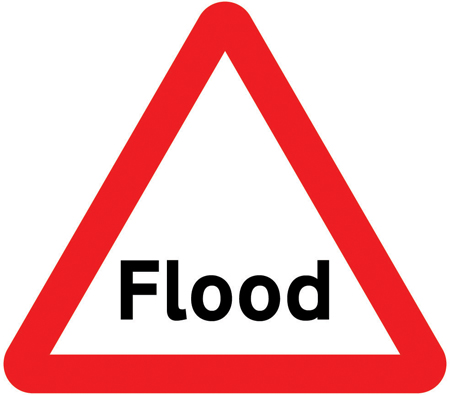 Flood | Road liable to flooding; water may cover the carriageway | Warning triangle |
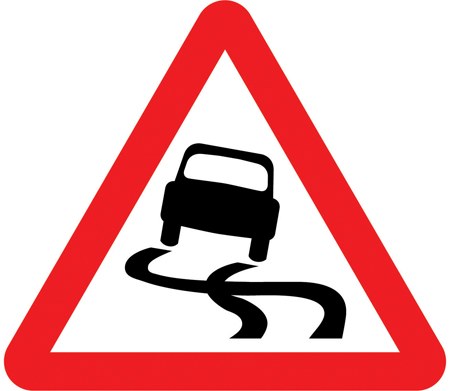 Slippery road | Reduced grip from rain, mud or spills on the surface | Warning triangle |
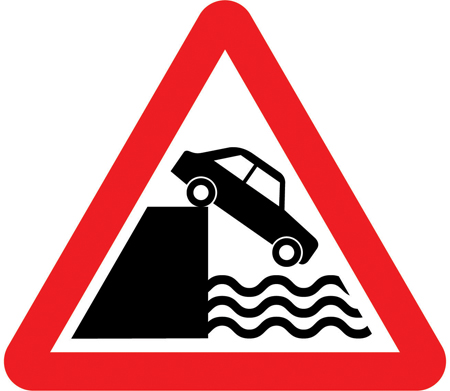 Quayside | Weak or sudden edge beside open water | Warning triangle |
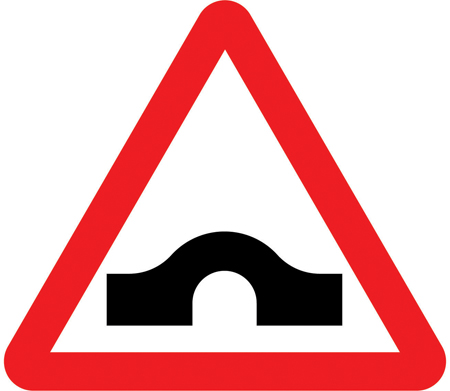 Hump bridge | Sharp hump may reduce ground clearance | Warning triangle |
Rules and Penalties
The ford warning triangle does not create a fixed penalty by itself because it is advisory. Driving into clearly unsafe water and losing control can still attract careless or dangerous driving attention if witnesses or cameras show you ignored obvious depth and flow.
Ignoring temporary road closure orders or police tape downstream of a swollen ford can bring separate offences where a statutory closure is in force. The static triangle warns; a red barrel barrier or signed diversion is the legal closure you must obey.
Splashing pedestrians deliberately at speed through a ford can lead to careless driving reports even away from signed crossings. Near a ford warning the same behaviour looks worse because you were already told water lies on the carriageway.
Stalling in deep water and abandoning a vehicle without securing it can obstruct rescue routes and endanger others. Recovery costs often fall on the driver when negligence is established, and repeat call-outs strain local fire resources during county-wide floods.
Theory tests focus on recognition and safe response rather than fines. Expect questions that pair the wading-car triangle with a shallow crossing and reject flood-only answers unless the pictogram shows the word Flood.
Check the latest theory test pass mark and book when you are ready via our booking guide.
Ford in Practice
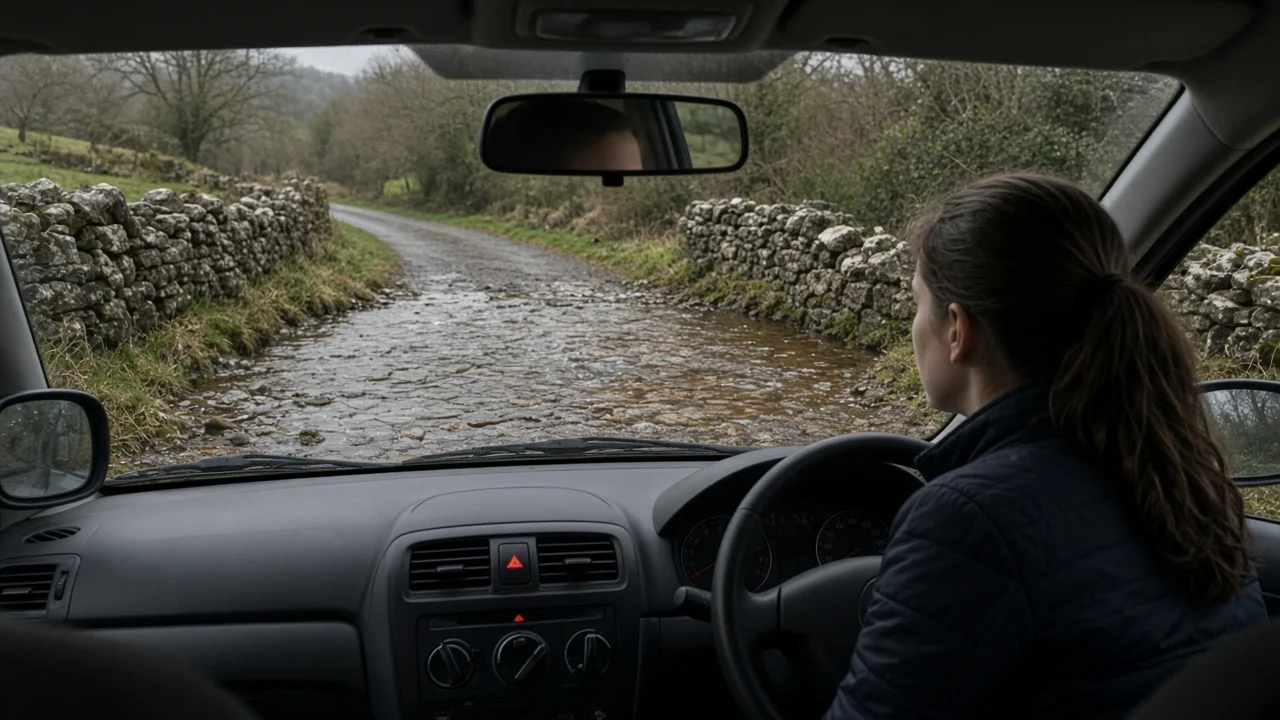
Elena drives a small estate along a Powys lane after overnight rain. A ford triangle with a plate reading one hundred yards appears where the road drops between dry-stone walls toward a stone bridge she usually ignores in favour of the stream crossing.
At the brow she sees brown water sliding across the cobbles, with the nearside post half submerged. A local in a pickup waves her back from a passing place. Elena stops before the first ripple, indicates, and reverses into the pocket rather than following the taller vehicle through.
On her theory revision app she matches the pictogram to a ford ahead, not liable to flooding text alone. In a hazard perception clip she scores by easing off when spray and brake lights bunch before a dip, even when the post is off-screen.
The following week the same ford is a trickle she could step across in trainers. Elena still slows at the triangle because upland showers can refill the channel in an hour without another named storm. A cyclist thanks her for leaving space when he peels off to a footbridge rather than riding through murky depth.
Her instructor later asks what she would do if depth looked shallow but a current rippled around her tyres. Elena answers that she would find another route because moving water can shift cars and hide washed-out edges, and Rule 121 matters more than saving five minutes.
How This Sign Appears on the Theory Test
Picture questions show the wading car inside a red triangle and ask what hazard to expect. Choose a ford or shallow water crossing rather than slippery road, quayside, or flood word plates unless the artwork changes.
Some stems add weather context. The safe pattern is slow, assess depth, and turn back if unsure; reject answers that tell you to maintain speed to create a bow wave or to restart immediately after stalling in water.
Compare artwork carefully: flood plates show the word Flood; ford plates show a car in water. Examiners swap similar triangles to test whether you read the symbol rather than memorising one generic water hazard.
Hazard perception clips may feature standing water without zooming on the sign. Training yourself to lift off when the road surface turns mirror-like helps you score even when only brake lights hint at depth.
Case studies sometimes pair ford warnings with incidents questions about engine damage. Link deep water to stopping safely and avoiding restart, matching Highway Code guidance used in the official question bank.
Take a free mock theory test and filter questions on road and traffic signs. Pair that with the warning signs guide for triangle symbols.
Related Road Signs
Flood
Longer stretches liable to flood rather than a defined stream bed.
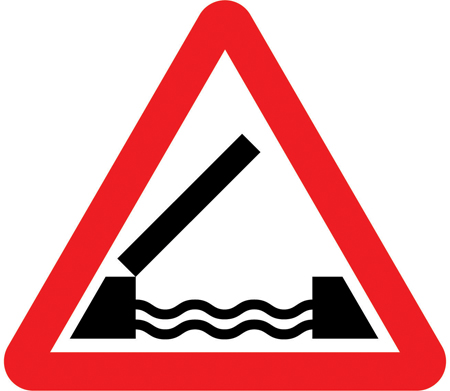
Opening bridge
River crossings where tide and shipping can raise water nearby.
Slippery road
Grip loss on wet tarmac after you leave the ford.
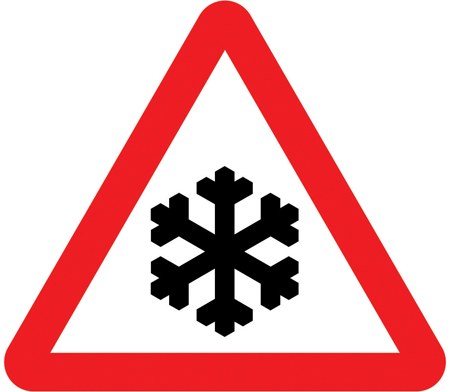
Risk of ice
Frozen fords and shaded valleys in winter mornings.
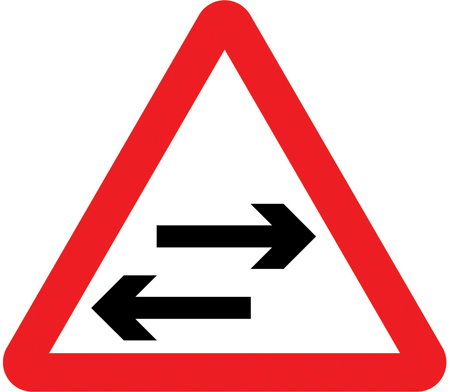
Two-way traffic
Narrow lanes where meeting traffic leaves no room to reverse from water.
Test Yourself on UK Road Signs
Let the ford warning start your decision early: slow before the dip, read the water rather than trusting habit, and turn back while the road behind is still clear. Recognising the wading-car triangle keeps theory papers straightforward and protects your engine when storms turn a familiar lane into a torrent. A free mock theory test helps you practise water-related warnings before the exam swaps ford and flood artwork.
Frequently Asked Questions
What does the ford warning triangle mean?
It warns that the road crosses shallow water ahead. The channel may deepen after rain or snowmelt. Slow down, assess depth and current, and do not drive through if you cannot see a safe route.
How is the ford warning different from the flood sign?
The ford plate shows a car wading through water and marks a designed crossing that may rise. The flood plate shows the word Flood and marks a length of road liable to submerge. Both need caution, but fords are usually a defined stream bed rather than a whole valley floor under water.
Does the ford warning set a speed limit?
No. It is advisory. You must obey posted limits and drive slowly enough to stop before moving water, stranded vehicles, or hidden damage to the ford surface.
Should I drive through if another car just made it?
No. Their tyres may be taller, their route may have used the crown of the road, or they may have misjudged and got away with it. Judge depth and current yourself, or wait until the level drops after rain.
Will the ford warning appear on my theory test?
Yes. Road and traffic signs include this triangle. Expect image questions asking for a ford or shallow water crossing and scenarios about avoiding unsafe water or engine damage after submersion.