
Last updated: October 2026 · Checked against Highway Code
Slippery Road Sign: meaning, rules and what to do
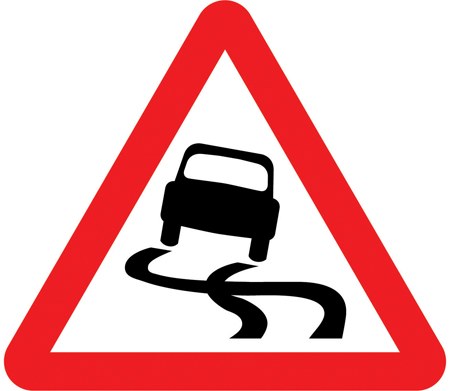
A black car with curved skid marks inside a red-bordered triangle tells you grip may fall away on the stretch ahead, whether from rain, mud, fallen leaves, or a fresh fuel spill on the carriageway.
Sign image © Crown copyright, reproduced from GOV.UK traffic sign images under the Open Government Licence v3.0.
What the Slippery road Sign Looks Like
The official UK design is an equilateral warning triangle with a thick red border, white centre, and a black pictogram of a car seen from behind with two wavy skid lines beneath the rear wheels. The graphic suggests loss of traction on the surface rather than a specific manoeuvre ban or a numeric limit. It sits in the same family as bend and junction warnings: red rim, white field, black symbol.
Engineers place it before long bends on tree-lined routes, at the foot of hills where farm traffic drags mud onto tarmac, and on urban approaches after roadworks when fresh chippings have not yet bedded in. A supplementary plate may quote distance in yards or metres. Repeaters after a lay-by remind drivers who stopped that the greasy section continues beyond the first crest.
Retroreflective sheeting makes the red edge readable in dipped headlights before you feel the steering lighten. Learners often mix it up with the risk of ice triangle, which uses a similar skidding car but is sited for shade and bridges. Motorway snowflake signals are separate. In picture questions, read the question wording: ice risk, ford depth, and generic slip are different answers.
Temporary cones sometimes hide the post during verge cutting. If a diversion sends you onto an unfamiliar lane, any repeated triangle still counts. Grit bins and salt spreader tracks are extra clues on winter mornings; the triangle itself warns about surface contamination and weather together, not only frost.
Risk of ice targets cold pockets, bridges, and shade where frost forms. Ford warnings mention water on the carriageway. Uneven road plates talk about bumps and ridges, not grip. Adverse camber triangles describe how the road slopes. All share the triangle shape; the black symbol tells you which hazard to prepare for first.
What the Slippery Road Sign Means
The warning marks lengths where tyres often struggle: tree tunnels that drip oil-rich sap, industrial estates where lorries leak diesel, and rural climbs where wet clay gets dragged from field gates. It does not create a new offence by itself. It supports the general duty in The Highway Code to drive at a speed that lets you stop within the distance you can see to be clear, and to adapt to the road surface.
Rule 125 reminds you that limits are maximums, not targets. On a soaked B-road the safe pace may sit well below the national limit because aquaplaning and long stopping distances matter more than the last repeater you passed. The triangle buys time to change down and cover the brake before the grip falls away, not when the wheel already spins.
Rain is the everyday trigger. Standing water needs somewhere to go; worn ruts and sunken drains let tyres surf for a moment until tread clears the film. The sign often appears where drainage is poor or camber sends run-off across the lane, not on every shower in the county.
Mud and gravel change friction quickly. After harvest, a mile that felt secure at noon can feel polished by teatime when trailers have packed clay into the wheel tracks. Fresh stone from resurfacing rolls under tyres until traffic embeds it; the first wet night after laying is a common crash window.
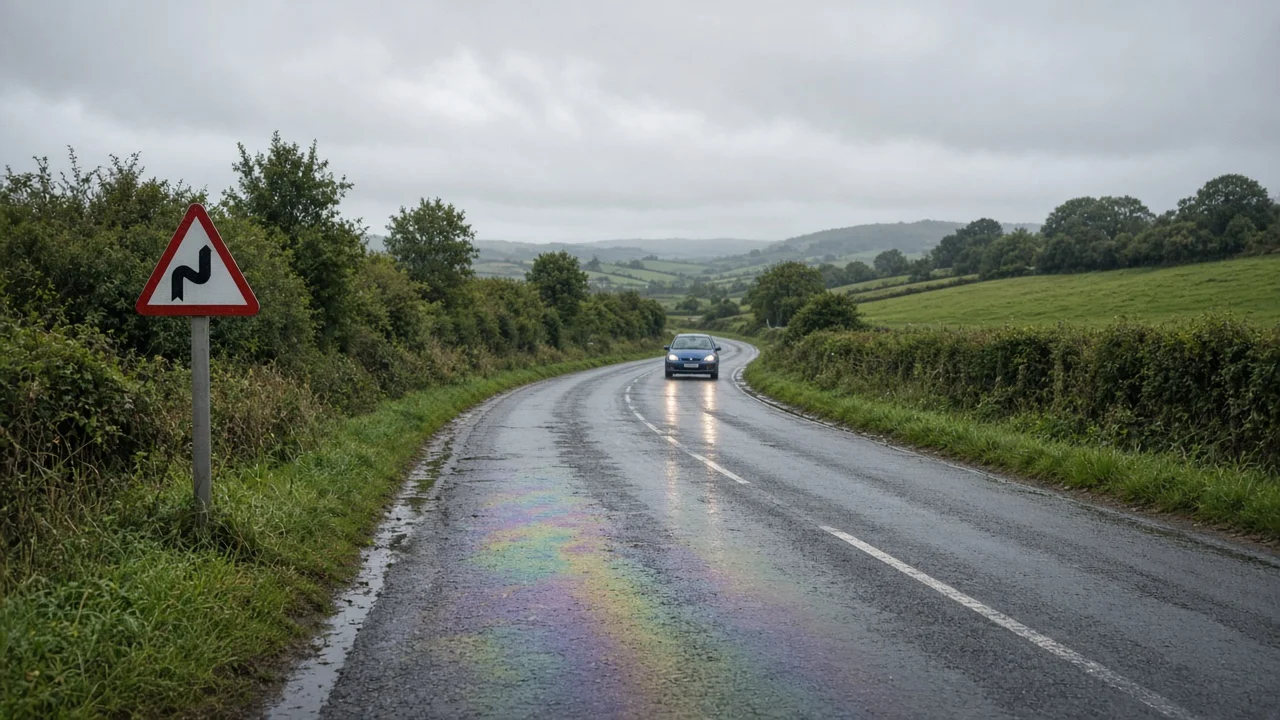
Diesel and oil spills leave rainbow sheens that look harmless until you brake for a junction. HGVs climbing slowly can weep fuel on long gradients; the triangle may sit on the approach to a bend where countless drivers have already slid into the hedge. Motorcyclists suffer most because two small contact patches cannot recover as easily as a car footprint.
Fallen leaves in autumn mat into a slick layer, especially under trees beside rivers and in parkland drives. They hide potholes and edge lines at the same time, so the warning pairs with careful scanning rather than only a gentle foot.
Smooth inputs keep control. Sharp pedal stamps can lock wheels on a greasy patch, while sudden lane changes may start a slide that only eases when you lift off and let tyres roll. The car theory test expects you to link the triangle with longer following distances and with avoiding harsh steering on contaminated surfaces.
All-wheel drive helps you pull away on a muddy slope but does not shorten stopping distance on a wet descent. Electric torque arrives instantly; on a contaminated lane the plate is a cue to check speed and regeneration even when the cabin feels calm.
Read the skidding car as a traction warning, not a ban on winter tyres or all-season tread. The carriageway stays open; the symbol shows how grip can vanish when contamination meets speed.
Before the signed band, glance at mirrors and lift off the throttle while the surface still feels normal. Changing down on a manual car adds engine braking that helps on gentle downhill approaches to bends.
In heavy rain, double following distance at the triangle. Spray from a van ahead can hide a cyclist or a parked gritter until your speed is already too high for a smooth stop.
If your car has a wet or snow mode, engage it before the bend rather than after the wheels slip. Handbooks differ; the plate is your cue to check settings early.
Sat navs may ignore microclimate and fresh mud. When the red triangle appears, trust local knowledge and the plate over an optimistic arrival time.
After dark, use dipped headlights before the brow so you do not dazzle anyone on the greasy section. Cat’s eyes and verge reflectors help judge camber when surface shine is hard to read.
If you feel the steering go light, ease off the accelerator and avoid braking hard while the wheels are turned. Look where you want the car to go rather than at the obstacle you fear.
Caravans and trailers push you on slight downgrades toward wet pinch points. The warning is your cue to check the hitch, slow before the bend, and leave space for oncoming traffic that may be sliding the other way.
Highway Code rules 122 to 125 and 228 (control, speed, and driving in wet or icy weather)
Slippery road vs Similar Signs
| Sign | Meaning | Legal or warning? |
|---|---|---|
| Slippery road | Grip may be poor from rain, mud, leaves, or spills | Warning triangle |
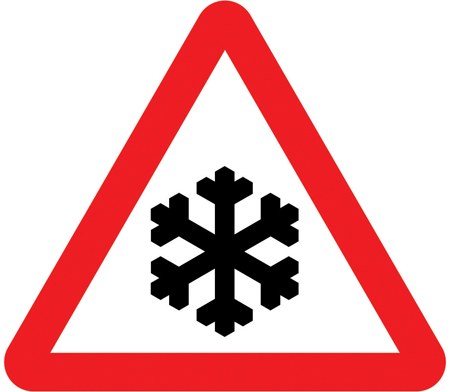 Risk of ice | Ice may form, often in shade or on bridges | Warning triangle |
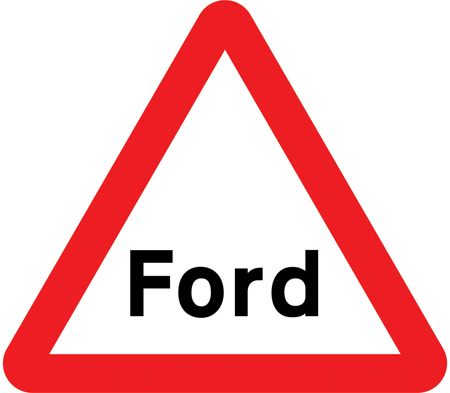 Ford | Shallow water may cover the carriageway | Warning triangle |
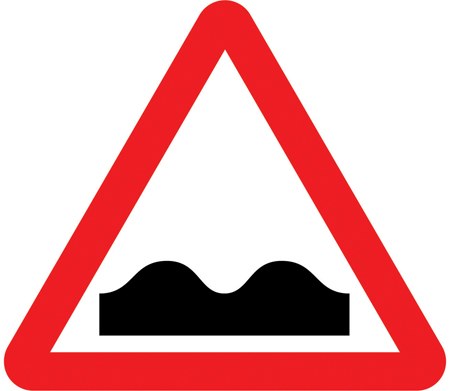 Uneven road | Surface bumps or ridges ahead | Warning triangle |
Rules and Penalties
There is no fixed penalty for passing a warning triangle because it is not a regulatory order. Enforcement instead targets careless or dangerous driving when speed, following distance, or loss of control contributes to a crash on a known slippery stretch.
Losing control after driving too fast for the conditions can lead to careless driving charges, especially if injury or serious damage follows. Insurance assessments often treat the driver who could not stop in the distance as at fault even when the road looked dry a mile earlier.
Aquaplaning at motorway pace on a signed wet section rarely excuses the speed choice if spray and standing water were visible. Courts expect you to have read the road and the posted warnings together.
Driving tests mark serious faults for approaching greasy bends too quickly, coasting in neutral, or stamping the brake when the car begins to slide. Examiners want gentle speed reduction before the hazard and steady steering without panic corrections.
Splashing pedestrians deliberately at a puddle beside a signed stretch can attract a separate penalty; that behaviour is not caused by the triangle, but it shows the same lack of regard for surface water the sign predicted.
Check the latest theory test pass mark and book when you are ready via our booking guide.
Slippery road in Practice
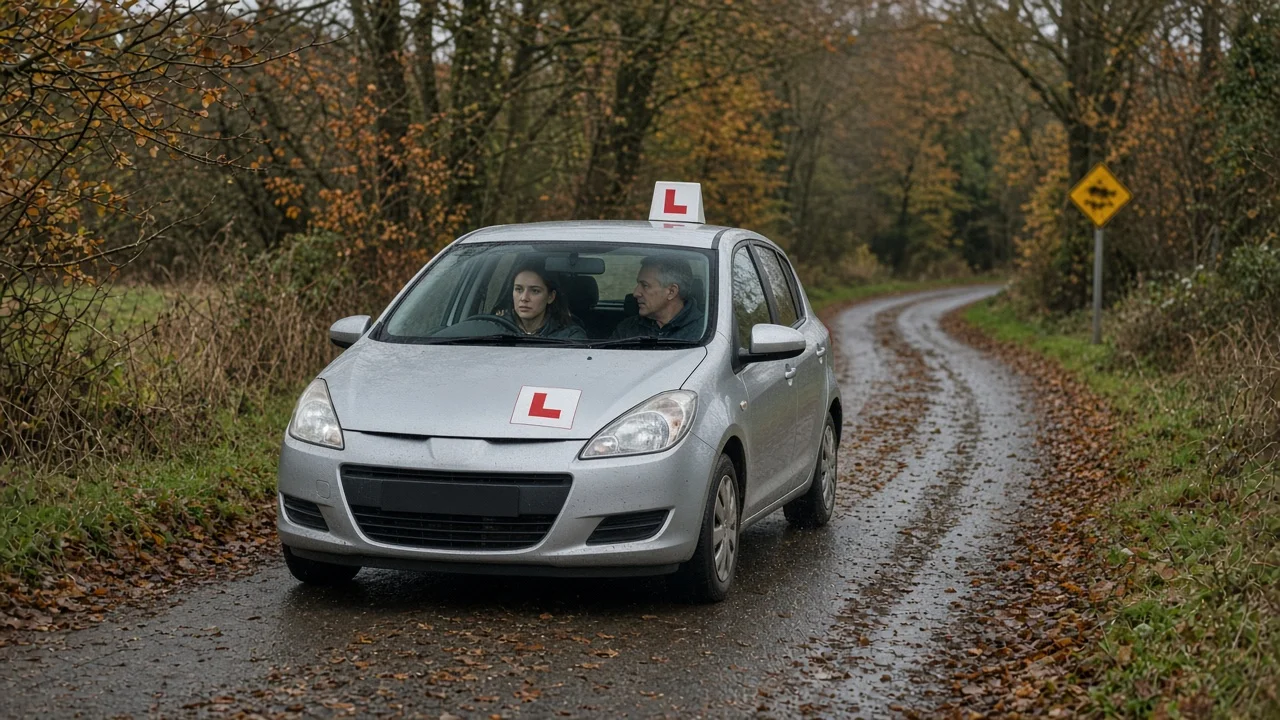
Marcus drives a manual estate to a Saturday football match along a wooded lane after overnight rain. A slippery road triangle appears before a left-hand bend he knows gets muddy when farm tractors use the field gate at the top.
He lifts off the throttle on the approach, checks mirrors, and selects third gear while still on the gentler uphill. Speed settles near thirty miles per hour without a harsh brake application.
A delivery van ahead keeps a steady line but leaves dark streaks near the centre of the lane where diesel has mixed with wet clay. Marcus holds back, using the nearside white line only as a guide rather than a target to hug, because the camber still carries run-off across the wheel tracks.
On his driving test the examiner routes him over the same bend after a shower. Marcus names the hazard aloud as poor grip ahead, slows before the trees close in, and keeps both hands on the wheel through the arc. The examiner notes that he did not accelerate when the main road widened beyond the gate.
The following week a dry spell arrives, yet Marcus still eases off at the triangle because dust and loose gravel from a resurfacing lorry have not washed away. A cyclist overtakes him carefully on the climb; the extra following distance he kept at the sign leaves room without a sudden swerve.
His instructor later asks why the plate matters when no puddle is visible. Marcus explains that the sign marks a recorded stretch where tyres lost grip after harmless-looking drizzle and farm mud; it reminds him to treat the bend as new every wet weekend.
How This Sign Appears on the Theory Test
Picture items show the skidding car and ask what hazard to expect. Choose the answer that the road may be slippery ahead, not ford, steep hill, or level crossing unless the pictogram changes.
Some questions pair the triangle with a braking scenario on a wet surface. Remember the official explanation: slow down, increase distance, and avoid harsh steering or braking while grip is low.
Differentiate from the risk of ice symbol when the wording mentions shade, bridges, or frost. Examiners assume you can match the skid graphic to generic slip when that option is offered.
Hazard perception clips may feature rural bends without zooming on the post. Training yourself to ease off when tree cover closes in helps you score even when the plate is off-screen.
When revising, sketch the car and skid arcs inside a triangle and label generic slip versus ice risk. Wrong-way answers are deliberate distractors in the fifty-question car paper where forty-three correct answers pass.
Take a free mock theory test and filter questions on road and traffic signs. Pair that with the warning signs guide for triangle symbols.
Related Road Signs
Risk of ice sign
Frost and shade where bridges freeze before verges.
Bend left sign
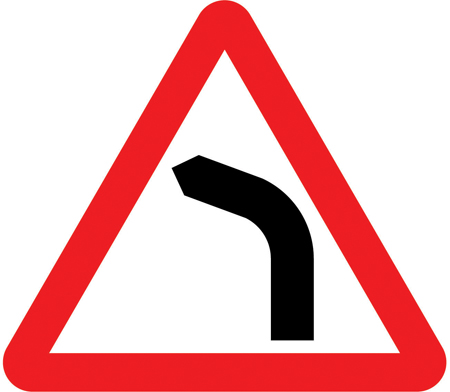
Curves where wet leaves and mud collect on the inside.
Steep hill down sign
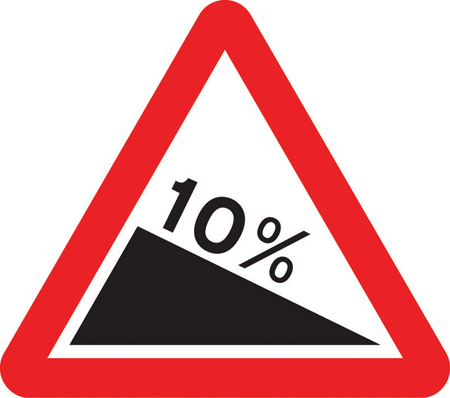
Long descents where braking and grip interact.
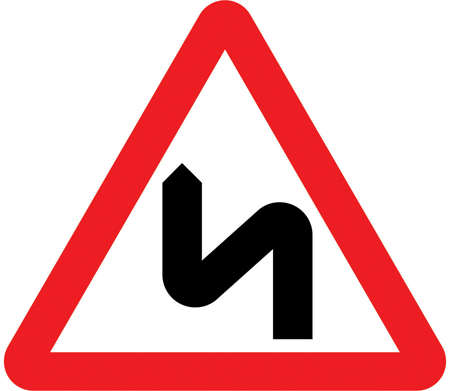
Double bend sign
Successive curves that stay greasy after rain.
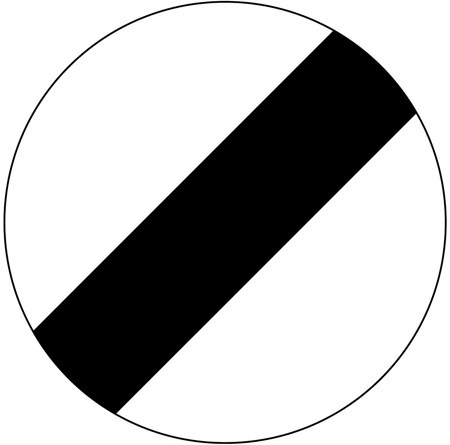
National speed limit
Default limits on open roads where wet grip still varies.
Test Yourself on UK Road Signs
Treat the slippery road warning as early notice to slow before bends, leaves, or mud, keep smooth inputs on steering and brakes, and leave space for cyclists and motorcyclists who feel low grip first. Calm wet-weather driving keeps you inside Highway Code expectations and gives examiners fewer reasons to mark a serious fault on rural test routes.
Frequently Asked Questions
What does the slippery road sign mean on the theory test?
It warns that the road may be slippery ahead. Picture questions expect you to choose that meaning rather than ford, ice-only, or uneven surface unless the symbol changes.
Does it set a speed limit?
No. It is advisory. You must still obey any limit signs and drive below the maximum when grip, visibility, or spray demand.
How is it different from the risk of ice sign?
Both use a skidding car, but risk of ice is placed where frost is expected from shade or bridges. The slippery road plate covers wider grip loss from rain, mud, leaves, and spills as well.
Should I brake hard when I see the triangle?
Ease off early and slow before the bend or contaminated section. Use gentle braking while wheels are straight rather than stamping the pedal on a greasy patch.
Why is the sign still there in dry weather?
Authorities leave it at fixed hazard locations so occasional rain, mud, or fresh gravel still warn unfamiliar drivers. It does not mean the surface is slick every day.