
Last updated: October 2026 · Checked against Highway Code
Bend to the Left Sign: meaning, rules and what to do
A black arrow curving to the left on a white warning field tells you the road ahead bends left, so you should reduce speed before the curve rather than braking mid-corner.
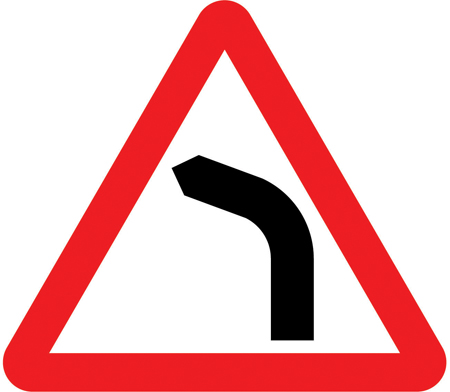
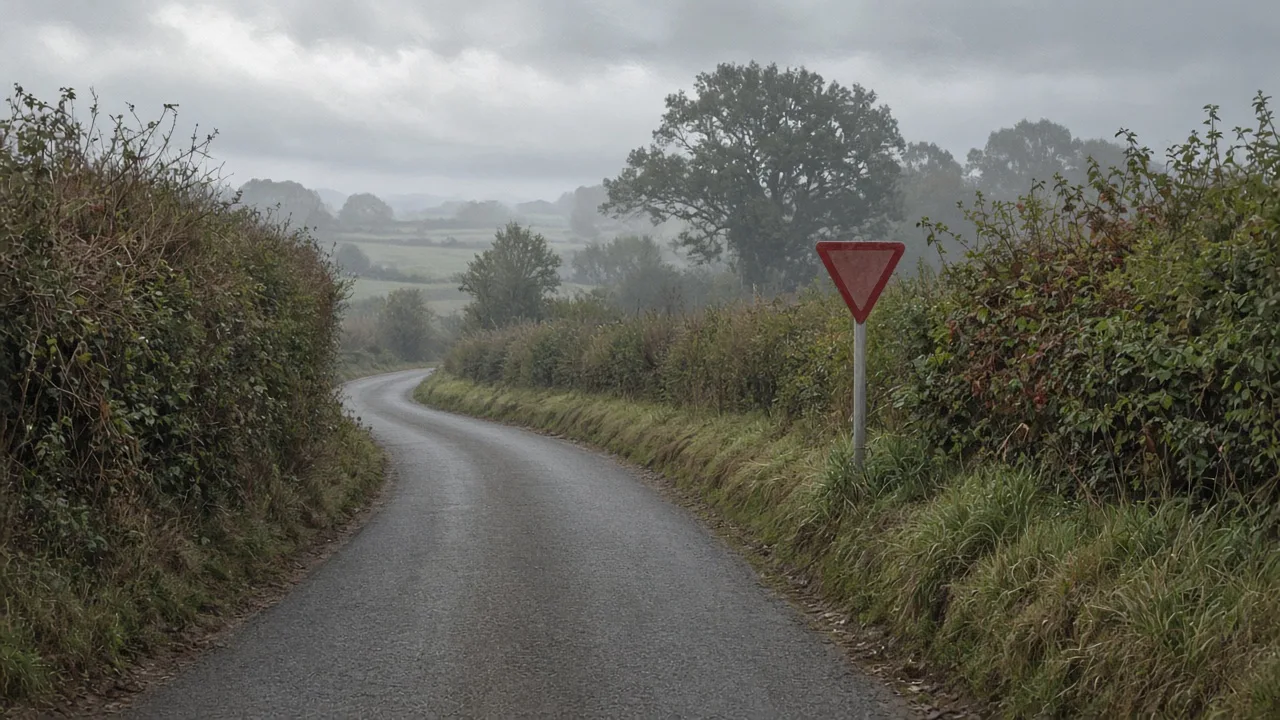
Sign image © Crown copyright, reproduced from GOV.UK traffic sign images under the Open Government Licence v3.0.
What the Bend left Sign Looks Like
The plate is an upward-pointing equilateral triangle with a thick red border and white centre. The symbol is a single black arrow whose shaft runs vertically and whose head turns clearly to the left, matching the direction of the bend on the road. It follows the same warning style as other hazard triangles: red rim, white field, black pictogram.
You will usually see it on a post at the nearside verge, often with a distance plate underneath showing how many yards or metres remain before the curve begins. On fast A-roads the board may repeat after a side entrance so drivers joining from a slip road still get notice. At night the retroreflective face catches headlights long before paint on the carriageway becomes obvious.
Do not confuse it with the mandatory blue “turn left” circle used at junctions where you must follow a lane. The warning triangle does not order a direction; it only describes geometry. A “bend to the right” triangle mirrors the arrow the other way. Double-bend plates show two arrow heads in sequence.
Chevron boards on sharp bends are separate: they are rectangular plates with repeated arrows fixed on the outside of a tight curve. The red triangle appears earlier on the approach, while chevrons line the bend itself. Both can appear on the same stretch in hilly country.
Bend right uses the mirror image. Double-bend triangles warn of two curves in quick succession. Advisory speed plates sometimes sit below the triangle but the limit on the sign remains the legal maximum unless a lower number is shown on a separate circular plate.
What the Bend to the Left Sign Means
The plate appears where the horizontal alignment still surprises drivers who have been travelling in a straight line. Forestry, embankments, and stone walls can hide the curve until you are close, so the triangle buys time to lift off the accelerator and check mirrors before camber and drainage change grip.
Rule 125 in The Highway Code links speed to what you can see and stop within. A bend left sign is your cue to drive at a pace that lets you stop on your side of the road within the distance you can see to be clear, even when the posted limit is higher. That principle applies in rain, fog, and at night when headlight throw defines your safe speed.
Camber often falls away to the left on right-hand bends in the UK; on a left-hand bend the road may rise on the inside, which can feel as if the car is being pushed outward. Smooth steering and gentle throttle keep tyres loaded evenly. Sudden braking once you are leaned into the curve can unsettle the vehicle, especially on gravel or wet leaves.
Oncoming traffic uses the same curve in the opposite direction. Stay left in your lane and avoid cutting the apex if a van or tractor is approaching; their wide body may need the centre of the carriageway. Motorcyclists sometimes take a straighter line; give them room rather than moving left into a ditch or kerb.
Hidden hazards inside the bend include fallen branches, mud from farm vehicles, parked cars on a lay-by, and pedestrians on narrow lanes without footways. Deer and sheep signs may appear on the same rural route; the bend reduces sight time, so the triangle works together with animal warnings rather than replacing them.
HGVs and buses need a wider arc. If you follow a large vehicle, hang back so you can see past their trailer before you commit speed. Overtaking on the approach to an unsigned bend is risky; the warning triangle is exactly where examiners expect you to hold position and match the lorry’s pace.
Ice and standing water collect in shaded bends under trees. Summer dust can mask wet patches after a shower. The sign does not list surface conditions, so scan the road surface as you enter and be ready to ease off if steering feels light or the car aquaplanes.
Temporary signs may cover the permanent triangle during roadworks when the line has shifted. Treat any fresh cone layout as new geometry even on a road you know well. Contraflows on narrow bridges sometimes place a bend warning where traffic now curves the opposite way to normal flow.
Brake in a straight line before you turn the wheel. Trail-braking is an advanced technique; learners should finish most deceleration while the wheels still point ahead, then steer smoothly through the bend.
Select a gear that gives engine braking on long downhill left bends. Riding the brake heats discs and fades stopping power before the next hazard. Diesel and electric cars still need a lower gear on steep moorland routes.
Use the left verge line or kerb as a guide without hugging it so tightly that your nearside wheel catches a drain cover. On roads with no markings, aim to keep a door’s width from the edge where sheep grids and mud end.
Dipped headlights help you see the exit of the curve at night. Full beam can dazzle oncoming drivers who are also negotiating the bend. Slow before the triangle’s distance plate expires so you are not surprised by a sharp radius in blackness.
After heavy rain, check for debris washed onto the inside of the curve. Tractors sometimes drop mud; a small slide at the apex can push you toward the opposite lane if you are still accelerating hard.
Sat navs may call the road straight while the triangle is already visible. Trust the plate and the view ahead over a screen that has not updated for a minor realignment.
If you meet a wide agricultural machine, stop in a passing place before the bend when one is signed, rather than forcing both vehicles to negotiate the arc together. Reversing around a blind curve is slow and dangerous.
Open the window slightly on hot days when you smell clutch or brakes on long descents. The sign marks one curve among many on mountain passes; plan the whole route speed, not only the first arrow.
Bend left vs Similar Signs
| Sign | Meaning | Legal or warning? |
|---|---|---|
| Bend to the left | Single left-hand curve ahead | Warning triangle |
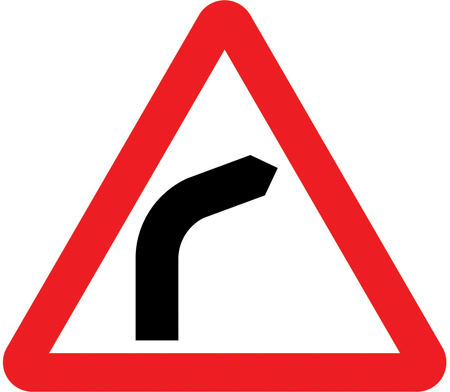 Bend to the right | Single right-hand curve ahead | Warning triangle |
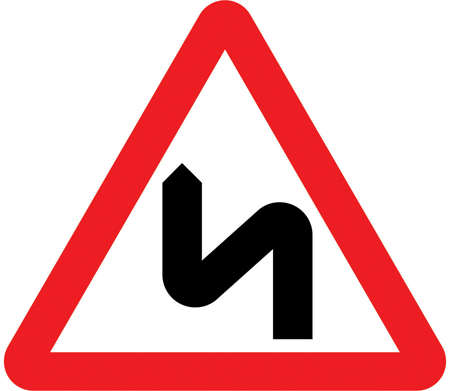 Double bend | Two bends in succession | Warning triangle |
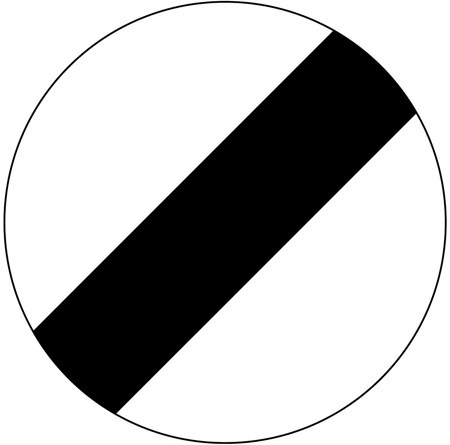 National speed limit | Default maximum on that class of road | Regulatory white disc |
Rules and Penalties
There is no separate offence for “ignoring” a warning triangle, but driving too fast for the bend supports careless or dangerous driving charges if you lose control or force others to swerve. Insurance claims after a single-vehicle skid often cite excessive speed on a known curve.
Crossing the centre line while cutting a left bend can cause a head-on collision. Police and courts treat the oncoming driver as vulnerable even if you misjudged the radius. Fixed penalties are less common than in speed-camera zones unless a crash or camera-equipped patrol witnesses the manoeuvre.
Driving tests fail candidates who enter bends too quickly, drift wide, or coast in neutral. Examiners want controlled braking before the curve, stable gear choice, and a path that stays inside lane markings without clipping the verge.
Losing traction on a bend with worn tyres or under-inflated pressures can invalidate “not my fault” arguments after a slide. The warning sign shows the hazard was advertised; maintaining the vehicle and adjusting speed remain your duty.
Cyclists and horse riders may be ahead around the blind part of the arc. Passing too close on the exit of a left bend, when your car drifts toward the centre, is a common serious fault on test and a real-world risk on narrow lanes.
Check the latest theory test pass mark and book when you are ready via our booking guide.
Bend left in Practice
Priya drives a B-road home from work at the national speed limit. A bend left triangle appears with a plate reading 150 yards. She checks mirrors, eases off the throttle, and drops from fourth to third before the straight section ends.
Around the curve a fallen tree branch partly blocks the nearside wheel track. Because she slowed early, she steers a gentle line inside the centre markings without a panic brake that could have locked the front wheels on wet tarmac.
A van approaches from the opposite direction using its lane correctly. Priya keeps left, completes the bend, and only accelerates once she can see the next straight. On her theory test later, she picks “reduce speed on approach” when the picture shows the left-arrow triangle.
During a driving lesson the same bend is greasy after frost. Her instructor asks her to rehearse the approach twice at a walking pace until the mirror-signal-brake-gear routine happens before the steering input. The examiner on test week notes the same habit and marks nothing for cornering.
That winter a cyclist is climbing slowly on the exit straight. Priya’s earlier patience in the bend leaves enough gap to pass wide and slow after the curve opens, instead of tailgating through the blind section where the triangle had warned her to hold back.
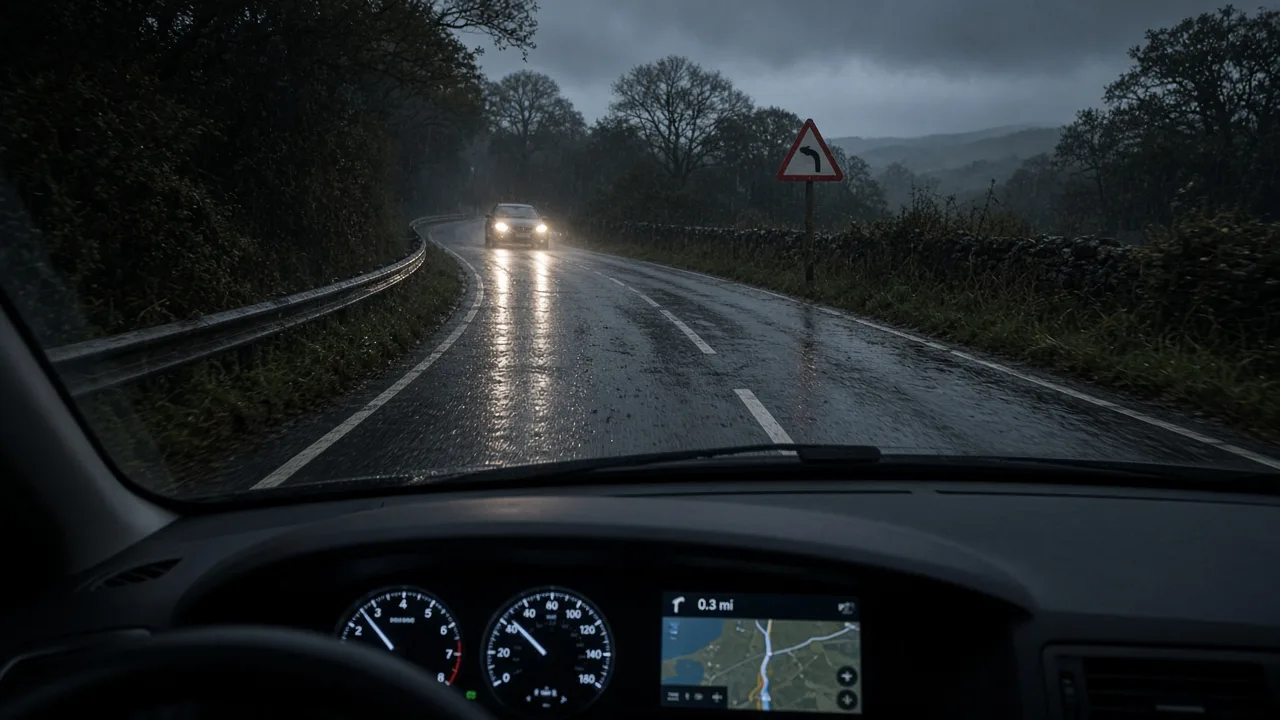
How This Sign Appears on the Theory Test
Picture items show the left-curving arrow inside a red triangle. Choose answers that mention slowing before the bend, not stopping unless another sign requires it.
Contrast with regulatory signs: a blue mandatory left turn is an order at a junction; the warning triangle only describes road shape ahead.
Double-bend questions add a second arrow head. Read the sequence carefully because “first bend left” scenarios expect you to prepare for a follow-up curve to the right.
Hazard perception clips on country roads often reward early clicks when a car drifts wide on a bend. Knowing that triangles precede those curves helps you anticipate loss of control, not only when a sign fills the screen.
Scenario text may pair a bend warning with a national speed limit sign. The correct attitude is to drive within the limit if conditions allow, but always be able to stop in the distance you can see clear on your side of the road.
Some items ask which sign warns of a hazard versus which sign sets a rule. The bend left plate is always warning category in the DVSA classification used in revision materials.
Take a free mock theory test and filter questions on road and traffic signs. Pair that with the warning signs guide for triangle symbols.
Related Road Signs
National speed limit
Default maximum after the bend on open roads.
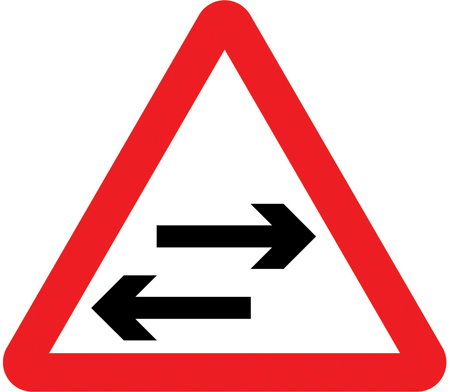
Two-way traffic
Oncoming flow on narrow bends and bridges.
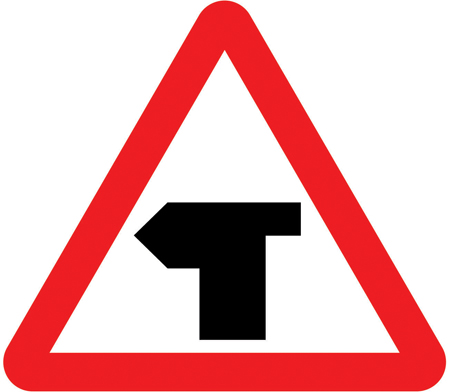
T junction sign
Junction geometry after a winding approach.
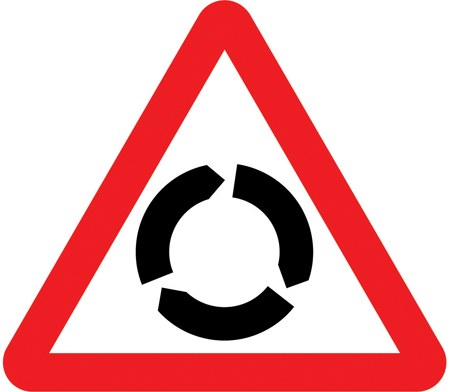
Roundabout sign
Circulating traffic beyond a curving link road.
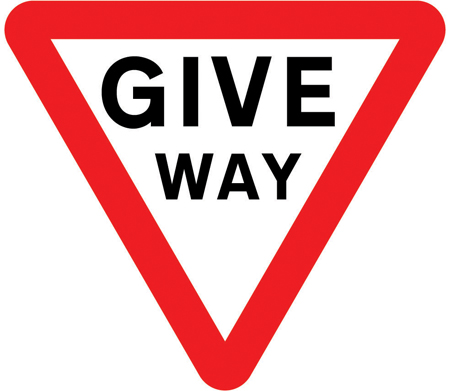
Give way sign
Yield orders often follow blind bends.
Test Yourself on UK Road Signs
Treat the bend left sign as early notice to manage speed and position. A smooth approach keeps grip in reserve for surprises hidden inside the curve and matches what both The Highway Code and driving examiners expect on rural routes.
Frequently Asked Questions
Does the bend left sign change the speed limit?
No. It warns of shape ahead. You must still obey posted limits and drive below them when visibility or grip is poor.
Should I brake while turning?
Finish most braking before you steer. Gentle adjustments mid-bend are sometimes needed, but harsh braking in the curve can break grip.
How is it different from chevron boards?
The triangle warns early on the approach. Chevron plates line the bend itself and repeat the direction of the curve.
Do I need to stop at a bend left sign?
Not unless another sign or marking orders a stop. Slow enough to stay in control and give way to anyone already in the hazard zone.
Will this sign appear on the driving theory test?
Yes. Image questions often show warning triangles. Know that a left-curving arrow means reduce speed before a left-hand bend.