
Last updated: October 2026 · Checked against Highway Code
Traffic Merges Sign: meaning, rules and what to do
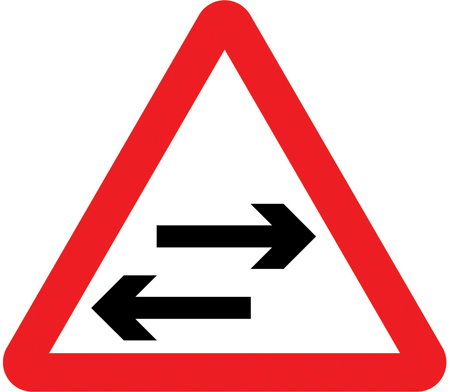
A black merge pictogram on a red triangle warns that a lane from the left will blend into your carriageway, so you must scan mirrors early and adjust speed before the taper ends.
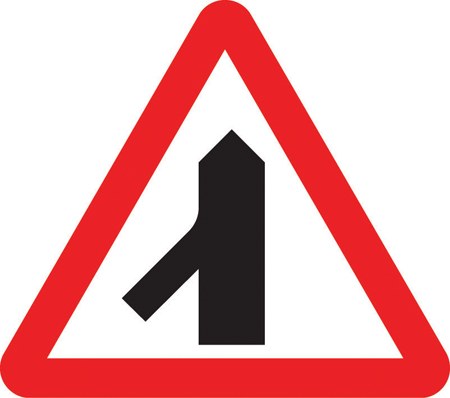
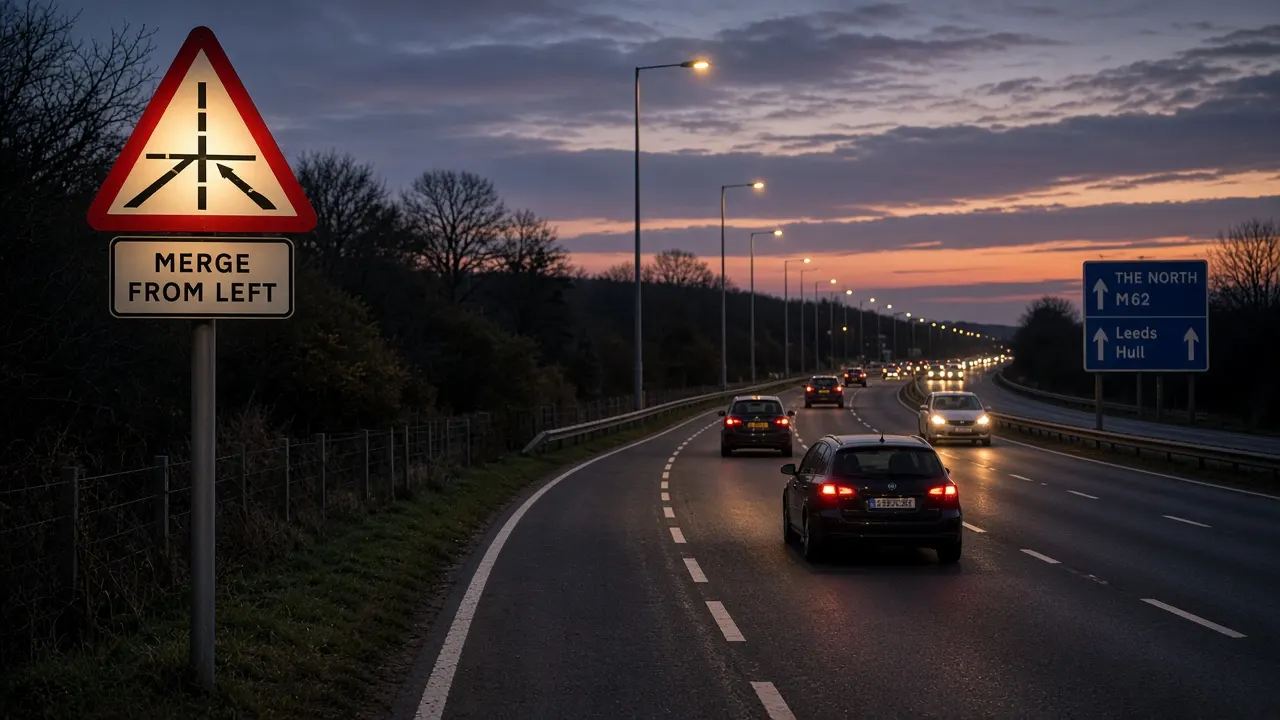
Sign image © Crown copyright, reproduced from GOV.UK traffic sign images under the Open Government Licence v3.0.
What the Traffic merges Sign Looks Like
The board points upward with the usual red border and white centre field. The pictogram shows a main lane continuing ahead while a shorter lane from the lower left curves in until the two flows share one width. The graphic is directional: in the UK official plate the join comes from the left relative to your direction of travel.
Distance plates sometimes sit beneath the triangle, quoting yards to the start of the taper. On motorways and dual carriageways you may see repeater boards after a junction, especially where an acceleration lane is short or hidden by a bend.
Do not confuse it with the lane-reduction triangle that shows two lanes narrowing to one without a side arm. That warning is about width ending, not about live traffic entering from a slip road. Staggered junction signs offset side roads; they describe cross traffic, not a parallel merge.
Blue motorway direction signs list junction numbers but do not replace the merge warning. Temporary cones can shorten a slip road while the triangle still stands on the main line, so read the live layout rather than memory from last week.
At night the retroreflective rim stays bright while the black merge symbol can look faint until your headlamps strike the board squarely. Rain and spray from lorries in the nearside lane may hide a joining car until its tyres hit the main surface.
Lane-reduction warnings show two parallel lines pinching to one without a joining arm. Side-road junction triangles show a stem meeting a bar. The traffic merges plate means a lane of moving vehicles will blend into yours, so your next task is mirror work and gap management, not a full halt at a give-way line on the main carriageway.
What the Traffic Merges Sign Means
The traffic merges sign appears where engineers expect drivers on the main line to underestimate joining traffic. It does not remove your duty to keep a safe following distance, and it does not give merging vehicles automatic priority. It announces geometry and flow so you plan observation before the painted gore disappears.
Rule 146 in The Highway Code asks you to adjust pace on approach to hazards. Here that means lifting your eyes to the nearside mirror, glancing over your left shoulder when lane discipline allows, and covering the brake if the slip road is busy. A smooth small reduction in speed often opens a gap more safely than a late swerve.
On dual carriageways the main line may still show 60 or 70 mph repeaters while the merge taper feels tight. The warning is about shared space, not about repeater numbers. A joining driver matching your speed needs a predictable gap; sudden braking after the triangle can trigger a shunt from behind.
Motorway slip roads use acceleration lanes so joining traffic can build speed. When the lane is short, lorries may still be in low gear as the taper ends. The merge board on the main line reminds you that a slow heavy vehicle could appear beside your rear wheel even when the motorway feels open.
Urban merges appear where bus lanes, park-and-ride spurs, or retail estates feed a fast distributor road. Cyclists entitled to use the nearside lane can be hidden by a joining car that steers late. Check the mirror before you drift right to overtake a queue.
Two lorries merging side by side can block the entire nearside mirror view. If you cannot see the slip road entry, assume someone is there and hold a steady lane position rather than hovering on the lane line.
Smart motorways without a hard shoulder remove the escape space merging drivers once used. The warning triangle on the main line matters more when the nearside lane is live and there is no shoulder to absorb a hesitant joiner.
Night merges show headlights on the slip road before you see bodywork. Dipped beams from a cautious joiner can look like distant street lighting. Slow slightly when the board appears so your mirror checks have time to matter.
Wet surfaces shrink grip for a joiner accelerating from a tight curve. Tyre spray from your nearside wheels can blind a driver who is already steering sharply. Easing off early is courteous and keeps your own ABS from pulsing in a panic stop.
Roadworks sometimes shift the merge point without updating every repeater. Trust cones, temporary markings, and the live triangle position before you assume the slip road still joins where it did before the scheme.
When the triangle appears, mirror-signal-manoeuvre starts with the nearside mirror, not the offside. Joining traffic always threatens the left blind spot first on a standard UK merge.
If you can move to the middle or right lane safely, do it before the taper rather than beside a joiner. One smooth lane change beats two small weaves.
Lorries need the full lane width through a merge. Do not cruise alongside a high-sided vehicle; either pass decisively or hang back where you can see their mirrors.
Sat-nav may announce the junction but not the merge stress on the main line. Trust signage when holiday traffic packs the slip road.
In rain, double the gap you would leave in dry weather. Joining drivers may aquaplane if they steer while still accelerating.
Open windows near a slip road let you hear motorcycles that lack loud exhaust notes but still accelerate hard to match speed.
If you are the joining driver, the merge warning on the main road does not remove your duty to match flow. Use the full acceleration lane where one exists, signal right early, and avoid stopping unless the main line is truly blocked.
Electric cars are quiet at merge speed. A joiner in a EV may be beside you before you hear anything; mirror checks matter more than engine noise.
Highway Code rules 146, 151 and 259 to 261 (hazard approach and joining)
Traffic merges vs Similar Signs
| Sign | Meaning | Legal or warning? |
|---|---|---|
| Traffic merges | Lane from the left joins your flow | Warning triangle |
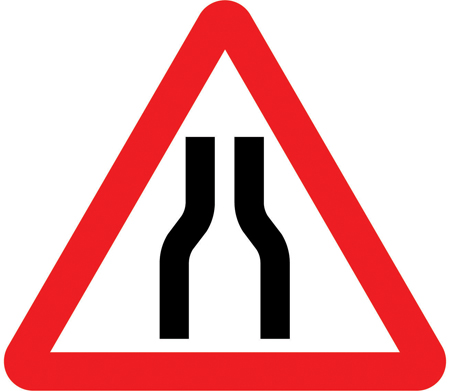 Lane reduction | Two lanes become one | Warning triangle |
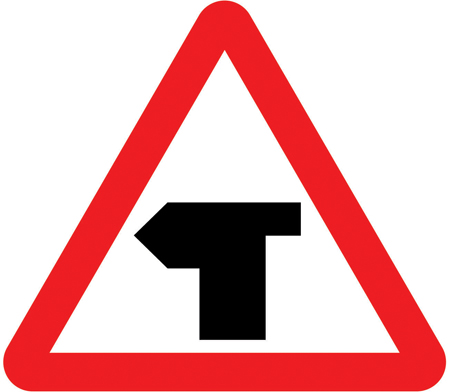 T junction | Side road meets through route | Warning triangle |
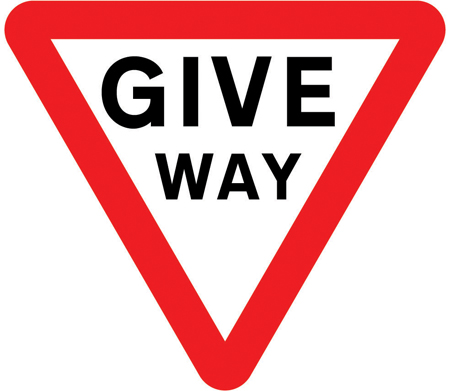 Give way | Regulatory yield at a line | Inverted triangle |
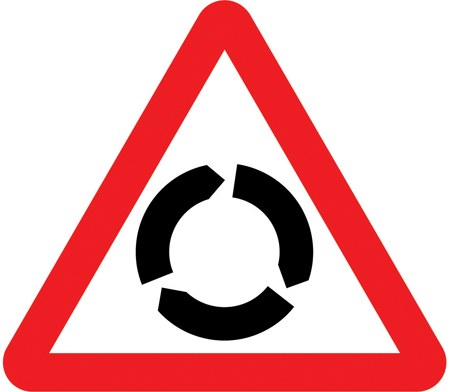 Roundabout ahead | Circulation replaces a plain merge | Warning triangle |
Rules and Penalties
Deliberately closing a gap so a merging driver cannot enter can support a careless driving report if they brake sharply or leave the carriageway. Investigators ask whether you checked mirrors and adjusted speed when the warning was visible.
Changing lanes without signal or mirror checks at a merge causes sideswipe collisions. Insurance fault often falls on the driver who moved without a safe gap, even if the joiner was hesitant.
Tailgating on the main line leaves no room to ease off for merging traffic. If a rear shunt follows your sudden brake, the following driver may be cited, but your mirror neglect can still appear in the narrative.
Overtaking on the nearside lane just before a merge point can trap a joiner between your car and the kerb. That manoeuvre fails driving tests and can attract police attention on fast distributors.
Theory questions rarely quote the plate by name; they show the merge pictogram and ask what to expect. Learning the symbol saves time and stops you picking answers about plain lane endings.
Check the latest theory test pass mark and book when you are ready via our booking guide.
Traffic merges in Practice
Noah drives the main carriageway of a dual route at 55 mph in light rain. A traffic merges sign appears with a 300-yard plate. He checks the nearside mirror and sees a hatchback on a short slip road still below his speed.
He lifts off the accelerator, flashes his rear lights once by gentle braking, and holds the centre of his lane. The hatchback blends in without touching the brakes hard. A following van had room because Noah eased off early at the warning, not at the last metre of paint.
Last month Noah had swerved right without a mirror check and startled a cyclist in the nearside lane. The triangle now triggers mirror-shoulder-lane position before he thinks about overtaking a queue.
On a later motorway lesson his instructor points to the same pictogram after a service station rejoin. Noah moves to lane two when the mirror shows a lorry on the slip road, then returns to lane one once the merge is clear.
In a theory app he recognises the left-joining graphic instantly and rejects an answer about a T junction. Linking the image to merging flow, not cross traffic, was the difference between pass and fail on road-sign questions.
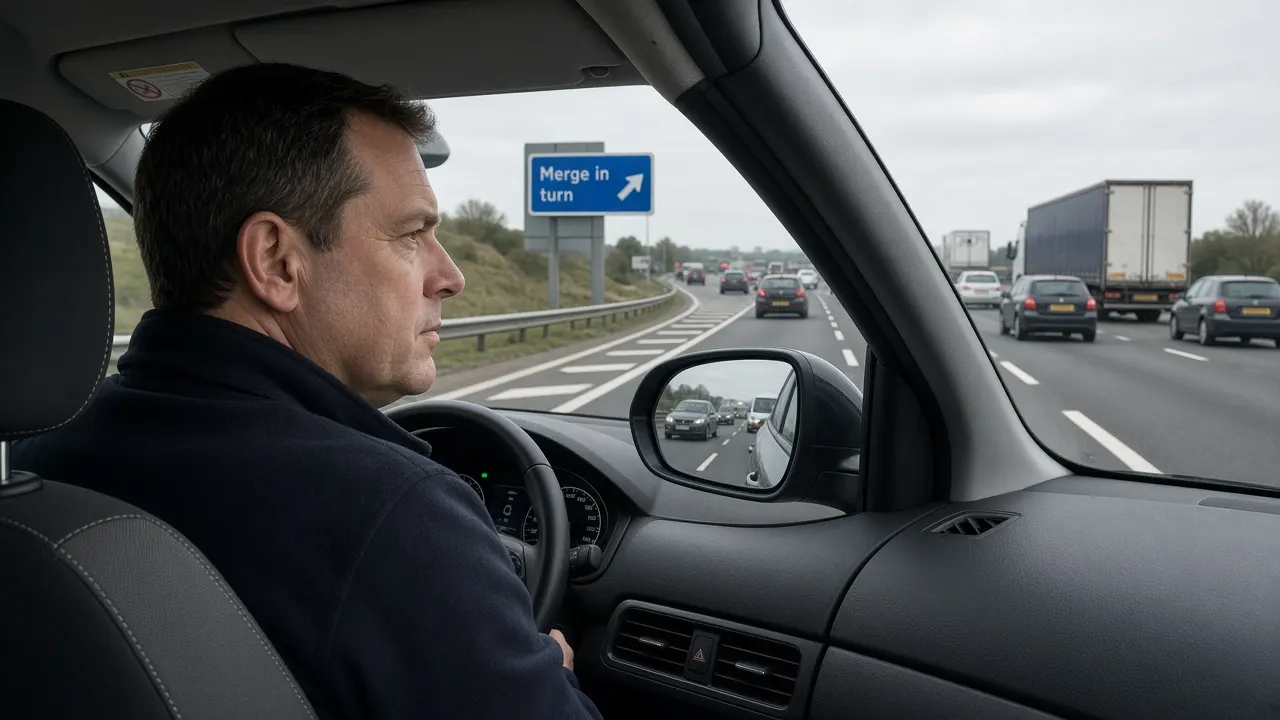
How This Sign Appears on the Theory Test
Match the merge pictogram to joining traffic from the left. Reject answers about dead ends, lane closures without a slip road, or give-way orders unless a separate regulatory plate is described.
Hazard perception clips sometimes show a car drifting left as a joiner appears. Click when the conflict develops, not when the distant triangle first flashes.
When two answers both say “slow down”, pick the one that includes mirror checks and making space, not merely easing the throttle while staying glued to the lane line.
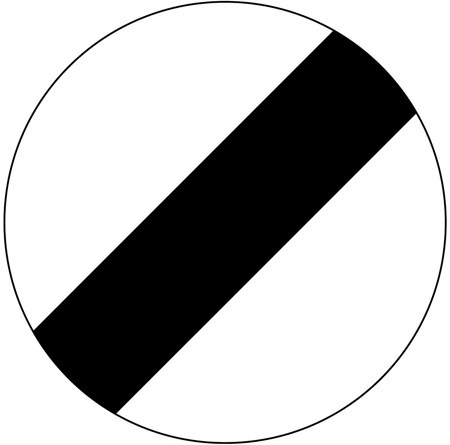
Picture questions may pair the warning with a national speed limit repeater. Remember that speed plates and merge geometry answer different questions.
Differentiate from staggered junction and T junction triangles: those show crossroads geometry, not a lane blending parallel to your path.
Sketch the merge on paper and label which arm carries joining flow. Examiners assume you can connect the symbol to a slip-road scenario without hesitating.
Take a free mock theory test and filter questions on road and traffic signs. Pair that with the warning signs guide for triangle symbols.
Test Yourself on UK Road Signs
Treat the merge triangle as a mirror-and-gap warning: ease off early, watch the nearside blind spot, and give joining drivers a steady space so everyone reaches the same lane without a late swerve or brake test.
Frequently Asked Questions
What does the traffic merges sign warn about?
It warns that a lane from the left will blend into your carriageway. Expect joining vehicles and adjust speed and position before the taper ends.
Who has priority at a merge on the main road?
The warning does not grant automatic priority to either side. Main-line drivers should make space when safe; joining drivers must match speed and merge without forcing others to brake sharply.
How is it different from a lane-reduction sign?
Lane-reduction triangles show two lanes pinching to one without a joining slip road. The traffic merges plate shows live traffic entering from the left.
Should I change lanes when I see the sign?
Change only if it is safe and necessary to open a gap. A nearside mirror and shoulder check come first; an unnecessary lane change can create a new conflict.
Will this appear on the theory test?
Yes. Category B questions show the merge pictogram and ask what hazard to expect. Link it to joining traffic, not to crossroads or plain lane endings.