
Last updated: October 2026 · Checked against Highway Code
No Overtaking Sign: meaning, rules and what to do
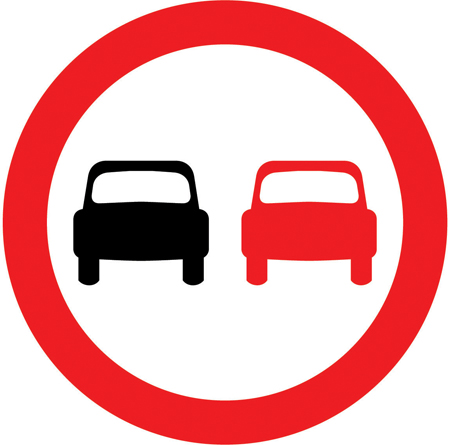
A red-ringed circle with two car silhouettes and a diagonal bar through the overtaking vehicle tells you that passing other moving traffic is forbidden on the signed length ahead.
Sign image © Crown copyright, reproduced from GOV.UK traffic sign images under the Open Government Licence v3.0.
What the No overtaking Sign Looks Like
The regulatory disc is white with a thick red border. Two black car silhouettes sit side by side, and a red diagonal slash crosses the nearside car to show the overtaking movement is cancelled. There is no speed number on the face; the pictogram alone creates the order.
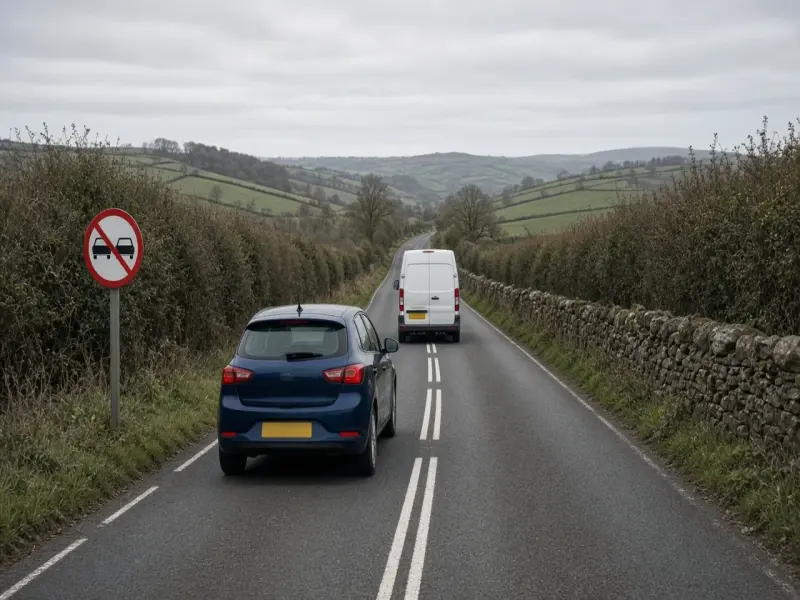
Posts usually stand on the left verge at the start of a hazard, often paired with double white centre lines on the carriageway. Repeat circles appear after side roads or lay-bys so drivers who joined mid-zone still see the restriction. At night the retroreflective ring is the first detail you notice.
Learners confuse it with “no motor vehicles”, which shows car and motorcycle glyphs instead of a passing manoeuvre. They also mix it with “end of dual carriageway” triangles, which warn about layout rather than banning overtakes. The two-car symbol in a red ring always means passing moving traffic is illegal here.
Temporary versions on metal frames copy the same layout during roadworks. Treat them as binding until a lawful end plate or diversion cancels them. Sat-navs may still suggest overtaking a slow tractor; the plate at the kerb overrides the screen.
Supplementary white rectangles may show distance, time bands, or “except cycles” on rare urban schemes. Read every plate on the post before you assume the ban is absolute for every class. A small end sign with a black stripe on white inside a red ring marks where overtaking becomes legal again if the road markings allow.
Think “do not pass moving traffic on this length”. Warning triangles about bends or hills advise caution; this circle creates a legal overtaking ban. Pair it with double white centre lines in your revision notes, because examiners often describe both together on country roads.
What the No Overtaking Sign Means
Traffic authorities install the order where sight lines, junction density, or collision history make passing dangerous even when drivers feel impatient behind a lorry or caravan. It applies from the sign until you pass an end plate, leave the signed road at a junction outside the zone, or reach markings that clearly cancel the restriction.
Rule 163 in The Highway Code sets the general overtaking standard: only pass when it is safe and legal. Rule 165 lists situations where you must not overtake, including where signs forbid it. The circular plate turns that general advice into a fixed order for the whole signed stretch, not only at one blind crest.
The ban targets overtaking manoeuvres against other vehicles that are still moving. You remain in breach if you cross the centre line to pass a slow car, bus, or motorcycle even when oncoming traffic looks clear. Passing a stationary queue at a junction is a separate judgement: if vehicles are moving intermittently, treat them as traffic you may not pass.
Double white lines often reinforce the same length. Where the centre marking is solid on your side, you must not cross it; the circle still matters when markings are worn or covered by snow. If a broken centre line returns and an end plate appears, you may overtake only when the usual Highway Code checks are satisfied.
Large vehicles need longer gaps. A car driver who ducks out to pass a tractor must complete the whole manoeuvre inside the legal section. Starting an overtaking run just before the end plate and finishing beyond it still counts as a breach if you passed moving traffic where the order applied.
The restriction does not by itself cap your speed. A separate round speed limit sign may sit on the same post. Examiners still expect you to drop speed behind slower traffic rather than hugging the bumper waiting for a gap that the law will not allow.
Expect the plate on single-carriageway A-roads through moorland, forest bends, and village approaches where driveways are hidden. Devon, North Wales, and the Scottish Highlands have long examples where one slow caravan sets the pace for miles.
Near level crossings and bridges, the circle often appears with narrow carriageways. Overtaking there risks meeting oncoming traffic with nowhere to tuck in. Hold position and use lay-bys only when you need to stop, not as a launch pad for an illegal pass.
On driving tests, examiners watch for illegal overtakes after frustration behind a bus. If the red-ring two-car symbol is visible, completing a pass is a serious fault even when the examiner knows you could have made it mechanically.
Motorcyclists may filter in slow urban traffic where lane discipline differs, but on signed rural lengths the order applies to every motor vehicle class unless a plate exempts cycles. Do not use the nearside gutter to sprint past a queue when the circle is in force.
After dark, judge following distance by the red reflectors on the vehicle ahead. Without overtaking relief, plan earlier overtaking opportunities on the previous straight where signs still permit passing, or accept a slower arrival time.
Highway Code rules 127, 163, 165 and 168 (overtaking and road markings)
No overtaking vs Similar Signs
| Sign | Meaning | Legal or warning? |
|---|---|---|
| No overtaking | Passing moving vehicles forbidden on signed length | Regulatory red circle |
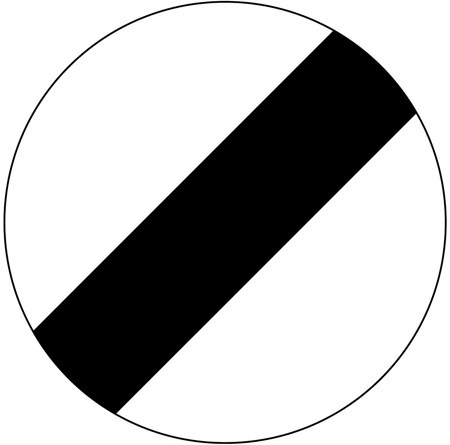 National speed limit | Default maximum for the road class, not a passing ban | Regulatory white slash on black |
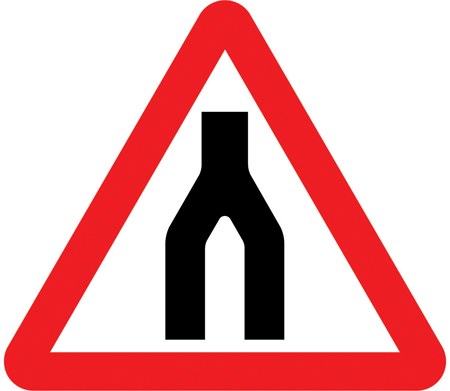 Dual carriageway ends | Warning that central reservation ends ahead | Warning triangle |
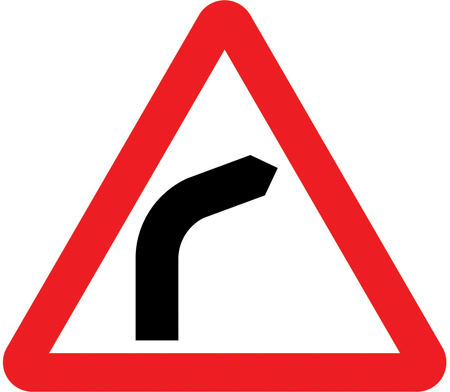 Bend to right | Hazard warning; overtaking may still be legal | Warning triangle |
Rules and Penalties
Police can prosecute failing to comply with a traffic sign when they see you overtake inside a signed zone. Penalty points and fines depend on the offence code and whether your pass forced another driver to brake or swerve.
Head-on collisions after illegal overtakes on banned lengths attract careless or dangerous driving charges, which carry far heavier sentences than a simple sign breach. Insurers may reduce compensation when dashcam footage shows you crossed double whites beside a no overtaking plate.
Speed cameras measure velocity, not passing, but average-speed sections sometimes cover the same hills where overtaking is banned. A steady following distance keeps you inside both the limit and the passing rule.
HGV and PCV drivers face the same symbol in theory tests and on route plans. Professional schedules should allow for slow traffic on signed climbs rather than assuming a passing opportunity every mile.
Civil claims after a nearside scrape often cite the regulatory circle as clear notice that the passing driver chose an unlawful manoeuvre, even when the slower vehicle was below the speed limit.
Check the latest theory test pass mark and book when you are ready via our booking guide.
No overtaking in Practice
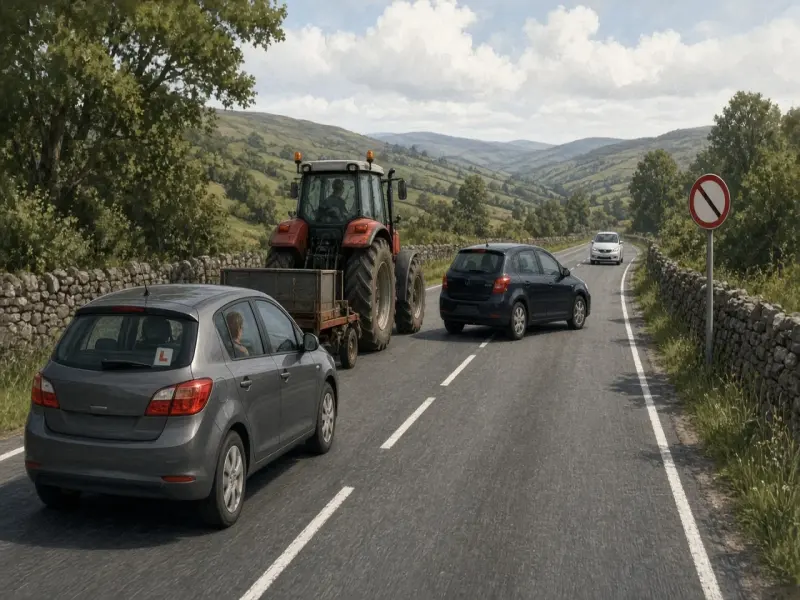
Elena follows a loaded tipper at forty-five miles per hour on a national speed limit single carriageway in the Peak District. A no overtaking sign stands beside double white centre lines, and the road curves left beyond a stone wall.
Traffic behind her stacks five deep. A van driver flashes headlights and pulls out across the centre line to pass both Elena and the lorry. An oncoming car appears from the blind bend, brakes hard, and the van driver cuts in early, forcing Elena to slow sharply.
Elena had already dropped back to a four-second gap and stayed on her side of the lines. At the next village she sees the black-stripe end plate and a broken centre line, but she still waits until the view opens before passing the lorry legally.
In a mock theory session that evening she recognises the two-car pictogram and picks “No overtaking” instead of “No motor vehicles”. The scenario matches DVSA wording that you must not pass other moving vehicles while the restriction is in force.
How This Sign Appears on the Theory Test
Image questions show the two-car circle and ask for the correct title. Choose “No overtaking” rather than lane or speed options unless the pictogram changes.
Scenario stems describe double white lines plus frustration behind a caravan. The safe answer keeps you in lane until the signed zone ends, even when a gap looks temptingly wide.
Contrast regulatory circles with warning triangles. A bend sign advises caution; the overtaking ban creates a legal prohibition for the whole length.
Link revision to road markings: solid white centre lines on your side reinforce the same message. Questions may mention only markings, only the sign, or both.
Fifty multiple-choice questions need forty-three correct within fifty-seven minutes. Sign recognition slips are cheap to fix with a short daily drill on prohibition circles before you book the real test.
Take a free mock theory test and filter questions on road and traffic signs. Pair that with the warning signs guide for triangle symbols.
Related Road Signs
National speed limit
Sets default speed; does not cancel a passing ban.
Dual carriageway ends
Layout warning where overtaking risk often rises.
Bend to the right
Hazard warning without a legal passing ban.
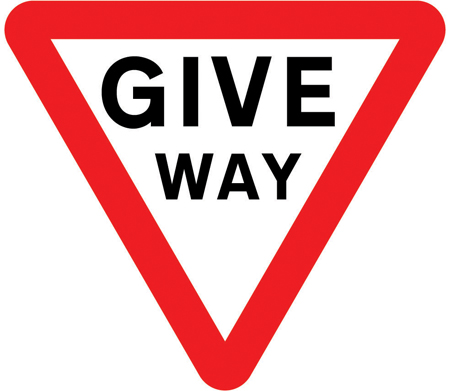
Give way sign
Priority triangle, not an overtaking order.
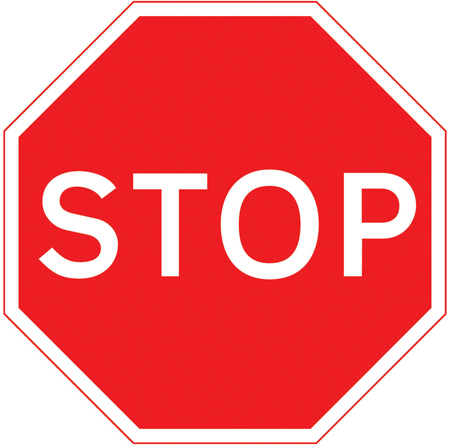
Stop sign
Mandatory halt; separate from passing bans.
Test Yourself on UK Road Signs
When the two-car symbol appears in a red ring, settle behind slower traffic and use the signed length to rebuild sight lines. A free mock theory test helps you spot the no overtaking sign quickly before exam nerves kick in.
Frequently Asked Questions
Can I overtake if the car ahead is driving slowly?
No, not while the regulatory order applies and the other vehicle is still moving. You must wait for an end plate or a section where passing is legal and safe under the Highway Code.
Does the sign apply to motorcycles?
Yes, unless a supplementary plate exempts a class. The standard order covers motor vehicles overtaking other moving traffic on the signed length.
What ends the restriction?
Usually a circular end plate with a black diagonal stripe on white, or leaving the controlled road at a junction outside the zone. Fresh centre-line markings may also show where passing becomes possible again.
Is overtaking banned on both sides of the road?
Each carriageway is signed for traffic facing that direction. Oncoming traffic has its own plates and markings. Do not assume your ban applies to drivers coming the other way.
Will I fail my driving test if I overtake here?
An illegal overtaking manoeuvre inside a signed zone is usually a serious fault. Examiners expect you to hold position even when traffic behind you grows impatient.