
Last updated: October 2026 · Checked against Highway Code
Level Crossing No Barrier Sign: meaning, rules and what to do
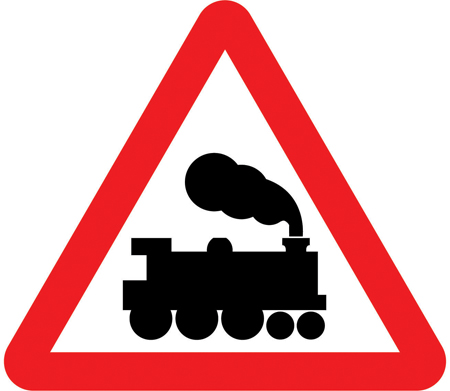
The level crossing no barrier sign is a red-bordered warning triangle with a black steam locomotive pictogram, telling you an open railway crossing lies ahead where there are no gates or barriers, so you must slow, look both ways, listen for trains, and stop when red lights flash or a horn sounds.
Sign image © Crown copyright, reproduced from GOV.UK traffic sign images under the Open Government Licence v3.0.
What the Level crossing without barrier Sign Looks Like
The official GOV.UK plate follows standard UK warning grammar: upright red triangle, white centre, black symbol. The artwork shows a side view of a steam locomotive with a smoke plume, which examiners still use even though most trains are electric or diesel. There are no barrier arms, no numeric speed ring, and no blue mandatory circle inside the frame.
Posts usually stand on the nearside verge on the final straight before the rails, often paired with a distance plate in yards or metres. Some authorities repeat the triangle after a side road so joining traffic receives the same heads-up. Retroreflective sheeting keeps the red border readable in rain long before the white crossboards at the track appear.
Learners often confuse it with the level crossing with barrier warning, which adds barrier arms to the pictogram, or with tramway plates that show a tram silhouette on rails in the carriageway. Opening bridge triangles show a hinged road deck, not a train. Once you notice the chimney and wheels, the locomotive graphic is hard to mix up with anything else in the warning chapter.
Temporary works may cover the permanent post during track maintenance, but the symbol stays the same when engineers replace sleepers. Portable lights sometimes appear while contractors test circuits. Even then the triangle remains the static reminder that tyre rubber and steel rails share a single plane with no gate to catch mistakes.
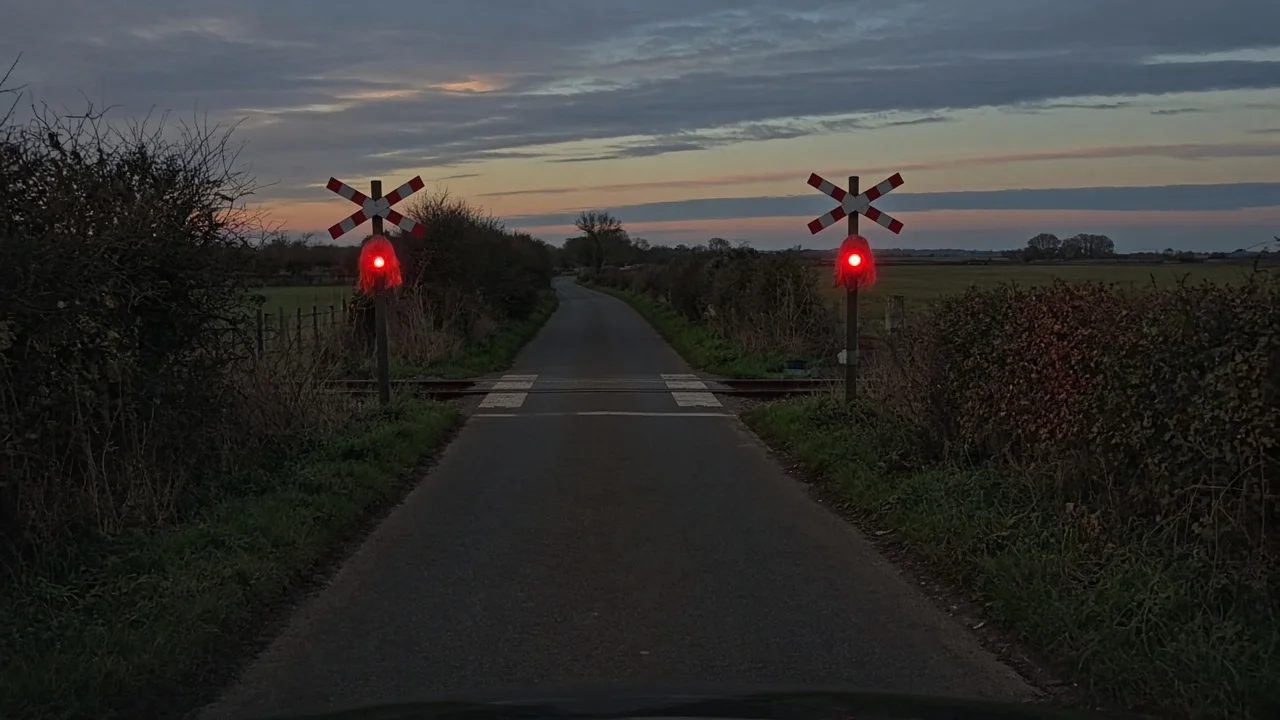
Barrier crossing warnings promise gates or barriers that descend before a train arrives. This plate marks crossings where lights, bells, and your own observation must do that job. At the track you should also see red and white St Andrew's cross boards; if signals show danger, stop even when the triangle is already behind you in the mirror.
What the Level Crossing No Barrier Sign Means
Highway authorities install the warning where a public road crosses open railway lines without full barriers. That includes many rural automatic open crossings, some user-worked gates on heritage lines, and older layouts where sight lines were judged adequate decades ago. The triangle does not tell you which train company uses the line. It tells you that routine driving can end in a collision with a vehicle that cannot swerve.
Rule 291 in The Highway Code groups level crossings together: be ready to stop, look both ways, listen, and obey lights and signs. Rule 292 adds that you must stop if red lights flash, a stop sign is shown, a person signals you to stop, or you hear a train approaching. Rule 293 covers user-worked crossings with telephones; Rule 294 covers automatic open crossings; Rule 295 covers automatic barrier crossings for contrast. The warning triangle sits upstream so those duties do not surprise you at the stop line.
Stopping distance still follows Rule 126. Your speed on the approach must let you halt before the white line when wig-wags pulse red. HGVs and coaches need longer gaps because mass carries them toward the rails. The warning buys time to drop a gear, open a window in quiet countryside, and check mirrors before the crossboards fill your windscreen.
Open crossings rely on train detection circuits that trigger lights and sometimes audible alarms. Equipment can fail, and maintenance windows can leave you facing a dark signal head when a special movement runs late. The triangle never replaces checking visually along both rails before you move. If in doubt, wait behind the line and use the yellow telephone if one is fitted.
Double tracks need double checks. A train passing left to right can hide a second unit approaching from the other direction. Wind noise in your cabin and music through speakers dull the horn you need to hear. The sign is your cue to treat the next hundred metres as a zero-distraction zone, not as a place to read messages or adjust sat nav volume.
Night driving changes the puzzle. Dipped headlights help you see reflectors on posts without dazzling yourself on shiny rails. Full beam can wash out red lenses and tempt you to roll forward when you should hold. If lights are out of service, local instructions may require stopping and looking; follow any temporary sign or flagger before trusting habit.
Pedestrians, cyclists, and horse riders may cross at the same place. School children on rural lanes sometimes treat the track as a shortcut. Scan verges and footpath mouths near the crossing because people may step out when vehicle lights suggest the road is clear even though a freight train is threading the curve.
Electric multiple units are quieter than the steam silhouette suggests. Do not assume absence of chuffing means absence of traffic. Leaf fall, snow, and wet leaves can make rails slick for road tyres if you stop on them; keep your wheels off the metal unless you are crossing promptly in one smooth move.
Heritage railways and tram-train interfaces are rare on test routes but common in revision banks. The same triangle grammar applies wherever Network Rail or a licensed operator crosses a road without barriers. Your legal duty is unchanged: obey signals and do not enter the crossing when a train is due.
Sat navs may route you over an open crossing without announcing freight timetables. When the locomotive triangle appears, cancel cruise control and treat ETA guesses as fiction until your bonnet is past the last rail and your mirror shows clear track behind.
Read distance plates as time to think, not as a speed limit. Use them to select a lower gear on manual cars and to open a gap from the vehicle ahead so you are not trapped straddling the stop line when red flashes.
If you queue at a busy open crossing, leave space for emergency vehicles and for the crossing keeper to wave traffic through after a train. Blocking the box junction beyond the rails can earn a penalty charge notice in some towns even when rail delays stack the queue.
Caravans and long outfits need the headroom and width plates that sometimes sit beside the warning. Low-loader escorts may pause on the approach; stay patient because reversing blind across live rails is not an option.
Motorcyclists should avoid filtering past queued cars if the queue hides wig-wag lenses. Stay in line where rails and flangeways can snag a tyre at an angle. Stand up slightly on the pegs if you need a sight line over a van roof without drifting into oncoming traffic.
When driving for work, note that dashcam footage of level crossing misuse is shared with British Transport Police campaigns. A fine and points for jumping flashing reds hurt less than a near miss with a seventy-mile-per-hour passenger service.
During driving tests, examiners rarely depend on a live train movement, but they may use roads where the triangle appears to test whether you read advance warnings and adjust speed without prompting. Calm observation scores better than dramatic last-second braking at the boards.
If you stall on the crossing, get everyone out, move clear of the rails, and use the telephone or call emergency services with the crossing identification plate number. Do not restart on the metals while a train is in sight.
After storms, fallen branches can hide crossboards or bend posts. Report damage through the number on the yellow sign so engineers can reset detection before the next freight path.
Level crossing without barrier vs Similar Signs
| Sign | Meaning | Legal or warning? |
|---|---|---|
| Level crossing without barrier | Open railway ahead; look, listen, obey lights | Warning triangle |
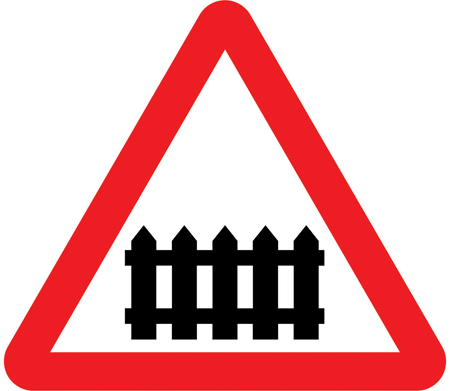 Level crossing with barrier | Gates or barriers will descend when trains approach | Warning triangle |
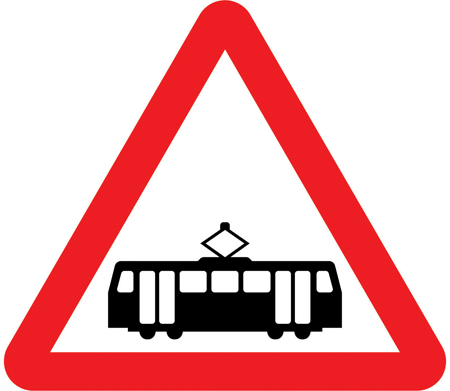 Tramway ahead | Trams may share the road on embedded rails | Warning triangle |
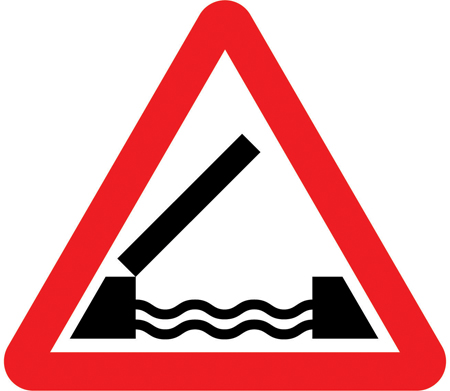 Opening bridge | Movable road span may open for shipping | Warning triangle |
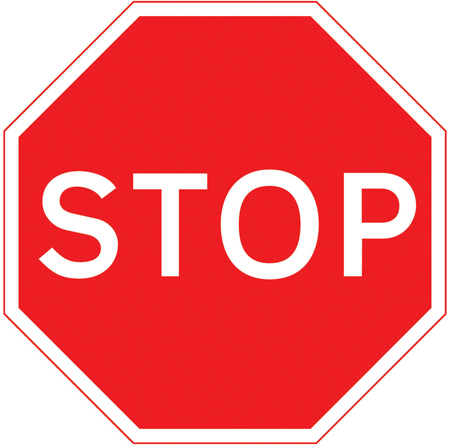 Stop | Mandatory halt at the stop line when shown | Regulatory octagon |
Rules and Penalties
The warning triangle itself creates no fixed penalty because it is advisory. Failing to stop when red lights flash at an open crossing can lead to prosecution for failing to obey traffic signals, with penalty points and a fine if convicted.
Entering the crossing when a train is approaching risks careless or dangerous driving charges if others must brake or swerve, even when no collision occurs. British Transport Police and local officers patrol known misuse hotspots with video evidence.
Misuse of user-worked crossings, including leaving gates open or ignoring telephone instructions, can attract railway bye-law enforcement as well as road traffic law. Treat keeper guidance as binding.
Blocking the crossing when stationary on the rails obstructs trains and can lead to prosecution for obstructing the railway as well as road offences. If you cannot clear the crossing, do not start across.
Driving tests mark serious faults for rolling past stop lines when wig-wags demand a halt, or for attempting to beat a closing train when barriers are not fitted but lights already flash.
Check the latest theory test pass mark and book when you are ready via our booking guide.
Level crossing without barrier in Practice
Marcus drives a delivery van along a Suffolk B road he rarely uses. The level crossing without barrier warning appears with a plate reading four hundred yards. He cancels adaptive cruise, selects third gear, and cracks the window an inch to hear better over the diesel fan.
Two hundred yards on, the St Andrew's cross boards stand bright against grey sky. No red lights yet. Marcus slows to twenty miles per hour, scans both rails, and listens. A wood pigeon distracts him; he ignores it and keeps eyes moving along the metals.
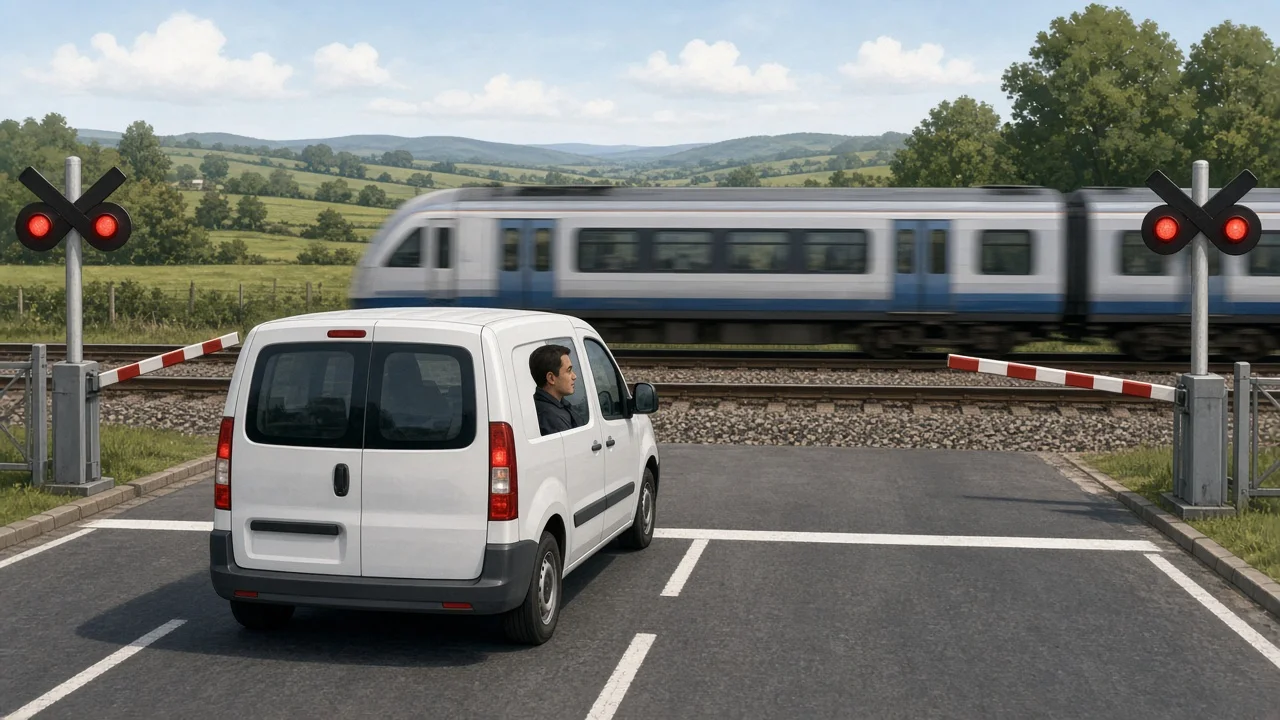
Halfway to the line, twin red lights begin to pulse and a bell clangs. Marcus stops with his front wheels behind the thick white stop line while a two-car unit glides past from his left. He notices a second path on the far side and waits until the lights stop flashing and his view along both tracks is empty.
He crosses in one steady pull without pausing on the rails, checking mirrors for a cyclist who queued behind him. On a later theory revision evening he matches the locomotive triangle to open crossings rather than barrier artwork, and he scores a hazard perception clip by easing off when brake lights bunch before crossboards glow.
His instructor asks what he would do if the lights failed and a sign said stop when lights out of order. Marcus answers that he would halt, look, listen, and use the telephone before moving, because the static triangle still promised rails even when electronics were silent.
How This Sign Appears on the Theory Test
Picture questions show the steam locomotive warning triangle and ask what hazard to expect. Choose an open level crossing, not a tram in the carriageway or a lifting bridge.
Scenario stems may add flashing red lights. The correct pattern is stop behind the line and wait; proceed only when lights stop and the way is clear, matching Highway Code level crossing rules rather than inventing a grace period.
Distractors sometimes show barrier arms on the pictogram. Compare symbols carefully: arms mean barrier crossing warning; locomotive alone means open crossing ahead.
Hazard perception rewards early slowing when traffic stacks before wig-wag heads or when rural road texture changes near rails. You may not see the triangle in the clip, but the behaviour the sign teaches still raises your score.
When revising warning triangles, sketch the locomotive and label it look and listen. Examiners expect instant recognition without confusing it with railway station direction signs on blue panels.
Take a free mock theory test and filter questions on road and traffic signs. Pair that with the warning signs guide for triangle symbols.
Related Road Signs
Stop sign
Mandatory halt where a stop line protects the crossing mouth.
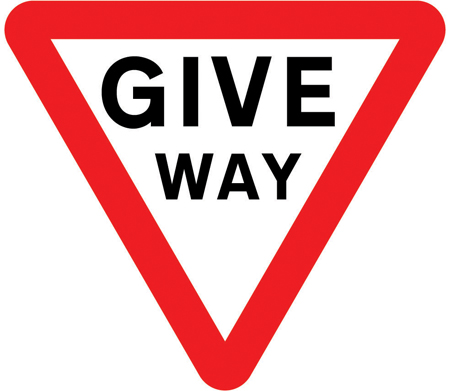
Give way sign
Side roads that join near crossings where priority matters.
Opening bridge
Movable spans over water, not trains on rails.
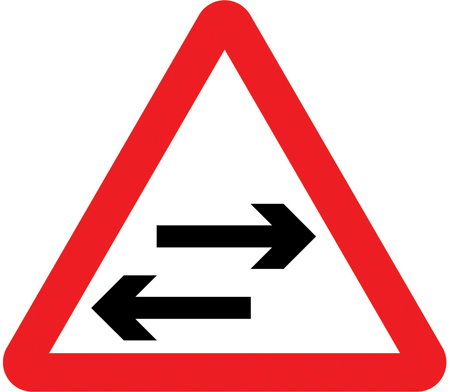
Two-way traffic
Narrow approaches where oncoming vehicles meet before the boards.
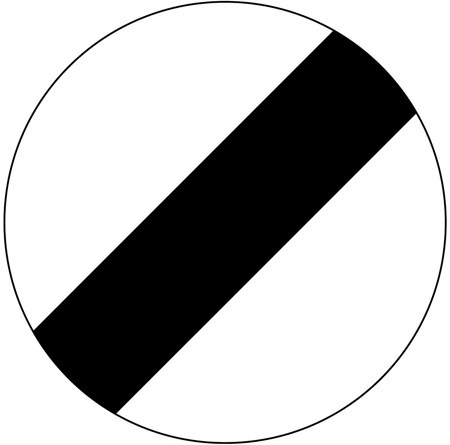
National speed limit
Default limits on open roads still demand safe speed for signals.
Test Yourself on UK Road Signs
Let the level crossing without barrier warning start your routine early: slow on the approach, look both ways, listen, and stop when red lights flash even if you cannot yet see the train. Open crossings demand more from the driver because no gate blocks a bad decision. A free mock theory test helps you practise locomotive triangles and level crossing scenarios before the exam swaps artwork.
Frequently Asked Questions
What should I do when I see the level crossing without barrier warning?
Ease off speed, prepare to stop at the stop line, and use lights and sound to detect trains. The triangle warns that open rails lie ahead; it does not replace wig-wag signals or crossboards at the track.
How is this different from the level crossing with barrier sign?
The barrier version adds gate arms to the pictogram. This plate marks crossings where barriers are not provided, so your observation and obeying red lights matter more.
Does the warning triangle set a speed limit?
No. It is advisory. You must still obey posted limits and drive slowly enough to stop when red lights flash or when you see or hear a train.
Can I cross if the lights are not flashing and I cannot see a train?
Only after you have looked both ways along every rail and listened carefully. If signs say stop when lights fail, follow that instruction and use the telephone if provided.
Will this sign appear on my theory test?
Level crossing questions are core knowledge. Expect image items that ask you to name open railway hazards or to choose the correct response when red lights pulse at the stop line.