
Last updated: October 2026 · Checked against Highway Code
Tramway Ahead Sign: meaning, rules and what to do
The tramway ahead warning triangle shows a black tram silhouette on white inside a red border, telling you that light-rail vehicles may run on or cross the carriageway on the next stretch. It does not grant you priority over trams or print a speed limit, but it is your cue to scan rails, mirrors, and stop lines before you treat the street like an ordinary urban road.
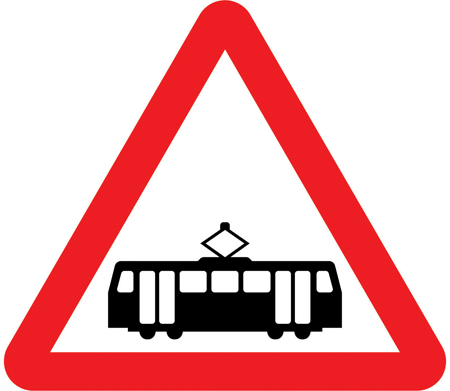
Sign image © Crown copyright, reproduced from GOV.UK traffic sign images under the Open Government Licence v3.0.
What the Tramway ahead Sign Looks Like
The official GOV.UK plate follows UK warning grammar: equilateral triangle pointing upward, thick red border, white centre, black pictogram. The symbol is a side-view tram with a cab, windows, and two bogies, not a steam locomotive and not a bus. That distinction matters in theory exams where level crossing artwork still shows classic railway motifs or barrier arms.
Retroreflective sheeting keeps the red frame visible under sodium street lamps on Manchester, Nottingham, Sheffield, Edinburgh, and Blackpool corridors where trams returned to streets after decades of bus-only layouts. You may see one post on the nearside verge or paired triangles bracketing a longer overlap where the route leaves a segregated median and re-enters mixed traffic.
Supplementary rectangles sometimes sit beneath the triangle: distance in yards, a tram stop name, or a reminder that only trams may use a marked lane. Those plates inform; they do not replace the triangle’s core message that steel wheels may share your tarmac soon. Blue mandatory circles with tram symbols belong to regulation, not this advance warning family.
Temporary versions on plastic stands appear during track renewal when buses replace trams for a weekend. The artwork stays the same so candidates learn one silhouette. If plastic boards lean in wind, read the symbol anyway because contractors often leave permanent posts covered while they weld rails a metre behind the fence.
Learners confuse the tramway ahead triangle with level crossing warnings, which show trains or gates on heavy rail, and with bus-only lane circles that use a bus pictogram on blue. Some city maps label light rail as “Metro” without posting this triangle on every approach; when the board is present, treat it as authoritative for that carriageway.
Level crossing plates describe trains on national rail with barriers and wig-wag lights. Bus lane signs regulate who may use a lane hour by hour. Pedestrian crossing warnings describe formal crossings with stripes or signals. The tramway ahead triangle names light-rail conflict on street track: quiet approach, fixed rails, and passengers stepping from platforms that may sit in the middle of the road.
What the Tramway Ahead Sign Means
Highway authorities install the warning where street-running trams intersect everyday motor traffic: city centres rebuilt around light rail, suburban extensions that cross roundabouts, and occasional shared lanes where cars must straddle rails between stops. The triangle does not tell you which stop is next or whether a segregated median ends in fifty metres. It tells you to switch from “car-first” assumptions to corridor discipline.
Rule 300 in The Highway Code states you must not enter a road, lane, or path reserved for trams. Painted diamonds, raised kerbs, and signposted tram-only lengths are not suggestions. If your sat nav routes you along a tram corridor, read ground markings before you commit; reversing out of a reserved lane during rush hour is awkward and may still be an offence.
Rule 301 reminds you that trams move quietly compared with buses. On shared streets you may hear rails before you see the cab, but electric motors can arrive from behind while your mirrors show an empty lane. Glance over your shoulder before turning across track, and expect trams to approach from either direction on two-way sections.
Rule 302 covers signals and priority at junctions where trams cross or merge. Obey tram-specific aspects when they face you: a white horizontal bar means stop, while a white vertical bar or arrow may permit movement depending on local design. Never assume a green traffic light for general traffic clears you to block rails; some layouts hold cars while trams receive a separate phase.
Rule 303 asks you to notice signs and markings that show tram routes, including the warning triangle you are reading now. Studded rails, coloured surfacing, and tactile paving at stops all reinforce the same story. Treat them as a chain, not as decoration left from an old engineering drawing.
Rule 304 forbids stopping on tram tracks or on stop approaches where you would trap a tram. A quick drop-off on rails during a phone call can pin a fifty-metre vehicle that cannot steer around your bumper. Yellow box junctions near stops exist for the same reason: keep the box clear even when pedestrians are still boarding.
Rule 305 warns that driving directly on rails reduces grip, especially when wet or icy. Steering can feel light as tyres hunt the groove. Straddle rails when the layout expects shared running, but avoid riding in the slot longer than necessary, and never use tracks as a shortcut past queues unless signs explicitly invite it.
Rule 306 focuses on pedestrians around stops. Platforms may be islands between lanes; people cross live traffic to reach them. Children chasing a departing tram can step from behind a parked van. Slow before the signed stretch, and be ready to yield to anyone already on the crossing or the track bed.
Rule 307 applies where tram lanes are also signed for buses or taxis during certain hours. Read the time plate before you follow a bus into what you hope is a shortcut. A tram-only diamond at the wrong hour can mean a penalty charge notice from a camera you did not notice on a gantry.
The warning does not make trams immune from the Highway Code. Operators must drive safely, but your duty is to avoid choices that force an emergency brake when the hazard was foreseeable from signs and rails. Think of the triangle as the start of a shared workspace, not as a tourist novelty beside a football stadium.
You meet this plate most often on Metrolink approaches in Greater Manchester, NET corridors in Nottingham, Supertram links in Sheffield, Edinburgh tram extensions, and Blackpool promenade sections where holiday traffic mixes with seasonal services. Even if you live elsewhere, theory banks are national, so learn the symbol before an exam hall question assumes Manchester geometry.
Rain turns rails into polished grooves. Motorcyclists should cross at a shallow angle with a steady throttle; sudden lean on wet steel has dropped riders in front of following traffic. Car drivers should avoid harsh braking while straddling rails because ABS pulses can lengthen stopping distance on metal.
Right turns across tracks need a lifesaver check for trams approaching from behind on the nearside. A green filter arrow for cars does not always mean the tram phase is idle; watch the white tram signal head if one is mounted beside the main cluster.
Overtaking a stationary tram at a stop demands patience. Passengers may cross behind the rear car without looking for your mirror. Wait until doors close and the tram moves, or pass only where signage and road width make a wide, slow overtake legal and safe. Theory distractors love “always overtake on the inside at stops”; that is usually wrong.
Driving tests in tram cities sometimes include short signed sections to see whether you read advance warnings and adjust lane position without prompting. Examiners note mirror use before crossing rails and whether you stop on stop lines when tram aspects demand it, even if general traffic still shows green.
Large vehicles need wider turns that can sweep across rails. Signal early and straddle when required so your rear wheels do not climb the flange. A lorry hung on a rail groove blocks the corridor for every service behind you until a heavy recovery arrives.
Night economy around arenas and theatres stacks queued cars beside platforms. Dip headlights when waiting so tram drivers can read your intentions. Full beam into a cab mirror can distract an operator who is already watching drunk pedestrians weaving between lanes.
Roadworks that shift traffic onto temporary tarmac sometimes leave rails proud of the surface. The warning triangle may stay up while buses substitute for trams; still treat grooves as trip hazards for tyres and ankles.
If you block a box junction or stop on rails and a tram cannot pass, operators may log the registration for police or civil follow-up. Apologising on social media does not restart the timetable; moving off promptly does.
Highway Code rules 300 to 307 (tramways, signals, and pedestrians)
Tramway ahead vs Similar Signs
| Sign | Meaning | Legal or warning? |
|---|---|---|
| Tramway ahead | Street-running trams likely on or crossing the road | Warning triangle |
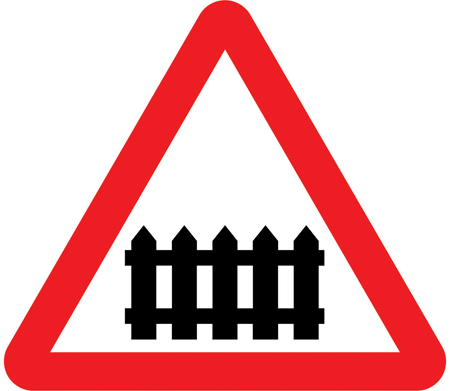 Level crossing with barrier | Heavy rail with barriers and wig-wag lights | Warning triangle |
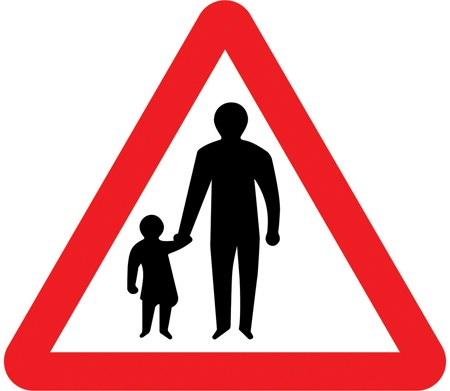 Pedestrians in road | Walkers may share the carriageway without pavements | Warning triangle |
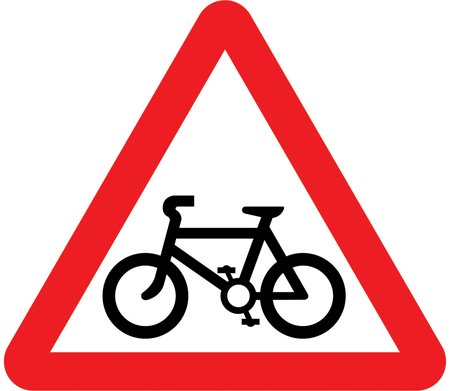 Cycle route ahead | Cyclists likely on or crossing the road | Warning triangle |
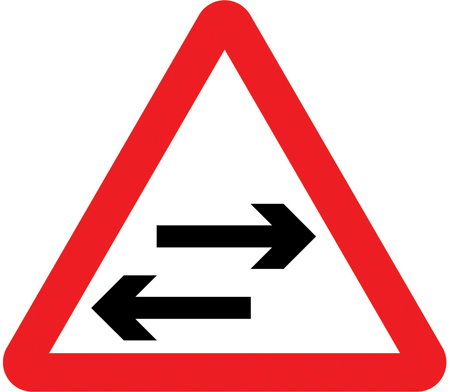 Two-way traffic | Oncoming vehicles on a narrow shared street | Warning triangle |
Rules and Penalties
The tramway ahead triangle does not carry its own fixed penalty tariff because it is a warning, not a speed camera trigger. Driving in a tram-only lane when signs forbid cars can attract penalty charge notices in many cities, separate from any police interest in how you crossed rails.
Stopping on tracks or blocking a tram stop approach can support careless driving allegations if an operator must emergency brake or passengers are endangered. Video from cab recorders and street cameras is increasingly common on light-rail corridors.
Ignoring a white horizontal tram signal where one is installed can be treated like disregarding a red light for road traffic, depending on local traffic orders. Do not guess; read the aspect that faces your lane.
Using tram grooves to bypass stationary queues when signs prohibit it risks both a lane offence and a close pass against pedestrians on a central platform. Insurers take a dim view of collisions where rails and warning plates made the hazard obvious.
Theory tests punish answers that claim trams must always stop for cars or that you may park on tracks for a quick errand. Learn the Highway Code tram chapter; fines in real life are only part of the damage a blocked tram causes to rush-hour passengers.
Check the latest theory test pass mark and book when you are ready via our booking guide.
Tramway ahead in Practice
On a wet Thursday, Priya drives toward Nottingham city centre on a road she usually treats as a bus corridor. A red triangle with a tram pictogram appears before the rails gleam through spray. She cancels adaptive cruise, checks mirrors, and drifts slightly left to straddle the groove while staying in her lane, leaving room for a cyclist on her nearside.
Ahead, a tram stands at a central platform with doors open. Pedestrians cross between lanes without making eye contact. Priya stops short of the yellow box that guards the stop mouth, even though the general traffic signal ahead still shows green for cars turning right. The tram’s white aspect shows horizontal bars, so she holds position until doors close and the cab moves.
When the tram eases forward, she does not immediately squeeze past on the inside. She waits until the platform clears and sight lines show no late passengers, then proceeds at walking pace with indicators cancelled because she is continuing straight. A van behind hoots once; she ignores it because a child steps off the kerb chasing a friend toward the rear car.
Half a mile later she turns right across embedded rails at a junction. A lifesaver glance reveals a tram approaching quietly from behind on her nearside. She waits with wheels straight until it passes, then completes the turn without stopping astride the flange. The warning plate did not create new law; it bought attention before steel wheels, open doors, and wet metal turned an ordinary commute into an exam-style scenario.
During revision she matches the triangle to light rail on street track, not to a level crossing locomotive. In a hazard perception clip she scores by easing off when brake lights bunch before rail glint, even when the post itself is out of frame. Her instructor links the moment to rules 304 and 306 so the practical habit and the multiple-choice answer stay aligned.
How This Sign Appears on the Theory Test
Picture questions show the black tram on a white triangle and ask what to expect. Choose light-rail traffic on or crossing the road, not a heavy railway level crossing or a bus-only city gate unless the artwork includes a circle bar.
Scenario stems describe overtaking at a stop, parking on rails, or assuming trams must yield. Safe answers favour waiting, giving way where signed, and keeping stops clear. Reject horn use to hurry passengers off the track.
Hazard perception clips on urban approaches reward early slowing when rails appear, brake lights stack, or pedestrians orbit a platform. You may not see the triangle in the clip, but the behaviour it teaches still raises your score.
Multiple-choice distractors swap in level crossing barrier signs or blue bus lane panels. Read shape first: red border triangle equals warning. Mandatory tram lanes use circles and diamonds on the carriageway, a different revision bucket.
Filter revision on road and traffic signs, then reread Highway Code rules 300 to 307 even if your home town has no trams. National banks assume you can recognise the plate before visiting a test centre in a light-rail city.
Link what you learn here with our warning signs guide and a timed car mock when you are aiming for forty-three correct from fifty within fifty-seven minutes.
Take a free mock theory test and filter questions on road and traffic signs. Pair that with the warning signs guide for triangle symbols.
Related Road Signs
Pedestrians in road
Passengers crossing to island platforms between lanes.
Cycle route ahead
Another vulnerable-user warning on shared urban corridors.
Two-way traffic
Narrow streets where trams and cars meet head-on.
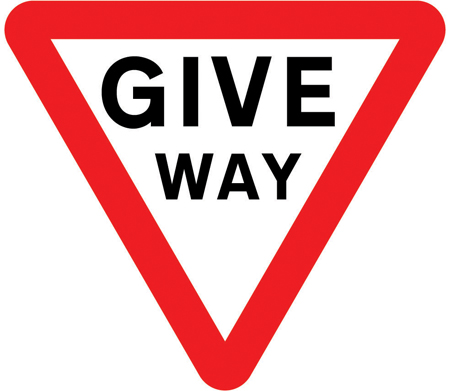
Give way sign
Priority lines where tram phases cross side roads.
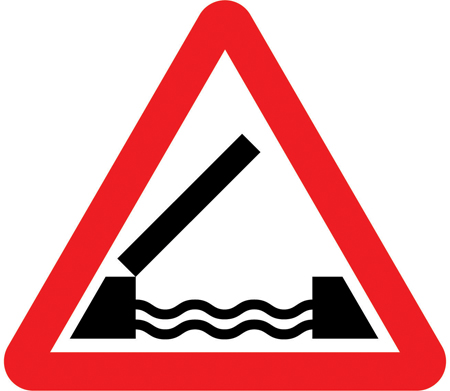
Opening bridge
Different movable hazard, often confused in quick-fire drills.
Test Yourself on UK Road Signs
Treat the tramway ahead plate as the moment to respect rails as fixed guidance you cannot argue with. Slow for stops, read tram signals as seriously as main traffic lights, and keep platforms clear even when general traffic still looks green. A free mock theory test helps you recognise this triangle quickly when exam artwork sits beside level crossing distractors.
Frequently Asked Questions
What does the tramway ahead sign mean?
It warns that trams may run on or cross the road ahead on street track or reserved lanes. Reduce speed, watch for signals and passengers at stops, and be ready to give way where signs and markings require it.
Does the tramway ahead sign set a speed limit?
No. It is a warning triangle only. You must still obey posted limits and drive at a speed that lets you stop safely for trams, pedestrians, and tram-specific signals.
How is it different from a level crossing sign?
Level crossing warnings describe heavy rail with barriers or trains on national rail. The tramway ahead pictogram shows light-rail vehicles that may share city streets, often without barrier arms.
Can I drive or park on tram tracks?
Only where the layout and signs clearly allow shared running. Do not stop or park on rails or stop approaches, and never enter a tram-only lane when diamonds or signs forbid motor vehicles.
Will the tramway ahead sign appear on my theory test?
Yes. Warning triangles are core knowledge. Identify the tram silhouette, reject answers that describe heavy rail level crossings, and choose options about expecting trams and giving way where signed.