
Last updated: October 2026 · Checked against Highway Code
Cycle Route Ahead Sign: meaning, rules and what to do
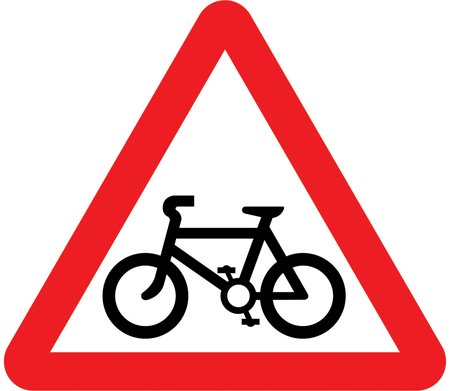
The cycle route ahead sign is a red-bordered warning triangle with a black bicycle, telling you that pedal traffic is part of the traffic mix on the stretch ahead. It does not ban driving or set a speed limit by itself, but it is your cue to scan mirrors early, leave overtaking room, and treat junction mouths like places where a thin silhouette can appear from nowhere.
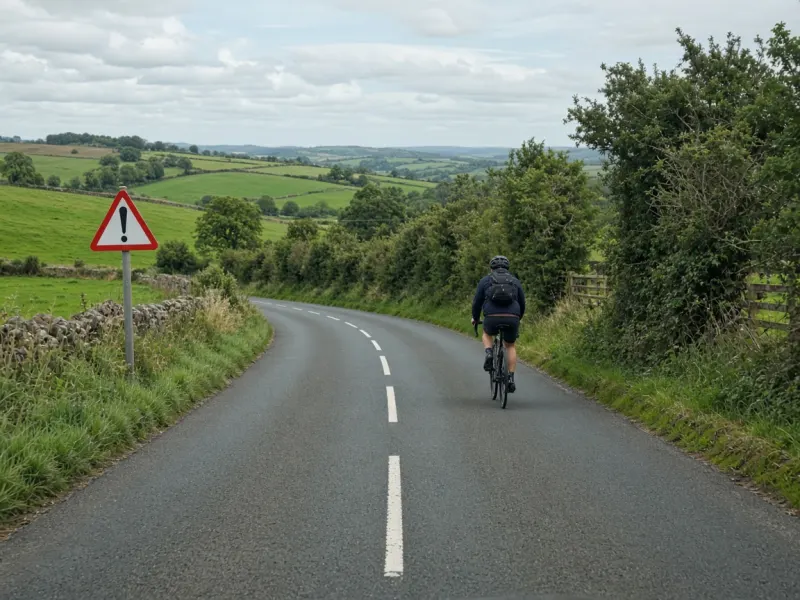
Sign image © Crown copyright, reproduced from GOV.UK traffic sign images under the Open Government Licence v3.0.
What the Cycle route ahead Sign Looks Like
The official plate follows UK warning grammar: upright red triangle, white centre, black pictogram. The bicycle is shown in profile with two wheels and handlebars, not a rider in lycra, because the symbol stands for the vehicle class rather than a leisure club outing. Reflective sheeting makes the border glow under headlamps on unlit lanes.
Posts usually face traffic on the approach to a village green link, a riverside path mouth, a toucan crossing, or a National Cycle Network spur that shares tarmac for a few hundred metres. You may see one triangle or a pair bracketing a short overlap where the route crosses a B road twice in quick succession.
Learners confuse it with the red circle and bicycle crossed by a diagonal bar, which prohibits cycling for motor traffic contexts, and with blue rectangular direction panels that name a numbered cycle route without warning of immediate conflict. Mandatory cycle track circles with a white bicycle on blue belong to traffic regulation, not this advance hazard family.
Supplementary plates sometimes sit beneath the triangle: distance in yards, a time plate for school peaks, or a “For ½ mile” reminder on long overlaps. Those rectangles are information, not separate prohibitions. Read them together with the triangle rather than treating the bicycle graphic as decoration.
Temporary versions appear on plastic stands during sportives or road closures when diversions send riders onto a road they normally avoid. The artwork matches the permanent sign so theory candidates learn one silhouette for every context where cyclists and cars share space unexpectedly.
Blue cycle route direction signs guide navigation along a corridor; they do not replace the need to watch mirrors when a warning triangle appears. Red “no cycling” circles forbid pedal traffic where quoted. Shared-use path entry plates may show both pedestrian and bicycle symbols on blue squares. The ahead warning always means conflict is plausible soon, not that you must dismount or that cycles have priority over every manoeuvre you might plan.
What the Cycle Route Ahead Sign Means
Highway authorities mount the cycle route ahead sign where mapping shows regular cycle movements crossing or running along the carriageway: path exits hidden by hedges, bridges that narrow the lane, commuter corridors into market towns, and tourist loops beside reservoirs. The triangle does not create a cycle lane; it announces that riders lawfully using the road may be ahead of you even when paint does not show a coloured strip.
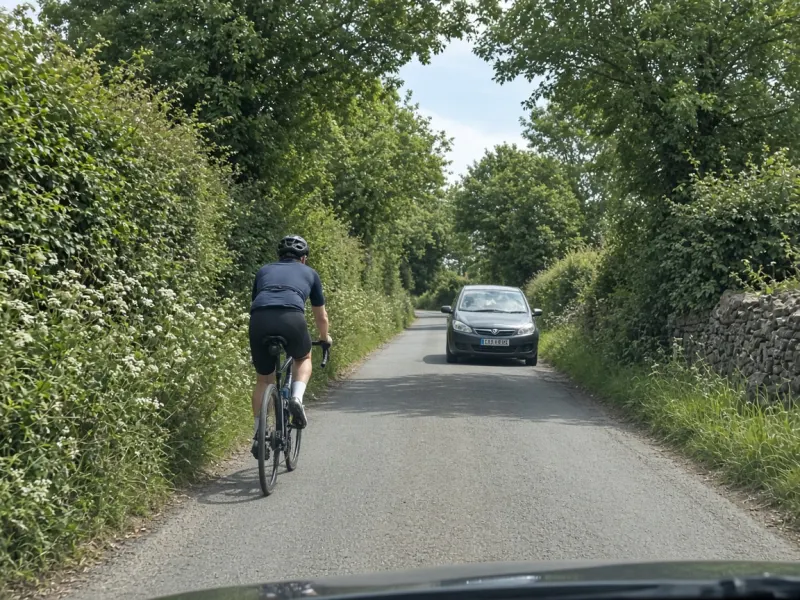
Rule 211 in The Highway Code tells drivers to watch for cyclists and motorcyclists, give them room, and expect them to move to avoid drains or parked cars. Rule 163 sets the overtaking standard: leave at least 1.5 metres when passing at speeds up to 30 mph, and give more space at higher speeds or in bad weather. The warning triangle is the roadside reminder to apply those rules before you feel pressure from a queue behind you.
Cyclists may ride two abreast where the road is wide enough; they may filter past stationary traffic on the nearside when it is safe. They are not obliged to hug the gutter if glass, grates, or parked doors make the nearside unsafe. Treat the signed stretch as a place where your lane position should leave them an escape lane rather than boxing them against a kerb.
Junctions along signed routes are high-risk: a rider continuing straight on the major road has priority over a car turning left across their path if the cyclist is already committed. Right turns across oncoming cycle traffic need a lifesaver glance and patience. The triangle upstream gives you time to cancel autopilot “I can beat them” habits before the mouth of the side path spews a group ride at walking pace.
Advanced stop lines and toucan crossings sometimes follow the warning on urban corridors. Stop at the first line when signals are red, not in the cyclist box. When lights change, check the nearside blind spot before moving off; a rider starting from the box beside your passenger door is a common near miss when drivers stare only at the car ahead.
Information plates on blue backgrounds may appear on the same corridor naming “National Cycle Route 1” or a local greenway. Those panels help riders navigate; the red triangle still carries the safety message for motor traffic. Do not assume that because you saw a blue name plate fifty metres ago you have finished sharing space. Overlaps can be longer than the first sign suggested.
Night and dawn demand dipped headlights and extra mirror checks. Small LED rear lamps are easy to miss if you focus on the centre of the lane. Wet roads reduce grip for bicycles more sharply than for cars on wide tyres; a rider braking on painted lines may need the full width you were reserving for “just a quick pass”.
The sign does not grant cyclists immunity from the Highway Code. They must not ride dangerously, and they should use lights at night. Your duty is still to drive so that a reasonable mistake by another road user does not become a collision you could have prevented with earlier slowing after you saw the triangle.
Country lanes with the triangle often lack pavements, so parents with children on tag-alongs or cargo bikes use the carriageway legally. Pass only when the next bend is visible and oncoming traffic is clear; if not, hold back without honking as intimidation.
Sportive weekends multiply traffic on signed overlaps. Sat nav may still route you down the same road while thousands of riders use an event waiver. Treat every summer Sunday near a warning plate as unpredictable density even when no temporary sign is out.
Driving tests on semi-rural routes near Cambridge, York, or coastal Devon regularly cross NCN spurs. Examiners note whether you mirror before pulling away and whether you leave space at pinch points. A hurried overtake near the sign is an easy serious fault.
Large vehicles need wider arcs at junctions. A lorry swinging left may cut across a cycle lane or the path of a rider you forgot was beside the cab. The warning triangle is your prompt to hang back until the HGV completes its turn rather than undertaking on the inside.
Parking bays beside signed routes create door zones. Expect riders to take a primary position approaching a row of cars; do not squeeze past within the same metre if traffic from the opposite direction is closing the gap.
Electric bicycles are quiet at low speed. The silhouette on the sign covers e-bikes as well as road bikes. Listen for tyre noise on gravel pull-offs as well as scanning for reflective ankle bands.
After rain, shared path exits dump mud on the carriageway. A rider avoiding a skid patch may drift centre lane for a second. Anticipate small lateral moves instead of treating any wobble as invitation to pass immediately.
If you live on the corridor, report near misses to the council’s cycling officer. Persistent complaints can justify mirror signs, refuges, or lowered limits. Data beats anecdote when budgets argue about every post.
Highway Code rules 163, 211 to 213, and 239 (advanced stop lines)
Cycle route ahead vs Similar Signs
| Sign | Meaning | Legal or warning? |
|---|---|---|
| Cycle route ahead | Cyclists likely on or crossing the road | Warning triangle |
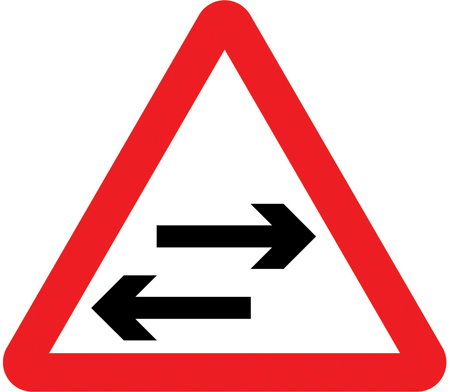
 Two-way traffic | Oncoming vehicles on a narrow link | Warning triangle |
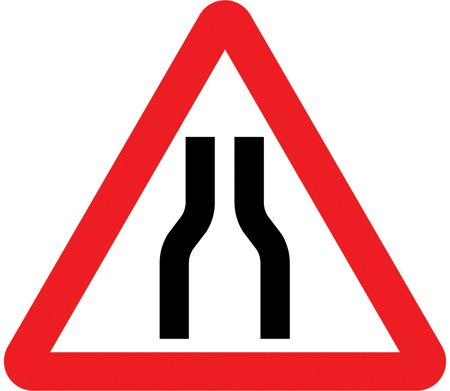 Road narrows left | Width reduces on the nearside | Warning triangle |
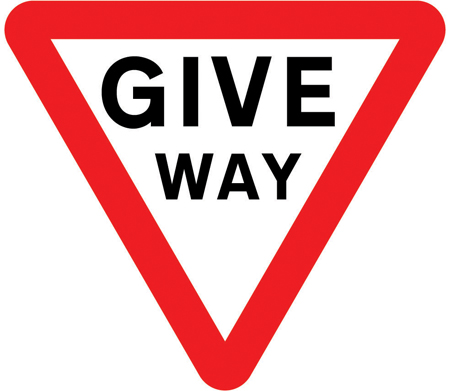
 Give way | Yield at the marked line | Regulatory triangle |
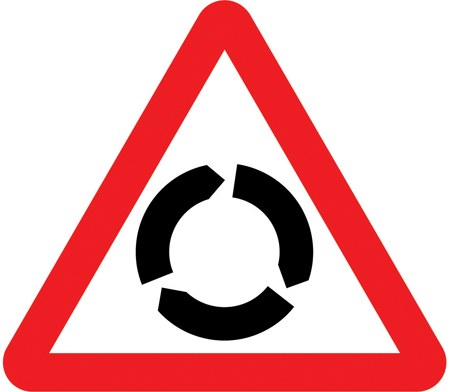 Roundabout ahead | Circulating junction approaching | Warning triangle |
Rules and Penalties
There is no fixed penalty ticket titled “ignored cycle route ahead triangle.” Enforcement flows from how you drive once warned. Close passes can support careless driving reports if a camera or witness shows you left insufficient space at speed.
Turning across a cyclist who had priority at a junction can attract the same attention, especially if video shows you failed to mirror before moving. The warning sign is not a defence for “I did not expect them”; it marks a foreseeable hazard.
Driving without due care near vulnerable road users can involve court proceedings rather than a simple fixed charge, depending on severity and evidence. Insurers take a dim view of cycle collisions even when criminal charges are not pursued.
Advanced stop line offences carry separate fixed penalties where cameras operate. Stopping in the cyclist box after you passed a route warning and a signalised crossing is a common urban double fault: you saw both cues and still blocked the safe start area.
Theory tests punish answers that confuse this triangle with “no cycling” or “dismount” plates. Learn the silhouettes: warning bicycle ahead means expect and make room, not ban bikes or order you to stop every time.
Check the latest theory test pass mark and book when you are ready via our booking guide.
Cycle route ahead in Practice
On a damp Tuesday, Elena drives a B road she uses for work. A red triangle with a bicycle catches her eye before a blind right bend. She lifts off the throttle early, checks the mirror, and notices two riders in a staggered pair climbing the hill at about fifteen miles per hour.
A van behind her closes quickly. Elena holds position rather than passing on a blind bend, activates the hazard briefly only if needed to show she is waiting, and waits until the straight after the bend offers sight of oncoming traffic. She overtakes with a full car width of clearance, returning to the nearside without cutting in front of the lead rider.
At the village junction fifty metres later, she signals left for the shop car park. A third cyclist appears from a path on her left, continuing straight on the main road. Elena waits with wheels straight until the rider clears her bonnet, then completes the turn at walking pace.
Had she treated the triangle as wallpaper, she might have passed on the bend or turned across the path rider. The sign did not create new law; it bought time to apply rules 163 and 211 before pressure and habit took over.
On her theory retake she recognises the same JPEG instantly: correct option “cycle route or cyclists likely ahead,” not dismount or parking. The practical habit and the exam answer now match.
How This Sign Appears on the Theory Test
Picture questions show the black bicycle on a white triangle and ask for the meaning. Link it to expectation and space, not prohibition. Reject “no cycling” and “cycles must dismount” unless the artwork includes a red circle bar or a separate regulatory plate.
Scenario stems describe overtaking on a country road after a warning sign. The safe pattern is wait for sight lines, leave generous clearance, and avoid returning to the nearside too soon. Horn answers to “warn” cyclists are usually wrong; patience is right.
Hazard perception clips on rural approaches reward early slowing when a small shape appears near the verge, even if the triangle itself is not visible in the clip. Train your foot to ease off when the road type matches signed cycle corridors.
Multiple-choice distractors swap in pedestrian zone circles or blue route numbers. Read the shape first: red border triangle equals warning. Blue rectangle equals information direction, a different revision bucket.
Filter revision on road and traffic signs, then reread vulnerable road user rules. Examiners assume you know minimum passing distances in spirit even if the numeric 1.5 metres appears only in the Highway Code, not on the triangle plate.
Take a free mock theory test and filter questions on road and traffic signs. Pair that with the warning signs guide for triangle symbols.
Related Road Signs
Two-way traffic
Narrow links where cycles and cars share width.
Road narrows left
Pinches that push riders toward the centre line.
Give way sign
Yield lines where path traffic meets the carriageway.
Roundabout ahead
Circulation where cyclists may take lane position.
National speed limit
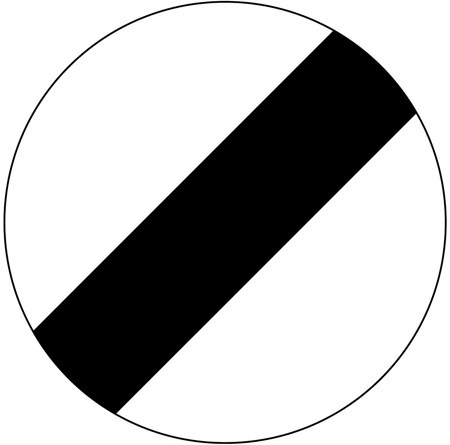
Default limit still demands safe speed for riders ahead.
Test Yourself on UK Road Signs
Treat the cycle route ahead plate as a courtesy from the highway authority to both drivers and riders: conflict is likely soon, so mirrors, gaps, and patient overtakes matter more than shaving thirty seconds off a commute. Pair this page with a free mock theory test to lock in the triangle silhouette and the Highway Code habits that keep everyone upright when paths meet tarmac.
Frequently Asked Questions
Does the cycle route ahead sign mean cyclists have priority everywhere?
No. It warns that cyclists are likely on or crossing the road ahead. Normal priority rules at junctions and give-way lines still apply, but you must be ready to yield when a rider is already committed or when turning across their path.
How much space should I leave when overtaking after this sign?
The Highway Code asks for at least 1.5 metres at speeds up to 30 mph and more at higher speeds or in poor conditions. If you cannot leave that room safely, wait behind until the road widens or sight lines improve.
Is this the same as a blue cycle route direction sign?
Not exactly. Blue panels usually guide cyclists along a named route. The red triangle warns motor traffic that the route intersects the carriageway you are driving on, so expect riders even if you are not following that route yourself.
What is the difference from a no cycling sign?
A no cycling sign is a red circle with a bicycle and diagonal bar, forbidding pedal cycles in that zone. The ahead warning triangle does the opposite job: it tells drivers to expect cycles, not to ban them.
Will I get points for ignoring the warning triangle?
There is no specific points tariff for passing the sign without slowing. You can still face careless driving allegations if your overtaking or turning puts a cyclist in danger after you were clearly warned that riders use the stretch.