
Last updated: October 2026 · Checked against Highway Code
Pedestrians in Road Sign: meaning, rules and what to do
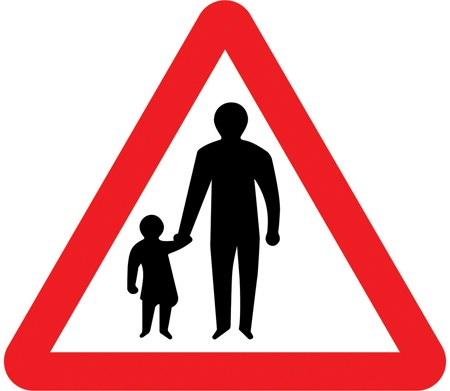
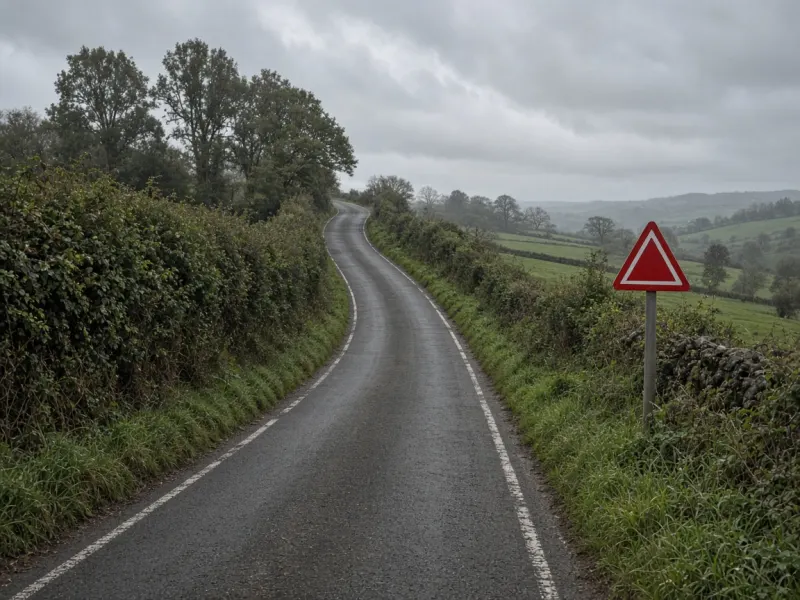
This red-bordered warning triangle shows black figures on the carriageway, telling you that walkers may share your lane because pavements are absent, narrow, or blocked, so you must slow down and be ready to stop without forcing them into the ditch.
Sign image © Crown copyright, reproduced from GOV.UK traffic sign images under the Open Government Licence v3.0.
What the Pedestrians in road Sign Looks Like
The official plate follows the standard UK warning shape: equilateral triangle pointing upward, thick red border, white centre field, black symbol. The pictogram shows two or more simplified human figures standing on a horizontal line that represents the carriageway. They face across or along the road depending on the artwork revision, but the message is always that feet belong on tarmac, not on a separate footway graphic.
Unlike a zebra or pelican advance sign, there are no stripes, beacons, or traffic-light symbols. Unlike the children going to or from school plate, the silhouettes are adult proportions without satchels or playground cues. Unlike deafblind pedestrian warnings, there is no dog or cane motif. Recognition in a theory test is therefore about the plain walking figures on the road line.
Posts often appear on rural lanes, village high streets, estate roads, and approaches to events where crowds spill from verges. You may see one triangle on the nearside verge or paired boards bracketing a longer stretch. A distance plate underneath sometimes quotes yards or metres to the start of the hazard, especially when a footpath ends abruptly at a bend.
Temporary versions can appear on plastic stands during festivals, fun runs, or road closures that push walkers along the live lane. The symbol stays the same even when the reason is a one-day parade rather than a permanent missing pavement. Treat every mounting as live information, not decoration left over from last summer.
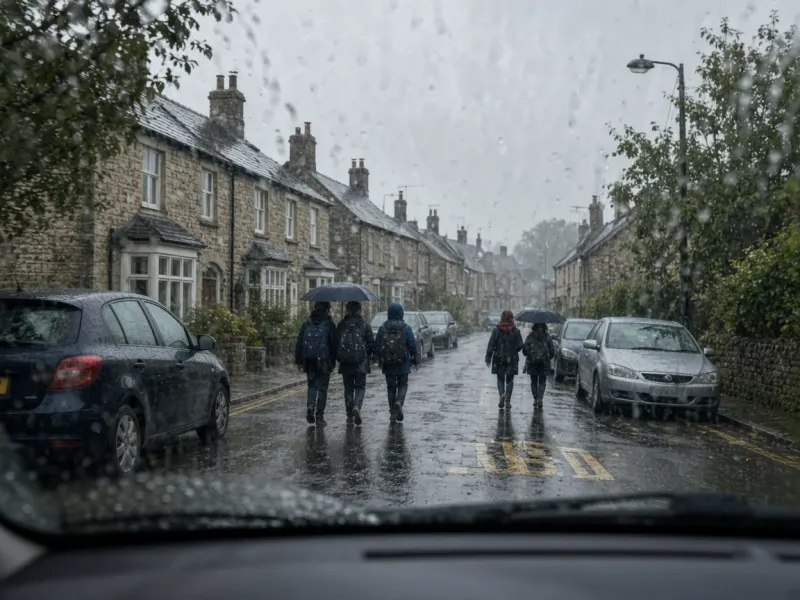
At night the retroreflective border glows while the black figures can disappear until your beam strikes the board squarely. Rain, mist, and low sun behind the sign can flatten contrast. If you know the route, the triangle still matters on the commute home when you stop actively hunting for hazards.
School warning triangles target child pedestrians near education sites. Deafblind pedestrian plates highlight people who may not hear or see you. Zebra and light-controlled crossing warnings describe formal crossing points with markings and priority rules. The pedestrians in road sign covers informal walking in the carriageway, often on lanes without footways, so your job is anticipation and safe passing speed rather than scanning for Belisha beacons.
What the Pedestrians in Road Sign Means
Highway authorities install this plate where surveys show regular foot traffic on the carriageway itself. Typical triggers include narrow village streets with parked cars on both sides, country lanes where the footpath stops at a gate, tourist routes beside water, and housing estates built before pavements were standard. The board does not ban walking in the road; it warns drivers that sharing is normal here.
Rule 146 in The Highway Code expects you to drive at a speed that lets you stop within the distance you can see to be clear. On a signed pedestrian stretch that distance must include people stepping from doorways, dog walkers rounding bends, and parents with pushchairs forced off the kerb by bins. A national speed limit repeater downstream does not cancel that duty.
Rules 204 to 206 remind country drivers that bends, brows, and narrow bridges hide pedestrians. This triangle names the hazard explicitly so you do not assume an empty lane just because no urban pavement exists. Hedges, dry stone walls, and parked delivery vans can conceal a walker until they are mid-lane.
Rule 170 sets the baseline for dealing with pedestrians already on the road: watch for them stepping into your path, give way if they have started crossing, and do not wave them into danger to be polite. On a lane where walking in the road is lawful, you yield space rather than claiming ownership because you hold the number plate.
Passing distance matters. The Highway Code asks for at least 1.5 metres when overtaking cyclists at up to 30 mph, and a wider gap when faster. Pedestrians lack even a bicycle frame for visibility. Crawling past with mirrors tucked in beats clipping a shoulder on a two-metre lane with oncoming traffic waiting.
The sign does not create a pedestrian zone or ban motor vehicles. Blue zone plates and red restriction circles do that work elsewhere. Here you remain on a public road with ordinary priority rules, except that human bodies on the surface outrank your hurry. Sounding the horn to clear villagers is antisocial and can startle someone into the path of a following car.
Horse riders, farm workers, and ramblers may share the same strip. Rule 215 covers animals; the same calm speed helps mixed traffic. Gravel and mud from boots reduce grip for everyone. A pedestrian slipping under your nearside wheel is a catastrophe no insurance adjuster can undo.
Children sometimes play on quiet estate loops. The school warning sign is absent, yet the pedestrians in road plate still applies. Small figures below bonnet height demand extra mirror checks when reversing out of drives on the same street.
Night economy changes the cast. Pub closing time, shift workers walking home without street lighting, and tourists using phone torches all increase risk after the triangle is last seen in daylight. Dipped headlights help you spot reflective clothing; they do not replace slower speed.
Sat-nav may call the route the fastest shortcut without mentioning missing footways. The triangle is the correction to algorithm optimism. If you would not walk your own family along the verge, drive as though they are already there.
You most often meet this plate in Cotswold villages, Lake District passes, Scottish single-track roads with passing places, and seaside promenade approaches where the carriageway narrows beside railings.
Holiday traffic compresses gaps. August queues tempt drivers to skim past walkers on the nearside while watching oncoming coaches. Hold position until both directions offer safe width.
Bin collection mornings block pavements legally parked lorries create. Residents walk in the road for twenty metres; the sign warns you all year, not only on collection day.
Driving tests on rural routes may include signed lanes near test centres. Examiners note whether you adjust speed before the figures are beside your door, not after.
Cyclists overtaking you may swing wide into the pedestrian stream. Check mirrors before accelerating away from a village pinch point.
Electric cars at crawling speed are almost silent. Pedestrians chatting may not turn until your shadow crosses them. A visible gap and gentle pace matter more than asserting right of way.
After snow, walkers use the cleared tyre tracks while pavements stay icy. The carriageway looks “open” because you drove it; foot traffic may still occupy the centre.
If you live locally, report broken street lighting near the sign to the council. Maintenance budgets respond to logged defects faster than to silent near misses.
Highway Code rules 146, 170 and 204 to 206 (pedestrians and rural roads)
Pedestrians in road vs Similar Signs
| Sign | Meaning | Legal or warning? |
|---|---|---|
| Pedestrians in road | People may walk on the carriageway ahead | Warning triangle |
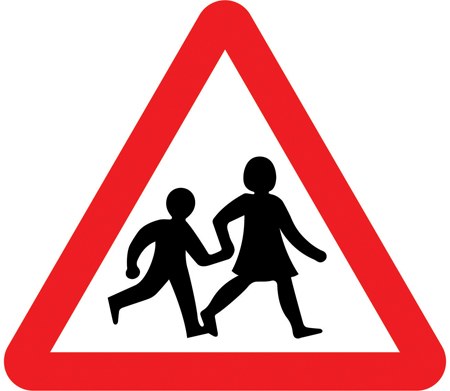 Children going to or from school | Child pedestrians likely near schools | Warning triangle |
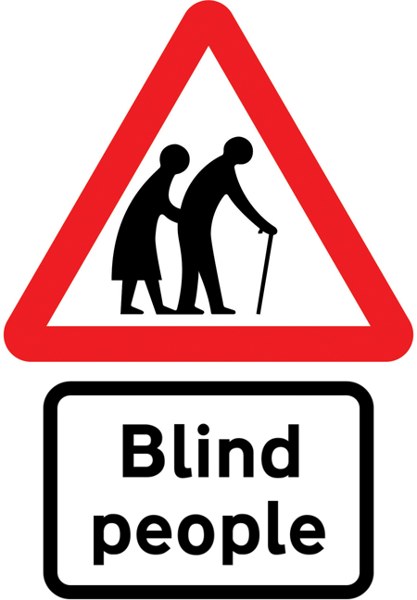 Deafblind pedestrians | Deafblind people may cross the road | Warning triangle |
 Zebra crossing ahead | Formal crossing with give-way duty when pedestrians wait | Warning triangle |
 Frail pedestrians likely to cross | Elderly or disabled pedestrians may cross slowly | Warning triangle |
Rules and Penalties
The pedestrians in road triangle does not print a numeric limit on the post. Speeding past a separate limit sign still attracts standard fines and points. Driving at an unsafe speed for walkers on the carriageway can support careless driving charges if an officer or camera evidence shows you could not stop in time.
Close passes that force someone to stumble can be investigated as careless or even dangerous driving when injury results. Civil claims for personal injury follow the same facts insurers use: could you have slowed earlier once the warning was visible?
Using a handheld mobile while threading past pedestrians merges two offence categories. The sign gives you no exemption from attention rules.
Parking on verges or pavements that pushes people into the road may bring local parking penalties even when the warning triangle addressed drivers, not stationary cars. As a moving driver you still adapt to the layout the community lives with daily.
Theory tests rarely quote fines for this plate. They ask what you should do when figures share the lane: slow, be ready to stop, and avoid intimidating horn use.
Check the latest theory test pass mark and book when you are ready via our booking guide.
Pedestrians in road in Practice
On a damp evening in a Devon village, Marcus follows a sat-nav shortcut along a lane signed thirty miles per hour. A red triangle with black walkers catches his eye before the footpath vanishes behind parked hatchbacks.
He checks the mirror, drops to fifteen miles per hour, and drifts slightly left within his lane to leave space on the nearside. A couple with a dog step off the kerb around a refuse bin; he holds steady until they pass, then eases forward without revving.
A van behind him overtakes on a blind bend, forcing an oncoming cyclist onto the grass. Marcus had already chosen a speed that let him stop beside the dog walkers. The sign did not remove the van driver’s choices, but it primed Marcus before the conflict, which is exactly why the triangle stands where the pavement ends.
How This Sign Appears on the Theory Test
Multiple-choice items show the walking-figures triangle and ask how to respond. Correct answers favour reduced speed and readiness to stop, not accelerating to clear the village quickly.
Picture questions may swap in school children or zebra artwork. Identify the plain pedestrians-on-carriageway symbol before applying rural sharing rules.
Hazard perception clips on narrow lanes reward early slowing when pedestrians appear near parked cars. Late braking after the figures enter your lane scores poorly.
Filter revision on warning signs, then reread Highway Code pedestrian duties. Reject options that suggest honking to move lawful walkers off the tarmac.
Case studies for instructors sometimes pair this sign with national speed limit plates on the same route. Remember limit signs cap legal maximums; safe speed for people in the road can be far lower.
Take a free mock theory test and filter questions on road and traffic signs. Pair that with the warning signs guide for triangle symbols.
Related Road Signs
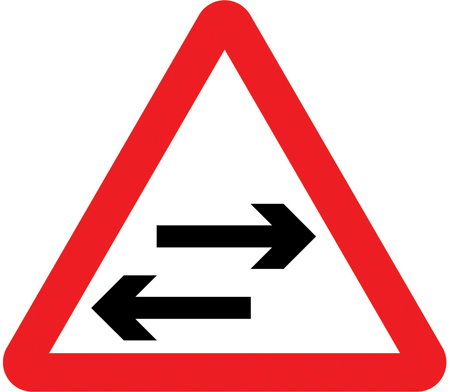
Two-way traffic
Narrow lanes where walkers and oncoming cars share space.
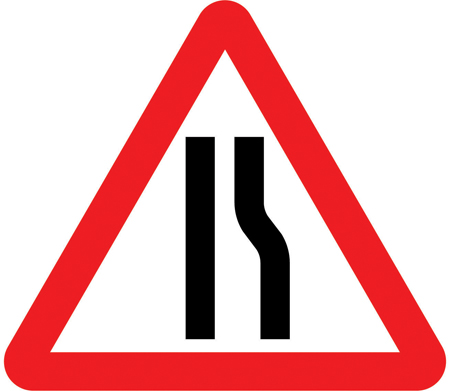
Road narrows both sides
Width pinch that leaves little room beside pedestrians.
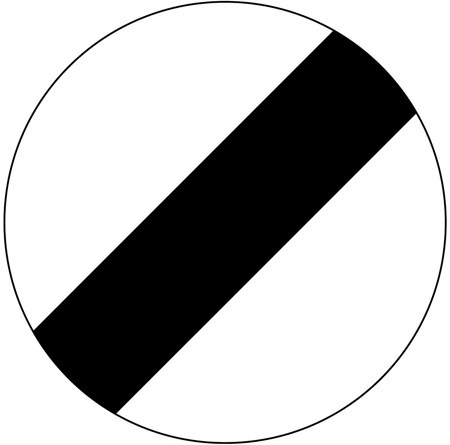
National speed limit
Default rural limit still demands a safe pace for walkers.
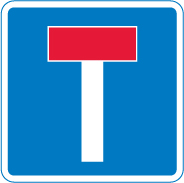
No through road
Quiet cul-de-sacs where residents walk in the carriageway.
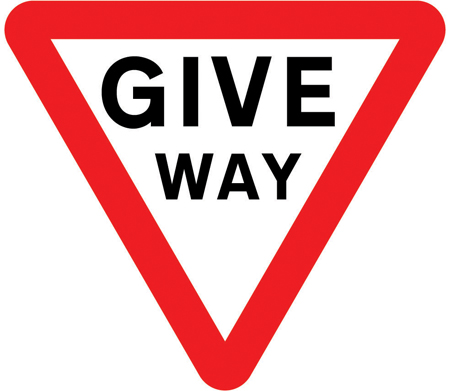
Give way sign
Junctions on village routes with mixed foot and vehicle traffic.
Test Yourself on UK Road Signs
Treat this triangle as a reminder that not every journey has a pavement beside it. Slow before the footpath ends, pass with generous space, and be ready to stop when figures share your lane. A free mock theory test helps you recognise this triangle quickly when exam artwork shuffles warning symbols.
Frequently Asked Questions
What does the pedestrians in road sign mean?
It warns that people may walk on the carriageway ahead, often because footways are missing, narrow, or blocked. Reduce speed and be prepared to stop or give them room.
Does this sign set a speed limit?
No. It is a warning triangle only. You must still obey posted limits and drive at a speed that lets you stop safely for pedestrians on the road.
How is it different from a school warning sign?
The school plate highlights children near education sites. The pedestrians in road sign shows generic walkers on the carriageway and is not limited to school hours or child figures.
Who has priority on a lane with this sign?
Pedestrians using the road lawfully still need you to avoid endangering them. You cannot insist they leap onto a verge; slow and pass only when you can leave safe clearance.
Will I get points for driving too fast past this sign?
There is no separate points tariff for ignoring the triangle itself. You can still face speeding penalties on limit signs, or careless driving allegations if your speed was clearly unsafe for people in the road.