
Last updated: October 2026 · Checked against Highway Code
Horse Riders Sign: meaning, rules and what to do
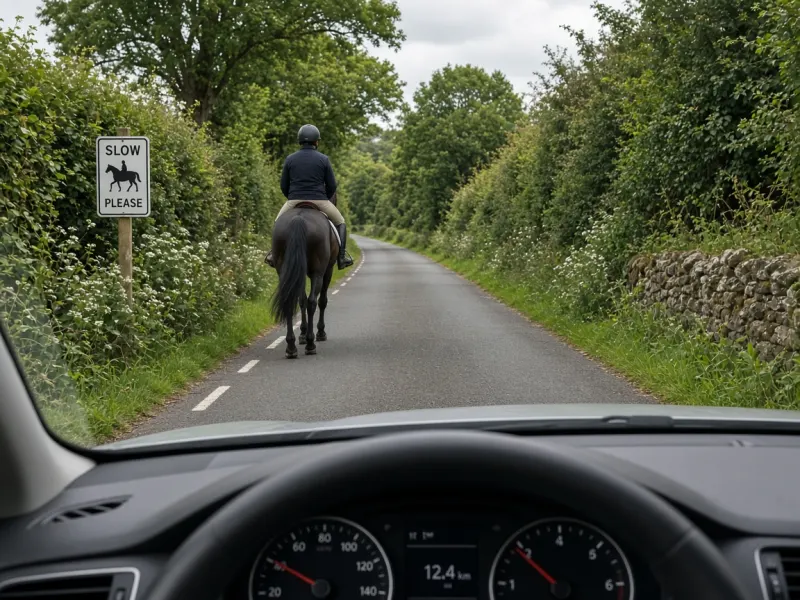
The black horse and rider on a red-bordered triangle is the council’s way of saying that half-ton neighbours may share your lane on the next stretch. It does not ban overtaking or print a speed limit, but it tells you to slow early, leave space, and treat every hoofbeat as a reason to drive like a guest in someone else’s paddock.
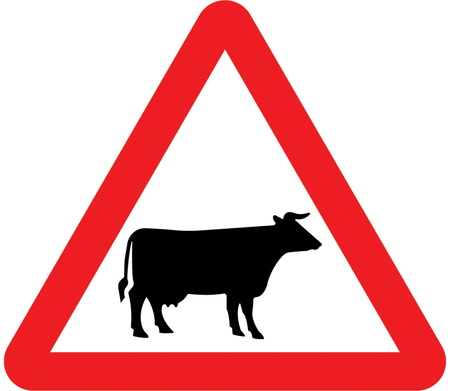
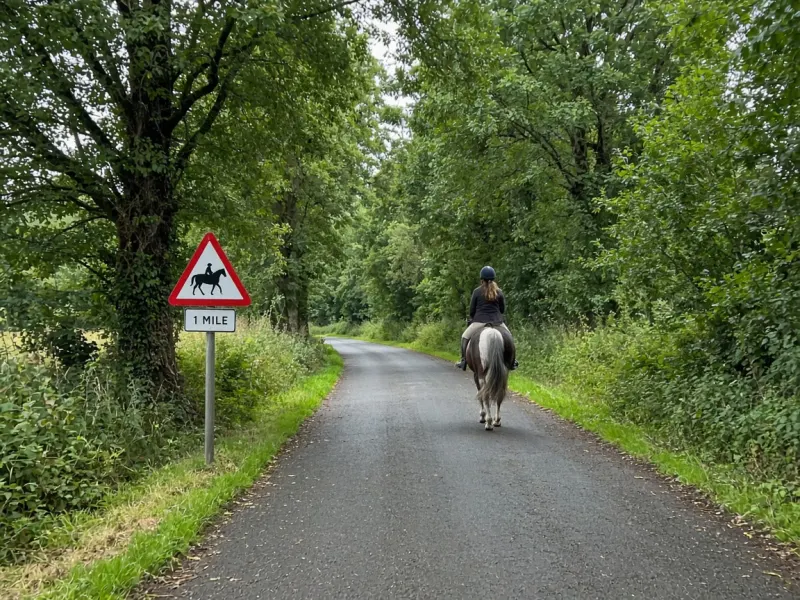
Sign image © Crown copyright, reproduced from GOV.UK traffic sign images under the Open Government Licence v3.0.
What the Horse riders Sign Looks Like
On GOV.UK plates the symbol is a standard UK warning triangle: red border, white centre, black pictogram. The artwork shows a horse with a rider in silhouette, usually facing left as if travelling along the road. The graphic is simpler than a dressage poster, which is fine because you read it at forty miles per hour through drizzle, not in a gallery.
Shape matters more than artistry. Triangles point upward; circles regulate; rectangles inform. This one only warns. You will not see a numeric limit or a red slash through a manoeuvre. If a bridleway were closed to horses, you would be looking at a different family of signs altogether, often on a bridle gate rather than on the main carriageway.
Placement tends to be rural: B roads through commons, forest edges, lanes linking villages to stables, and approaches to popular hacking routes. Authorities may repeat the plate after a hidden drive or before a blind crest where riders cross from a field to a verge path. A supplementary plate might quote distance in yards, though many sites rely on a single post.
Learners sometimes confuse this triangle with the wild animals plate, which shows a generic quadruped for deer and similar mammals, or with cattle and sheep warnings that name farm stock explicitly. The mounted figure is the giveaway. If the silhouette has antlers, you are in deer country; if it has a saddle, you are in courtesy country.
Highway engineers pick the mounted horse plate where riding routes cross or run beside the carriageway often enough to justify a permanent warning. Cattle and sheep triangles cover herds on open hillsides. Wild animal signs target deer at dusk. All share triangle grammar; the black symbol tells you which creature might step into your path.
What the Horse Riders Sign Means
Horses are lawful traffic on most UK roads unless a specific restriction applies. Riders use single-track lanes, B roads, and many A roads without a parallel bridleway. The warning triangle marks stretches where that sharing is concentrated, not where it is theoretically possible once a year.
The sign does not create a bridleway or grant riders priority over cars. It simply satisfies the driver’s duty to anticipate hazards. Rule 125 in The Highway Code reminds you that speed limits are maximums, not targets; Rule 214 tells you to slow or stop for animals when necessary and to avoid startling them.
Rule 215 is the chapter learners should reread before a rural mock test. It asks drivers to pass horse riders wide and slow, to heed requests to slow down or stop, and to be particularly careful at junctions where a horse may turn across your path. A plastic bag, a dog behind a hedge, or a backfiring exhaust can send a horse sideways faster than you can apologise.
Official guidance often quotes passing at up to ten miles per hour with around two metres of space when conditions allow. Treat that as a practical aim on a straight, dry lane, not a licence to brush past on a blind bend because the national speed limit sign still applies. The triangle and the limit work together: one names the hazard, the other caps legal speed, neither replaces judgment.
Hand signals matter because horses lack brake lights. A rider’s right arm moving up and down asks traffic to slow; an arm extended with the palm facing rear asks you to stop. Respond smoothly. Creeping past while the rider is signalling stop is how practical tests fail and how real insurance claims start.
Night and low sun change the picture. Reflective bands on horses and high-visibility clothing on riders help, but a dark coat on a shaded lane can still appear late. Dip headlights when following or passing so you do not dazzle the rider or freeze the animal in your beam.
Motorcyclists and large vehicles face the same duty of care. A loud exhaust on a country lane can spook a horse into the centre line. A lorry’s wash can unsettle a novice mount. If you cannot pass safely, hold position until a gateway, lay-by, or wider straight offers room.
Northern Ireland follows broadly similar vulnerable road user principles, though learners should confirm current NI Highway Code wording if they sit a test in Belfast rather than Birmingham. The triangle shape on the island of Ireland still means warning; the horse symbol still means hooves on tarmac.
You meet this plate most often in the New Forest, Surrey heathland, Welsh valleys, Scottish glens, and anywhere livery yards sit close to through routes. Event days can multiply traffic and horses on the same narrow strip, so treat festival weekends as double hazard weather.
Driving instructors on rural test routes use these lanes to watch mirror checks, following distance, and patience. Examiners rarely need a lecture on triangles; they want to see you slow before the hazard, not after the horse fills your windscreen.
Cyclists may ride two abreast legally in many situations; horses may ride two on a road when safe. Do not squeeze between paired riders and oncoming traffic. Wait until the convoy passes a wider point.
If a horse faces you on a single-track lane, reverse to a passing place when your car is easier to manoeuvre backward. Stay off the horn. A calm reverse beats a stand-off where a hoof meets a bumper.
After you pass, check the mirror. A spooked horse can swing back into the road. Report recurring near misses to the parish council if a signed stretch clearly needs a lower advisory speed or better verge maintenance.
Caravans and towing outfits need extra planning. The combination is longer and slower to steer; start slowing earlier when the triangle appears so you are not braking beside the horse.
Horse riders vs Similar Signs
| Sign | Meaning | Legal or warning? |
|---|---|---|
| Horse riders | Horses or riders may be on the road ahead | Warning triangle |
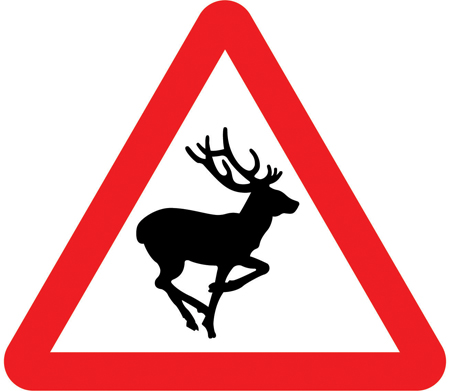 Wild animals | Deer or other wildlife may step out, often at dusk | Warning triangle |
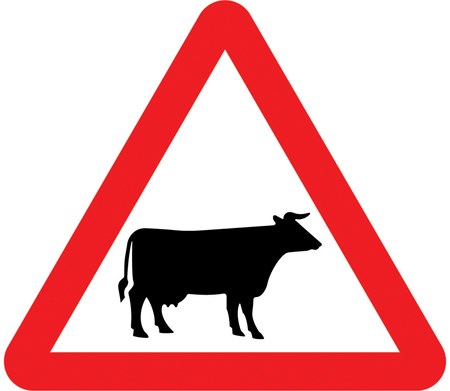 Cattle | Cattle may block or cross the carriageway | Warning triangle |
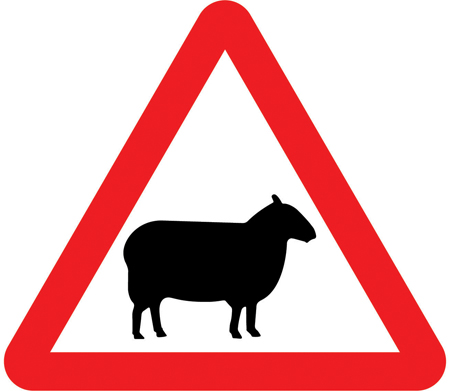 Sheep | Sheep may wander on rural routes | Warning triangle |
Rules and Penalties
There is no fixed penalty ticket titled “ignored horse riders triangle.” The plate is a warning, not a speed camera trigger. If you exceed a posted limit, normal speeding penalties apply. If you overtake dangerously close to a horse, police can consider careless or dangerous driving charges because the hazard was visible and predictable.
Frightening a horse is not a quaint countryside anecdote; it can cause injury to rider, animal, and oncoming traffic. Swerving into a ditch to avoid a bolting horse still counts as loss of control if your speed made the scenario inevitable.
Civil claims hurt more than folklore about angry yard owners. A wing mirror clipping a rider’s leg or a child on a pony can mean personal injury proceedings even when no points land on your licence. Insurance prefers prevention to courtroom poetry.
Theory papers test attitude: slow, give room, avoid horn and revving. They rarely ask for obscure fine amounts. Learn what the triangle implies about behaviour, then practise on sign-themed multiple choice until you score comfortably above the forty-three pass mark from fifty questions.
Check the latest theory test pass mark and book when you are ready via our booking guide.
Horse riders in Practice
On a Sunday morning near the South Downs, Marcus drives his hatchback along a lane he usually treats as a scenic shortcut. A red triangle with a mounted horse catches his eye before a wooded bend. He lifts off the throttle, checks the mirror for a close follower, and drops to twenty miles per hour.
Around the bend he sees two riders in high-visibility jackets trotting single file. The leading rider extends her right arm and moves it up and down. Marcus eases to a crawl and holds back because the verge is soft and the oncoming sight line is short. A van behind him huffs but does not overtake on the blind arc.
At a wider stretch the lead rider waves him on. Marcus passes at walking pace, engine quiet, leaving a full car width between his nearside and the horses. In the mirror the ponies stay calm. The warning plate did its job before he saw hooves: it switched his brain from “national limit mindset” to “shared lane mindset.” Had he stayed at shortcut speed, he could have met the arm signal mid-corner with no room to recover.
How This Sign Appears on the Theory Test
Car theory multiple choice includes a classic image question with this exact plate. The correct option is that horse riders are likely in the road ahead, not that horses are banned or that a race meeting is in progress. Read the silhouette before you rush the options.
Other distractors mention bridleway closure or prohibition. Regulatory signs use circles and slashes; this triangle only warns. If an answer sounds like a ban, check whether the symbol family matches.
Hazard perception clips may show rural roads where shapes move at the verge. Early slowing scores better than a late brake when a horse steps out. Think “predictable vulnerability,” not “surprise obstacle.”
Filter revision toward road and traffic signs, then reread animal rules in The Highway Code. Pair sign drills with a timed car mock when you are aiming for forty-three correct from fifty within fifty-seven minutes.
Link what you learn here with wider guidance on passing horses in our horse riders road rules article if you want step-by-step passing distances and signal tables beyond the triangle itself.
Take a free mock theory test and filter questions on road and traffic signs. Pair that with the warning signs guide for triangle symbols.
Related Road Signs
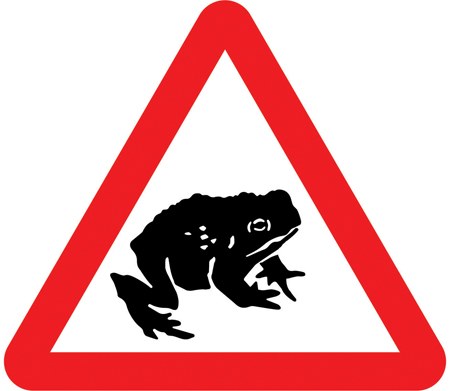
Migratory toad crossing
Another animal warning on quiet lanes near water and woodland.
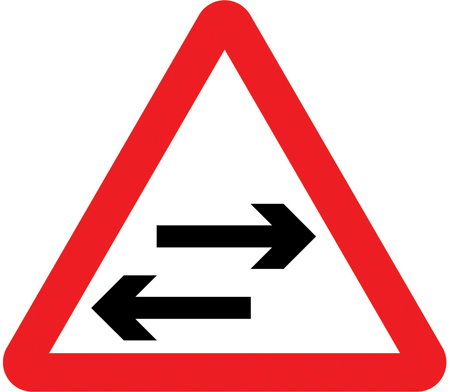
Two-way traffic
Narrow rural links where horses and cars share one lane.
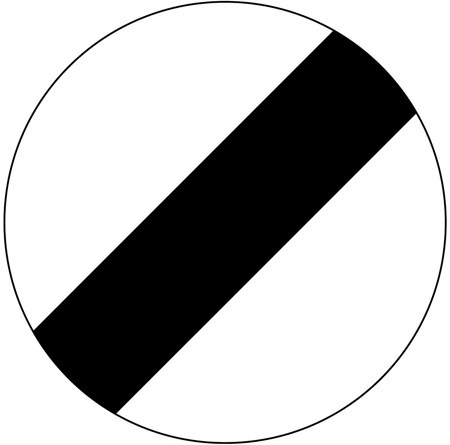
National speed limit
Default limit on country roads still demands safe speed near horses.
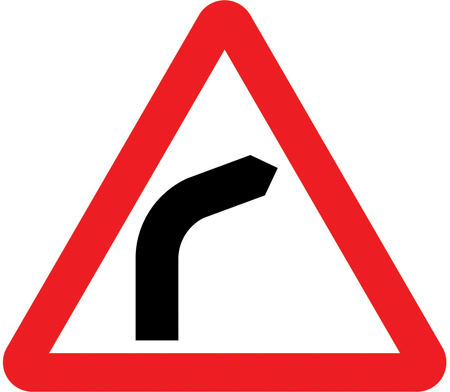
Bend right
Blind bends where riders appear late if you carry too much speed.
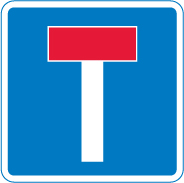
No through road
Dead ends that still attract hacking routes from nearby stables.
Test Yourself on UK Road Signs
Treat the horse riders plate as a promise that the next mile may belong to hooves as much as tyres. Slow before the bend, pass wide and quiet, and respect arm signals like you would a school crossing patrol. A free mock theory test helps you recognise the triangle quickly when the exam swaps artwork between cattle, deer, and mounted riders.
Frequently Asked Questions
What does the horse riders sign mean?
It warns that horses or riders may be on or crossing the road ahead. Reduce speed, be ready to stop, and pass with plenty of room without revving the engine or sounding the horn unless a real emergency requires it.
Does the horse riders sign set a speed limit?
No. It is a warning triangle only. You must still obey posted limits and drive at a speed that lets you stop safely for animals and people on the carriageway.
How should I pass horses after this warning?
Slow early, leave generous space, and pass at a low steady speed. Official guidance often mentions about two metres and roughly ten mph when conditions allow, but waiting behind on a narrow lane is better than a risky squeeze.
How is this different from the wild animals sign?
The wild animals triangle shows a generic quadruped for deer and similar wildlife. The horse riders plate shows a mounted figure where equestrian traffic is common on the carriageway.
Will the horse riders sign appear on my theory test?
Yes, it is a common road sign question. Identify the mounted silhouette, reject answers that describe bans or closures, and choose the option that horses are likely ahead on the road.