
Last updated: October 2026 · Checked against Highway Code
Migratory Toad Crossing Sign: meaning, rules and what to do
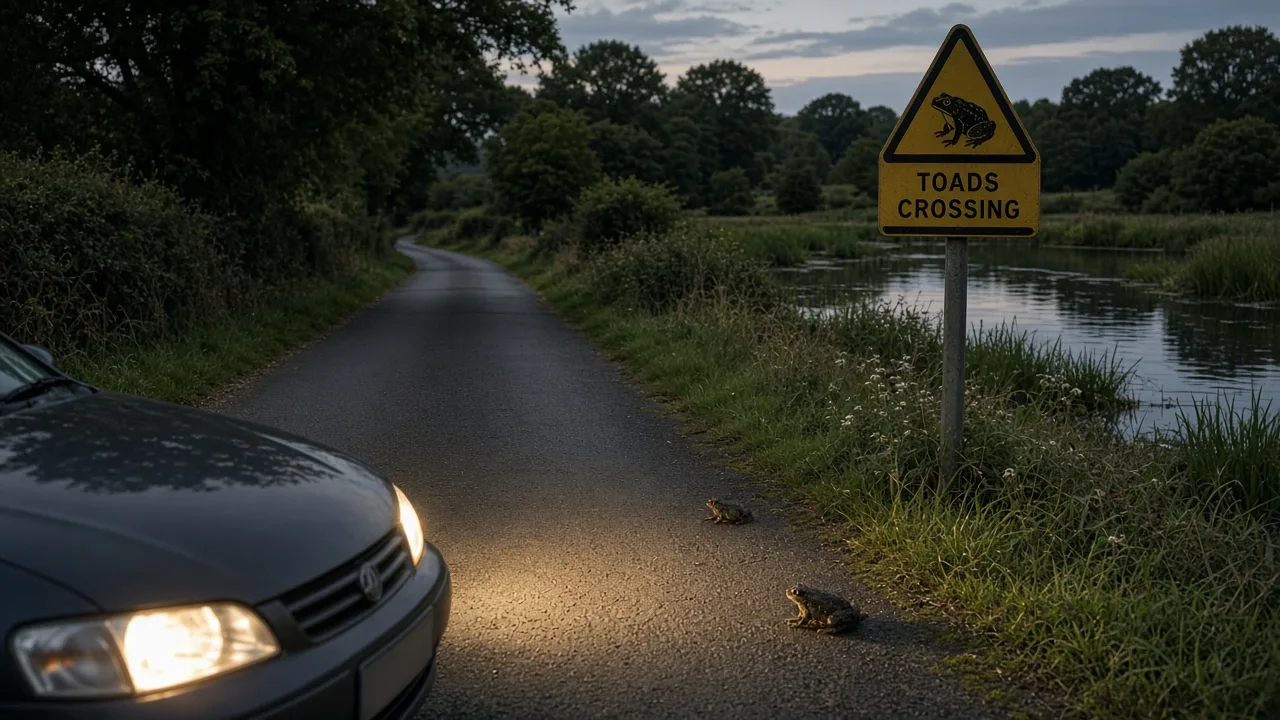
This red-bordered triangle is the polite heads-up that warty commuters may be marching across the tarmac after dark. It does not order a speed limit, but it tells you amphibians treat your lane like a footpath on mild spring evenings, so you slow down, dip your lights and scan the carriageway like a responsible human rather than a motorway missile.
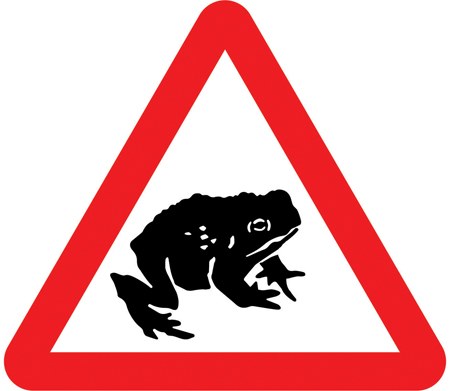
Sign image © Crown copyright, reproduced from GOV.UK traffic sign images under the Open Government Licence v3.0.
What the Migratory toad crossing Sign Looks Like
The GOV.UK plate is a standard UK warning triangle: red border, white centre, and a black silhouette of a toad in mid-stride. The creature looks chunky and purposeful, which is fair, because common toads are not built for ballet. They are built for stubborn plods toward ponds they remember from decades of instinct.
Unlike regulatory circles or blue motorway panels, this shape only warns. It does not quote a numeric limit or ban a manoeuvre. Councils mount it on rural lanes, woodland edges, and reservoir tracks where ecology surveys show repeated crossings. You may see one sign or a pair bracketing a short hotspot.
Learners sometimes confuse it with the wild animals triangle, which shows a generic quadruped, or with cattle and sheep plates that name farm stock explicitly. The toad graphic is distinctive once you notice the hopping posture. If the silhouette were a deer, you would be reading a different chapter of country driving entirely.
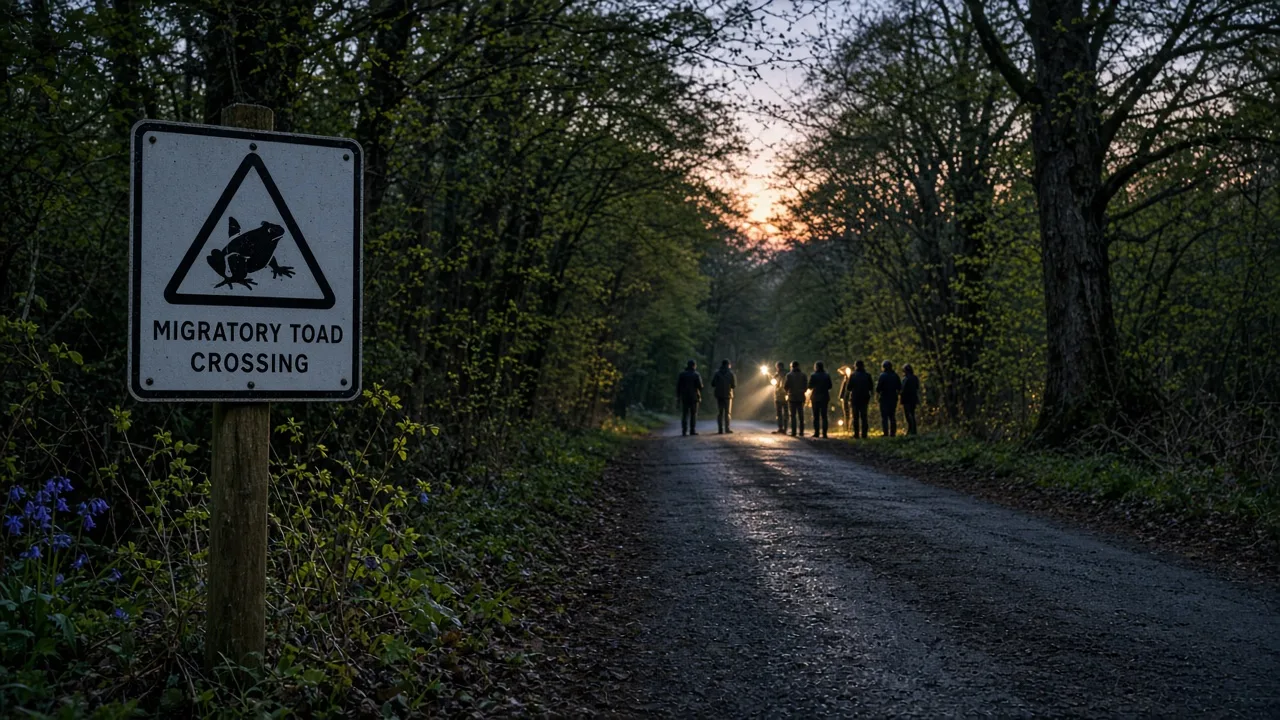
The migratory toad crossing sign often appears beside handmade posters about local patrols, buckets, and torches. That clutter is not official traffic law, but it is a strong hint that residents care enough to stand in the drizzle counting amphibians. Treat the combination as a reason to lift your foot off the accelerator before the pond smell reaches your nostrils.
Highway authorities choose the toad plate when surveys show amphibian movement concentrated on one stretch. Cattle and sheep warnings cover livestock on open hillsides. Wild animal triangles cover deer and smaller mammals. All share the same triangle grammar; the black symbol tells you which cast member might wander into your beam.
What the Migratory Toad Crossing Sign Means
Common toads spend much of the year in gardens, woods, and compost heaps, then migrate toward breeding ponds when temperatures rise and rain softens the soil. That journey can cross a quiet lane you use as a shortcut. The warning triangle marks where tyre tracks and toad tracks overlap often enough that engineers asked for a permanent reminder.
Movement peaks on mild, damp evenings, frequently between late February and April depending on latitude and weather. Frogs may share the party, but the sign name calls out toads because their migrations are slower, more predictable along historic routes, and easier for councils to map. A toad in the open is a small, dark lump that reflects poorly compared with a cat’s eyes.
The Highway Code treats animals on the road as a live hazard. Rule 214 tells you to slow down or stop if necessary, let animals pass, and avoid behaviour that startles them. Rule 215 adds care near horses and livestock; the same calm approach suits amphibians. Swerving violently for a toad and meeting a tree is worse than a gentle stop when the road behind is clear.
Dipped headlights matter. Full beam can dazzle you and freeze small animals in place. A smooth reduction from thirty to twenty miles per hour on a lane you know well can buy seconds to spot movement near the white line. Windscreen washers and demisters help on foggy March nights when every puddle looks like a helmet.
Volunteer toad patrols organised with groups such as Froglife redirect animals into buckets and carry them across safely. If a hi-vis steward signals you to wait, treat it like a temporary human level crossing. They are not traffic wardens, but obstructing them while they shuffle a breeding population is neither neighbourly nor clever.
The sign does not create a separate speed limit. Police still enforce limits already posted, and careless driving remains the realistic legal risk if you blast through a known crossing on a patrol night with people in the road. Insurance claims after wildlife strikes are messy; prevention is cheaper than arguing about comprehensive cover at dawn.
You most often meet this plate on single-track lanes linking villages to nature reserves, gravelled estate roads near balancing ponds, and forestry commission entrances in southern England and Wales. Scotland and northern counties see fewer dedicated toad plates, but the biology still happens wherever historic ponds survive.
Some counties install temporary flashing amber warnings during peak nights. The static triangle remains year-round as education for drivers who only visit in summer and wonder why autumn feels lonely for amphibians.
Driving instructors rarely centre entire lessons on toads, yet rural test routes near Chiltern beechwoods or New Forest verges can drop you onto signed lanes in season. Examiners watch whether you adjust speed for conditions without being told twice.
Cyclists and motorbikes hit toads too. If you ride, a upright posture and wide beam angle help, but nothing beats slowing before the pond dip where the sign faces both directions.
After heavy rain, expect stragglers on nights the forecast called dry. Toads do not read apps. They respond to temperature and moisture, which means your calendar and their calendar disagree politely until they do not.
If you live locally, report fresh casualties to parish councils or wildlife groups. Data keeps the sign maintained when budgets argue about every post. One squashed teacher toad is sad; a pattern of squashes is infrastructure planning.
Migratory toad crossing vs Similar Signs
| Sign | Meaning | Legal or warning? |
|---|---|---|
| Migratory toad crossing | Amphibians may cross the carriageway in season, often at night | Warning triangle |
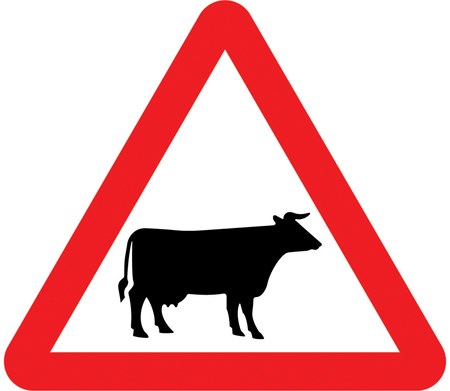 Cattle | Cattle may be on the road ahead; wait if herd blocks you | Warning triangle |
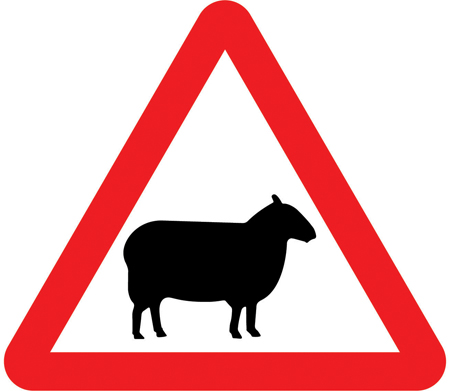 Sheep | Sheep may wander on rural routes; drive slowly | Warning triangle |
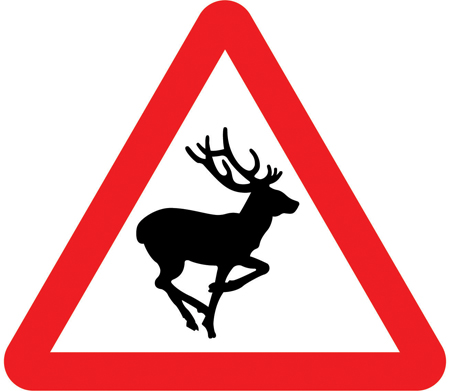 Wild animals | Deer or other wildlife may step out; stay alert | Warning triangle |
Rules and Penalties
There is no Home Office ticket titled “failure to respect amphibian triangle.” Enforcement rides on how you drive once warned. Speeding past a fixed limit sign still attracts standard penalties. Causing danger by ignoring stewards or ploughing through a visible patrol can attract careless driving attention if an officer witnessed the whole pantomime.
Wildlife collisions are tragedies, not revenue events. You will not collect points specifically for squashing a toad, but striking a larger animal and leaving the scene, or driving so fast that you cannot stop for a person helping wildlife, opens the usual careless or dangerous driving toolkit courts already own.
Civil liability hurts more than folklore about toad karma. A swerve that writes off a hedge and a neighbour’s wall still goes through your insurer even if the toad hopped away smugly. Smooth braking beats heroic geometry.
Theory questions love animal warnings because they test attitude, not memorised fines. They ask what you should do when sheep, deer, or amphibians appear, not how many points a newt costs. Learn the behaviour the triangle implies.
Check the latest theory test pass mark and book when you are ready via our booking guide.
Migratory toad crossing in Practice
On a March evening near a Hampshire pond, Priti drives home from a late shift along a lane she usually treats as forty miles per hour in spirit if not in law. A red triangle with a black toad catches her headlamps, then a volunteer in reflective straps waves a torch low across the surface.
Priti checks her mirror, drops to fifteen miles per hour, selects dipped beam, and stops two car lengths short. Two stewards carry buckets between ditches while a chorus of croaks sounds like a leaky orchestra. A saloon behind her huffs but does not overtake because the lane is narrow and the hazard is obvious.
After ninety seconds the stewards nod her forward. She creeps past, keeps vigil for stragglers near the kerb, and resists the urge to post a joke online about traffic caused by toads. The sign did its job: it primed her before the torch appeared. Had she stayed at village racing speed, she could have endangered volunteers and added herself to a statistic nobody wants on a parish newsletter.
How This Sign Appears on the Theory Test
Multiple-choice banks show warning triangles with animal symbols and ask how to respond. The correct pattern is almost always calm speed reduction, readiness to stop, and avoiding sudden swerves, not sounding the horn to compose a symphony.
Picture questions may swap toads for deer to check whether you read the silhouette. Identify the species symbol quickly, then apply the same gentle approach because physics does not care about taxonomy.
Hazard perception clips sometimes include dark rural roads with moving shapes near the verge. The scoring window rewards early reaction to slowing traffic or animals, not late stomps after the hazard became a thump.
Filter revision on road and traffic signs, then reread Highway Code animal rules. When an option suggests flashing headlights to hurry wildlife, reject it. When an option suggests stopping if safe, favour it.
Take a free mock theory test and filter questions on road and traffic signs. Pair that with the warning signs guide for triangle symbols.
Related Road Signs
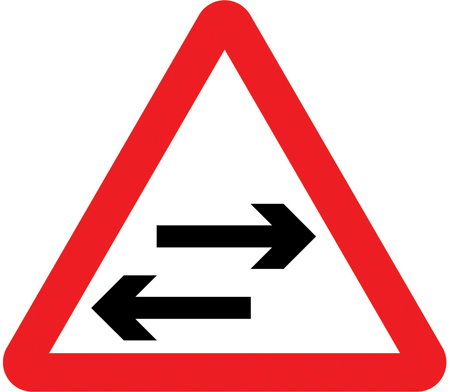
Two-way traffic
Narrow rural links where oncoming traffic shares one lane.
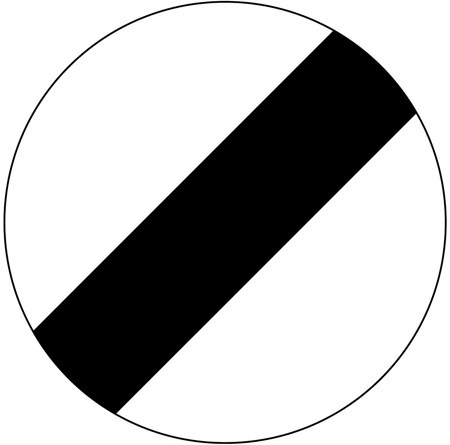
National speed limit
Default limit on country lanes still demands safe speed for wildlife.
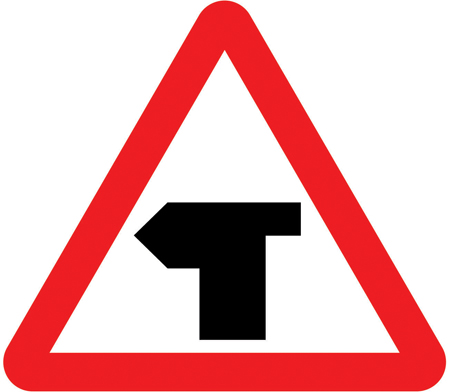
T junction sign
Side roads joining quiet lanes near ponds and woods.
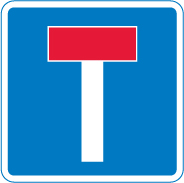
No through road
Dead ends that still attract amphibians walking to water.
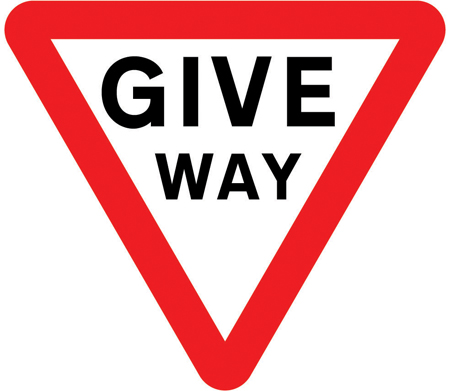
Give way sign
Yield marks at junctions on routes to nature sites.
Test Yourself on UK Road Signs
Treat the migratory toad crossing plate as a seasonal courtesy from the council to both drivers and pond life. On mild spring nights, dip your lights, shave off speed before the water smell arrives, and share the lane with creatures that were commuting long before number plates existed. A free mock theory test helps you lock in how warning triangles behave when exams swap the artwork.
Frequently Asked Questions
When are migratory toads most likely on the road?
Peak movement is usually on damp, mild nights from late winter into spring, though exact weeks depend on weather and where you live. Slow down whenever you see the sign in those months, not only on the first evening you notice frogs singing.
Does the sign set a legal speed limit?
No. It is a warning triangle only. You must still obey posted limits and drive at a speed that lets you stop for animals and people on the carriageway.
What should I do if volunteers are carrying buckets?
Stop or crawl forward only when they signal it is safe. They are trying to reduce casualties; edging past impatiently puts them and the animals at risk.
How is this different from the wild animals sign?
The wild animals triangle shows a generic quadruped for deer and similar mammals. The toad plate targets amphibian crossings mapped by local ecology work.
Will I get penalty points for hitting a toad?
There is no specific points tariff for amphibian collisions. You can still face careless driving allegations if your speed and attention were clearly unsuitable for the conditions and hazards present.