
Last updated: October 2026 · Checked against Highway Code
Falling Rocks Sign: meaning, rules and what to do
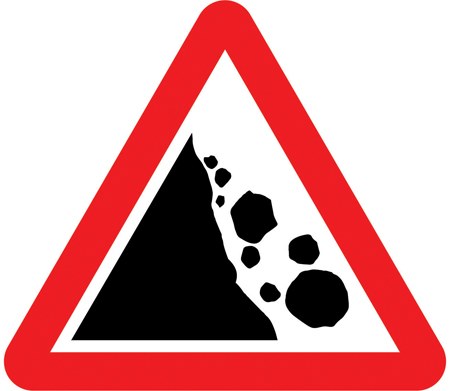
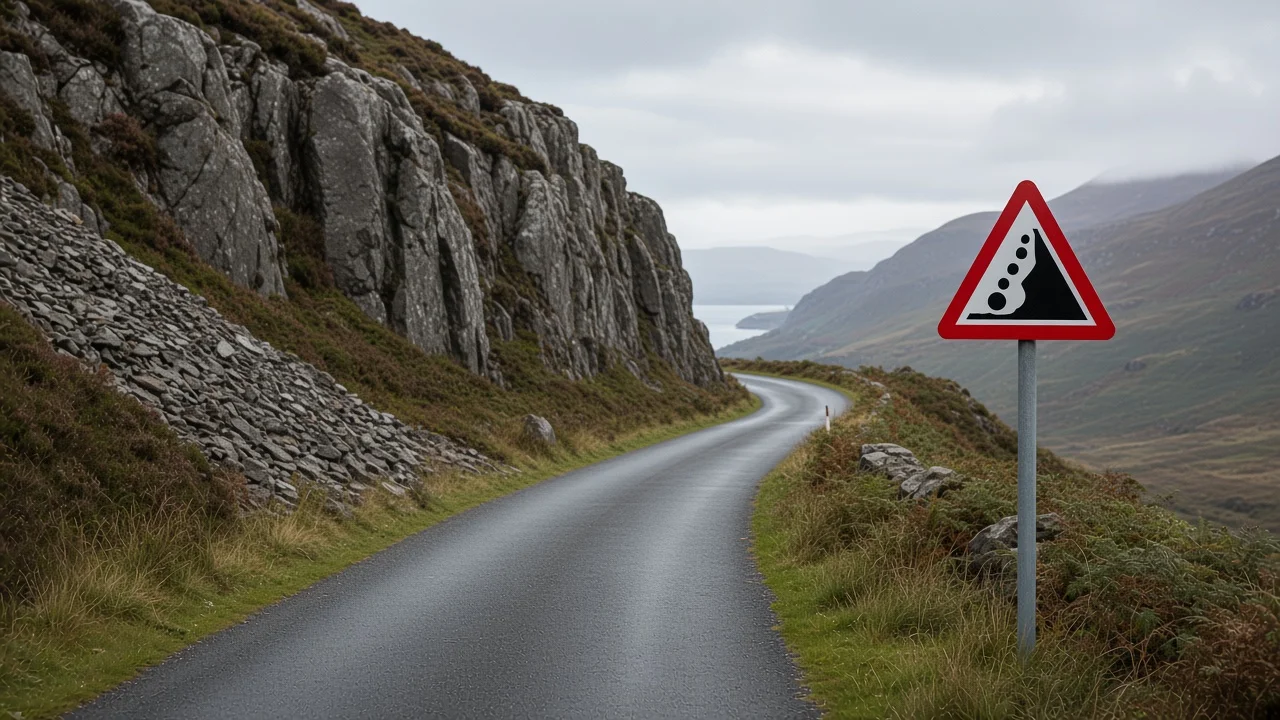
The red-bordered triangle with black boulders tumbling down a slope warns that rockfall can reach the carriageway ahead. It does not ban overtaking or set a numeric limit, but it tells you to treat the next stretch as unstable geology rather than a clear runway, especially after frost, heavy rain, or blasting work higher up the face.
Sign image © Crown copyright, reproduced from GOV.UK traffic sign images under the Open Government Licence v3.0.
What the Falling or fallen rocks Sign Looks Like
On GOV.UK artwork the plate is a standard UK warning triangle: thick red border, white centre, and a black pictogram of rocks sliding down a diagonal slope. The graphic is stylised rather than photographic, yet the message is unmistakable once you have seen one on a mountain pass.
Engineers mount it where geotechnical surveys show rockfall risk: coastal cliffs in Cornwall and Pembrokeshire, slate valleys in Snowdonia, Highland glens, and road cuttings through limestone where freeze-thaw opens joints overnight. Distance plates in yards sometimes follow, though the triangle alone is the advance warning.
Retroreflective sheeting makes the red rim flash in dipped headlights before you can read the rock shapes. That glimpse matters on evening commutes when shadows hide scree that already spilled across the white line.
Learners often confuse it with loose chippings plates, which use different artwork and usually pair with a distance or length plate. Quarry or mine entrances may have separate direction signs on blue or white panels. The falling rocks triangle is about spontaneous debris from natural slopes, not a surfaced dressing gang working behind cones.
Temporary amber lights or barrier tape may appear after a slide while contractors clear the lane. The static sign remains the year-round reminder that gravity does not respect summer traffic volumes.
Soft verges and quayside warnings use different symbols: one suggests unstable edges beside the lane, the other water beside the carriageway. If the pictogram shows tumbling stone rather than a car skidding or a crumbling rim, you are in falling rocks territory.
Loose chippings warnings describe freshly dressed surfaces where grit can flick up paintwork, often with a distance plate. Soft verges highlight weak edges you could sink into. Quayside plates warn of water drops. The falling rocks triangle is specific to cliff and cutting hazards where stone arrives from above rather than from maintenance traffic.
What the Falling Rocks Sign Means
Rockfall is a genuine risk on Britain’s steeper engineered roads. The sign marks stretches where historical slides, cracked buttresses, or overhanging ledges make fresh debris likely. It does not create a separate speed limit; instead it supports the general duty in The Highway Code to drive at a speed that lets you stop within the distance you can see to be clear.
Rule 125 reminds you that limits are maximums, not targets. On a blind bend below a crag, the safe speed may be far below the national limit because a football-sized block can appear without audition. The triangle buys reaction time before you are committed to a line that threads between boulders.
Weather drives timing. Heavy rain lubricates joints and can trigger slumps after dry spells. Frost wedges rock apart, so spring mornings may litter the nearside lane even when the sky looks innocent. Summer heat expansion causes sudden pops on south-facing faces that tourists photograph from the wrong verge.
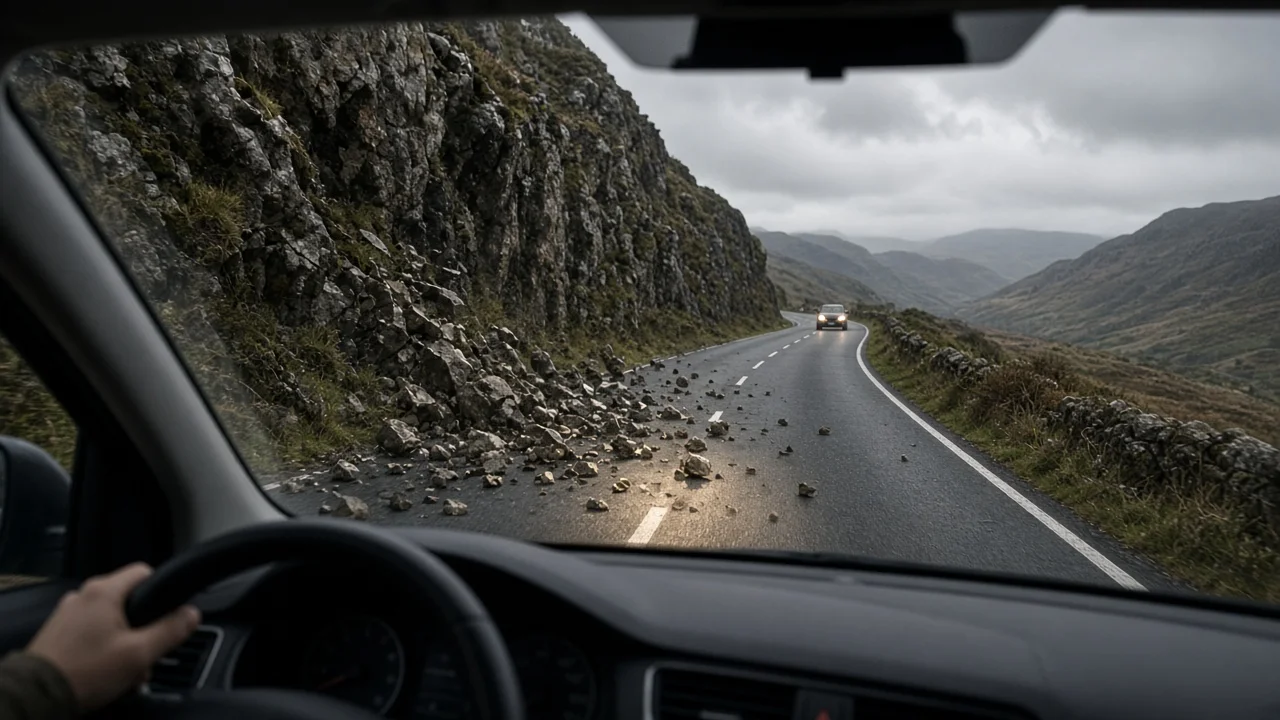
Debris ranges from gravel that feels like loose chippings under tyres to blocks that will destroy suspension if you hit them at forty miles per hour. Scan the surface texture: a dark scatter across both lanes means treat the centre as suspect until you can see past the bend. A single pale patch on the nearside may still puncture a tyre if you hug the cliff for comfort.
Lane position matters. Hugging the rock face feels protective but places you under the fall line; hugging the drop may expose you to crosswind and missing barriers. A balanced track with space to brake is usually wiser than extremes, provided sight lines allow.
Stopping under an overhang to take photos is poor practice the sign implicitly discourages. If you must halt for an obstruction, choose a wider bay or pull as far from the face as the verge allows. Coaches and caravans need extra clearance because length pushes the rear into zones small cars skim past.
Motorcyclists suffer disproportionately: a marble-sized stone at speed can unseat a rider. Cyclists climbing mountain passes should expect drivers to pass cautiously; if you drive, give them room rather than honking at a cautious crawl below the triangle.
The sign does not excuse tailgating. If the vehicle ahead slows for rubble, hold back. Overtaking on a narrow cliff road with oncoming traffic hidden by the next hairpin is rarely worth the seconds saved.
Highways teams sometimes close lanes after major slides. The warning triangle still applies when a single lane reopens because further material can follow the first batch. Respect convoy instructions and do not weave past plant unless directed.
You meet this plate on the A82 beside Loch Lomond, Devon lanes under Exmoor cliffs, the A496 in Snowdonia, and many single-track passes where one side is raw rock. Holiday drivers unfamiliar with left-hand verge drops benefit from the same early lift off the throttle locals use every market day.
Driving instructors on rural test routes coach candidates to name the hazard aloud and reduce speed before the cutting swallows the horizon. Examiners watch for late braking that locks wheels on gravel, not for dramatic swerves that cross the centre line.
Fleet vans with low front splitters should treat scattered stone like a speed bump forecast: approach upright, avoid harsh compression, and check under trays after a run through a signed zone.
After storms, report fresh falls to the council if the carriageway is partially blocked. Repeat incidents in one week justify extra barriers or temporary lower limits. Data beats guesswork when maintenance budgets argue about every mesh net.
Sat navs rarely mention geology. When the red triangle appears, trust the plate over an optimistic arrival time, especially on diversion routes that funnel you through a scenic gorge.
If you tow, remember the trailer tracks a different line through debris. A stone you miss with the car wheels can strike the caravan tyres two metres later.
Night driving demands dipped beams and slower speeds: shadows hide contrast between asphalt and rock until your suspension tells you.
Highway Code rules 122 to 125 (control, speed and stopping distances)
Falling or fallen rocks vs Similar Signs
| Sign | Meaning | Legal or warning? |
|---|---|---|
| Falling or fallen rocks | Stones may be on the road from cliffs or cuttings | Warning triangle |
| Loose chippings | Fresh surface dressing; grit may damage paint | Warning triangle (often with distance plate) |
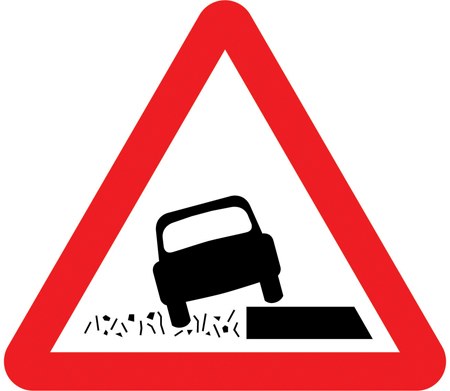 Soft verges | Weak edges; risk of sinking off the carriageway | Warning triangle |
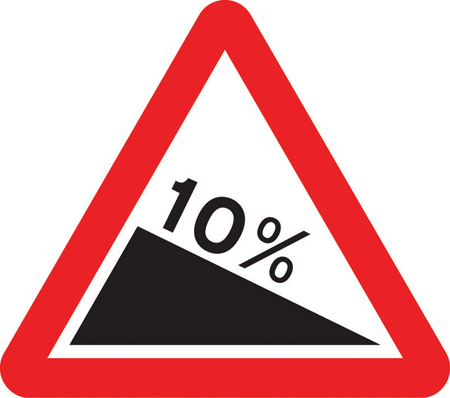 Steep hill downwards | Sharp or sustained descent ahead | Warning triangle |
Rules and Penalties
There is no fixed penalty titled “failure to heed falling rocks triangle.” The plate is advisory. Speeding past a separate limit sign still attracts standard penalties. Causing danger by driving so fast you cannot stop for visible debris, or leaving the scene after a strike that injured a passenger, opens careless or dangerous driving routes courts already use.
Damaging your vehicle on a boulder after ignoring obvious scatter rarely produces a helpful insurance narrative. Third-party claims arise if you swerve into oncoming traffic while avoiding stone. Smooth braking beats dramatic geometry every time.
Driving tests mark serious faults for approaching signed cliff roads too quickly, coasting in neutral on descents, or overtaking blindly where the examiner knows rockfall history. They want early speed reduction and calm steering.
Theory questions test recognition: the correct meaning is risk of falling rocks. Distractors mention loose chippings for a fixed distance, quarry entrances, or soft verges. Learn the pictogram and you will not chase the wrong label under exam pressure.
Parking or camping under unstable faces can lead to obstruction or careless parking allegations if you block clearance works, even though the triangle itself does not regulate waiting.
Check the latest theory test pass mark and book when you are ready via our booking guide.
Falling or fallen rocks in Practice
On a damp April morning, Priya drives a hire car along a coastal B-road in Pembrokeshire. A falling rocks triangle catches her dipped beam where the lane cuts into red sandstone, the sea glittering to her right.
She checks the mirror, eases from forty to twenty-five miles per hour, and covers the brake without riding it. Rounding the bend she spots a scatter of fist-sized stones across the nearside half of the lane, with a larger block resting on the white line.
Priya holds her line in the centre where sight allows, steers smoothly around the block without crossing into the opposing lane, and keeps a gap to a camper van ahead that also slowed. In her mirror a following saloon drops speed without flashing lights.
Beyond the bend the surface clears. She keeps a modest pace until open moor returns, then resumes the limit where safe. Had she treated the triangle as decoration, the block on the line could have wrecked a tyre or pulled the wheel from her hands.
On her theory test two weeks later, the same rock pictogram appears among four answers. She selects risk of falling rocks, rejecting loose chippings for four hundred yards because no distance plate accompanied the symbol in the question artwork.
In a hazard perception clip on a mountain road she scores by easing off when gravel suddenly speckles the lane, even though the post is out of frame, because the behaviour the sign teaches still applies.
How This Sign Appears on the Theory Test
Multiple-choice banks show the rockslide triangle and ask what hazard to expect. The correct pattern is risk of falling rocks, not quarry access, soft verges only, or loose chippings for a fixed distance unless a separate plate appears in the image.
Picture questions may swap artwork with loose chippings to check whether you read the symbol. Tumbling boulders on a slope mean cliff debris; spalled surface texture with a distance plate means dressing works.
Hazard perception clips on gorge roads reward early slowing when the surface texture changes or brake lights bunch ahead. Late stomps after a thump under the floor score poorly because the safe window closed.
Filter revision on road and traffic signs, then reread Highway Code speed and stopping distance rules. Reject answers that tell you to stop under the cliff for photos or to accelerate past scatter to clear the zone quickly.
When two warning triangles appear in one question, match symbol to hazard before choosing behaviour. Ice, verges, and rockfall share triangle grammar but different responses.
Car, motorcycle, HGV, and PCV banks reuse the same pictogram with identical correct wording. Learn once, apply everywhere.
Take a free mock theory test and filter questions on road and traffic signs. Pair that with the warning signs guide for triangle symbols.
Related Road Signs
Steep hill downwards
Long descents where gravity and debris often meet on cliff roads.
Bend right
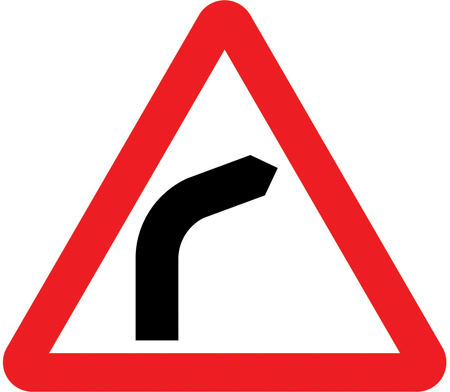
Blind curves below crags hide rocks until the last moment.
Double bend
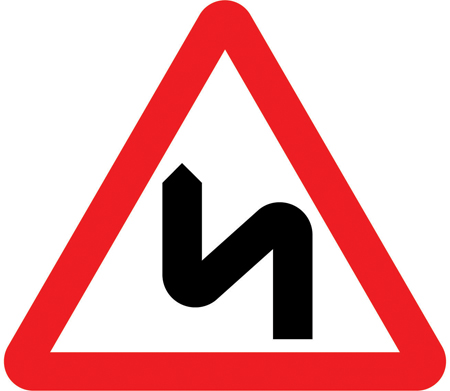
Serpentine cuttings where slides can land mid-corner.
Two-way traffic
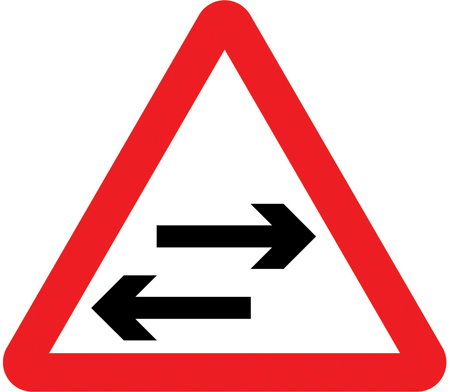
Narrow passes where swerving around stone risks head-on contact.
No stopping
Clearways that stop you halting under fall zones or pinch points.
Test Yourself on UK Road Signs
Treat the falling rocks warning as geology with a timetable you cannot see. Ease off before the cutting swallows the horizon, scan the surface for fresh scatter, and keep steering calm if stone appears where your lane used to be. Recognising the triangle in revision saves easy marks when the exam swaps chippings artwork for tumbling boulders. A free mock theory test helps you practise warning signs before test day.
Frequently Asked Questions
What does the falling rocks sign mean in the UK?
It warns that stones may fall from cliffs or cuttings onto the road ahead, or that fallen rocks may already be on the carriageway. Slow down, stay alert, and be ready to steer smoothly around debris without swerving into oncoming traffic.
Does the falling rocks sign set a speed limit?
No. It is a warning triangle only. You must still obey posted limits and drive at a speed that lets you stop within the distance you can see to be clear, which may be well below the limit on cliff roads.
How is it different from the loose chippings sign?
Loose chippings warnings relate to fresh road surfacing and often show a distance plate. The falling rocks pictogram shows boulders tumbling down a slope and marks natural rockfall risk from above, not maintenance grit alone.
Should I stop under the cliff when I see this sign?
Avoid stopping beneath overhangs if you can. If you must halt for obstruction, use a lay-by or pull as far from the rock face as the verge allows. Do not block the lane while taking photos.
What is the correct theory test answer for this sign?
Choose risk of falling rocks. Common wrong options mention loose chippings for a fixed distance, a quarry entrance, or soft verges only. Match the tumbling rock symbol to cliff debris on the road.