
Last updated: October 2026 · Checked against Highway Code
Length Restriction Sign: meaning, rules and what to do
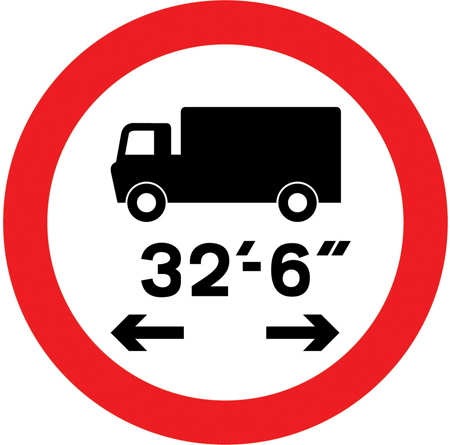
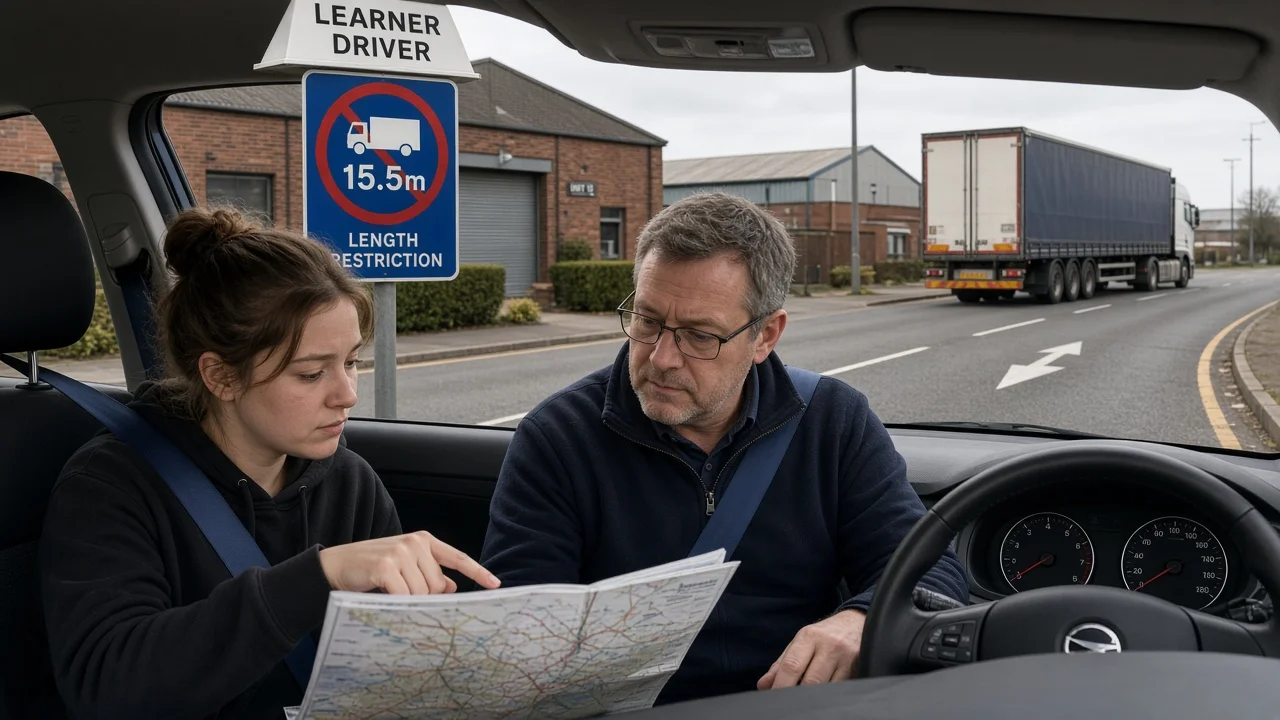
The length restriction sign is a blue circle with a red border showing a goods vehicle and a maximum length in metres or feet, with arrows along the vehicle axis. It tells you not to enter the road ahead if your vehicle or combination is longer than the figure shown.
Sign image © Crown copyright, reproduced from GOV.UK traffic sign images under the Open Government Licence v3.0.
What the Length restriction Sign Looks Like
The official GOV.UK plate follows UK prohibitory grammar: blue disc, thick red ring, white numerals or imperial feet and inches. A black lorry silhouette sits above the limit, with horizontal arrows pointing left and right along the vehicle length. That layout distinguishes length from width plates, which squeeze inward-pointing triangles beside the measurement instead of a full vehicle symbol.
Figures may appear in metric metres on newer posts, or in feet and inches such as thirty-two feet six on older village bridges and estate entrances. A small rectangular plate beneath sometimes repeats the limit for clarity or adds Except for access when residents need a narrow exemption. Repeat circles after side streets remind joining traffic that the ban continues.
Posts stand at the mouth of narrow lanes, weak bridges, tight industrial yards, and housing layouts where articulated outfits would block the carriageway or strike building lines. On dual carriageways the same symbol can appear on a verge before a single-track section drops from a main road.
Retroreflective sheeting keeps the red ring visible at night when drivers estimate whether a car transporter will fit. Learners often confuse the plate with the width restriction circle, which lacks the lorry pictogram, or with height restriction numerals that sit inside a warning triangle ahead of low bridges rather than inside a blue mandatory disc.
Temporary works may cover the permanent post, yet the symbol stays consistent when engineers replace damaged boards. Portable signs during festivals sometimes echo the same artwork when organisers need to keep long coaches on an outer ring road.
Width restriction circles show side arrows or inward triangles without a lorry graphic. Height and weight limits use their own numerals and symbols. A red warning triangle with length artwork marks restriction ahead, while the blue circle is the legal maximum you must not exceed. Read every plate on the approach, not only the first post you notice.
What the Length Restriction Sign Means
Traffic authorities install the order where geometry, bridge capacity, or turning space cannot safely accept vehicles longer than the signed figure. The plate does not suggest a recommended length for comfort. It is a hard ceiling: proceed only if your lawful overall length is at or below the number, including drawbars, rear platforms, and rear-mounted cycles when they extend the outfit.
Rule 124 in The Highway Code reminds you that speed limits are maximums in good conditions, yet dimension orders are absolute. You cannot argue that you drove slowly enough to squeeze through. If the combination is too long, the road is legally closed to you until you find another route.
Overall length is measured along the vehicle axis in line with construction and use regulations. Articulated lorries count tractor and semi-trailer together. Car and caravan outfits count the trailer even when the car is modest. Roof boxes rarely change the figure unless they project far beyond the rear bumper; rear bike racks and loaded trailers often do.
Except for access plates allow entry when your destination lies inside the zone and no shorter route exists, but they do not grant permission to wait, load, or turn on a length you cannot negotiate. Delivery drivers still risk careless driving if they block a junction while reversing a outfit that should never have entered.
The order runs from the sign until an end plate, a clear break in the restriction, or a junction where another face does not repeat the symbol. Joining from a side road requires you to read the circle facing your direction. Assuming the main road limit ended because you turned off a dual carriageway is a common fleet ticket.
Warning triangles labelled length restriction ahead appear upstream on faster approaches. They do not replace the blue circle at the decision point. They give HGV drivers time to peel off before sat nav insists on a scenic lane. Private car drivers should still notice them when towing long boats or twin-axle caravans.
Weak structures sometimes pair length limits with weight restrictions on separate posts. Obey both. A outfit within mass limits can still lever a parapet off a short span if the wheelbase and overhang pivot at the wrong point. Bridge strike teams see length breaches as often as height strikes in historic towns.
Bus and coach routes are planned against signed limits, yet rail replacement services and wedding hires occasionally send unfamiliar drivers down estate roads. If your PCV exceeds the plate, you must refuse the turn even when passengers press you to try. Operators carry liability when schedules ignore dimension data.
Northern Ireland uses the same symbol grammar on most restriction plates, though some rural boards still show imperial only. When touring across the border, convert your outfit length to the unit on the sign before you commit to a ferry port shortcut.
Electric lorries and hydrogen rigs follow the same orders as diesel outfits. Quiet approach does not shrink physical length. Autonomous trials must still respect posted limits because the sign addresses vehicle geometry, not who holds the steering wheel.
Measure once in daylight with the trailer hitched and loads secured, then store the figure on a cab sticker or phone note. Guessing at a post while traffic queues behind you invites a strike or a blocking fine.
Sat nav lorry modes respect many dimension databases, yet new restrictions appear after bridge assessments. When the red ring appears, treat the device as wrong until you have visually confirmed clearance.
Reversing out of a lane you should not have entered is harder than refusing entry. If the limit is marginal, walk the pinch point or ask a banksman before you drag a caravan past a parked car.
Car transporters and boat trailers extend rear overhang beyond the number plate. Include that projection when you compare against the signed maximum.
On driving lessons, examiners rarely route through active length bans, but they may use nearby roads to test whether you read regulatory circles without confusing them with warning triangles.
When escorting abnormal loads under special orders, different paperwork may apply. Ordinary learners and car drivers should assume the public plate applies to them unless police or highways staff direct otherwise.
Cyclists and motorcyclists are not caught by length orders aimed at goods vehicles unless a plate explicitly includes all vehicles. Still read local orders because some pedestrianised zones use combined motor vehicle bans.
If a plate is vandalised or faded, treat missing numerals as a signal to stop and find another route rather than gambling. Councils renew boards after strikes, but interim damage is not a defence in court.
Highway Code rules 124, 126 and 163 (limits, stopping distance, and overtaking)
Length restriction vs Similar Signs
| Sign | Meaning | Legal or warning? |
|---|---|---|
| Length restriction | No vehicle or combination longer than the figure shown | Regulatory circle |
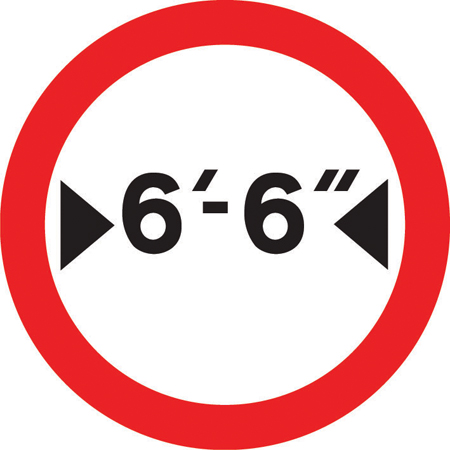 Width restriction | Maximum width between inward arrows | Regulatory circle |
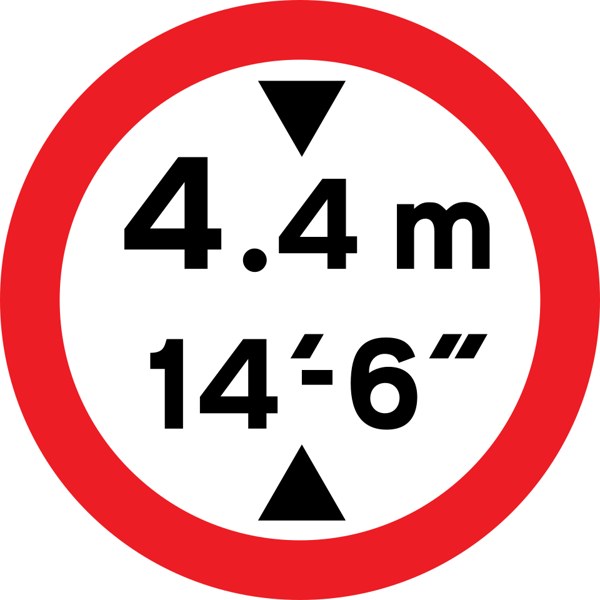 Height restriction | Maximum headroom ahead | Warning or regulatory |
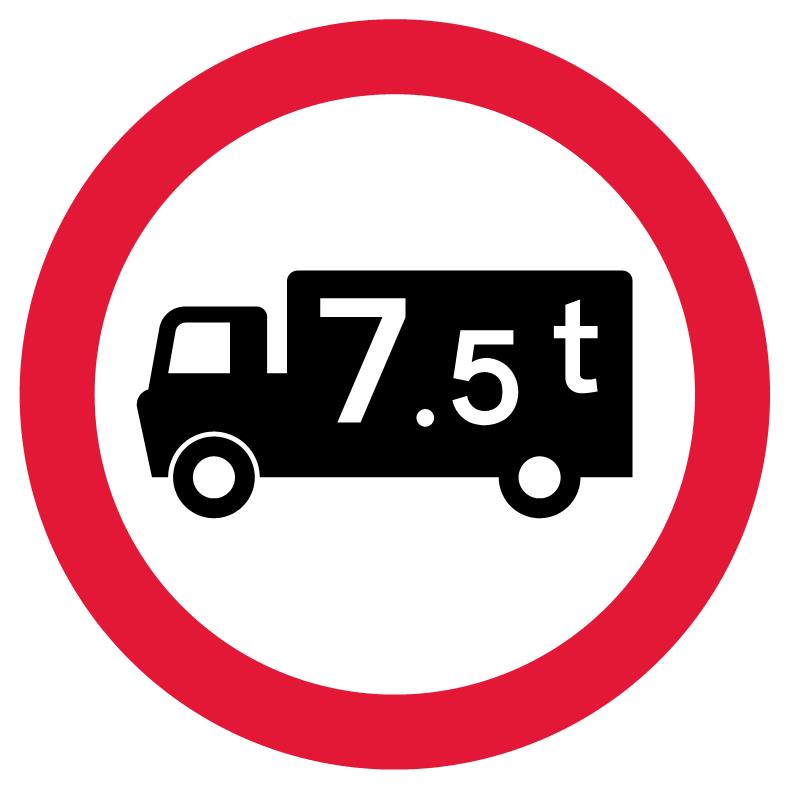 Weight restriction | Maximum gross weight on a weak bridge or road | Regulatory circle |
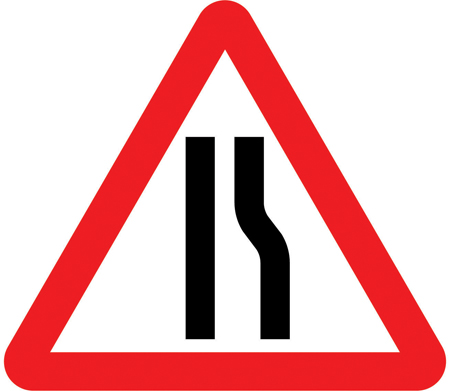 Road narrows | Carriageway width reduces on a fixed lane | Warning triangle |
Rules and Penalties
Ignoring a lawful length restriction is a traffic offence when your outfit exceeds the posted limit. Fixed penalties and court fines vary with severity; insurers may refuse claims if you entered a signed zone knowing the combination was too long.
Striking a bridge, wall, or parked car while attempting a tight turn can bring careless or dangerous driving charges even without injury. Length orders exist partly to keep those manoeuvres off unsuitable streets.
Operators of goods vehicles face operator licence curtailment when drivers repeatedly breach dimension signs. Private motorists towing caravans can still receive penalty points if obstruction or damage follows a poor choice.
Civil claims from residents whose property you clip may exceed any police fine. Waiting for oncoming traffic to clear does not shrink your outfit; blocking a length-restricted lane can attract penalty charge notices where keep-clear cameras operate.
Driving tests treat failure to obey a clear regulatory sign as a serious fault when the examiner judges you should have read the plate before committing.
Check the latest theory test pass mark and book when you are ready via our booking guide.
Length restriction in Practice
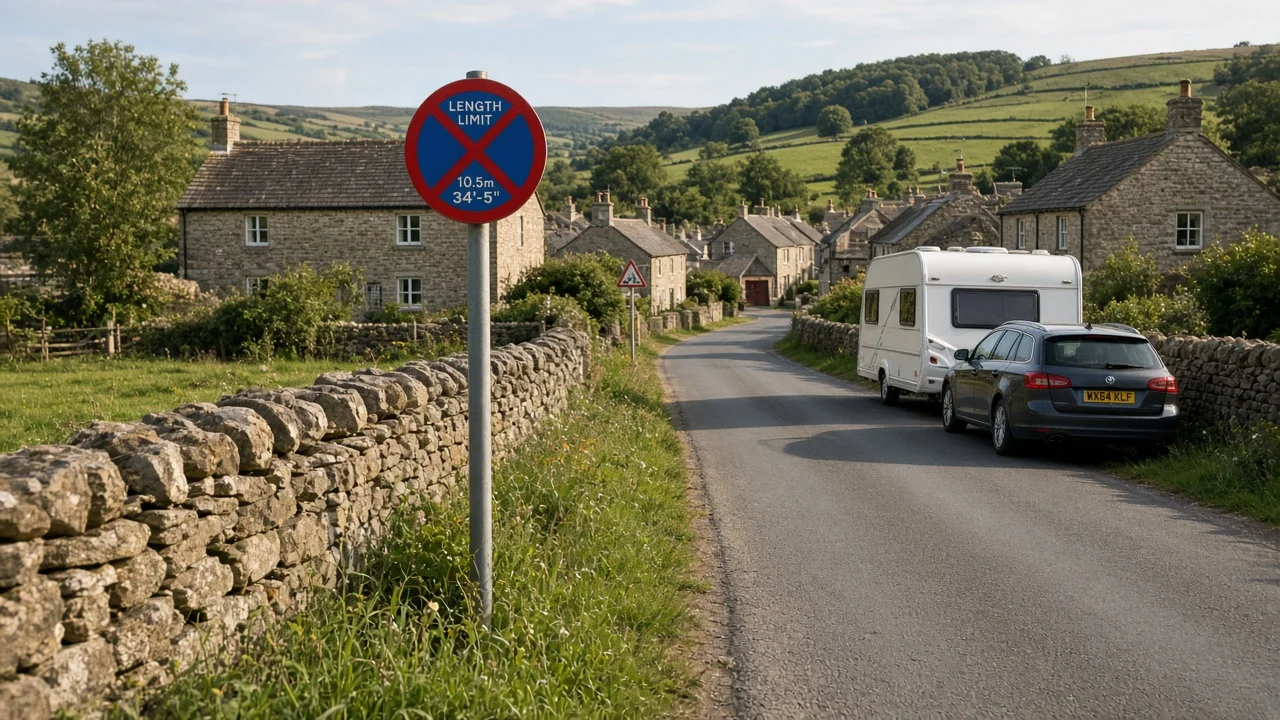
Marcus tows a twin-axle caravan through the Cotswolds on a route his app chose to avoid motorway miles. A length restriction circle shows 10 metres on a stone wall beside a hump-backed lane. He knows the car plus caravan measures 11.2 metres over the drawbar, so he stops before the cattle grid and consults the map for a B road that accepts longer outfits.
While he waits, a delivery van driver waves him through, assuming cars may ignore lorry symbols. Marcus declines. The plate limits combination length, not only HGVs. He signals a three-point turn in a wider gateway, mindful that reversing with limited visibility is safer than wedging the caravan between dry-stone walls.
Later, on a theory revision evening, he matches the pictogram to horizontal length arrows and picks the correct answer when a question pairs the circle with Except for access. In a hazard perception clip he scores by easing off when brake lights bunch before a village choker, even though the sign is out of frame.
His instructor asks what he would do if the numerals were scratched off but the lorry symbol remained. Marcus answers that he would not enter without knowing the limit, because guessing risks a strike and invalidates careful planning.
Before booking his practical test, he runs a timed session on the car mock and flags any dimension question he guesses. He pairs that with a walk down a high street reading width and length plates on real posts so symbols connect to kerb layout, not only to app graphics.
How This Sign Appears on the Theory Test
Picture questions show the blue circle with lorry and length arrows. Choose the answer that states vehicles longer than the figure must not proceed, not merely that long vehicles should sound horns.
Scenario stems may add Except for access. The correct pattern is entry only when your destination lies inside and no lawful shorter route exists, not whenever you are in a hurry.
Distractors sometimes show width restriction artwork with inward triangles. Compare symbols: a lorry silhouette with horizontal arrows signals length, not width.
Hazard perception rewards early slowing when HGVs peel off a main road before a village narrows. You may not see the circle in the clip, but the behaviour the sign teaches still raises your score.
When revising regulatory signs, sketch the lorry with outward length arrows and label the numerals as maximum combination length. Examiners expect instant recognition without confusing the plate with weight tonnes inside a similar ring.
Take a free mock theory test and filter questions on road and traffic signs. Pair that with the warning signs guide for triangle symbols.
Related Road Signs
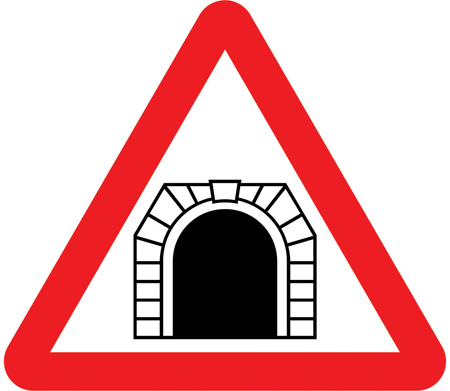
Tunnel ahead
Often paired with separate height boards at the portal.
Road narrows
Fixed pinch points that still trap long outfits even without a posted length.
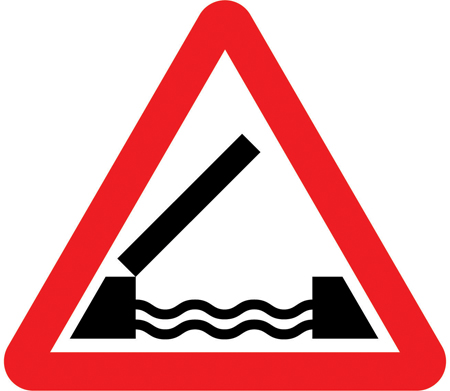
Opening bridge
Movable spans where queues and deck gaps punish poor planning.
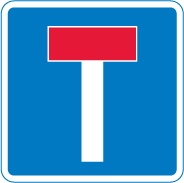
No through road
Layout plates that do not replace dimension orders at the mouth.
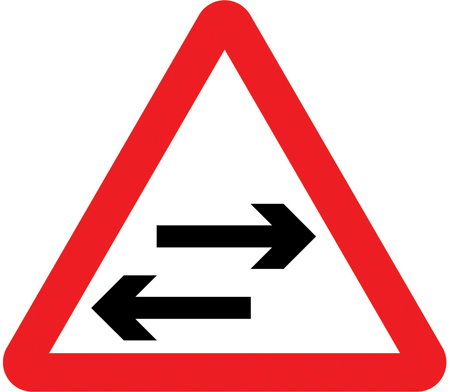
Two-way traffic
Meeting traffic on narrow lengths where passing places are scarce.
Test Yourself on UK Road Signs
Treat every length restriction sign as a final check, not a suggestion. Measure your outfit honestly, respect Except for access wording, and turn back while you still have space. Long vehicles belong on planned routes, and the blue circle exists to stop geometry surprises in places never built for modern outfits. A free mock theory test helps you drill regulatory circles before the exam swaps numerals.
Frequently Asked Questions
Who must obey a length restriction sign?
Any vehicle or combination longer than the figure shown must not pass. The lorry symbol highlights goods vehicles, but car and caravan outfits are included when overall length exceeds the limit unless a plate exempts specific classes.
How is this different from a width restriction sign?
Width plates show inward-pointing arrows or side triangles without a lorry graphic. Length plates show a vehicle silhouette with arrows along its axis and a maximum length figure.
Does Except for access let me enter with an overlong caravan?
No. Access exemptions allow entry to reach a property inside the zone when no shorter route exists. They do not permit you to break the length limit while you are inside.
What if my sat nav sends me past a length restriction sign?
You must still obey the plate. Find another route or stop safely before the signed length. Navigation apps can be wrong after new bridge assessments.
Will this sign appear on my theory test?
Regulatory dimension signs are core knowledge. Expect image questions on maximum length, and hazard clips that reward slowing before tight village layouts.