
Last updated: October 2026 · Checked against Highway Code
Side Road Left Sign: meaning, rules and what to do
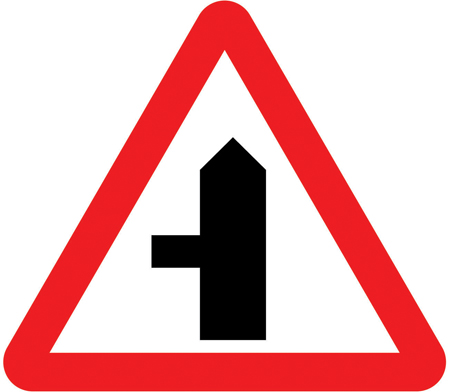
A black side arm on the left of a vertical bar tells you a minor route will meet your carriageway from the left, so you must scan that mouth before your speed carries you past it.
Sign image © Crown copyright, reproduced from GOV.UK traffic sign images under the Open Government Licence v3.0.
What the Side road left Sign Looks Like
The plate points upward with a red border and white centre. The pictogram is a thick vertical bar with an arrowhead at the top, representing the road you are on, plus a thinner horizontal bar sprouting from the left flank. That left arm is the side road joining ahead.
Distance plates sometimes sit beneath the triangle, showing yards to the junction in old or metric units. The graphic follows the standard hazard style: red rim, white field, black symbol. It is not blue, circular, or rectangular like direction or regulatory plates.
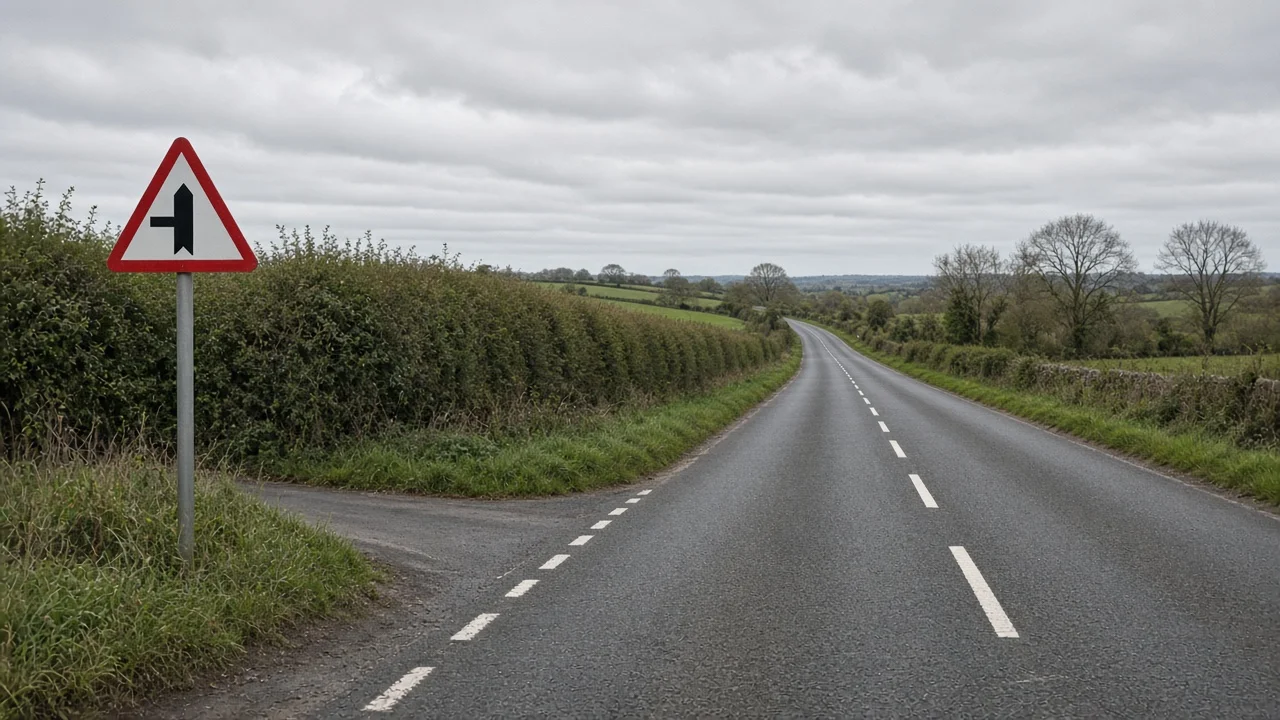
Engineers place the board on the through route where the side mouth still surprises visitors, often after a bend or where hedges hide emerging traffic. You may see a matching plate on the minor approach, though that arm more often carries give-way paint instead.
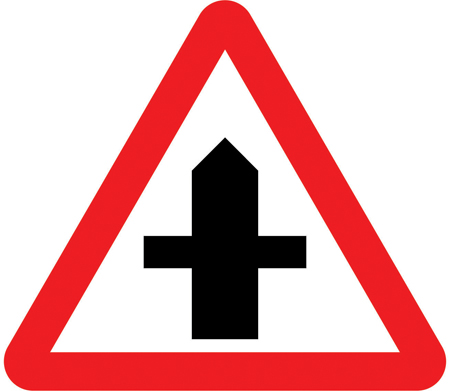
Do not swap it for the mirror image used when the join comes from the right. Do not read it as a T junction: here the main road continues straight while a side arm feeds in. Crossroads warnings show arms on both sides of the bar, not a single left branch.
The side road right triangle mirrors the arm to the right. T-junction warnings show a stem ending at a bar rather than a through route with a branch. Staggered junction signs break the side arms so traffic does not meet in one square.
What the Side Road Left Sign Means
The side road left sign is a layout cue, not a priority order. It tells you geometry is about to change so you can match speed to sight lines. Regulatory give-way, stop, or signal heads at the mouth still decide who must yield.
Rule 146 in The Highway Code expects you to reduce speed on approach to any junction. On the through road that means glancing left early, especially when the side road is blind or downhill traffic on the main route is fast.
Drivers emerging from the left arm usually face give-way dashes or a stop line. They must wait for a safe gap. The warning on the main road reminds through drivers that someone may misjudge that gap, particularly in rush hour or after rain.
Priority can invert during roadworks. Fresh give-way lines on what was once the main carriageway override habit. Read cones, portable signals, and temporary plates every time, even on a commute you know well.
Sight lines dominate risk. High hedges, parked vans, and stone walls at the mouth hide cyclists and motorcycles. The triangle is your prompt to move your head, not just your eyes, before you draw level with the join.
Gradient changes the picture. A side road dropping to the main route can hide exhaust plumes until a bonnet rises. A side road climbing may show only roof lines first. Adjust speed before the mouth, not when a bonnet suddenly fills your lane.
Night traffic often reveals the hazard through light spill: a stationary car waiting to emerge may show only sidelights until it moves. Dipped headlights from the left can mean someone is inching forward without a clear view of your lane.
Large vehicles turning right out of the side mouth need extra room and may straddle both lanes briefly. Anticipate wide swings and avoid passing aggressively just as the triangle passes out of view.
Pedestrians sometimes treat the mouth as a shortcut between fields or bus stops. The warning triangle does not replace zebra or puffin crossings that may sit nearby; scan footways as well as carriageways.
Temporary holiday traffic increases late emerges from campsite and cottage drives marked only by this triangle. Treat summer weekends as higher risk even when the limit sign has not changed.
Cover the brake when the triangle appears if hedges hide the mouth. Through drivers who wait until the lip often miss motorcycles tucked behind a bush.
Open your window near rural campsites to listen for gravel crunch on the side arm while your eyes watch the main flow.
After heavy rain, spray from lorries on the through road can hide a waiting car on the left. Increase following distance upstream of the junction.
If sat nav calls for a left turn into the side road, signal in good time on the main route so following traffic does not stack beside the mouth.
Horse riders exiting the side arm need a wide berth once they enter the through lane. Pass slow and quiet; do not sound the horn while they are still deciding to emerge.
Electric cars are nearly silent at low speed. Glance twice for cyclists rolling down the side arm before you draw level with the give-way line on the minor road.
Winter frost on the side arm can send a emerging car sideways into your lane. Slow early when the triangle follows an ice warning plate upstream.
Side road left vs Similar Signs
| Sign | Meaning | Legal or warning? |
|---|---|---|
| Side road left | Minor road joins from the left | Warning triangle |
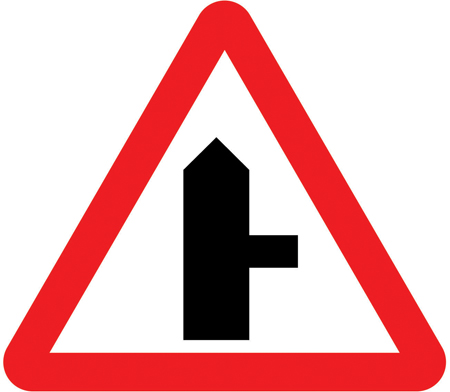 Side road right | Minor road joins from the right | Warning triangle |
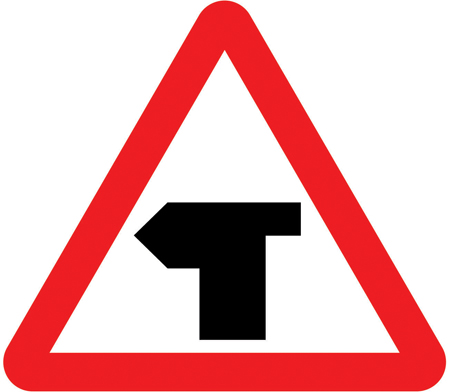 T junction | Side road ends at through route | Warning triangle |
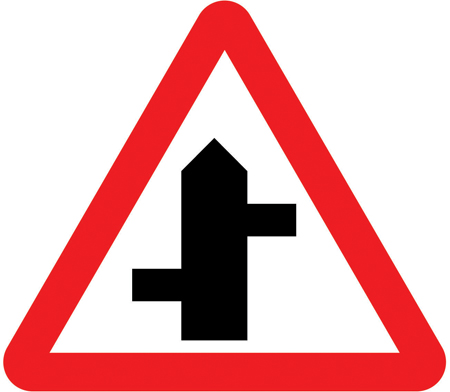 Staggered junction | Side roads join at offset points | Warning triangle |
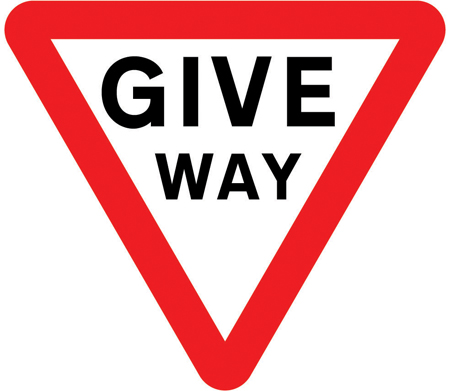 Give way | Regulatory yield order | Inverted triangle |
Rules and Penalties
Failing to anticipate traffic from the left and forcing another road user to brake can support a careless driving report if their avoidance manoeuvre is sharp. Insurers often apportion blame to the driver who did not match speed to the junction.
Side impacts from the left arm frequently appear in police summaries as failure to give way when the emerging driver is at fault, but through drivers who were speeding may still share liability if they could have stopped earlier.
Driving tests mark serious faults when a learner on the main road does not check the side mouth, even if no vehicle appears. Examiners expect a clear left scan timed with the warning board, not a last-second glance at the lip.
Blocking the through lane while turning right into the side road can amount to unnecessary obstruction if you stop across following traffic without good reason. Signal early and choose a gap that lets you clear the carriageway.
Pedestrians already on the carriageway at the mouth retain priority. The warning does not excuse close passes when someone is crossing to a refuge on the left.
Speed limits on the through route still apply after you pass the junction. Accelerating before you are clear of the side mouth reduces reaction time for the next hazard.
Check the latest theory test pass mark and book when you are ready via our booking guide.
Side road left in Practice
Helen drives a 50 mph single carriageway she uses for work. A side road left triangle appears where a farm track meets after a hedge gap. She lifts off the throttle, checks the mirror, and scans the mouth while keeping wheels straight in lane.
A delivery van waits at give-way on the track, nose visible but rear hidden. Helen maintains a steady 35 mph until the van stays put, then passes without steering toward the mouth.
Moments later a second vehicle surges from the same arm without stopping. Because Helen had already slowed, she brakes smoothly and the following car behind her also has room. Last week she would have been at 48 mph and needed a hard stop.
On her mock theory test she matched the triangle to “watch for traffic joining from the left on the main road,” not to giving priority to side traffic. That distinction saved a mark on a picture question about junction warnings.
During her practical test the examiner praised a left shoulder check timed with the board, even though no vehicle emerged. Rolling past without that scan would have been marked as insufficient observation.
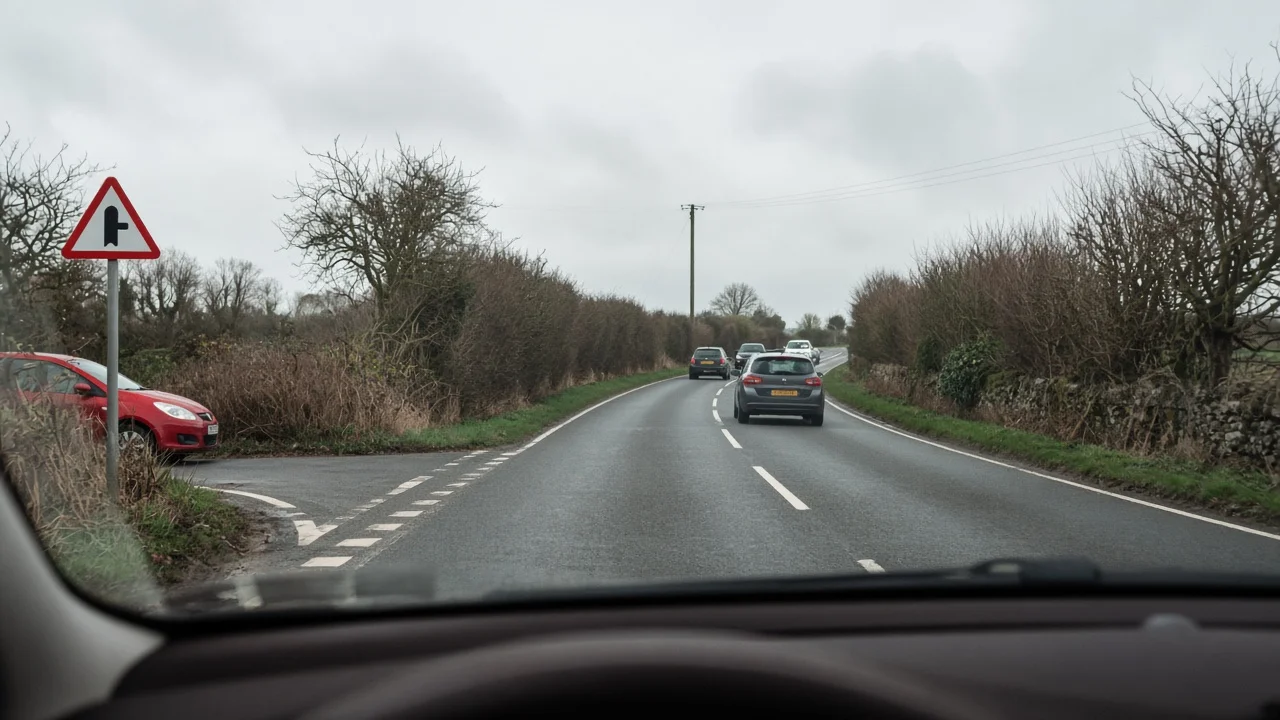
How This Sign Appears on the Theory Test
Picture items show the left-branch symbol and ask what hazard to expect. Choose answers about traffic joining from the left on the through route, not about you gaining priority from the side arm.
Contrast the mirror-image right-branch triangle. Examiners often place both symbols side by side to test whether you read arm direction correctly.
Do not confuse the layout with a T junction stem ending at a bar. Here the vertical bar continues; only the left arm is new.
Hazard perception clips may show a bonnet nudging from a hidden mouth. Click when the emerging vehicle becomes a developing hazard, not when the distant triangle first fills the screen.
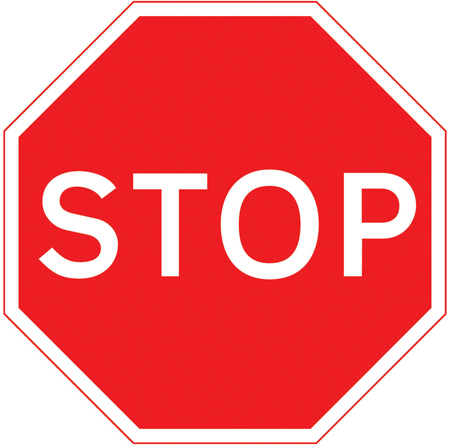
Multiple-choice wording about give-way lines on the side arm belongs to regulatory signs, not to the warning triangle itself. Link stop or yield plates to the minor approach, link the red triangle to advance notice on the main road.
When revising, sketch the symbol and label “main ahead” on the vertical bar and “joining traffic” on the left arm. Mapping the pictogram onto real corners prevents guesswork under time pressure.
Take a free mock theory test and filter questions on road and traffic signs. Pair that with the warning signs guide for triangle symbols.
Related Road Signs
Test Yourself on UK Road Signs
Treat the left arm as a promise that someone may enter your lane without seeing you. Match speed to the mouth, scan left in good time, and let give-way or stop controls on the minor road do their job for emerging drivers.
Frequently Asked Questions
What does the side road left sign mean?
It warns that a minor road joins the carriageway from the left ahead. Slow on the main road and look for emerging traffic; obey give-way or stop controls if you are on the minor arm.
Who gives way at a side road on the left?
Usually drivers on the minor road yield to through traffic unless signs, signals, or markings say otherwise. The warning triangle does not change that order.
How is it different from a T junction sign?
The side road left sign shows the main route continuing with a branch on the left. A T junction sign shows a side road ending at a through bar.
Is the side road left sign an order to stop?
No. It describes layout only. Stop or give-way plates on the minor approach tell drivers when to halt or yield.
Does the sign apply if I am turning into the side road?
Yes. It warns of the junction geometry from any approach, but priority rules depend on markings and regulatory signs at the mouth.