
Last updated: October 2026 · Checked against Highway Code
School Warning Sign: meaning, rules and what to do
This red-bordered triangle is the children school sign that tells you young pedestrians may appear without warning on routes to classrooms, nurseries, and after-school clubs. It does not post a speed limit by itself, but it expects you to drop pace, scan pavements and driveways, and treat every parked car as a possible hiding place for someone smaller than your bonnet.
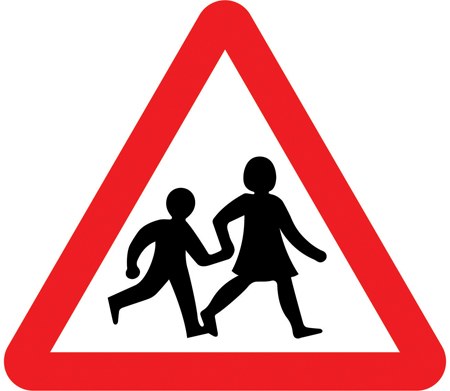
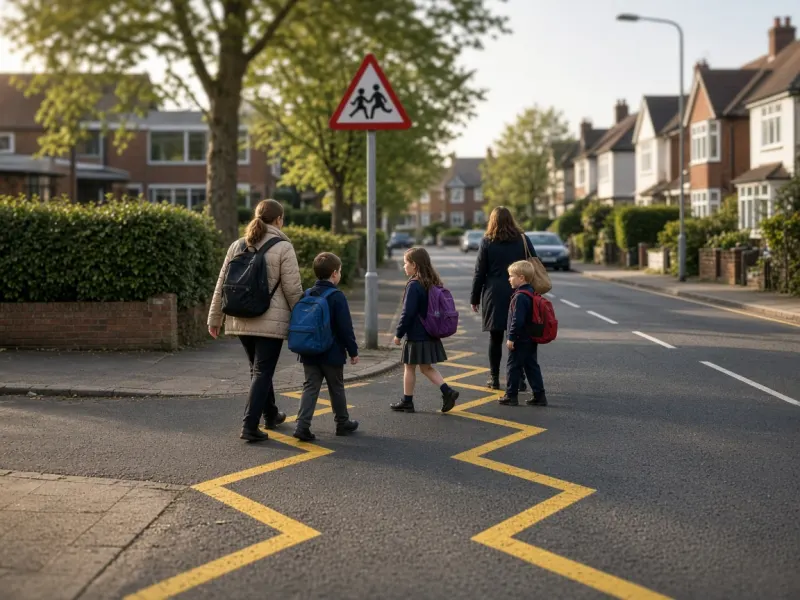
Sign image © Crown copyright, reproduced from GOV.UK traffic sign images under the Open Government Licence v3.0.
What the Children going to or from school Sign Looks Like
The GOV.UK plate is a standard UK warning triangle: red border, white centre, and a black pictogram of two figures, usually an adult with a taller child and a smaller child beside them. The silhouettes read instantly as a family walking, which is why theory apps label it the school warning sign rather than a generic pedestrian plate.
Unlike blue direction signs or circular orders, this shape only warns. It does not quote twenty miles per hour unless a separate roundel or repeater appears nearby. Councils mount it on lamp posts, railings, and advance boards fifty to one hundred metres before a school gate or along a rat-run parents use at pickup time.
Learners sometimes confuse it with the pedestrians in road triangle, which shows a single walker on the carriageway, or with the school crossing patrol sign, which is a separate warning for lollipop staff. The children school sign targets routes where pupils commute in groups, not every footpath in town.
You may see pairs of triangles bracketing a short stretch, or one plate facing each direction on a narrow residential street. Supplementary plates can name a school, show a distance, or remind drivers that the hazard is term-time heavy. Sat-navs rarely mention the symbol, so your eyes still beat algorithms on the school run.
Highway authorities choose the children plate when mapping shows regular pupil movement on or beside the carriageway. Pedestrians in road warnings cover general walking hazards. School crossing patrol signs flag staffed crossings ahead. All share triangle grammar; the black symbol tells you which vulnerable group deserves extra patience.
What the School Warning Sign Means
Primary and secondary pupils, nursery children, and teenagers cutting corners to the bus stop all use the same roads as commuters. The warning triangle marks where their paths overlap yours often enough that engineers asked for a permanent reminder. It appears on main roads near gates, on estate loops behind academies, and on lanes linking villages to rural schools where no pavement exists.
Movement peaks on weekday mornings between roughly eight and nine, at lunchtime in some towns, and again from mid afternoon until clubs finish. Half terms and holidays calm the street, but the sign stays up year-round because summer schemes, evening lettings, and weekend football on the field still draw children. A quiet August Tuesday can fool you if a holiday club coach unloads at the kerb.
Rule 205 in The Highway Code tells drivers to watch out for children near schools and to drive slowly when you see the warning. Rule 206 adds that young children may not judge speed or distance well, so you must not rely on them to wait for you. Rule 207 covers school crossing patrols: when a patrol shows a stop sign, you must stop and stay stopped until they lower it.
Zigzag yellow markings outside many school gates ban waiting and often ban stopping during marked hours. They work with the triangle rather than replacing it. A parent double-parked on the zigzags blocks sight lines for everyone and can attract a penalty charge notice even when the general speed limit is thirty miles per hour.
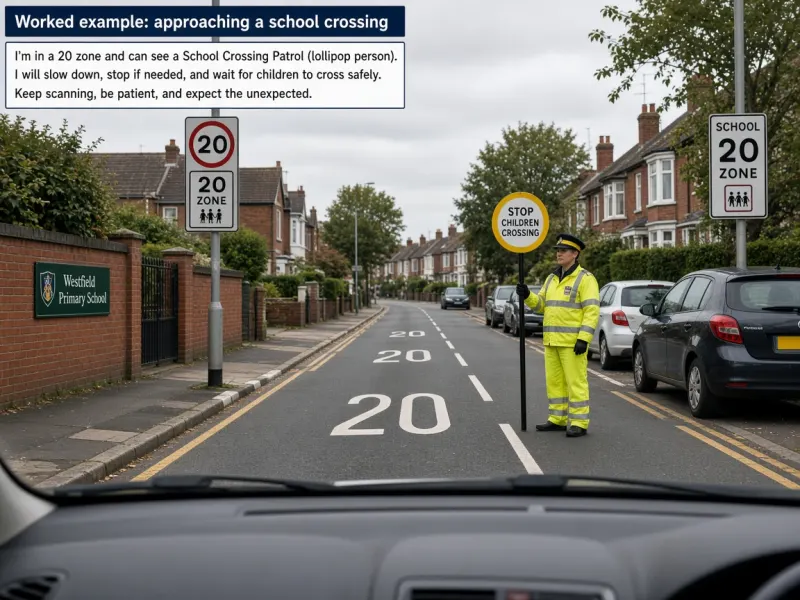
Twenty miles per hour zones and limits near schools are increasingly common. The triangle does not automatically create that limit, but it often sits at the mouth of a zone where humps, raised tables, and camera enforcement back the message. Inside a signed twenty, the roundel is law; the triangle is still your cue to expect someone to chase a dropped scarf into the road.
Parked cars along the kerb create the classic school-run hazard: a child darts from between two bumpers while your mirror view was clear a second earlier. The sign primes you to look low, look twice, and keep speed low enough that a gentle stop fits within the space you can see. Horn blasts and aggressive overtaking frighten children and invite complaints from head teachers.
You meet this plate on urban distributor roads, Victorian terraces without front gardens, and new-build estates where the school sits at the centre of a crescent. Rural routes may pair it with narrow lanes, passing places, and no footway at all, which pushes pedestrians into the same strip as tractors and school minibuses.
Driving instructors schedule lessons around school peaks when they can, because examiners watch whether you adjust speed without prompting. A test route that passes a primary at three fifteen is less about memorising the pictogram and more about proving you can read the whole scene: buses, crossing patrols, cyclists on the pavement edge, and doors opening into your lane.
Electric and hybrid cars are quiet at crawling speed. Near schools, pedestrians may step out without hearing you. Scan movement at wheel-arch height and resist the urge to creep on the pavement side simply because the engine note is faint.
Large vehicles need extra room. A coach or HGV swinging wide at a mini roundabout beside a school can clip the kerb where pupils wait. The triangle on the approach should trigger a wider following gap and patience if the vehicle ahead is a bus displaying school service plates.
Cyclists filtering past queues must also expect children to open car doors or run to parents on the opposite pavement. If you ride, slow to walking pace through signed stretches and treat the triangle as a shared responsibility, not only a car problem.
Residents sometimes campaign for additional measures after a near miss. Temporary flashing amber lights, chicanes, and parking enforcement cameras often follow data, not anger alone. Reporting repeated dangerous parking to the council helps keep the triangle honest when budgets debate every post.
Highway Code rules 205 to 207 (children and school crossings)
Children going to or from school vs Similar Signs
| Sign | Meaning | Legal or warning? |
|---|---|---|
| Children going to or from school | Pupils may cross or play near the road; drive slowly | Warning triangle |
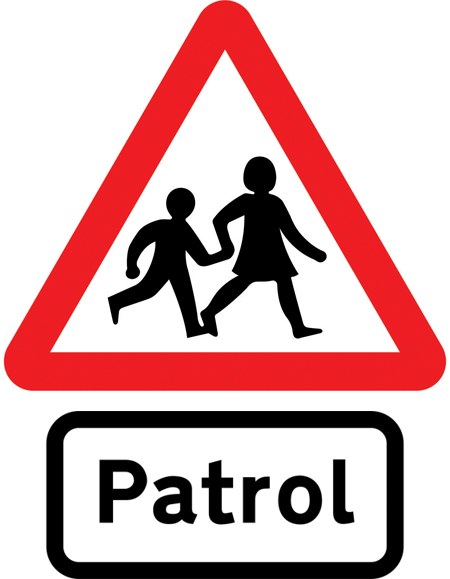 School crossing patrol | Lollipop staff may stop traffic ahead | Warning triangle |
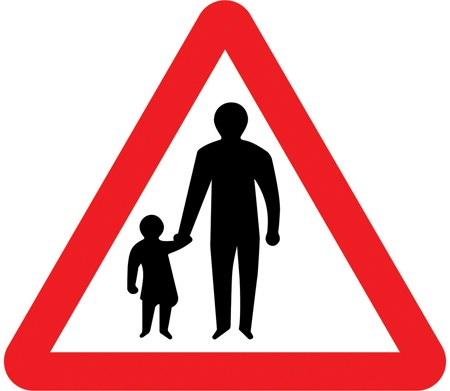 Pedestrians in road | People may be walking in the carriageway | Warning triangle |
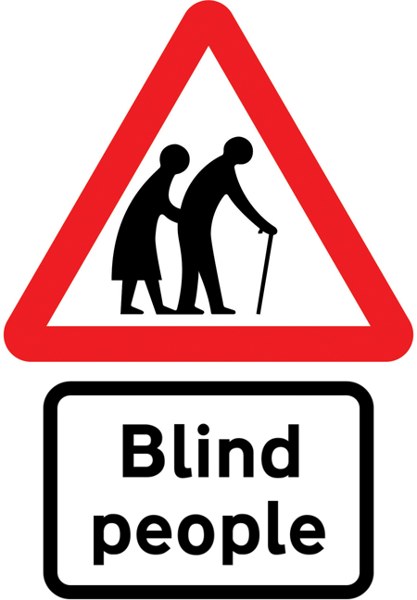 Deafblind pedestrians | People with sight and hearing loss may cross | Warning triangle |
Rules and Penalties
The triangle itself does not create a separate Home Office offence titled ignoring the school warning sign. Enforcement rides on how you drive once warned. Speeding in a signed twenty zone still attracts standard penalties. Driving on school keep-clear zigzags during restricted hours can bring penalty charge notices from civil enforcement officers.
Careless driving and dangerous driving laws apply if your speed and attention were clearly unsuitable for children near the road. A collision with a pedestrian near a school can trigger police investigation, insurance disputes, and civil claims that dwarf any fixed penalty.
Failing to stop for a school crossing patrol when the stop sign is displayed is a specific offence. Treat the lollipop exactly like a red light for that crossing: halt in good time, stay stopped until the patrol steps back, and do not edge forward to pressure children across faster.
Using a handheld mobile phone near a school gate combines two reputational sins at once. Even legal hands-free calls divide attention when a small pedestrian can appear from behind a people carrier. The sign is your reminder to finish the call before the zigzags, not after someone shouts.
Theory questions rarely quote fines for the triangle alone. They test whether you slow down, watch for children, and obey patrols. Learn the behaviour this plate implies, then map supplementary orders such as twenty limits and zigzags when plates add them.
Check the latest theory test pass mark and book when you are ready via our booking guide.
Children going to or from school in Practice
On a wet November afternoon, Marcus collects his daughter from after-school club along a road he usually treats as thirty miles per hour in spirit. A red triangle with two black figures catches his eye, then a queue of parked SUVs shrinks the usable lane outside the gate.
Marcus checks his mirror, eases to fifteen miles per hour, and covers the brake. A boy chases a football from between two bumpers while a patrol in a high-vis coat turns to face oncoming traffic. Marcus stops well short of the zigzags, lets the patrol lower the sign, and only moves when the pavement is clear.
A hatchback behind him hoots once. Marcus ignores it because the hazard is obvious and the law backs the stop. Had he stayed at commuter pace, he could have reached the ball before the child did. The school warning sign primed him before the patrol appeared; that is exactly why the council paid for the post.
How This Sign Appears on the Theory Test
Multiple-choice banks show the children school sign and ask what it means. The correct pattern is almost always that pupils may be near the road and you should drive slowly, not that playgrounds are closed to traffic or that cycling is banned unless a separate plate says so.
Picture questions may swap the pictogram for pedestrians in road or school crossing patrol to check whether you read the symbol. Identify the two-child graphic quickly, then apply slow speed and readiness to stop.
Hazard perception clips often include residential streets with parked cars and movement near kerbs. Early reaction to slowing traffic, crossing patrols, or children stepping out scores better than a late brake when the scene already looks chaotic.
Filter revision on road and traffic signs, then reread Highway Code rules on children and crossings. Reject answers that suggest honking to warn children or overtaking a queue at the gate. Favour calm speed and stopping for patrols.
Take a free mock theory test and filter questions on road and traffic signs. Pair that with the warning signs guide for triangle symbols.
Related Road Signs
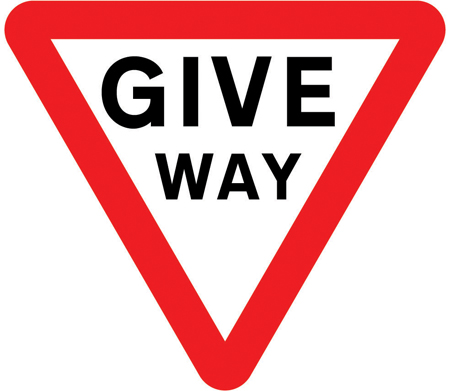
Give way sign
Side roads joining busy school approaches where you must yield.
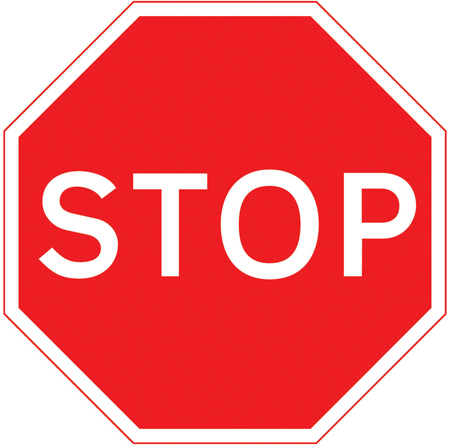
Stop sign
Mandatory halt at junctions on routes with heavy pupil crossing.

Urban clearway
No stopping during school-run hours on many high streets.
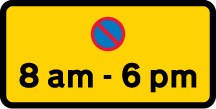
Waiting restrictions
Kerbside orders that pair with zigzags outside gates.
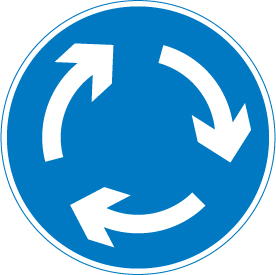
Mini roundabout sign
Small roundabouts outside schools where lane discipline matters.
Test Yourself on UK Road Signs
Treat this warning triangle as a daily promise that someone small may step into your path without malice and without maths. On term-time mornings and afternoons, shave off speed before the zigzags, respect crossing patrols, and assume every parked car hides a child. A free mock theory test helps you recognise the children school sign when the exam swaps artwork and wording.
Frequently Asked Questions
What does the school warning sign mean?
It warns that children may cross or play near the road on the way to or from school. Slow down, watch pavements and gaps between parked cars, and be ready to stop without swerving dangerously.
Does the children school sign set a 20 mph limit?
Not by itself. It is a warning triangle only. If a twenty miles per hour zone or limit applies, you will see separate circular signs and often repeater plates. You must still drive at a speed that lets you stop for children even where the limit is thirty.
How is this different from the school crossing patrol sign?
The patrol sign warns that lollipop staff may stop traffic ahead. The children going to or from school plate warns about pupil movement along the route generally. You may see both on the same approach.
When is the hazard worst?
Weekday school run times are busiest, especially just before nine and from about three until clubs end. Holidays are quieter, but activity can still spike for camps, sports, and evening events.
What should I do at zigzag markings?
Do not wait or stop on yellow zigzags outside school entrances during the hours shown on nearby plates unless rules allow loading for disabled pupils. They keep the crossing visible for everyone, including patrol staff.