
Last updated: October 2026 · Checked against Highway Code
Urban Clearway: meaning, rules and what to do
Yellow lines, time plates and the clearway symbol combine to ban stopping on busy urban routes when traffic needs to flow.
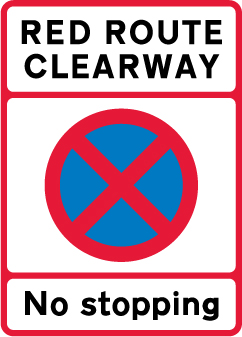
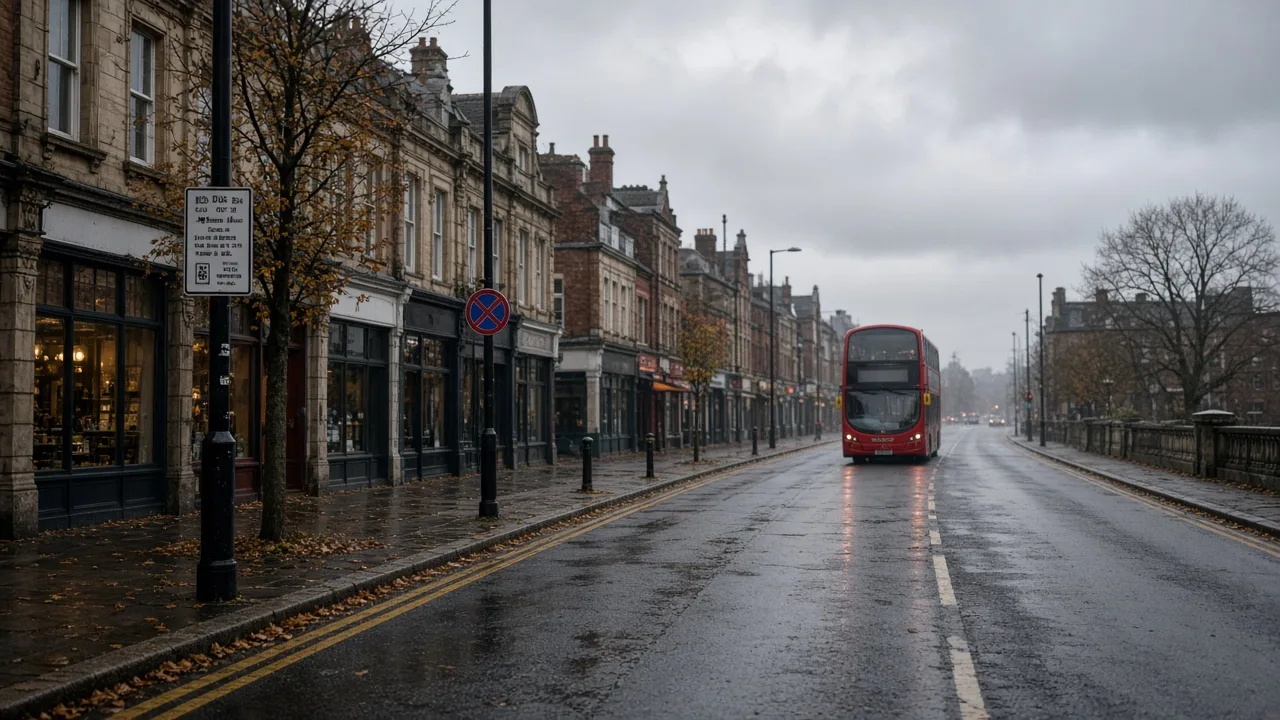
Sign image © Crown copyright, reproduced from GOV.UK traffic sign images under the Open Government Licence v3.0.
What the Clearway Sign Looks Like
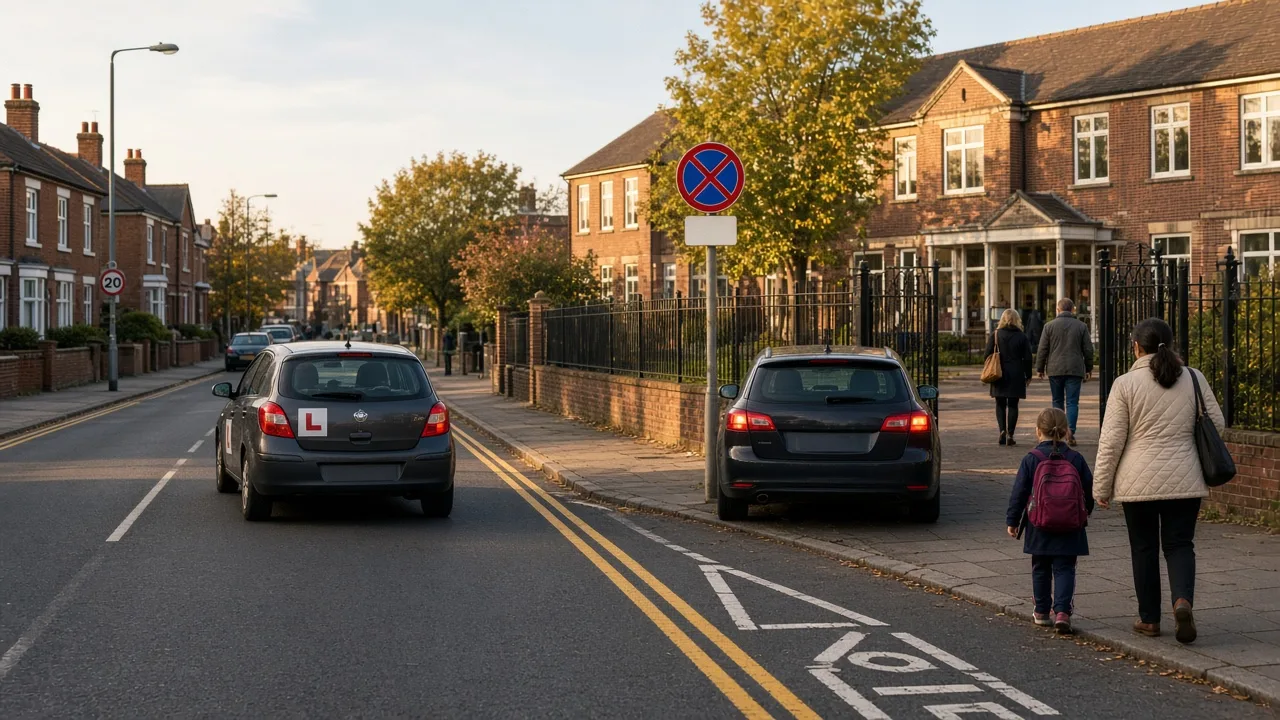
The clearway plate is a blue circle with a red border and a red cross over the blue field. It often sits on a rectangular white backing at the start of a restriction, with smaller repeat plates after side streets so you know the zone continues.
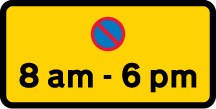
On town routes the symbol is almost always paired with double yellow lines along the kerb and one or more white time plates listing days and hours. Some councils add “Except” panels for bank holidays or school terms only.
Drivers sometimes hunt for a red circle with two upright bars, which is the no-stopping order at all times. The clearway plate works with timed yellow lines instead, so you must read both the cross symbol and the timetable before you pause at the kerb.
Sat-nav maps rarely show clearway hours. Instructors tell learners to scan lamp posts on approach to schools and high streets because the cross plate can be easy to miss when you are watching pedestrians.
Unlike the circular no-stopping sign, the clearway plate usually appears with yellow road markings and repeat plates along the route. Rural clearways can look sparse; urban ones are rarely alone. A single red bar on blue is a no-waiting order, which is slightly less strict because brief set-down may be allowed on some lengths.
What the Urban Clearway Means
The restriction keeps buses, trams and general traffic moving on arterial roads through towns and cities. During restricted hours you may not stop, even briefly, to drop off passengers, unload shopping, or check a map. That includes pulling onto the yellow lines, straddling a bus stop mouth, or halting in a live lane because the queue ahead is slow.
The order applies to the carriageway the signs face until an end plate or a break in markings. Side roads and lay-bys are only safe if no yellow lines or clearway plates extend there. Rule 243 in The Highway Code groups clearways with other waiting controls: if the time plate says no stopping between 8am and 9:30am, you must not halt on the marked section in that window.
You will see these layouts near schools, shopping parades, hospital fronts and commuter corridors where double parking would block buses. Plates often repeat after junctions so drivers joining mid-route still see the restriction. When the period ends, you may wait if yellow line rules allow, but watch for residents’ bays, loading bans, bus stops and no-waiting circles that still forbid parking.
Stopping means bringing the vehicle to a halt with anyone inside or outside. Hazard lights do not convert an illegal stop into a lawful one. If you need to take a call or help a passenger, leave the marked length before the restriction starts or use a signed bay on a side street.
Emergency services may stop when necessary; learners should not assume that exception applies to a quick errand. Breakdowns are awkward on clearways: move off the signed length when you can, and use hazards only while you are a genuine obstruction.
Council gritters and refuse lorries sometimes pause on clearways during early-morning rounds under separate permits. Private cars cannot copy them. If you see a lorry stopped on double yellows, it does not mean the restriction is lifted for you.
Ride-hailing apps often pin pickups on main-road kerbs. Passengers should meet drivers in side streets outside plate hours. Accepting a curbside pin on an active clearway risks an instant PCN from a camera car.
School crossing patrols may step into the carriageway with a lollipop sign. Your queue must not inch forward into the yellow-lined clearway while children are still crossing, even if the clock has not reached the afternoon plate window yet.
Before you book a theory test slot, run timed mocks that mix sign recognition with scenario questions. Flag any clearway item you guess, then reread Highway Code rules 238 to 243. On lessons, ask your instructor to name real plates along the route so the symbol connects to layout, not only to app graphics.
Highway Code rules 238 to 243 (waiting and parking restrictions)
Clearway vs Similar Signs
| Sign | Meaning | Legal or warning? |
|---|---|---|
| Urban clearway | No stopping on the marked main carriageway during times on plates | Regulatory (plates + markings) |
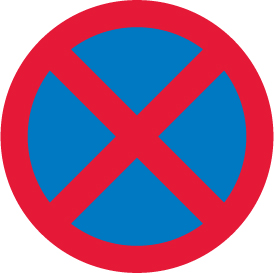 No stopping | No stopping at any time on that length of road | Regulatory (red circle, double bar) |
 No waiting | No parking; you may stop briefly to pick up or set down on some orders | Regulatory (red circle, single bar) |
| Rural clearway | No stopping during plate times; often fewer yellow lines visible | Regulatory (same symbol, different context) |
Rules and Penalties
Stopping on a clearway during restricted hours is treated as a waiting offence. Local authorities enforce it with civil penalty notices. You will not normally receive penalty points on your licence for a stationary vehicle offence, but the fine can be substantial in London and other cities with higher PCN rates.
Traffic wardens and camera cars patrol repeat offenders near schools. A wheels-on-kerb stop for “just a minute” still counts as stopping. If you block a bus lane, a bus stop, or school zigzag markings at the same time, a separate higher charge may apply.
Some cities use CCTV on bus corridors where clearways overlap red routes. The ticket may arrive by post days later, which surprises learners who thought nobody saw them pause.
In the theory test, questions often show a plate time and ask whether you may wait, load, or pick up. Read every day listed: “Mon–Fri” excludes weekends unless stated. Combine the sign with yellow line knowledge from your mock tests.
On a driving test, stopping illegally on a clearway can count as a serious fault if it blocks traffic or forces others to swerve. Examiners notice hesitation at school gates.
Check the latest theory test pass mark and book when you are ready via our booking guide.
Clearway in Practice
Priya collects her niece from primary school at 3:10pm on a Wednesday. The main road outside has double yellow lines, a clearway plate, and a white time plate showing “Mon–Fri 8am–9:30am and 3pm–4pm”. At 3:05 she considers stopping opposite the gates while traffic is slow.
Because the afternoon window is active, she must not stop on the clearway even with hazard lights on. She drives past the school, turns into a side street without yellow lines, and parks where loading is not banned. At 4:01pm the restriction ends, but she still checks for no-waiting circles before waiting on the main road.
If she had stopped at 3:15pm on the marked section, a camera car could issue a PCN without warning. The lesson: timed clearways follow the clock, not how long the queue is or how close you are to the kerb.
Her instructor later asks her to explain the difference between this layout and a double-bar no-stopping sign on a hospital approach. Priya notes that the clearway gives her legal waiting time outside the plate hours, while the hospital order bans halting day and night.
How This Sign Appears on the Theory Test
Questions place the clearway symbol next to a time plate and ask if you may wait, load, or pick up. They rarely name the restriction in every option; instead they describe yellow lines and hours.
Revise the difference between stopping, waiting, and parking. The DVSA bank groups these under road and traffic signs. When you practise, filter mocks that include parking restrictions and read each plate word by word.
Car candidates face 50 multiple-choice questions in 57 minutes and need 43 correct to pass. Sign items are often quick if you already know bar counts and plate layouts.
Hazard perception is separate: clips may show parked cars on bus routes, but clearway knowledge still helps you predict why traffic bunches near schools.
Take a free mock theory test and filter questions on road and traffic signs. Pair that with the warning signs guide for triangle symbols.
Related Road Signs
No stopping sign
Absolute ban on stopping at any time on that length of road.
Waiting restrictions
No waiting orders and yellow line plates explained.
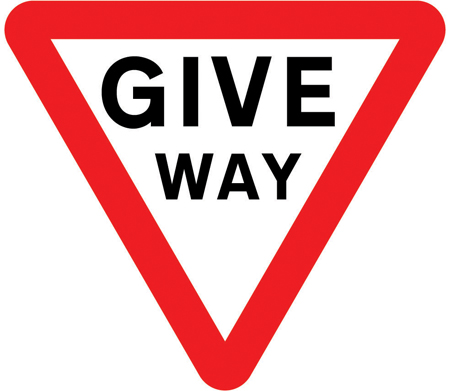
Give way sign
Priority at junctions — different shape, different job.
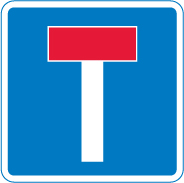
No through road
Dead-end information sign, not a stopping ban.
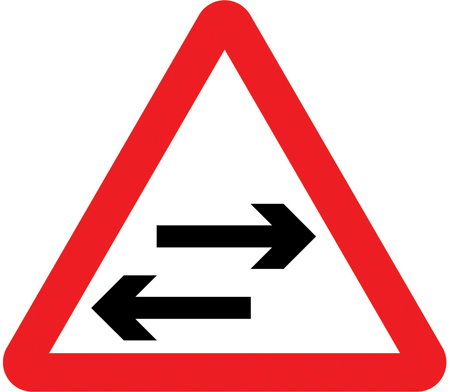
Two-way traffic
Warning where two-way flow resumes on a narrow route.
Test Yourself on UK Road Signs
Clearway plates punish assumptions. Learn the timetable, respect the yellow lines, and drill parking questions until they feel routine. When you are ready, book through the official DVSA service and keep practising signs in short bursts.
Frequently Asked Questions
What is an urban clearway?
It is a timed no-stopping zone on a built-up road, marked by clearway signs, yellow lines, and white time plates. You must not stop on the marked carriageway during the hours shown.
Can I stop outside the restricted times?
Outside the plate hours you may stop only if other rules allow. Single or double yellow lines, bus stops, and no-waiting signs can still forbid waiting.
How does a clearway differ from a no stopping sign?
A no stopping sign bans stopping at all times on that length. A clearway bans stopping only during the times on the plates, usually on routes with yellow markings.
Do clearways in towns have yellow lines?
Yes, most use yellow kerb markings so drivers can see the restriction without reading every plate. Always check the time plate for exact hours.
Can I pick up passengers during restricted hours?
No. Picking up or setting down counts as stopping. Find a legal side street or bay, or wait until the plate hours end.