
Last updated: October 2026 · Checked against Highway Code
Double Bend Left Sign: meaning, rules and what to do
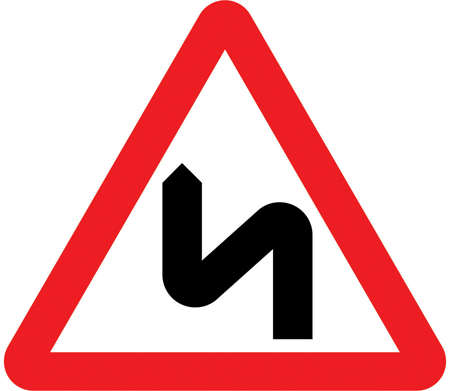
Two linked black arrows inside a red triangle warn that the road bends left and then right (or left again) before you straighten, so you must slow before the first curve.
Sign image © Crown copyright, reproduced from GOV.UK traffic sign images under the Open Government Licence v3.0.
What the Double bend left Sign Looks Like
The double bend left sign is an upright warning triangle with a red border and white centre. The symbol shows two curved black arrows: the first sweeps to the left, the second continues in the opposite direction, hinting at an S-shaped or closely spaced pair of bends rather than one long arc.
Official UK artwork for “first bend to the left” matches GOV.UK diagram 513. The mirror image plate, with the first arrow bending right, is a separate warning for double bends that start the other way. Colour never changes: black pictogram, white field, red rim.
You will often see the board on rural B roads, forest drives, and coastal routes where engineers could not straighten the alignment. Supplementary plates may sit below, quoting distance in yards or showing a recommended maximum speed, but the triangle alone does not set a numeric limit.
Learners sometimes confuse it with a single bend-left triangle, which shows only one arrow. The double version always carries two linked curves. It is not a chevron board on a bend itself; those blue or yellow alignments sit on the verge inside the curve.
Satellite maps may show gentle kinks that do not warrant the sign, while the posted warning reflects sight lines, camber, or crash history. Trust the triangle on the ground rather than assuming the bends look mild from above.
Pair it mentally with bend-left and bend-right singles, and with the right-first double bend plate. Chevron alignment signs guide you through one curve; this triangle only announces the hazard ahead.
What the Double Bend Left Sign Means
The warning gives you time to bleed off speed while the carriageway is still straight. Entering the first left bend too fast makes the second direction change harder to catch, especially when the road drops away or tightens without a long straight between curves.
Rule 125 in The Highway Code reminds you that the speed limit is a maximum, not a target. On warning-signed bends, choose a pace that lets you stop within the distance you can see to be clear, even when the numeric limit on a repeater plate is higher.
Line choice matters. A wide entry can push you toward the centre at the apex of the first bend, which risks a head-on conflict if someone cuts the corner from the other direction. Staying nearer the left kerb on the first left curve usually opens sight lines for the return bend.
The second bend may be sharper or off-camber even though the symbol looks symmetrical. Tree cover, dry stone walls, and high hedges hide the full layout until you are committed. The sign is your cue to lift scanning from the bonnet to the vanishing point and both verges.
Wet leaves, mud from tractors, and frost linger in shaded S-bends. A grip level that felt fine on the approach can fade mid-sequence. Gentle steering inputs beat late braking once you are loaded on the suspension in the first curve.
Motorcyclists and cyclists may take a different line to manage camber. Give them room rather than squeezing past inside the double bend. Horse riders sometimes stay central for visibility; pass wide and slow only when you can see the second curve is clear.
Long vehicles need the full width. A lorry swinging right to make the left bend can straddle the centre line at the apex. Car drivers should not gamble on overtaking between the two curves unless the road is long, straight, and marked for two safe lanes.
Hidden hazards cluster here: farm gates, field entrances, and unsigned crossroads just after the second bend. The triangle does not show junctions, but the geometry often limits how far you can see past the first turn. Cover the brake and cancel cruise control early.
Night driving turns the pair of bends into a rhythm of headlight wash and shadow. Use dipped beams and anticipate oncoming glare on the second apex. Deer and sheep use these corridors; a single reflective eye at the verge is reason to hold speed down for both curves.
After heavy rain, water can pool in the trough between bends where drainage is poor. Aquaplaning is more likely when you are still correcting from the first steer input. Tyres in good condition and lower speed are the practical defence.
Highway Code rules 125, 146 and 155 (speed, bends and country roads)
Double bend left vs Similar Signs
| Sign | Meaning | Legal or warning? |
|---|---|---|
| Double bend, first left | Two bends close together, left first | Warning triangle |
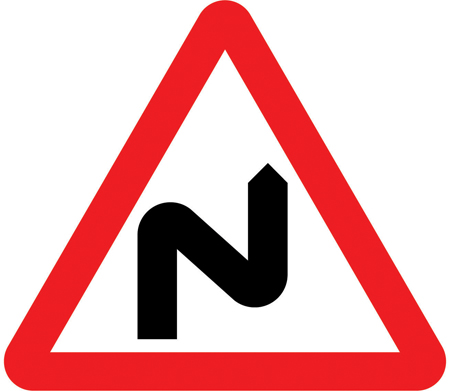 Double bend, first right | Two bends close together, right first | Warning triangle |
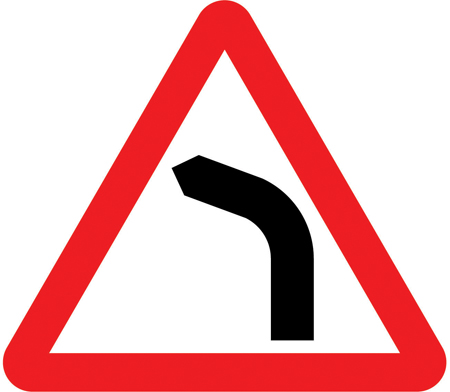 Bend to the left | Single left-hand curve | Warning triangle |
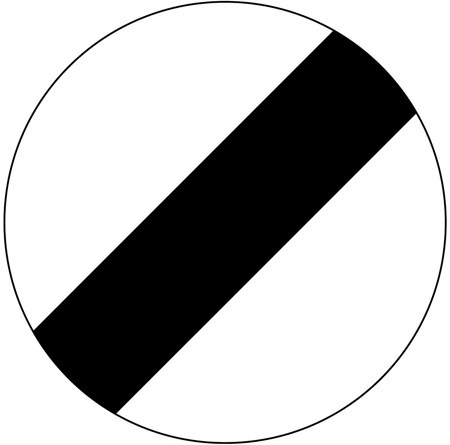 National speed limit | Default maximum on that class of road | Regulatory white disc |
Rules and Penalties
There is no fixed penalty for “failing to notice” a warning triangle because it is advisory. Enforcement follows what you do next: excess speed, careless cornering, or crossing solid centre lines can bring fixed penalties or court action after a crash.
Driving too fast for a double bend is a common careless driving scenario when investigators find skid marks crossing the centre or verges. Insurance may treat the manoeuvre as at fault even when no speed camera was present.
Practical tests mark serious faults for uncontrolled speed through bends, poor lane position, or approaching too fast to steer smoothly through linked curves. Examiners expect visible slowing after warning boards on country routes.
Overtaking on the approach or between the bends is risky where sight lines are short. A collision while overtaking near hidden crests can attract dangerous driving charges if witnesses show reckless timing.
Theory questions rarely quote the plate name verbatim. They show the two-arrow triangle and ask what to expect or how to respond. Knowing the symbol beats memorising wording.
Check the latest theory test pass mark and book when you are ready via our booking guide.
Double bend left in Practice
Marcus drives a village delivery route and knows the hill, yet each winter he respects the double-bend-left triangle after the open straight. He checks mirrors, eases from 40 to roughly 25 mph before the first arrow bend, and keeps both hands on the wheel.
In the first left curve he sees a tractor tyre track spilling gravel from a field entrance. He does not hug the centre to peek at the second bend; he holds left and straightens gently so the car is balanced for the right-hand return.
A cyclist appears on the crown of the second curve. Marcus stays behind until the road opens, then passes with a full metre of clearance on a brief straight. He notes that the warning board gave him the mental slot to plan both bends, not just the first.
On a later lesson his instructor asks what would change in heavy rain. He answers that he would brake earlier on the approach, avoid sharp steering corrections between the curves, and expect longer stopping distances if a deer stepped out after the first apex.
That habit also saved a mock theory scenario where the image showed the left-first double bend and asked which action was best. He picked “slow down on the approach” rather than “accelerate to clear the bend quickly,” matching Highway Code bend guidance.
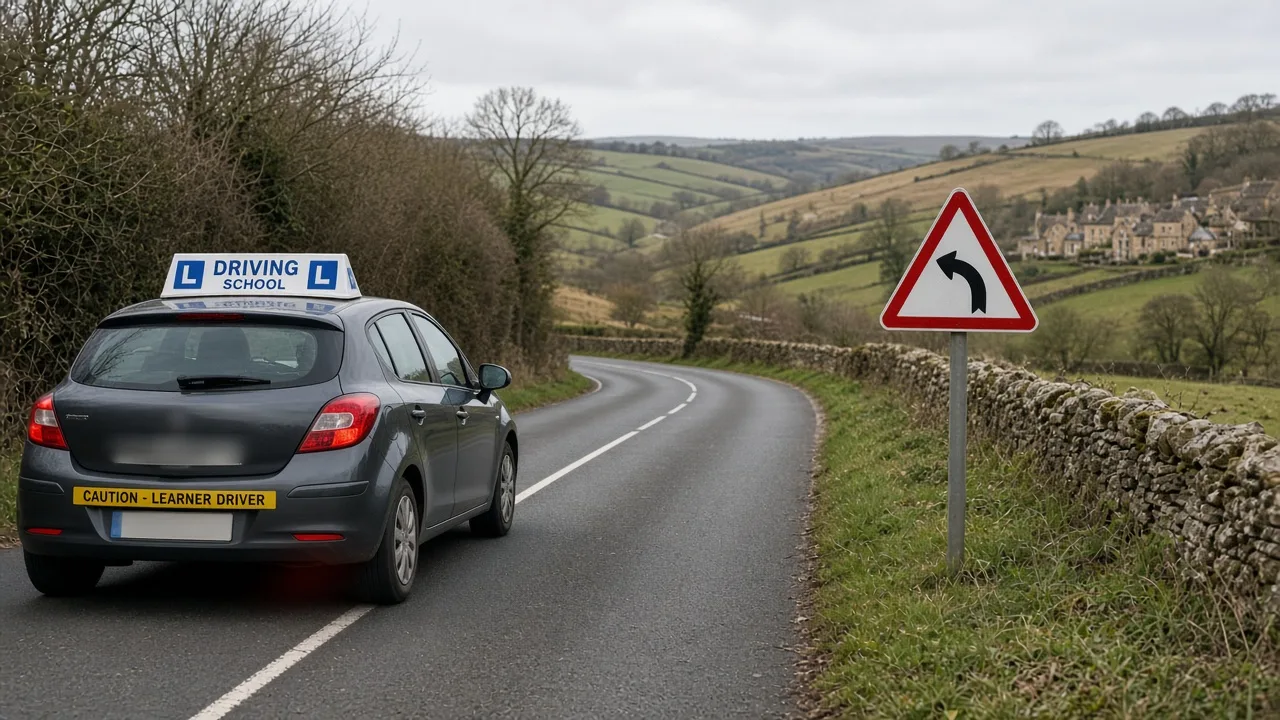
How This Sign Appears on the Theory Test
Multiple-choice items display the two-arrow left-first triangle and ask what hazard to expect. Choose answers about successive bends, not about junction priority unless a different symbol is shown.
Some questions contrast single and double bend plates. Count the arrows: one curve versus two linked curves starting left.
Picture scenarios may add a supplementary speed plate beneath the triangle. Remember the main sign still only warns; the small plate may suggest a safe speed, not a legal limit by itself.
Hazard perception clips filmed on country roads reward early slowing before the view tightens. You may not see the actual board in the clip, but the skill matches what the sign demands: reduce speed before steering loads up.
When revising, pair this symbol with bend-right and double-bend-right variants so you do not mix up the first direction. Examiners like trapping candidates who reverse the arrow order.
Take a free mock theory test and filter questions on road and traffic signs. Pair that with the warning signs guide for triangle symbols.
Related Road Signs
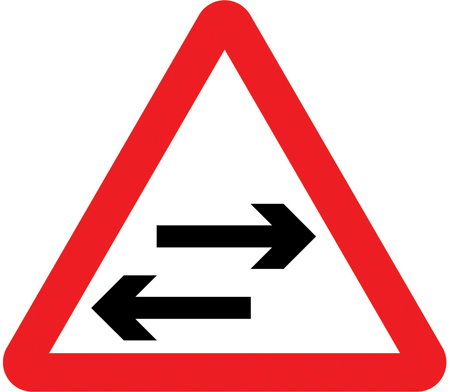
Two-way traffic sign
Often follows narrow sections where bends hide oncoming vehicles.
National speed limit sign
Repeater context on single-track lanes between bend warnings.
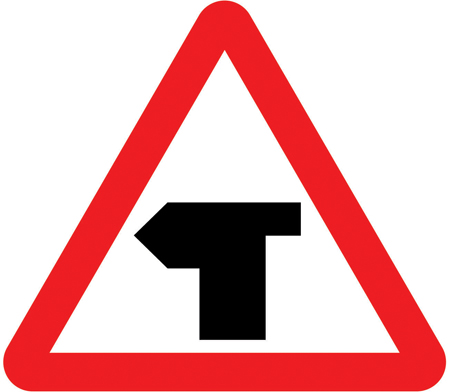
T junction sign
Junctions sometimes sit just after an S-bend sequence.
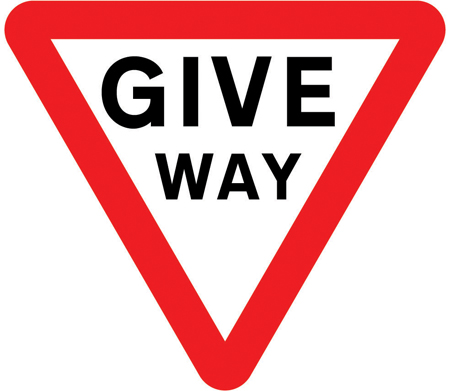
Give way sign
Regulatory priority after warning boards on rural arms.
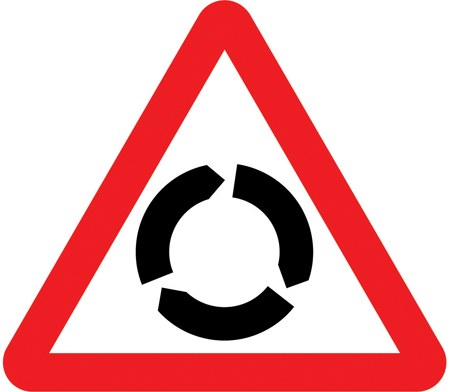
Roundabout sign
Another advance warning that needs early speed reduction.
Test Yourself on UK Road Signs
Treat the left-first double bend triangle as the start of a two-part manoeuvre: slow on the straight, steer smoothly through both curves, and keep scanning for traffic and surface grip before you accelerate away.
Frequently Asked Questions
What does the double bend left warning triangle mean?
Two bends lie ahead in quick succession, and the first curves to the left. Slow before you enter the first curve and stay ready for the second change of direction.
How is it different from a single bend left sign?
The single plate shows one arrow. The double version always shows two linked arrows, warning that another bend follows immediately after the first.
Does the sign show which way the second bend goes?
Yes. The second arrow points the opposite way from the first, so a left-first plate implies a right-hand curve next unless the road layout has been changed since the sign was posted.
What speed should I drive after this warning?
There is no automatic limit from the triangle alone. Choose a speed that lets you control the car through both bends and stop within the distance you can see to be clear.
Can I overtake between the two bends?
Only if the road is wide, markings allow it, and you can see the whole manoeuvre is safe. On typical warning-signed country bends, overtaking between the curves is unsafe because sight lines are short.