
Last updated: October 2026 · Checked against Highway Code
Width Restriction: meaning, rules and what to do
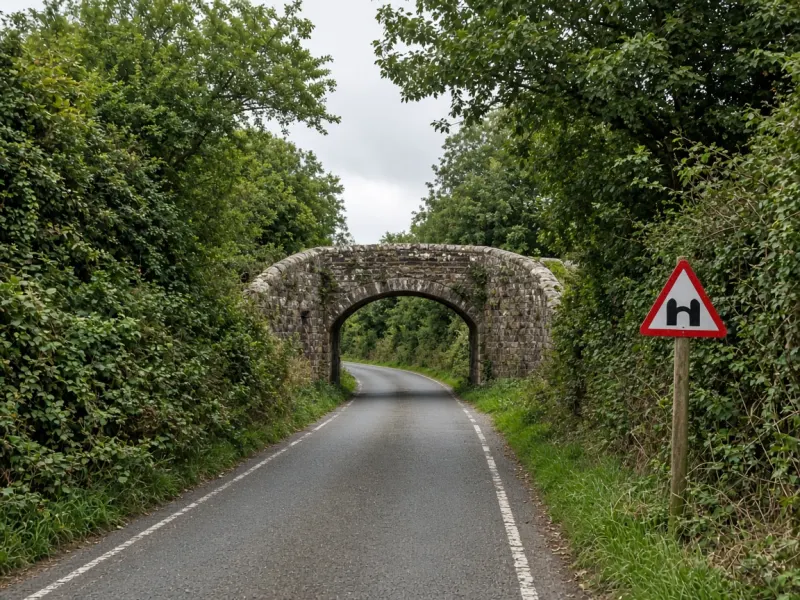
This UK warning triangle shows a black gate pictogram, telling you a fixed pinch point lies ahead where the space between posts, walls, or bridge cheeks is too tight for some vehicles, so you should slow, know your overall width, and turn back before you scrape paint or block traffic.
Sign image © Crown copyright, reproduced from GOV.UK traffic sign images under the Open Government Licence v3.0.
What the Width restriction Sign Looks Like
The official gate warning follows UK triangle grammar: upright red border, white centre, black symbol. The pictogram shows two vertical posts or cheeks with a horizontal bar across the top, forming a narrow gateway viewed from the front. Horizontal arrows often point inward toward the gap, stressing that clearance is limited between fixed objects rather than that the tarmac simply tapers.
Posts appear on approaches to historic bridges, estate gateways, industrial yards, park drives, and traffic-calming chicanes where bollards replaced a wider arch. Engineers may add a distance plate in yards or metres beneath the board on faster roads so you have time to cancel cruise control and check wing mirrors before the pinch fills your windscreen.
Repeaters sometimes sit after a side junction so traffic joining from a housing estate still sees the same message. Temporary versions at roadworks can echo the symbol when a lane is boxed in by barriers; treat any consistent gate pictogram inside a red triangle as the same hazard class even when cones already guide you.
At night retroreflective sheeting makes the red rim flash before you can judge the gap. Dip headlights when following tall vans so you can still read any white plate that quotes maximum width in metres. Learners often confuse this plate with road narrows triangles, which show converging road edge lines, or with height restriction circles that carry numerals inside a red ring.
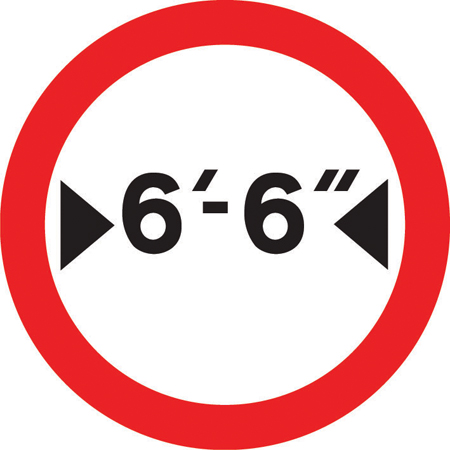
The warning triangle alone does not always state a figure. A separate regulatory plate may list the maximum width permitted through the restriction. Read both together: the triangle buys thinking time; the numerals plate is the measurement you must not exceed once you commit to the gap.
Road narrows warnings describe a shrinking carriageway where two careful drivers may still pass. The gate triangle marks a fixed pinch where overall vehicle width including mirrors and load may be unlawful or impossible to fit. Height, length, and weight restriction triangles use different pictograms and usually pair with circular plates. Read the black artwork inside the triangle before you assume every restriction sign means the same limit.
What the Width Restriction Means
Highway authorities install the warning where permanent geometry caps how wide a vehicle can be: stone bridge parapets, cast-iron columns, timber gates, rising bollards, and lined concrete chicanes all create the same problem for wide vans, campers, and agricultural kit. The triangle does not close the road by itself. It tells you that routine journeys can fail if you have forgotten roof boxes, mirror extensions, or trailer overhang.
Rule 125 in The Highway Code reminds you that speed limits are maximums in good conditions. A national speed limit on a rural approach may still read as sixty miles per hour on paper, yet you may need to walk pace through a signed gap while you steer precisely between posts. This board is your cue to lift off early, not to discover the limit at the sound of scraping alloy.
Rule 153 expects you to allow for parked vehicles, pedestrians, and cyclists that steal usable width even when the legal carriageway continues. Here the hazard is structural: the gap will not widen because you honk. Cyclists may dismount and walk through; your duty is not to squeeze past them inside the chicane where handlebars can catch a bollard and throw someone under your wheels.
Overall width includes mirrors in most practical driving contexts even when plates quote body width. Folding mirrors is standard practice on narrow Devon lanes and city archways when manufacturer guidance allows it. Fixed wide bodies on minibuses, horseboxes, and American pickups need measuring tape discipline before you commit, because reversing with traffic behind you is slow and stressful for everyone.
Supplementary plates in metres are the numbers examiners want you to link to the warning pictogram. If your handbook lists two metres ten without mirrors but the plate quotes two metres, assume the stricter reading and add mirror span unless local guidance says otherwise. When no numerals appear, use the triangle as a prompt to stop short, walk the gap, or ask a passenger to guide you rather than gambling on millimetres.
HGV and PSV drivers meet these warnings on last-mile deliveries to village centres. Sat navs optimised for cars may still route a rigid lorry under a decorative arch. Professional drivers should cross-check vehicle dimensions against depot records and any height and width order on the traffic sign schedule; the warning triangle is the on-street reminder that the map was optimistic.
Caravans and wide trailers change effective width with snaking angles. A straight tow car may clear while the caravan corners strike a post. Identify whether the restriction measures the whole combination or only the motor vehicle before you enter a one-way chicane with no escape except reversing uphill.
Electric vehicles are not narrower than combustion equivalents, but quiet approach speeds can surprise pedestrians squeezing through the same gap. Scan pavements beside pinch points because people sometimes treat chicanes as informal crossings when shops sit on both sides.
Emergency access routes sometimes keep a width restriction to stop rat-running yet still expect fire appliances to pass. That does not licence private drivers to ignore damage risk. Blue lights do not erase brickwork; your responsibility remains to use a lawful alternative when your vehicle cannot fit safely.
Temporary width limits during festivals may add barriers inside an existing arch. The permanent triangle still applies when boards return. Cones can shift the usable line by centimetres that matter to a roof box; trust live channelisation over memory from last year's event.
Measure once in daylight on a quiet day if you regularly drive a wide outfit through a tourist village. Write overall width on a note in the cab, including mirror tips and ladder racks, so the triangle triggers a number comparison instead of guesswork.
Stop in a safe lay-by before the chicane if traffic is clear and you need to fold mirrors or remove a bike rack. Doing that inside the pinch blocks following cars and tempts oncoming drivers to enter while you are still adjusting.
Ask a passenger to stand where they can see both corners if the gap is blind from the driver's seat. A short walk takes less time than explaining scrapes to hire firms or insurers.
When two wide vehicles meet at a one-way width restriction, whoever entered first usually must complete the passage or reverse to a wider bell mouth. Courtesy and horn avoidance beat inching forward until metal touches stone.
Sat navs may show a through road where only slim cars belong. When the red triangle appears, trust road furniture and any metres plate over an ETA that assumed a coach could fit.
Driving instructors on rural test routes use these warnings to check whether candidates read advance plates and adjust speed without prompting. Naming the hazard aloud and easing off before the posts score better than a late brake that surprises following traffic.
After snow, bollards and posts can hide until your bumper finds them. The warning still applies when white caps disguise stone cheeks; creep forward with windows down if you need to hear mirror clearance.
If you drive for work, document when dispatch sends you through a signed gap that your vehicle handbook forbids. Ignoring a published width warning weakens negligence defences when wing panels need respraying.
Highway Code rules 125, 153 and 160 (speed, meeting traffic, and towing)
Width restriction vs Similar Signs
| Sign | Meaning | Legal or warning? |
|---|---|---|
| Width restriction | Fixed narrow gap ahead; check vehicle width | Warning triangle |
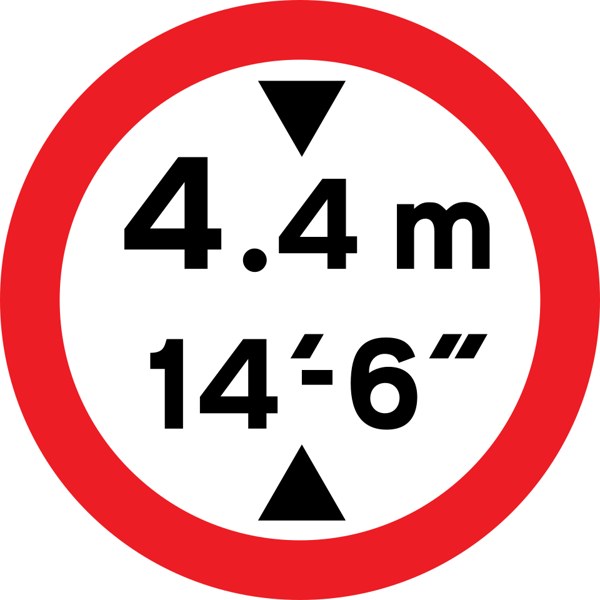 Height restriction | Low headroom; numerals on regulatory plate | Warning plus restriction plate |
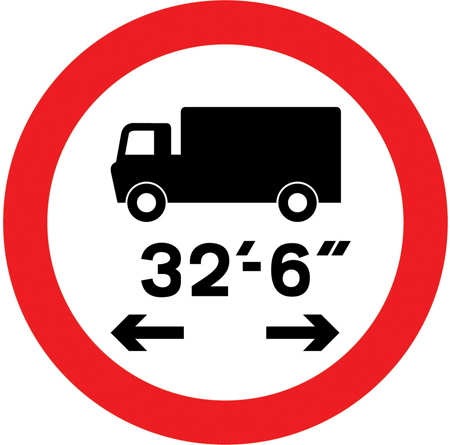 Length restriction | Long vehicles may not fit the layout ahead | Warning triangle |
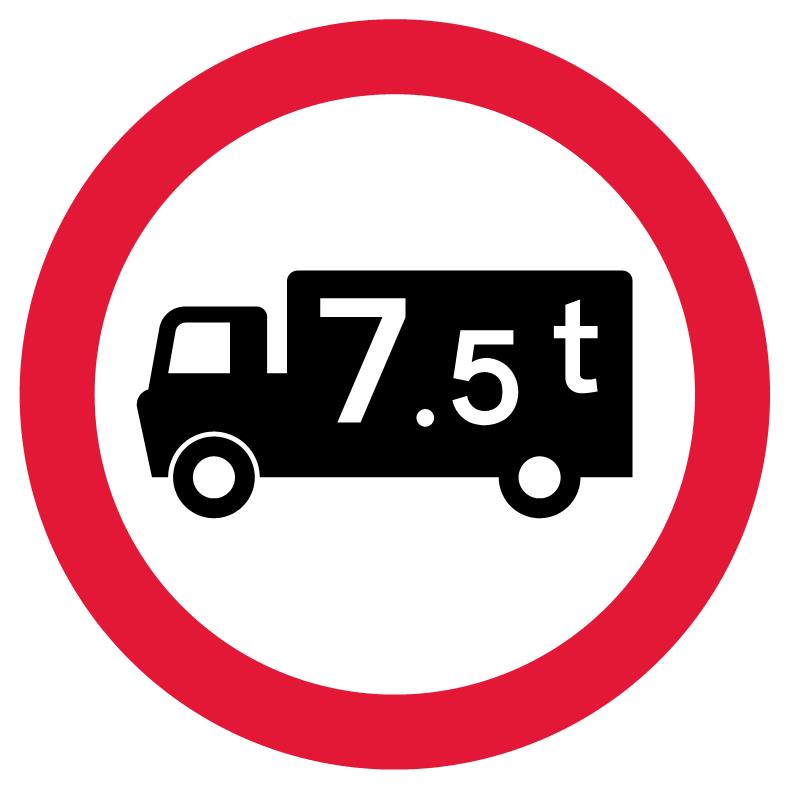 Weight restriction | Weak bridge or road; maximum weight applies | Warning triangle |
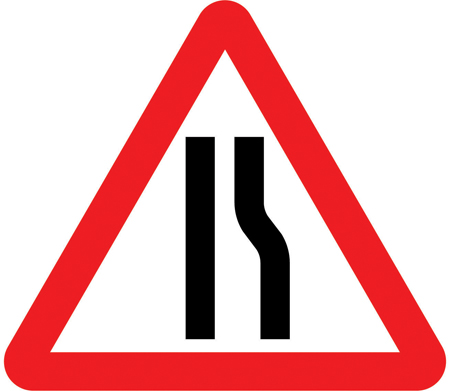 Road narrows both sides | Carriageway edges converge; meeting traffic risk | Warning triangle |
Rules and Penalties
The width restriction warning triangle is advisory on its own, but driving a vehicle that exceeds a posted maximum width through a signed gap can support careless driving attention if you strike property or force lengthy reverses that block emergency access.
Scraping bridge heritage stonework or council bollards can lead to civil recovery bills beyond insurance excess, especially where traffic orders document the restriction and CCTV faces the chicane.
Blocking a one-way pinch by wedging a wide van halfway through may amount to unnecessary obstruction if you could have turned back at the last wide bell mouth. Police may direct you to reverse even when you feel the gap looked passable from a distance.
Commercial operators who ignore known width limits on scheduled routes can face operator licence scrutiny when bridge strikes or repeated damage claims appear in traffic commissioner records, even when no fixed penalty notice was issued at the scene.
Theory tests focus on recognition and safe response. Expect image questions that show the gate pictogram and ask you to choose narrow gap ahead or check vehicle width, rejecting road narrows artwork that only shows converging lane lines.
Check the latest theory test pass mark and book when you are ready via our booking guide.
Width restriction in Practice
Marcus drives a camper van toward a Cotswold village centre. A width restriction triangle appears with a plate reading one hundred yards and a separate circular plate quoting two metres maximum width. He checks his handbook: two metres one with mirrors extended.
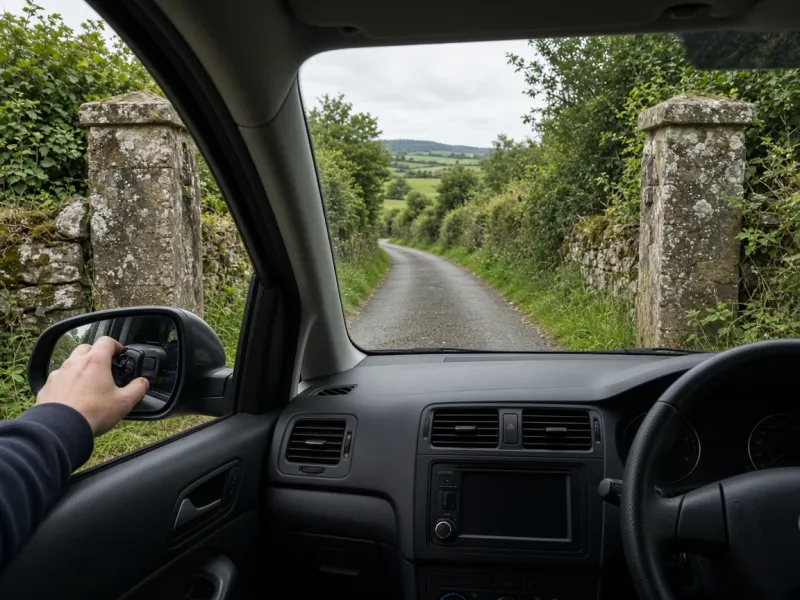
Before the stone posts he pulls into a marked bay, folds both mirrors per the manual, and asks his partner to watch the nearside arch while he creeps forward at walking pace. A hatchback behind him waits rather than honking, because the chicane is one-way through the gap.
On his theory revision app he matches the gate symbol to width restriction ahead, not height numerals or road narrows lines. In a hazard perception clip on a narrow high street he scores by easing off when brake lights bunch before bollards, even when the post is off-screen.
The following month he tows a small trailer on the same route without re-measuring. The triangle still warns of the pinch, but the trailer tracks wider on the turn. He stops short, detours around the village, and avoids gouging a hire panel on a post he cleared last time without a tow.
His driving instructor later asks what he would do if no metres plate appeared. Marcus answers that he would treat the warning as a cue to assess the gap on foot or turn back, because fixed restrictions do not widen for optimism, and Rule 125 still demands a speed that lets him stop before the posts.
How This Sign Appears on the Theory Test
Picture questions show the gate or posts pictogram inside a red triangle and ask what it means. Choose width restriction ahead or narrow gap, not maximum height, weight only, or simple road narrows unless the artwork shows converging edges without posts.
Some stems pair the warning with a metres plate in a separate image. Read both: the triangle warns; the plate regulates the number. Reject answers that treat the triangle alone as the legal maximum width.
Compare artwork carefully: height restriction warnings often show a low bridge profile; length restriction signs show a long vehicle silhouette; weight restriction signs show a heavy lorry on a weak deck. The width restriction gate symbol is distinctive once you notice the horizontal bar and inward arrows.
Hazard perception clips on historic streets may reward early clicks when traffic slows before chicanes. Knowing that width restriction triangles precede those sections helps you anticipate conflict without waiting for a sign to fill the frame.
Case studies for HGV and PCV modules sometimes describe bridge strikes after ignored dimensions. Link the warning to route planning and to finding an alternative before metal meets masonry.
Distractors may quote "do not proceed if too wide" for regulatory plates while showing only the warning triangle. Pick answers that match the image shown, not a stricter plate that is not on screen.
Take a free mock theory test and filter questions on road and traffic signs. Pair that with the warning signs guide for triangle symbols.
Related Road Signs
Road narrows both sides
Tapering tarmac rather than a fixed gateway width.
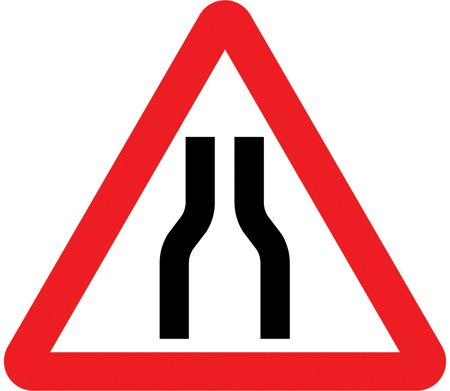
Road narrows left
One-sided pinch where meeting traffic still matters.
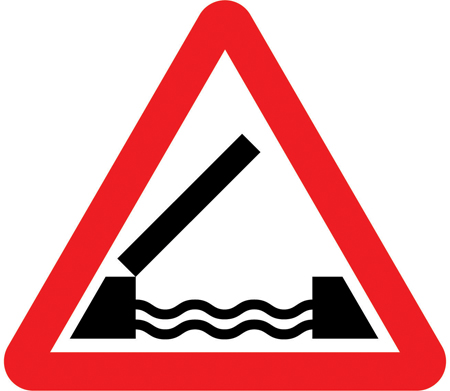
Opening bridge
Movable spans that often carry width and height plates.
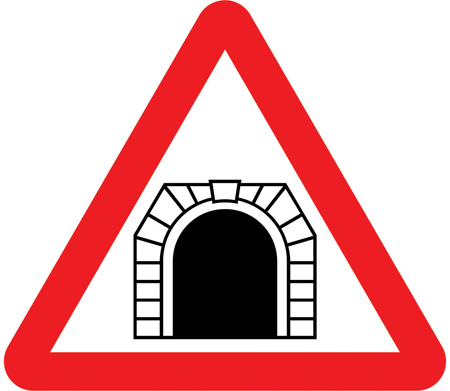
Tunnel ahead
Enclosed tubes where lining width can be tight.
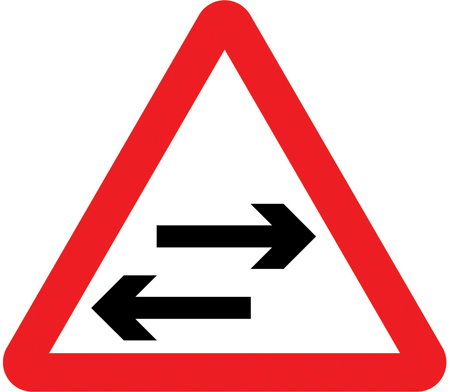
Two-way traffic
Oncoming flow through the same narrow gap.
Test Yourself on UK Road Signs
Let the gate warning start your decision before the posts fill your view: know your width, read any metres plate, and turn back while the road behind is still clear. Recognising the gate triangle keeps theory papers straightforward and protects bodywork on UK lanes where stone and steel do not forgive a rushed guess. A free mock theory test helps you practise restriction warnings alongside height and length plates before the exam swaps similar artwork.
Frequently Asked Questions
What does the width restriction warning triangle mean?
It warns that a narrow fixed gap lies ahead, such as posts, bridge cheeks, or a chicane. Slow down, check your vehicle width including mirrors and load, and do not proceed if you cannot clear the space safely.
Does the triangle show the maximum width in metres?
Not always on the triangle itself. A separate plate may quote metres. The warning pictogram tells you to expect a pinch; the numerals plate, when present, states the limit you must obey.
How is this warning different from road narrows?
Road narrows signs show converging road edges on open tarmac. The gate pictogram shows posts or cheeks, marking a physical pinch that may block wide vehicles even when the road surface looks wide on the approach.
Should I fold my mirrors at a width restriction?
If your vehicle handbook allows folding mirrors and the gap is tight, yes, before you enter the pinch. Overall width often includes mirror tips. Stop in a safe place to adjust rather than blocking the chicane.
Will this restriction warning appear on the theory test?
Yes. Road and traffic signs include restriction warnings. Expect image questions linking the gate triangle to a narrow gap ahead and scenarios about turning back when your vehicle is too wide.