
Last updated: October 2026 · Checked against Highway Code
Sheep Sign: meaning, rules and what to do
This red-bordered triangle tells you woolly stock may share the tarmac ahead. It does not set a numeric speed limit, but on open hills and unfenced lanes it means you drive slowly enough to stop for a flock, follow a farmer’s directions, and resist the horn like it owes you an apology.
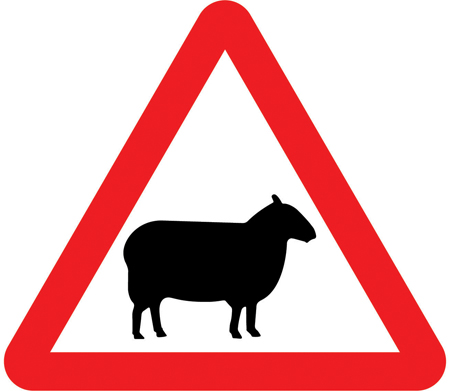
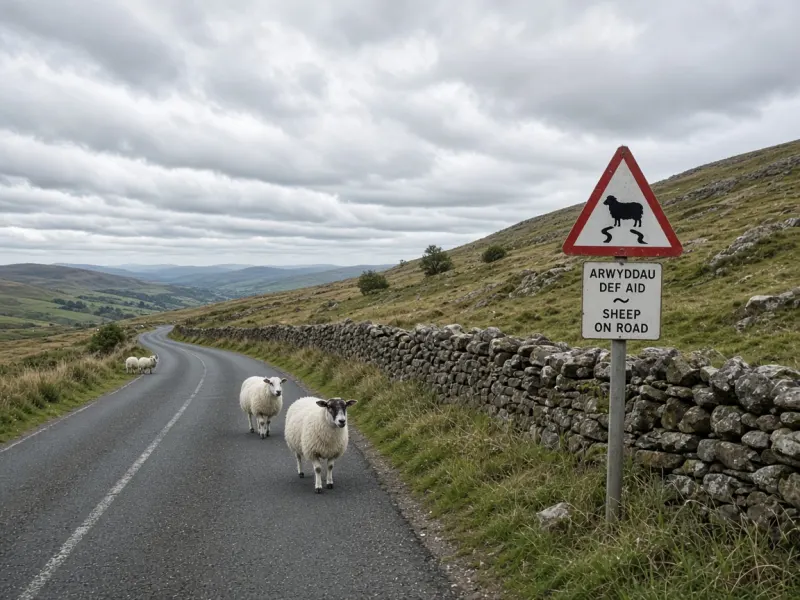
Sign image © Crown copyright, reproduced from GOV.UK traffic sign images under the Open Government Licence v3.0.
What the Sheep Sign Looks Like
The official plate follows the UK warning triangle pattern: thick red border, white centre, black pictogram. The symbol is a side view of a sheep, usually with a rounded body and legs that read clearly at a glance. It matches the GOV.UK traffic sign set used on theory tests, not a cartoon mascot from a children’s book.
You will see it on posts at the verge, sometimes duplicated after a junction so drivers joining mid-route still get the message. Distance plates may sit beneath on faster links, though many moorland approaches rely on a single triangle before the unfenced stretch. Retroreflective sheeting makes the red rim visible long before you can spot individual animals in dusk light.
Do not confuse it with the cattle triangle, which shows a cow silhouette, or the wild animals plate with a generic quadruped often linked to deer. Horses and migratory toads have their own artwork. The sheep graphic is specific: if the black shape is clearly ovine, you are being warned about sheep behaviour, not every mammal in the county.
Learners sometimes expect a speed roundel under every animal warning. Most sheep plates stand alone. A national speed limit sign may already govern the road, which is why examiners care about appropriate speed for conditions rather than memorising a special “sheep limit” that does not exist in law.
Cattle warnings cover dairy and beef herds that may block a lane for minutes. Wild animal triangles target deer and similar wildlife stepping from cover. Horse plates appear near equestrian routes. All share triangle grammar; the black symbol tells you which animal is likely to wander into your path.
What the Sheep Sign Means
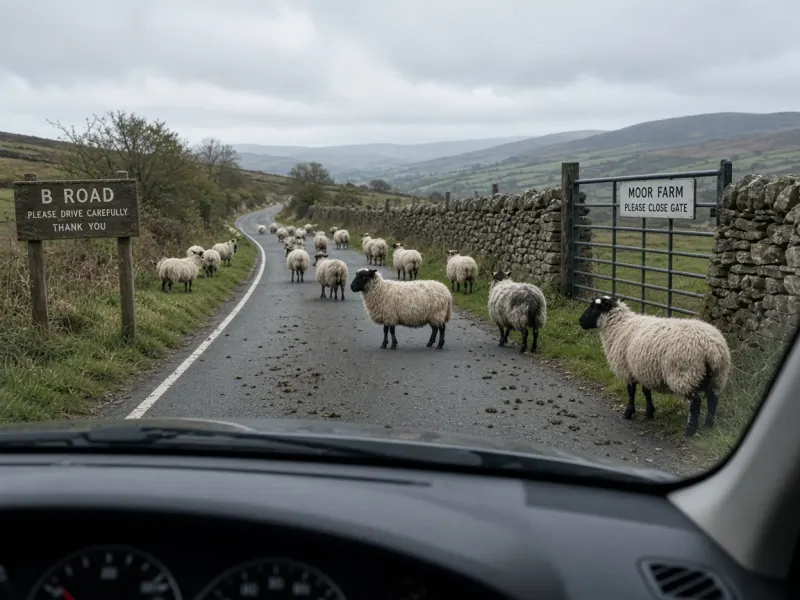
Sheep farming shapes large parts of Wales, Scotland, the Lake District, Yorkshire Dales, Dartmoor, and other open landscapes where fencing would be impractical or culturally alien. Flocks move between pasture, hefting on hills they know by instinct. A quiet B-road can therefore become a shared corridor without warning beyond the triangle and your own attention.
The sign marks a stretch where highway records or local knowledge show repeated presence on the carriageway. It is advisory in the strict sense: no instant fine attaches to the triangle itself. Instead it triggers the general duty to drive at a speed that lets you stop within the distance you can see to be clear, which on a misty moor may be far below the posted or national limit.
Highway Code rules 214 and 215 cover animals on the road. Rule 214 tells you to slow down or stop if necessary, let animals pass, and avoid behaviour that startles them. Rule 215 adds detail for horses and livestock, including waiting patiently when a herd blocks you and following directions from someone in charge of the animals. Sheep do not read hand signals, but shepherds do.
Sheep behaviour matters for drivers. They flock, which means one ewe crossing can pull twenty others behind her. Lambs in spring lag and zigzag. A dog off the lead on open access land can scatter a flock onto the road even when no sign was visible round the last bend. Panicked sheep are unpredictable; gentle speed gives you time to brake without locking up on gravel.
Sheep grids at farm entrances and moor gates keep stock in the field while letting vehicles pass. They are not a licence to race between grids. Animals still gather near gates, drink at streams beside the carriageway, and escape when a gate is left open. Treat the grid as one tool in a wider landscape where the triangle already warned you.
Night driving raises the stakes. Sheep eyes reflect headlights, but a dark fleece on a dark verge hides until the last moment. Dipped beams help you judge distance without dazzling oncoming drivers on narrow lanes. Fog on high ground can shrink your sight line to a few car lengths while the national speed limit sign still legally allows sixty on a single carriageway; safe speed is not the same as maximum speed.
Seasonal patterns repeat. Lambing brings vulnerable young near dykes and ditches. Haymaking and gathering days concentrate movement at dawn and dusk when commuters use the same lanes. Tourist traffic in summer adds cars unfamiliar with passing places and livestock etiquette. The static sign works year-round; your vigilance must match each visit.
Single-track roads with passing places demand patience when sheep occupy both the lane and the bay. Whoever reaches a clear stretch first should not force a stand-off. Reverse to a wider spot if that resolves the queue without stressing the flock.
Motorcyclists and cyclists hear bleating before some car drivers see movement. If you ride, scan verges and reduce speed before crests where walls stop and open moor begins.
Do not sound the horn to “clear” sheep unless a genuine emergency requires it and even then expect chaos. Horn blasts can split a flock across both lanes.
Photographers and walkers sometimes stop abruptly at a scenic pull-in. Combine that hazard with livestock drifting behind a drystone wall gap and you have a classic rural near-miss. Lift off early when the triangle repeats.
Driving tests in upland centres may route candidates through signed areas. Examiners watch for appropriate speed, holding back when a farmer signals, and not edging past a blocked lane aggressively. You are unlikely to fail solely because sheep delayed you; you can fail for unsafe impatience.
Sat navs optimise for minutes saved, not for lambing gathers. When the red triangle appears, trust local signage over an ETA whispering that you are “on the fastest route”.
After heavy rain, sheep may congregate on the tarmac for warmth or grit. Mud tracked onto the road reduces grip for the car behind you as well; keep following distance generous.
Sheep vs Similar Signs
| Sign | Meaning | Legal or warning? |
|---|---|---|
| Sheep | Sheep may be on or beside the road ahead | Warning triangle |
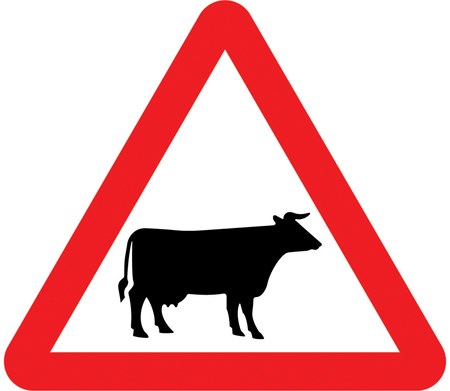 Cattle | Cattle may block or cross the carriageway | Warning triangle |
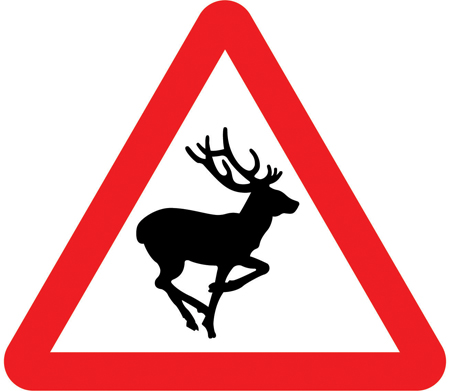 Wild animals | Deer or other wildlife may step out from cover | Warning triangle |
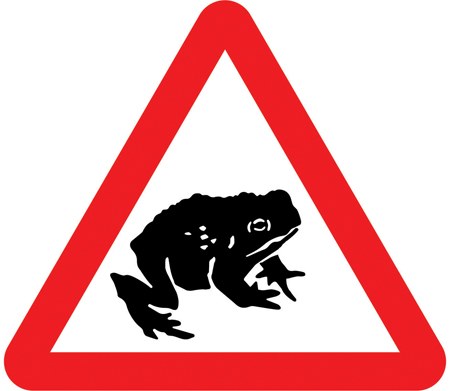 Migratory toad crossing | Amphibians may cross in season, often at night | Warning triangle |
Rules and Penalties
There is no Home Office offence titled “failure to heed sheep triangle.” The plate warns; enforcement targets how you drive once the hazard is obvious. Speeding past a fixed limit sign still carries standard penalties. Careless driving can follow if you ignore a visible flock, a farmer’s stop signal, or a narrow lane full of stock while travelling too fast to stop.
Colliding with livestock is a civil and insurance nightmare even when no endorsable ticket mentions sheep. Farmers may claim for lost animals; your comprehensive policy may still argue about excess and fault. Prevention beats arguing at a field gate.
Swerving violently to miss a lamb and meeting oncoming traffic or a drystone wall is worse than a controlled stop when the road behind is clear. Courts and insurers ask whether your speed matched the conditions the triangle advertised.
Theory tests favour attitude questions: slow, stop if safe, avoid startling animals, do not overtake blindly when stock occupies the lane. They rarely ask for a points tariff for hitting a ewe; they ask what you should do when the picture shows a warning triangle with livestock.
Check the latest theory test pass mark and book when you are ready via our booking guide.
Sheep in Practice
On an Easter Monday in Snowdonia, Marcus drives a hire car toward a trailhead on a lane he has only used in winter. The familiar warning triangle catches his eye after a stone bridge, then the national speed limit repeater reminds him sixty is legal, not mandatory.
He drops to about twenty-five miles per hour, dips headlights in low sun, and spots movement at a wall gap. A dozen ewes with lambs spread across the lane ahead. A local farmer on a quad gestures him to wait. Marcus stops well short, engine idle, hands visible on the wheel.
A convoy behind him honks once. He ignores it. The farmer shifts the flock through a gate. Marcus waits until the carriageway is clear, passes at walking pace, and keeps scanning for stragglers near the verge. At the next passing place he lets the impatient convoy overtake toward a bend he would not rush blind.
On his theory retake later that month, a question shows the sheep triangle and asks for the best response. He picks reduced speed and readiness to stop, not horn use to scatter animals. The sign on the real lane had already taught him the scored answer.
How This Sign Appears on the Theory Test
Multiple-choice banks pair animal warning triangles with scenarios on rural roads. The ovine silhouette is distinctive once you recognise it. Read the symbol first, then apply calm speed reduction rather than dramatic swerves.
Picture questions may swap sheep for cattle to test whether you notice the species graphic. The response pattern is similar: patience, stopping if needed, and following anyone in charge of the herd.
Hazard perception clips sometimes show dark shapes on moorland tarmac without zooming on the post. Training yourself to lift off when tree lines open and walls end helps you score even when the plate is off-screen.
Filter revision on road and traffic signs, then reread Highway Code rules on animals. Reject answers that suggest flashing headlights to hurry livestock or squeezing past a blocked lane at speed.
When an option mentions sheep grids, remember grids reduce escapes at a point; they do not cancel the warning triangle on the approach stretch.
Take a free mock theory test and filter questions on road and traffic signs. Pair that with the warning signs guide for triangle symbols.
Related Road Signs
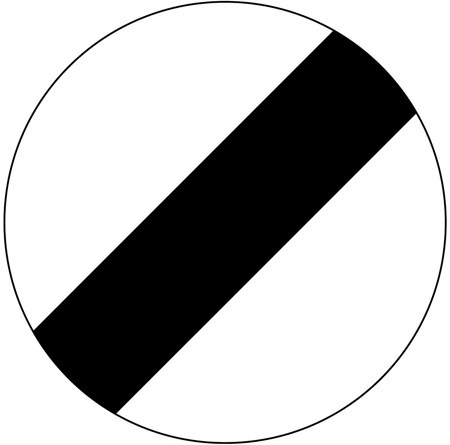
National speed limit
Default limit on country lanes still demands safe speed for livestock.
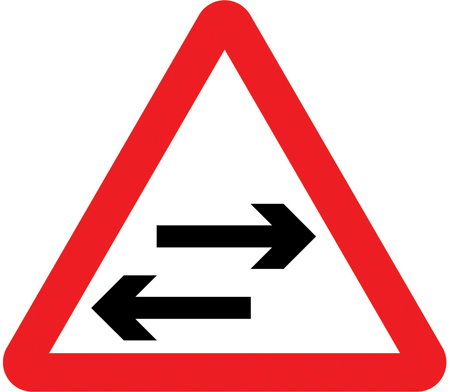
Two-way traffic
Narrow upland links where oncoming cars meet sheep at once.
Migratory toad crossing
Another animal warning triangle with different season and behaviour.
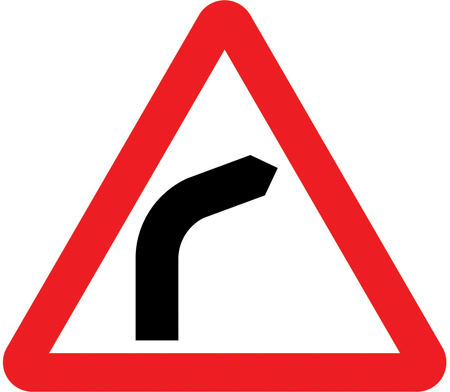
Bend right sign
Blind curves on the same routes where flocks use the verge.
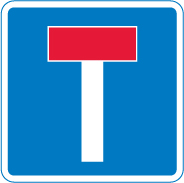
No through road
Dead-end farm tracks that still feed sheep onto the main lane.
Test Yourself on UK Road Signs
Treat this plate as a plain promise that the road ahead is shared with farm stock, not a promise that animals will politely wait in a field. Slow early, stop when a shepherd or the flock demands it, and keep your speed honest when the national limit sign tempts you to forget the moor. A free mock theory test helps you lock in how warning triangles behave when the exam swaps cattle for sheep in the artwork.
Frequently Asked Questions
What does the sheep sign mean in the UK?
It warns that sheep may be on or beside the carriageway ahead, common on open hills and unfenced pastoral roads. Slow down, be ready to stop, and wait if a flock blocks you.
Does the sheep sign set a speed limit?
No. It is a warning triangle only. You must obey posted limits and drive at a speed that lets you stop safely for animals and other hazards.
What should I do if sheep block the road?
Stop at a safe distance, wait patiently, and follow directions from someone in charge of the animals. Do not use the horn to scatter them or squeeze past dangerously.
How is the sheep sign different from the cattle sign?
Both are red warning triangles, but the black pictogram shows either a sheep or a cow. The driving response is similar: slow, stop if needed, and avoid startling livestock.
Will I get penalty points for hitting a sheep?
There is no specific points tariff for striking sheep, but careless or dangerous driving charges can apply if your speed and attention were clearly unsuitable. Insurance and civil claims are the usual practical consequences.