
Last updated: October 2026 · Checked against Highway Code
Bicycle Crossing Sign: meaning, rules and what to do
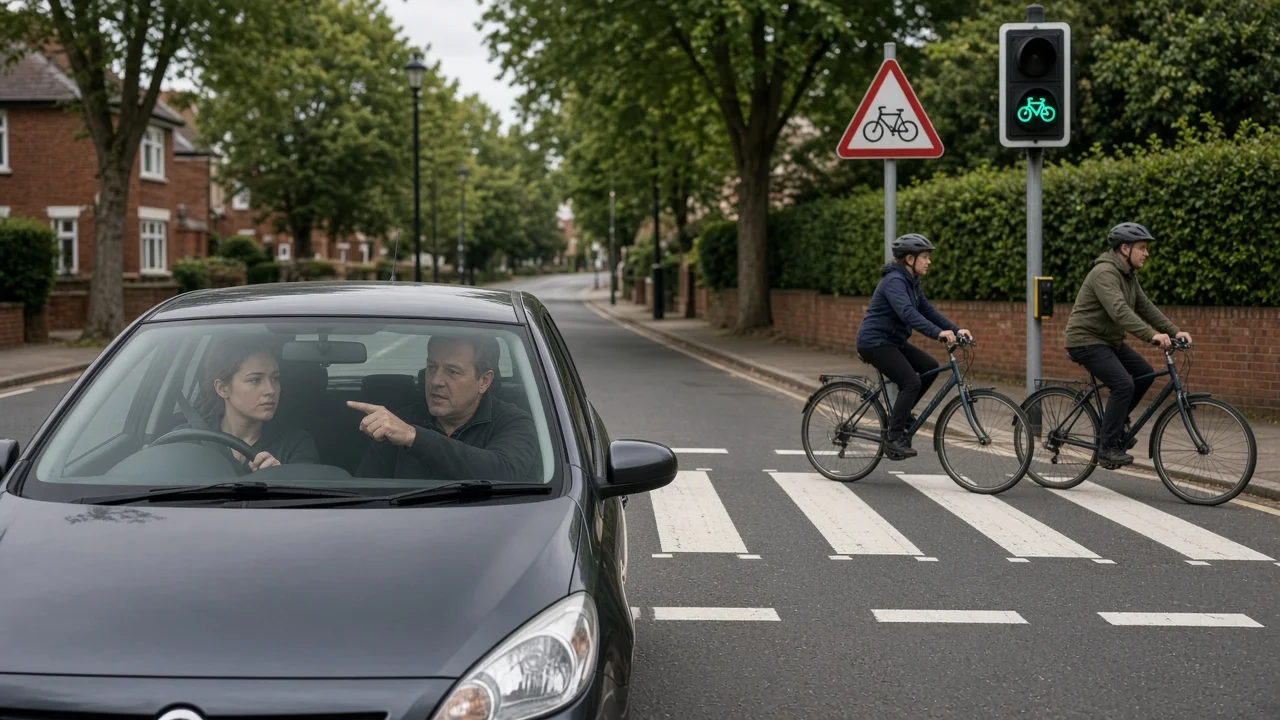
The bicycle crossing sign is a red-bordered warning triangle that shows a cycle symbol with crossing markings, telling you that riders may cut across your lane at a designed point rather than simply riding along it. Slow early, scan both verges, and be ready to stop before you reach the white ladder lines or signal heads that often follow this plate.
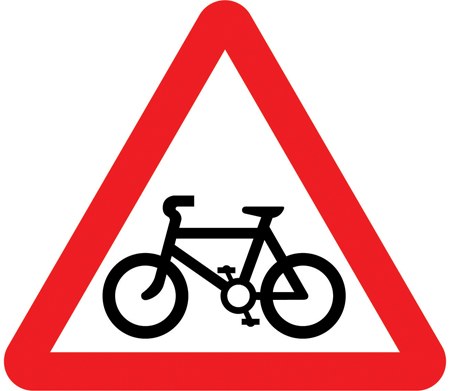
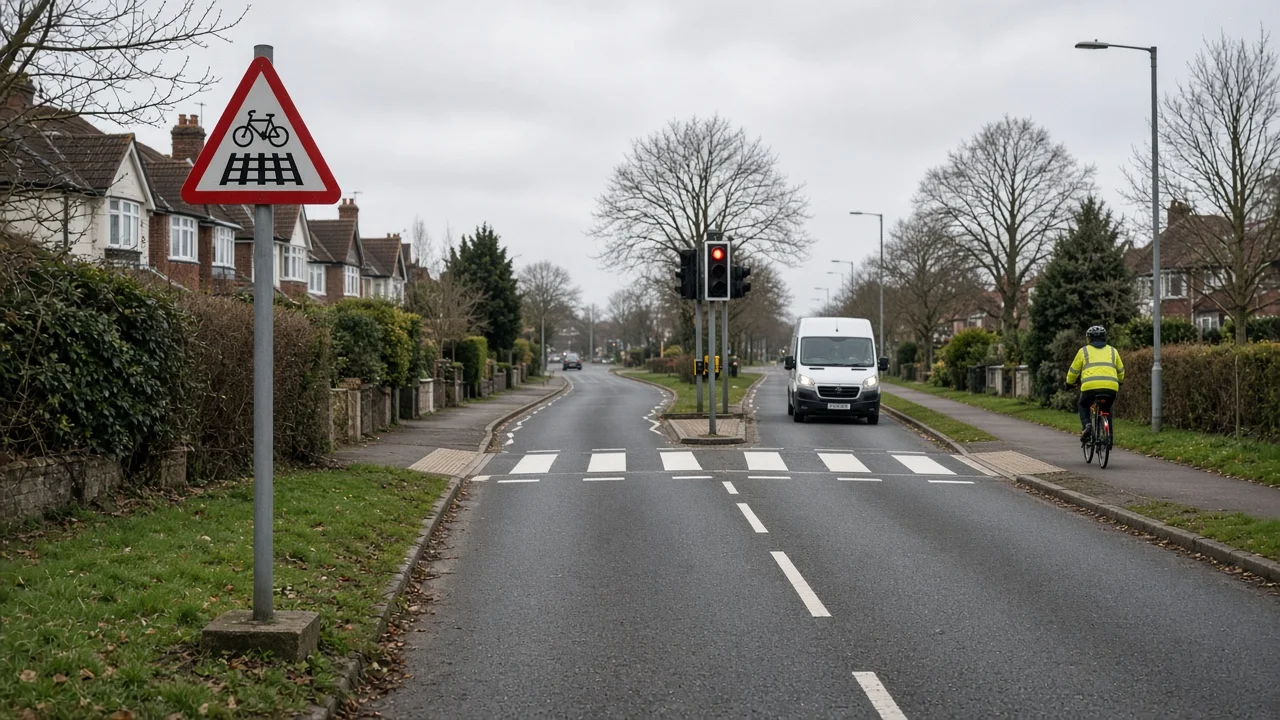
Sign image © Crown copyright, reproduced from GOV.UK traffic sign images under the Open Government Licence v3.0.
What the Bicycle crossing Sign Looks Like
Official UK artwork uses the standard warning triangle: thick red border, white field, black pictogram. The bicycle is shown in side profile, and horizontal bars beneath the wheels represent crossing markings on the road surface. That ladder motif is the detail learners should memorise, because a plain bicycle without bars belongs to the separate cycle route ahead family.
Posts face approaching motor traffic on A roads, distributor routes, and busy estate spines where an off-road cycle track meets the carriageway at right angles. You may see one triangle on the nearside verge or paired boards when the crossing sits on a crest or bend. Distance plates underneath sometimes quote yards to the stop line or to the first set of studs.
Temporary versions on folding stands appear during construction when a shared path is diverted across a live lane. The symbol stays identical so theory candidates learn one silhouette. Do not treat a plastic board as optional because the permanent post is missing; contractors still route real commuters across your path.
Night visibility relies on retroreflective sheeting on the border while the black symbol needs headlamp strike to pop. Rain and mud spray from lorries can hide a post until you are close. If you commute daily, the triangle still deserves a foot lift on the evening run when you stop actively searching for hazards.
Supplementary rectangles may sit below the triangle naming a toucan crossing, a parallel crossing, or a puffin-style cycle stage. Those names describe engineering; the triangle job stays the same: cyclists may traverse the road here, so your speed and sight lines must cope before the markings begin.
The cycle route ahead triangle shows a bicycle alone and warns that riders use or travel along the road corridor. The bicycle crossing plate adds crossing bars under the wheels and targets a junction between path and carriageway. Zebra and light-controlled pedestrian warnings describe foot crossings. Deafblind pedestrian plates highlight people who may cross slowly. Read the bars under the bike before you pick an exam answer.
What the Bicycle Crossing Sign Means
Highway authorities install this warning where cycle design sends riders across motor traffic rather than merging along it: exits from riverside paths, greenway spurs meeting a distributor road, toucan arms beside retail parks, and school routes that leave a shared footway to reach a pelican island. The triangle is advance notice so you adjust before the conflict is beside your door mirror.
Rule 211 in The Highway Code expects you to watch for cyclists and motorcyclists, give them room, and anticipate sudden moves to avoid drains or parked vehicles. At a crossing, the critical move is lateral: a rider may enter from your left or right on a green phase while you still hold a stale mental picture of an empty lane.
Rule 170 reminds you to give way when a pedestrian or cyclist has started to cross and you would force them to stop or swerve. Many cycle crossings pair markings with give-way triangles or signal faces; the warning sign upstream does not grant you priority, but it makes surprise harder to plead if video shows you never slowed.
Rule 163 still governs overtaking elsewhere on the approach. If riders are queuing on a path mouth waiting for a gap, do not blast past a stationary queue and cut across the mouth at the moment the lead bike rolls out. Treat the signed zone as one continuous hazard from triangle to far kerb.
Toucan and parallel crossings let cycles and pedestrians share a signal stage. When lights are red for motor traffic, stay behind the stop line and off advanced stop boxes reserved for cycles. When your phase is green, look left and right across the mouth of the crossing before moving; a late cyclist on amber can still be lawfully committed.
Unsignalised marked crossings rely on eye contact and courtesy. A rider standing with one foot down on the approach path may be waiting for a safe gap. Creeping forward to “encourage” them is intimidation, not efficiency. Wait until you can see the whole width clear, then proceed without surging.
Large vehicles need extra care because the cab hides a crossing mouth. If you drive a van or lorry, hang back at the line until you are sure no cycle is crossing the front corner. The warning triangle is your cue to stop using the bonnet as a sight block.
The sign does not create a cycle lane on the carriageway. Blue mandatory cycle track circles and white lane markings do that elsewhere. Here the message is intersection risk. Sat-nav may not mention the crossing; the post is the human-readable layer on top of the algorithm.
Electric cycles accelerate briskly from rest. The pictogram covers e-bikes as well as pedal machines. Listen for quiet tyre hum on damp mornings as well as scanning for LED front lamps that look like distant car sidelights.
Children on small bikes may use the same crossing on school runs. They wobble, they look at friends instead of traffic, and they sit lower than adult riders. Extra patience after the triangle beats a horn blast that sends a novice into your lane.
You most often meet this plate on urban fringes where Sustrans-style paths meet 30 mph distributors, beside new housing estates with parallel greenways, and on seafront roads where promenade cycles rejoin traffic at controlled points.
Rush-hour queues tempt drivers to straddle the stop line for a better view. That blocks the crossing and can trap riders in the gutter between lanes. Hold back even if the car behind flashes headlights; your licence cares more than their timetable.
Driving tests near cities with active cycle networks may route you past a signed crossing. Examiners watch whether you mirror before moving off from a red light and whether you scan the crossing mouth on green, not only the car ahead.
Rain makes white ladder markings slippery for skinny tyres. Expect riders to take a straighter line across than in dry weather and avoid turning left across their path because you assumed they would curve to the kerb.
Parked delivery vans beside a path exit create a perfect hide for a cyclist. Slow before the van nose, peek if safe, and edge forward only when the footway and carriageway are visible together.
After dark, dip headlights when waiting at the line so you do not dazzle someone on the crossing. A rider looking down at a phone screen may not see your indicator; your speed should assume that mistake.
If you cycle as well as drive, report broken lamps or faded markings to the council. The warning sign cannot compensate for a crossing that no longer reads clearly on the ground.
Sportives and charity rides sometimes marshal informal crossings on rural A roads. Temporary triangles may duplicate the permanent one. Treat marshals as extra eyes, not as permission to ignore the motor traffic still using the lane.
Highway Code rules 163, 170, and 211 to 213 (vulnerable road users and crossings)
Bicycle crossing vs Similar Signs
| Sign | Meaning | Legal or warning? |
|---|---|---|
| Bicycle crossing | Cycles may cross the road at a point ahead | Warning triangle |
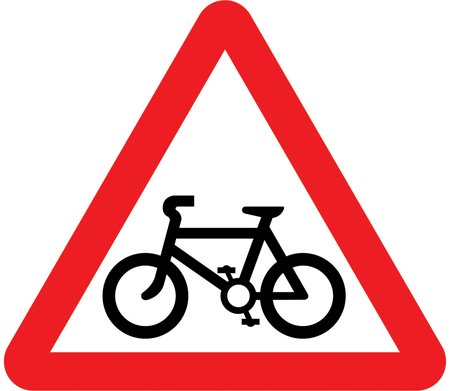 Cycle route ahead | Cyclists likely along or entering the road corridor | Warning triangle |
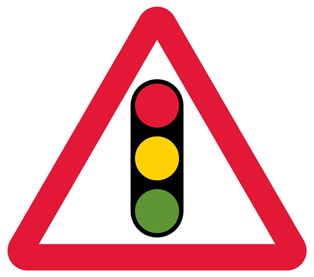 Traffic signals ahead | Light-controlled junction approaching | Warning triangle |
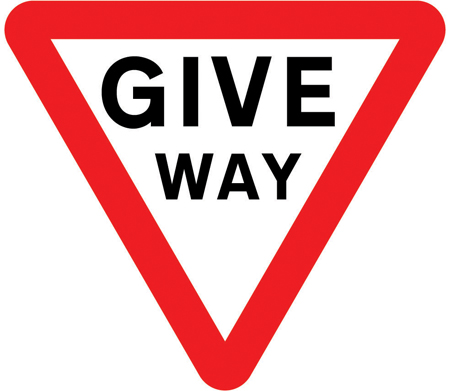
 Give way | Yield at the marked line | Regulatory triangle |
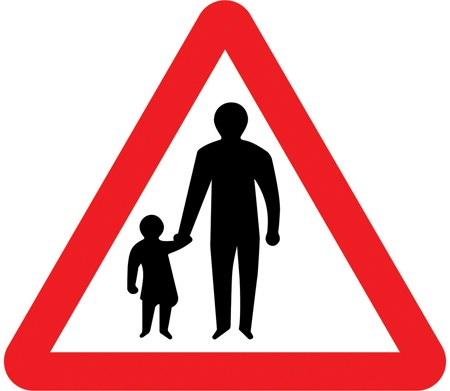 Pedestrians in road | Walkers may share the carriageway | Warning triangle |
Rules and Penalties
There is no fixed penalty titled “ignored bicycle crossing triangle.” Enforcement follows how you drive at the crossing itself. Failing to stop at a red light, blocking a crossing, or turning across a committed cyclist can attract standard motoring penalties where cameras or witnesses exist.
Careless driving allegations can follow close passes or hurried left turns immediately after a signed crossing, especially when dashcam footage shows the warning post in clear view. Insurers treat cycle collisions seriously even when criminal charges are not pursued.
Stopping in a cycle advanced stop box carries its own fixed penalty in many urban areas. Passing the warning and then blocking the box at the next set of lights merges two predictable faults.
Using a handheld phone while creeping across a crossing merges distraction with vulnerable road user risk. The triangle gives you no exemption from attention rules.
Theory papers test recognition and attitude: slow, scan, yield when appropriate. They rarely quote obscure fine amounts for warning plates alone. Learn what the bars under the bicycle imply about crossing movement, not just that “bikes exist somewhere nearby.”
Check the latest theory test pass mark and book when you are ready via our booking guide.
Bicycle crossing in Practice
On a grey March morning, Priya drives a supermarket delivery van along a dual-use corridor she usually rushes. A red triangle with a bicycle and ladder markings catches her eye before a slight crest. She eases from thirty to twenty miles per hour and checks the nearside mirror for cyclists filtering on the path.
Over the crest she sees toucan signals and white studs across both lanes. The lights are green for path traffic. A pair of commuters enters from the left; one is already past the centre line. Priya stops smoothly before the stop line, leaving the crossing clear, while a hatchback behind her brakes late and honks.
When her phase turns green, she looks left across the mouth, then right, before rolling. A teenager on a BMX crosses late on amber from the far side. Priya holds rather than surging; the rider clears her front corner by a metre.
Had she treated the triangle as decoration, she might have crested at thirty, seen the cyclists late, and braked into the hatchback behind while swerving. The sign bought three seconds of foot lifting and mirror work before the conflict, which is exactly why it stands upstream of the studs.
At her theory resit she spots the same artwork in a picture question and picks “cyclists may cross the road ahead,” rejecting answers about banning cycles or mandatory cycle lanes. Practical habit and exam recognition now match.
How This Sign Appears on the Theory Test
Picture items show the bicycle with crossing bars and ask for the meaning. Link the bars to crossing movement, not to a long on-road cycle corridor. Reject plain-bicycle artwork unless the question clearly names cycle route ahead.
Scenario stems describe approaching a crossing after a warning triangle. Safe answers favour reduced speed, readiness to stop, and yielding to committed riders. Horn options to clear the crossing are usually wrong.
Distractors swap in no cycling circles, blue cycle route direction panels, or pedestrian-only zebras without a cycle symbol. Read the triangle border first: red warning, not blue information.
Hazard perception clips on urban approaches reward early slowing when small shapes move toward a mouth between hedges, even if the triangle is out of frame. Train your foot to ease off when path exits meet distributor roads.
Filter revision on road and traffic signs, then reread crossing and overtaking rules. Examiners assume you understand give-way duty at markings even when the numeric 1.5 metre passing distance appears only in The Highway Code, not on the post.
Take a free mock theory test and filter questions on road and traffic signs. Pair that with the warning signs guide for triangle symbols.
Related Road Signs
Cycle route ahead
Plain bicycle triangle for riders along the road, not only crossing it.
Traffic signals ahead
Lights that often control toucan and parallel crossings.
Give way sign
Yield lines paired with many cycle crossing mouths.
Roundabout ahead
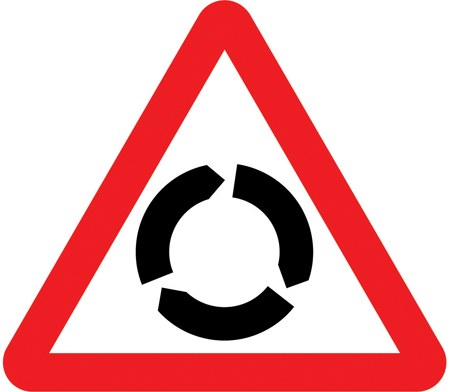
Circulation where cycle tracks sometimes cross entry arms.
Pedestrians in road
Walkers sharing tarmac when paths are missing or blocked.
Test Yourself on UK Road Signs
Treat the bicycle crossing triangle as fair warning that your straight line may intersect a rider’s line soon. Slow before the crest, respect signals and markings, and yield when someone is already crossing. A free mock theory test helps you separate this barred-bicycle artwork from route-ahead plates when exam JPEGs shuffle.
Frequently Asked Questions
What does the bicycle crossing sign mean?
It warns that cyclists may cross the carriageway at a designed point ahead, often shown by ladder markings on the road. Reduce speed and be ready to give way when riders are crossing or waiting to cross.
How is it different from the cycle route ahead sign?
Cycle route ahead shows a bicycle without crossing bars and warns that riders use or travel along the road corridor. The bicycle crossing plate adds bars under the wheels to show a crossing movement across your path.
Does this sign mean cyclists always have priority?
No. The triangle is a warning, not a universal priority grant. Give-way markings, traffic signals, and who is already committed on the crossing still decide who waits. You must still avoid endangering riders who are lawfully crossing.
Do I need to stop when I see only the warning triangle?
Not unless markings, signals, or a rider already on the crossing require it. The triangle tells you to adjust speed and attention so you can stop safely if needed before you reach the crossing itself.
Will I get points for ignoring the bicycle crossing warning?
There is no separate points tariff for passing the triangle without slowing. You can still face penalties for red-light offences, blocking crossings, or careless driving if your behaviour at the crossing endangers cyclists after you were clearly warned.