
Last updated: October 2026 · Checked against Highway Code
Cattle Sign: meaning, rules and what to do
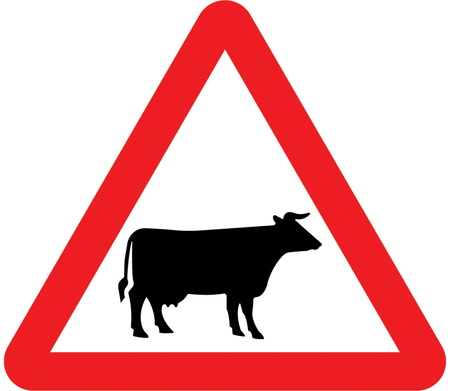
The black cow silhouettes on a red-bordered triangle tell you that beef and dairy traffic may share the carriageway with your tyres. It does not post a speed limit, but it demands patience, low speed, and a willingness to stop while a farmer shifts a herd between field and milking parlour.
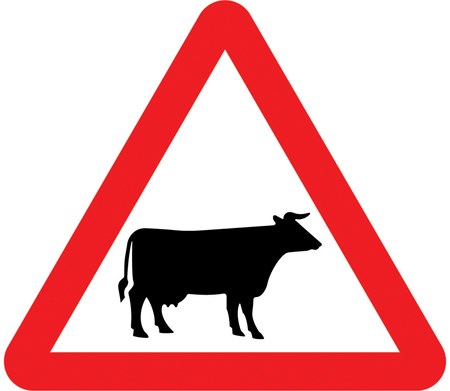
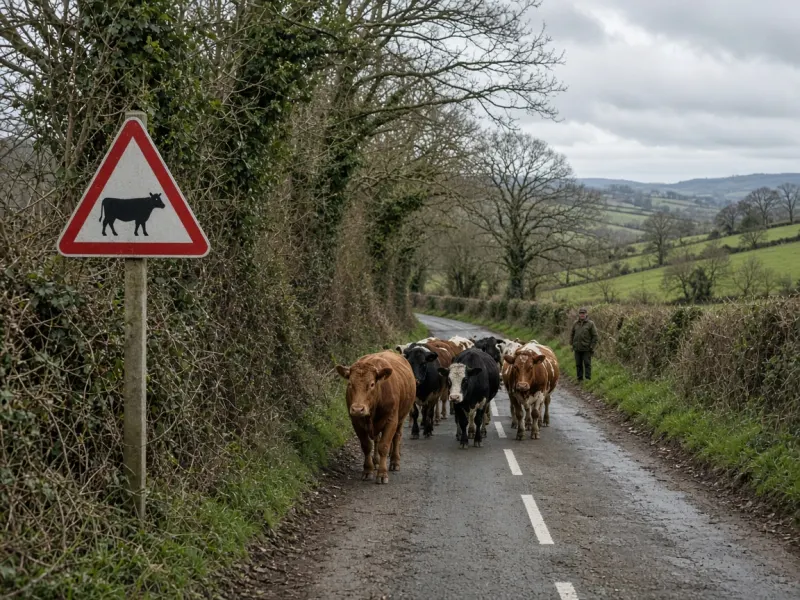
Sign image © Crown copyright, reproduced from GOV.UK traffic sign images under the Open Government Licence v3.0.
What the Cattle Sign Looks Like
The standard UK warning triangle points upward with a red border and white centre. The pictogram shows one or more black cattle in profile, often a cow and calf pair, which matches the Department for Transport artwork used on open farmland routes. The shape is never circular and never blue; those grammars belong to orders and motorway information.
You may see a single triangle on a post, a pair bracketing a known crossing point, or the same symbol repeated after a side road where drivers rejoin too quickly. Supplementary plates quoting distance in yards sometimes sit beneath the board on faster A roads approaching a farm entrance.
Learners confuse this plate with the sheep warning, which shows fleecy silhouettes with different body shapes, or with the wild animals triangle that depicts a generic quadruped for deer. Horse rider warnings use a mounted figure. Each animal sign shares the triangle frame; the black symbol names the species most likely to wander into your path.
Near cattle grids you might spot the sign twice: once before the grid and once where open common land begins. Grids deter walking stock but do not guarantee an empty road. A gate left open or a broken fence can still place a ton of curious beef across your bonnet line.
At night the retroreflective red rim catches headlights before the cattle graphic is obvious. Treat a flash of warning triangle on a dark lane as a cue to dip main beam and cover the brake, especially after rain when hooves have dragged mud onto the centre line.
Authorities install the cattle plate where farming practice regularly puts cows on the highway, including drove roads, milking routes, and unfenced commons. Sheep warnings suit open hillsides with different flock behaviour. Wild animal triangles target deer and mammals that bolt unpredictably. All are advance warnings, not speed limit orders.
What the Cattle Sign Means
British cattle spend part of the year in enclosed fields and part on tracks that cross tarmac. Early morning and late afternoon milking runs are classic risk windows, when a herd shuffles between pasture and parlour at walking pace while the rest of the county commutes. The warning triangle marks stretches where that overlap is frequent enough that highway engineers want a permanent reminder.
Unlike a circular limit sign, the cattle plate creates no new numeric cap. National speed limit on a single carriageway country road might still read as sixty miles per hour on paper, yet case law and the Highway Code both expect you to drive below that when animals occupy the lane. Rule 125 ties speed to what you can see and stop for; Rule 214 tells you to slow or stop for animals and let them pass without frightening them.
Cattle behave differently from sheep. Cows are heavier, slower to turn, and sometimes curious about a stationary car. A horn blast can scatter a herd the wrong way or send calves bolting back across your path. Farmers often walk ahead with sticks or dogs; their hand signals are informal but worth obeying because they know which beast is about to plant itself on the white line.
Bulls and suckler herds deserve extra respect. A sign does not tell you whether the approaching group includes a protective parent or a nervous heifer. Give wide clearance, keep the engine note low, and resist the urge to edge past within kicking range. Motorcyclists are vulnerable to sudden sideways movement; riders should slow early and consider stopping if the road is completely blocked.
Cattle grids rattle your suspension and suggest open moor ahead, yet they are not a promise that the carriageway ahead is clear. Stragglers sometimes wait on the tarmac side of the grid while the main herd grazes. Temporary signs during droving festivals or market days can reinforce the static triangle; treat any combination as a reason to plan extra minutes rather than to overtake a queue of patient drivers.
Large vehicles complicate the picture. An HGV meeting a herd on a narrow lane may need to stop with the trailer angled to leave a gap. Car drivers who squeeze past force cows to spook against the hedge or into the path of oncoming traffic. Waiting two minutes for a clear road is cheaper than explaining a cracked mirror to your insurer.
Electric and hybrid cars can surprise livestock because tyre noise no longer announces you from a distance. In signed areas, assume animals have not heard you until you are close, and reduce speed earlier than you would in a diesel you can hear yourself.
You meet this sign most often in Devon, Cornwall, the Welsh Marches, the Lake District, the Pennines, and anywhere dairy farms sit beside B roads. Scottish Highland routes and New Forest adjacencies show similar plates even when the landscape looks empty in midsummer.
Holiday traffic makes weekends worse: renters in camper vans meet locals moving stock on lanes they have never driven. If you are the visitor, yield without drama. The farmer will still be there when you have gone home.
Dog walkers on public footpaths beside fields should keep pets on leads near cattle, especially when calves are present. Drivers see fewer dogs on the carriageway but should still watch for a loose spaniel darting from a gate while cows follow.
Cyclists can startle herds when descending quietly. A bell or a calm voice helps, but the triangle is your hint to ride single file and be ready to put a foot down if the road fills with brown backs.
After flooding, gates and fences fail more often. A triangle you ignored in dry August becomes urgent in a wet February when a river meadow empties stock onto higher ground beside the lane.
Driving instructors on rural test routes use these signs to watch whether you adjust speed without prompting. Examiners notice impatient overtakes and horn use more sharply than a learner who simply waits behind a slow herd.
Sat-nav shortcuts through farm tracks sometimes omit animal warnings. If the road surface turns to mud and the hedges close in, assume livestock even before a triangle appears.
Highway Code rules 125, 214 and 215 (speed, animals and livestock)
Cattle vs Similar Signs
| Sign | Meaning | Legal or warning? |
|---|---|---|
| Cattle | Cattle may be on or crossing the road; wait if blocked | Warning triangle |
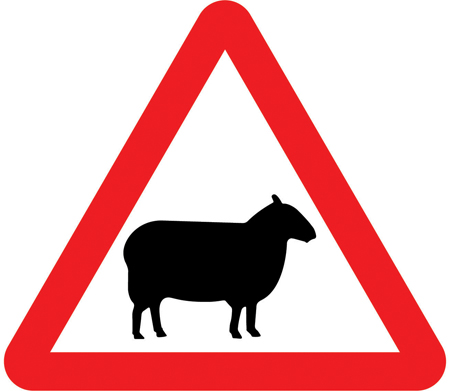 Sheep | Sheep may wander on rural routes; drive slowly | Warning triangle |
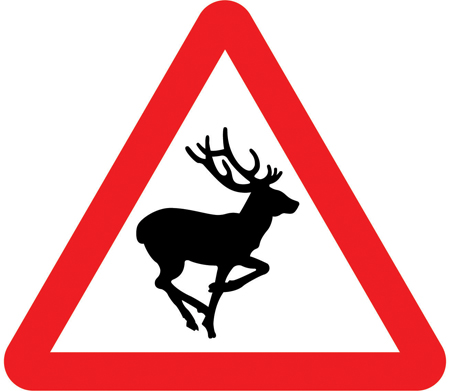 Wild animals | Deer or other wildlife may step out; stay alert | Warning triangle |
 Horse riders | Horses may use the road; pass wide and slow | Warning triangle |
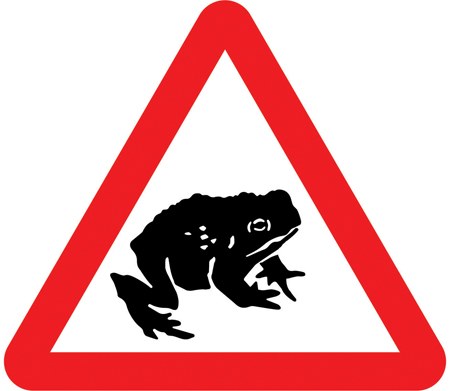 Migratory toad crossing | Toads may cross in season, often at night | Warning triangle |
Rules and Penalties
There is no fixed penalty notice titled “ignored cattle triangle.” Enforcement focuses on how you drove once warned. Exceeding a posted speed limit still brings standard speeding sanctions. Driving past a visible herd at a speed that left no chance to stop can attract careless driving attention if a witness or camera records the scene.
Striking livestock hurts your wallet and your conscience. Insurance claims for bodywork damage after a cow impact are common on rural policies. Deliberately sounding a horn to hurry animals off the road can amount to unnecessary horn use in built-up contexts; on open lanes it is still poor practice and may agitate the herd.
Leaving the scene after hitting a large animal without reporting where required can overlap with failure to stop rules when injury or significant damage occurs. Farmers may need to identify injured stock for welfare reasons. Swap details when a gate or fence is damaged.
Theory tests rarely quote fines for cattle signs. They ask what you should do when the pictogram appears or when a photo shows cows ahead. The correct pattern is slow, stop if needed, and avoid sudden swerves into oncoming traffic.
Check the latest theory test pass mark and book when you are ready via our booking guide.
Cattle in Practice
On a damp May morning near Bodmin, Marcus drives a delivery van along a lane he usually treats as a forty-minute-per-hour shortcut. A red triangle with two black cattle shapes catches his wing mirror before the smell of silage reaches the cab.
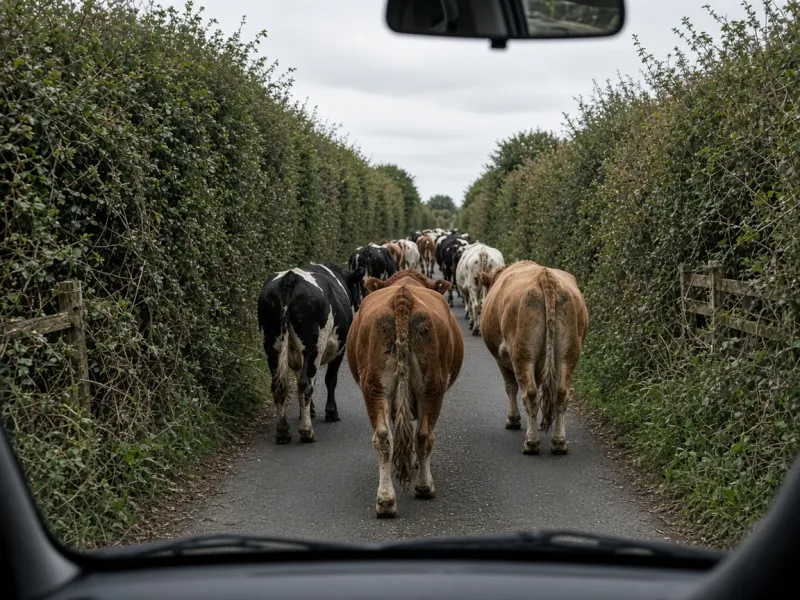
He checks the mirror, eases to fifteen miles per hour, and dips headlights even though the sun is rising. Around the bend, twenty dairy cows occupy both lanes while a farmer walks behind with a collie. A hatchback behind Marcus tries to overtake on the grass verge; the farmer waves that driver back.
Marcus waits with the handbrake on, engine idling quietly, until the last cow clears the cattle grid. The farmer nods him forward. Marcus crawls past the grid, keeps scanning ditches for stragglers, and resists posting a complaint online about rural logistics. The sign primed him before the herd appeared; had he stayed at van racing speed, he could have faced a careless driving conversation and a bonnet full of beef.
How This Sign Appears on the Theory Test
Multiple-choice items show the cattle triangle among other warnings and ask how to respond. The safe answer almost always involves reducing speed and being ready to stop, not accelerating to clear the hazard before animals move.
Picture questions may swap cattle for sheep to test whether you read the silhouette. Identify the species quickly, then apply the same calm approach because weight and kick risk differ but patience does not.
Hazard perception clips on rural roads sometimes include dark shapes ahead near a farm gate. Early slowing scores better than a late brake when the herd fills the lane.
Filter revision on road and traffic signs, then reread Highway Code animal rules. Reject options that suggest flashing headlights to scare cows forward. Favour options that mention waiting behind a blocked road.
Case study style questions occasionally pair a national speed limit sign with an animal warning on the same route. Remember the limit is the maximum in ideal conditions, not a target when hooves are on the tarmac.
Take a free mock theory test and filter questions on road and traffic signs. Pair that with the warning signs guide for triangle symbols.
Related Road Signs
Migratory toad crossing
Seasonal amphibian crossings on quiet lanes near ponds.
National speed limit
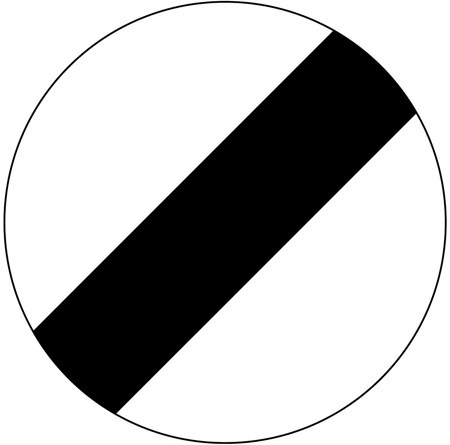
Default rural limit still demands safe speed for livestock.
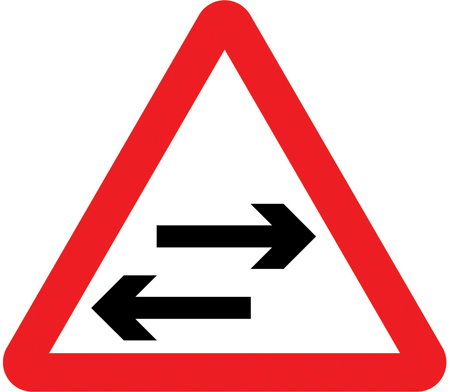
Two-way traffic
Narrow lanes where oncoming traffic meets slow herds.
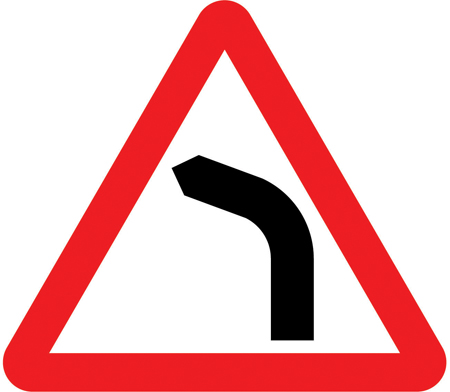
Bend to the left
Curves that hide cattle until you are close to the gate.
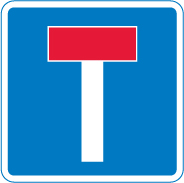
No through road
Farm tracks that still carry milking routes twice daily.
Test Yourself on UK Road Signs
Treat the cattle warning as a promise that the countryside still runs on farming clocks, not just yours. Slow before you smell the herd, wait without theatre when the road fills, and share the lane with animals that outweigh your car. A free mock theory test helps you recognise animal triangles quickly when the exam swaps artwork between cows, sheep, and deer.
Frequently Asked Questions
What should I do when I see the cattle sign?
Reduce speed, use dipped headlights at night, and be ready to stop if cattle are on the carriageway. Wait until the animals move or the farmer signals it is safe to pass. Avoid sounding the horn unless there is immediate danger.
Does the cattle sign set a speed limit?
No. It is a warning triangle only. You must obey posted limits and drive at a speed that lets you stop for livestock and other hazards on the road.
How is the cattle sign different from the sheep sign?
Both are red warning triangles, but the pictogram shows cattle silhouettes rather than sheep. Behaviour differs: cows are heavier and herds may block the road for longer. The response is the same: slow down and wait patiently.
Can I overtake a herd on a narrow lane?
Only if you can leave plenty of space, see far enough ahead, and no oncoming traffic is approaching. On many signed lanes overtaking is unsafe; waiting behind the herd is the correct choice.
Will I get penalty points for hitting cattle?
There is no specific points tariff for livestock collisions, but careless or dangerous driving charges can apply if your speed and attention were clearly unsuitable for the conditions and the warning sign.