
Last updated: October 2026 · Checked against Highway Code
Low Flying Aircraft Sign: meaning, rules and what to do
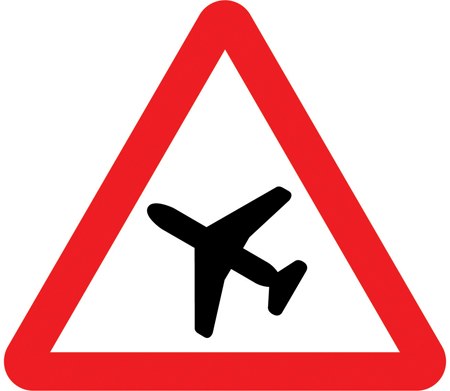
The red-bordered triangle with a black aircraft silhouette warns that fixed-wing aircraft or gliders may cross the road at very low height, so you should keep your eyes on the carriageway while staying aware of sudden noise and shadow from above.
Sign image © Crown copyright, reproduced from GOV.UK traffic sign images under the Open Government Licence v3.0.
What the Low flying aircraft Sign Looks Like
Official GOV.UK artwork places a side-view aircraft symbol inside the usual UK warning frame: thick red border, white interior, black pictogram. The aeroplane shape is simplified so it reads at a glance in rain or dusk, not like a detailed airline logo. There are no speed numerals, no blue circles, and no supplementary text baked into the triangle itself.
Distance plates sometimes sit beneath the post, quoting metres or yards to the zone where flights are common. Authorities repeat the triangle after side turnings so traffic joining from farm tracks still sees the same caution. Retroreflective sheeting makes the border flash under headlamps long before you hear turbine whine.
Learners confuse it with the “low-flying helicopters” plate, which uses rotor blades in the symbol, or with airfield direction signs on blue backgrounds that guide pilots rather than warn motorists. Wind sock posts and red boundary lights belong to aerodrome fencing, not this triangle. Once you spot wings and a tail fin in black on white, you are on the right revision card.
Pairs of signs bracket short valleys where the Ministry of Defence publishes low-flying training corridors, or where gliding clubs winch-launch above a ridge road. Summer holiday traffic may never see a sortie while winter weekdays bring fast jets on timetable. The static symbol covers the whole year, not only display weekends.
Temporary “low flying” boards with aircraft graphics can appear during airshows, but the permanent regulatory warning keeps the standard triangle grammar. If a post is knocked flat after a storm, report it to the local highways team because missing warnings leave visiting drivers unprepared for sudden canopy shadow.
Helicopter low-flying plates use a rotor silhouette. Airfield information signs on blue rectangles point aviators to runways. Level crossing warnings mention trains, not wings. The fixed-wing triangle is for aeroplanes and gliders crossing rural roads on published low-level routes, especially near RAF training areas and active gliding sites.
What the Low Flying Aircraft Sign Means
Britain keeps extensive low-level flying areas for military training, police helicopters on separate plates, and civilian light aviation. The triangle marks road sections where wings may cross your line of travel at heights that feel uncomfortably close, even when pilots remain inside lawful limits. Your job is to anticipate surprise, not to judge cockpit clearance with a ruler from the driver seat.
Distraction causes more road risk than the aircraft itself in most documented incidents. Drivers crane necks, passengers point, and following traffic brakes late when a fast jet appears from behind a hedge. The Highway Code expects you to stay in control and avoid behaviours that divert attention from the road (Rule 148). A glance upward is fine at low speed; tracking a display team while steering at forty miles per hour is not.
Gliders towed behind light aircraft on long ropes add a horizontal hazard people forget. The rope may sit above your bonnet yet still frighten you into swerving. Hearing a tow plane without seeing the glider behind it is a classic summer hazard near clubs in Yorkshire, Scotland, and the South West. Treat engine noise ahead as a cue to hold lane position and scan mirrors before braking.
Night flying is rarer on the same corridors but not impossible. You might see navigation lights rather than a silhouette. Dip headlights when meeting traffic so you can still read verge posts, and do not assume the sky is empty because the triangle felt like a daytime curiosity.
The sign does not grant aircraft priority over road traffic in a legal sense motorists can quote in court. Aircrew follow separate aviation rules. Your duty remains ordinary careful driving: adjust speed for conditions, keep safe distances, and avoid blocking farm entrances used as emergency overrun grass.
Sheep on the verge, cyclists on sportives, and oncoming timber lorries still matter as much as any sortie. Combine the aircraft warning with standard rural scanning. A hawk-like shadow does not cancel deer hazards signed a mile earlier.
Motorways rarely carry this triangle because traffic is separated from training valleys, yet slip roads near bases can still warn you before you join faster flow. Holiday drivers leaving RAF valley routes in Wales sometimes meet the symbol just as national speed limits resume, which is exactly when complacency returns.
You will see the plate on B-roads skirting RAF Valley approaches, the Mach loop viewpoints in Snowdonia, Salisbury Plain fringes, and gliding club access lanes in the Pennines. Examiners on rural routes may ask you to name the hazard without promising a live flypast on test day.
When a sortie passes, keep both hands on the wheel, check mirrors, and maintain lane discipline. Other drivers may brake hard for photos. Holding a steady speed with a four-second gap prevents rear shunts that become the real collision story.
Open sunroofs and convertible tops amplify noise, which can feel like danger even when the aircraft is legally high. Passengers filming should not lean out. Children unrestrained in rear seats may stand up; remind them before entering signed valleys.
Caravans and high-sided vans catch crosswinds in exposed gaps beneath training routes. The triangle is your hint to grip the wheel before cresting a ridge, separate from any turbulence you feel when a Hercules passes.
Horse riders and farm tractors share the same narrow strips. Do not use aircraft noise as an excuse to overtake blindly. Wait for straight sight lines even if a Typhoon dopplers away and tempts you to rush.
If you stop in a lay-by to watch military training, park fully off the carriageway and face traffic when you walk back. Lay-bys near popular spotting points fill quickly on sunny bank holidays; reversing without observation has caused bumps unrelated to aviation.
Sat navs optimise for minutes saved, not sortie timetables. When the red triangle appears, cancel cruise control and treat ETA guesses as flexible, especially if you are leading a convoy of unfamiliar drivers.
Electric cars offer little audible warning to pedestrians who step into the road while staring upward. Gentle horn use is discouraged except in genuine danger; better to slow early where villages sit under final approach paths to civilian strips.
Highway Code rules 126 and 148 (stopping distances and safe driving)
Low flying aircraft vs Similar Signs
| Sign | Meaning | Legal or warning? |
|---|---|---|
| Low flying aircraft | Fixed-wing aircraft or gliders may cross low near the road | Warning triangle |
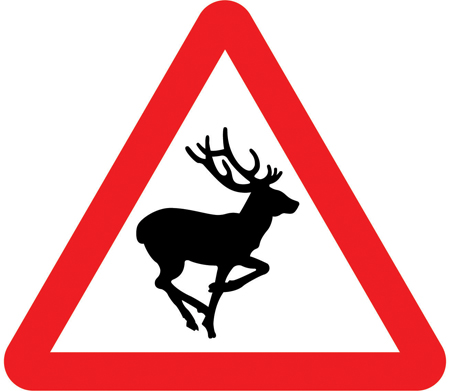 Wild animals | Deer or wildlife may enter the carriageway | Warning triangle |
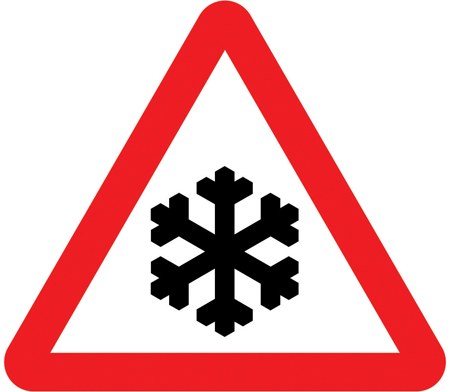 Risk of ice | Shaded or wet stretches may freeze before other road | Warning triangle |
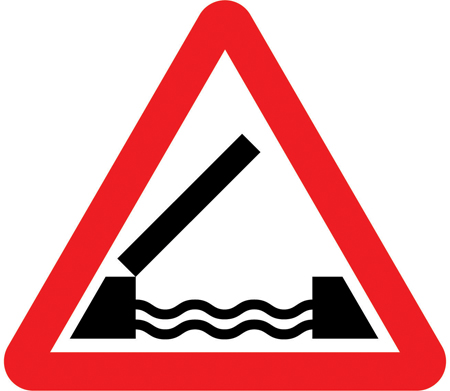 Opening bridge | Movable road deck may open for shipping | Warning triangle |
Rules and Penalties
The triangle creates no separate offence titled “ignored aircraft warning.” Police still enforce posted speed limits and careless driving when your head is turned skyward during a lane change. Dangerous driving charges follow serious loss of control, not merely witnessing a training sortie.
Using a handheld mobile to film a flypast while moving attracts the standard mobile phone penalties. Mount dashcams legally and let passengers record if the car is parked safely off the live lane.
Insurance claims after rear-end shunts in spotting queues often hinge on whether the lead driver braked for entertainment. Maintain following distances as if the hazard were a tractor, not a airshow.
Driving tests mark serious faults for failing to anticipate distraction: swerving toward verge spectators, slowing abruptly without mirrors, or blocking access for emergency farm vehicles while chasing a view.
Theory items reward calm responses: keep attention on the road, be prepared for sudden noise, do not assume aircraft will always appear. They rarely ask for military timetable detail.
Check the latest theory test pass mark and book when you are ready via our booking guide.
Low flying aircraft in Practice
On a May morning near a Snowdonia pass, Priya drives her instructor car along a national speed limit stretch she knows from holiday walks. A low flying aircraft triangle gleams on the nearside post before the road dips toward a river bend.
She mentions the hazard aloud, eases to fifty-five miles per hour, and keeps her eyes primarily on the white line while listening for engine pitch. A glider on tow crosses the valley fifty metres above the hedge; her passenger gasps, but Priya holds steering steady and checks the mirror before lifting off the throttle slightly.
Behind her, a hatchback brakes late and flashes headlights, annoyed at her calm pace. She does not accelerate to appease them; she keeps space until the straight returns and the rope tow turns away from the road.
On her theory test the following week, a picture question shows the same winged triangle beside a distance plate. She selects “be ready for aircraft crossing ahead and avoid distraction,” not “stop immediately” or “sound horn continuously.”
Months later she meets the layout at dusk on the Salisbury Plain fringe. Navigation lights flicker behind clouds, yet deer still cross at the next wild animals plate. She combines both warnings without letting either cancel the other.
How This Sign Appears on the Theory Test
Image recognition items pair the winged triangle with phrases about distraction and crossing aircraft, not about mandatory stops unless a separate order sign appears.
Scenario text may describe noise before sight; link that story to reduced attention on steering, not to speeding up to “beat” the sortie.
Multiple-choice distractors sometimes show helicopter rotors or airport blue signs. Match fixed-wing artwork to the correct warning name.
Hazard perception clips filmed near bases may include distant jets without highlighting the plate. Training your eye to expect sudden movement above the treeline still scores early clicks when traffic slows as a group.
Linked questions about Rule 148 test whether you know interior distractions and outside events share the same principle: stay focused on controlling the vehicle.
Take a free mock theory test and filter questions on road and traffic signs. Pair that with the warning signs guide for triangle symbols.
Related Road Signs
Wild animals
Deer and wildlife still cross beneath training valleys.
Risk of ice
Shaded upland bends freeze before you see wings.
Opening bridge
Another rare hazard that rewards early slowing.
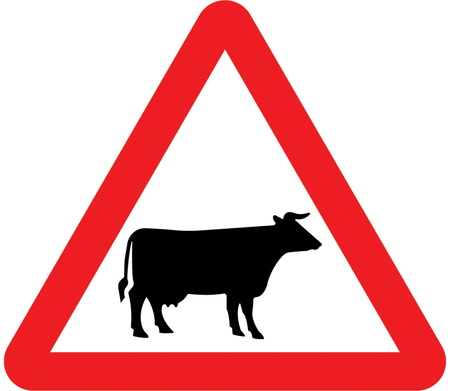
Horse riders
Equestrians spook easily when jets surprise riders.
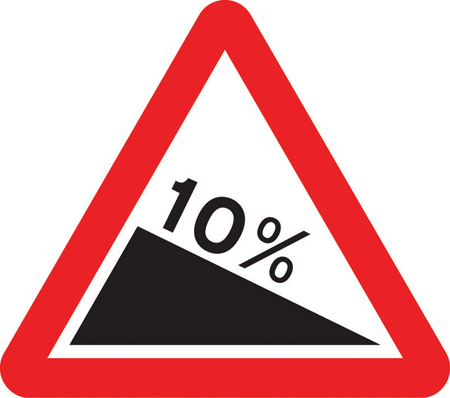
Steep hill downwards
Gradient and distraction combine on hill passes.
Test Yourself on UK Road Signs
When the winged triangle appears, treat the sky as background noise and the tarmac as your contract. A disciplined glance and steady speed keep you inside Highway Code expectations while still letting you enjoy the occasional lawful flypast safely from the driver seat.
Frequently Asked Questions
Must I stop when I see the low flying aircraft triangle?
No. The plate warns you to expect aircraft nearby. Stop only if ordinary road conditions, signals, or an obstruction require it.
How is this different from the helicopter warning?
The fixed-wing symbol shows aeroplane wings and tail. The helicopter plate uses a rotor pictogram for rotary traffic on separate routes.
Can I park to watch military training?
Use marked lay-bys fully clear of the live lane. Do not block farm access or stand on the carriageway for photographs.
Does the sign mean aircraft always fly at roof height?
Not always. Training heights vary with weather and task. The warning covers the corridor where low crossings are common enough to sign.
Will this appear on my driving theory test?
Yes, among warning sign recognition items. Learn the triangle shape and the correct response: stay focused and anticipate crossing aircraft.