
Last updated: October 2026 · Checked against Highway Code
Double Bend Right Sign: meaning, rules and what to do
Two black arrow heads on a white warning field show that the road bends right and then bends again soon after, so you must carry stable speed and steering through both arcs without relaxing too early.
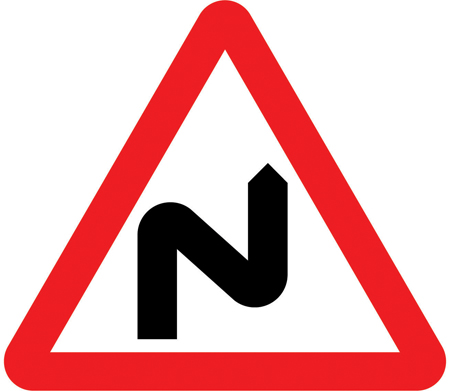

Sign image © Crown copyright, reproduced from GOV.UK traffic sign images under the Open Government Licence v3.0.
What the Double bend right Sign Looks Like
The plate is an upward-pointing triangle with a red border and white centre, matching other UK hazard warnings. The symbol shows two arrow heads in sequence: the first curves to the right, and the second continues the S-shaped story, usually with the second head turning back toward the left. Both pictograms are black on white; there is no speed number inside the triangle itself.
Engineers place the board where drivers still have room to brake in a straight line before the first radius tightens. A distance plate may sit underneath, quoting yards or metres to the start of the first bend. On moorland routes you might see the same triangle repeated after a farm entrance because joining traffic has not seen the earlier post.
Mirror the layout carefully in revision apps. The double bend left version flips both arrow heads. A single bend right triangle shows only one curve. Chevron boards on the verge are separate rectangular plates that repeat direction on very sharp corners; they complement the triangle rather than replacing it.
Advisory speed roundels sometimes appear below the triangle on notorious stretches. Those circles are recommendations, not automatic limits, unless a separate regulatory number applies on that road class. The triangle alone never replaces a circular speed limit sign.
Single bend right warns of one curve only. Double bend left starts the sequence the other way. Risk of ice and slippery road triangles may sit on the same hill road; read every plate because surface warnings stack with geometry warnings.
What the Double Bend Right Sign Means
The double bend right sign marks an S-shaped alignment where many drivers straighten the wheel after the first right curve and then run wide on the return left, or they enter the second bend too fast because the first felt easy. The plate tells you to plan for two changes of direction before you celebrate a clear view.
Rule 125 in The Highway Code ties speed to sight lines and stopping distance. On linked bends you must be able to stop on your side within what you can see clear through both curves, not only the first gap between hedges. Rain, frost, and fallen leaves shrink that margin faster than on a single open bend.
Weight transfer matters twice. Braking hard between the bends can unload the rear tyres just as you need grip for the second arc. Finish most deceleration on the straight approach, use a gear that gives engine braking on downhill pairs, and steer smoothly without jerking the wheel at the transition point.
Oncoming traffic negotiates the mirror image. If you cut the first right bend tight to the centre line, you may meet a tractor or coach on the wrong side of the crown as they exit their left curve. Hold your lane discipline through both sections and resist overtaking until the road straightens and markings allow.
Sight lines dip between the two curves on wooded hills. Pedestrians, cyclists, and horses may appear in the valley of the S where neither arm is visible from the approach. The warning buys time to lift off the throttle and scan both arcs, not only the bonnet line ahead.
HGVs and caravans need extra width on the second bend because the trailer cuts in when the road turns back. If you follow a long vehicle, hang back through both curves so you are not forced to brake on the connecting straight where your car may still be leaned over from the first turn.
Cameras and telematics on fleet vans sometimes flag harsh lateral g-force here. Fleet trainers treat the double bend right plate as a coaching marker: brake early, one input at a time, and no mobile phone glances between the arcs where a straight wheel feels tempting.
Temporary traffic management can shift the line so the first bend is sharper than before resurfacing. Treat familiar commutes as new when cones appear. Contraflows on narrow bridges occasionally pair a double-bend warning with fresh give-way lines on what used to feel like a straight crossing.
Pick a speed on the approach that still feels calm at the midpoint between the bends. If you must lift off sharply on that linking strip, you entered too fast for the pair.
Look through the first right curve toward the exit of the second. Your eyes lead the wheel; staring at the bonnet hides deer, walkers, or mud until you are already committed.
In wet weather, avoid trailing the vehicle ahead so closely that their spray hides the second arrow board on the verge. Drop back before the first triangle so you can read every plate.
Motorcyclists may counter-steer through both bends faster than you expect. Give them space rather than moving left into a drain at the second apex.
At night, use dipped headlights through both curves so oncoming drivers on the reciprocal S are not blinded on their second turn. Full beam on a left-hand section of the pair can dazzle across the valley.
Electric cars with heavy batteries still need smooth inputs; regenerative braking set to high can feel like a sudden slow between bends. Adjust one-pedal settings before hill routes with repeated warnings.
If a sat nav shows a straight line while the triangle is visible, trust the road and the sign. Minor realignments after landslips often lag on consumer maps.
When you meet wide farm machinery, use a passing place before entering the double bend rather than forcing two vehicles to share the S. Reversing around a blind second curve wastes minutes and blocks both directions.
Highway Code rules 125, 146 and 155 (speed, bends and control)
Double bend right vs Similar Signs
| Sign | Meaning | Legal or warning? |
|---|---|---|
| Double bend, first right | Two curves, opening to the right | Warning triangle |
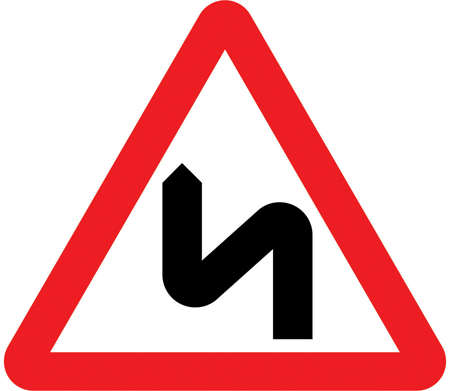 Double bend, first left | Two curves, opening to the left | Warning triangle |
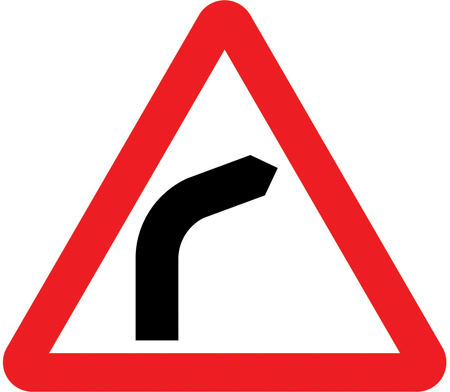 Bend to the right | Single right-hand curve | Warning triangle |
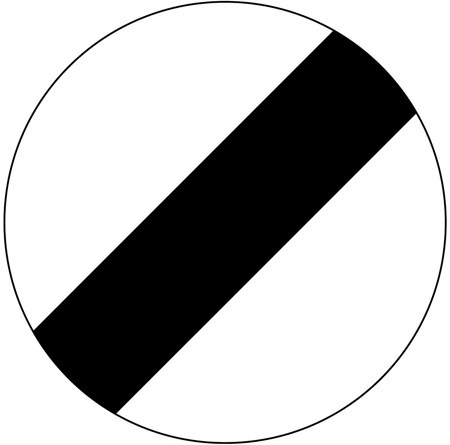 National speed limit | Default maximum on that road type | Regulatory white disc |
Rules and Penalties
Ignoring linked bends does not have its own ticket, but losing control on the second curve supports careless driving reports when speed was unsuitable for the signed geometry. Single-vehicle damage claims often note that warning triangles were present on the approach.
Crossing the centre line while straightening the S too aggressively risks a head-on crash. Courts focus on whether you stayed on your side through both arcs, not only the first.
Driving tests fail candidates who accelerate before the second bend is complete, who drift wide toward oncoming traffic, or who change gear mid-corner with a lurch that unsettles the car.
Overtaking on the short straight between two bends is a common serious fault when sight is short. Examiners expect you to hold position until the layout opens and markings permit a safe pass.
Worn tyres or incorrect pressure show up on the second bend when the car is already loaded from the first turn. Maintenance remains your responsibility even when the hazard is signed.
Check the latest theory test pass mark and book when you are ready via our booking guide.
Double bend right in Practice
Jon commutes over a ridge where a double bend right triangle sits with a plate reading 200 yards. He checks mirrors, eases from fourth to third, and finishes braking while the road is still straight.
Through the first right curve he keeps left in his lane as a coach approaches on the reciprocal bend. On the brief straight he holds steady throttle instead of accelerating, because the second left-hand arc tightens behind a stone wall.
A cyclist appears on the exit of the second bend. Jon’s earlier patience leaves room to wait until the road opens, then pass with a full metre of clearance. He never needed to brake hard on the linking section.
On his theory test he sees the two-arrow triangle and picks “slow for two bends in succession, first to the right”. He rejects an answer about mandatory direction because the plate is a warning, not a blue circle.
During a driving test the same pair is damp after rain. The examiner notes that Jon completes both curves without crossing centre markings or coasting in neutral. The signed geometry matches what The Highway Code expects on rural B-roads.
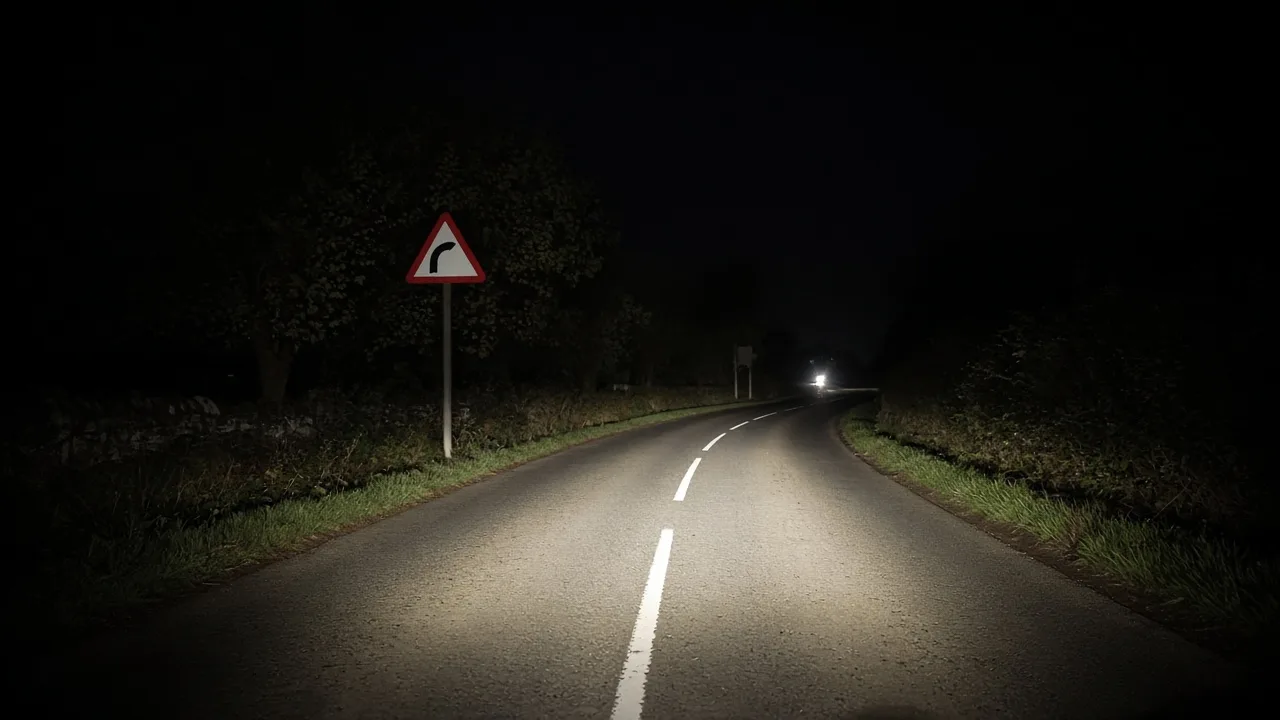
How This Sign Appears on the Theory Test
Image questions show two arrow heads inside a red triangle. Read the direction of the first curve carefully because “double bend right” means the opening bend is to the right, not that both bends turn the same way.
Contrast with single bend plates, which show one arrow only. Double-bend items often appear next to questions about maintaining speed through linked curves.
Scenario text may describe a national speed limit after the S. The correct attitude is to drive within the limit when safe, yet always be able to stop in the distance you can see clear on your side through both bends.
Hazard perception clips on hill roads reward early reaction when a car drifts wide on the second curve. Knowing that double-bend triangles precede those sequences helps you anticipate loss of control before the clip peaks.
Classification questions ask whether the plate is warning or regulatory. The double bend right symbol is always a warning triangle in DVSA materials, not an order to turn.
Some items pair the sign with slippery road or steep hill warnings. Choose answers that mention adjusting speed for combined hazards, not stopping unless another sign requires it.
Take a free mock theory test and filter questions on road and traffic signs. Pair that with the warning signs guide for triangle symbols.
Related Road Signs
Test Yourself on UK Road Signs
Use the double bend right warning as a two-part plan: settle speed before the first curve, then stay disciplined through the second. Drivers who treat the pair as one hazard keep grip and sight lines for whatever hides in the middle of the S.
Frequently Asked Questions
What does the double bend right warning triangle mean?
Two bends follow in quick succession, with the first curving to the right. Slow on the approach and be ready for a second change of direction before the road straightens.
How is it different from a single bend right sign?
The single plate shows one arrow head. The double version shows two heads in sequence, warning that another curve comes soon after the first.
Should I accelerate between the two bends?
Only if the linking section is straight enough and you can see the second curve is clear. Many drivers crash by speeding up too early; hold a steady pace until both arcs are behind you.
Does this sign set a speed limit?
No. It describes geometry. Obey posted limits and drive below them when grip or visibility is poor through both bends.
Will this appear on the UK driving theory test?
Yes. Picture items use the two-arrow triangle. Learn that the first arrow direction tells you which way the opening bend turns.