
Last updated: October 2026 · Checked against Highway Code
Soft Verges Sign: meaning, rules and what to do
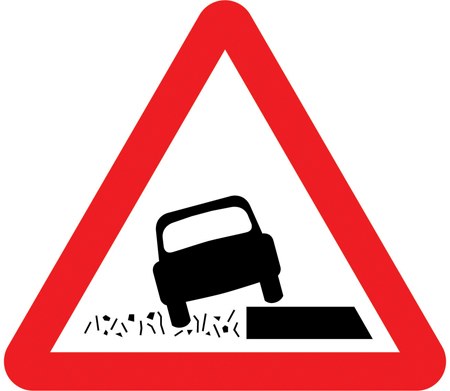
The UK soft verges warning is a red-bordered triangle with a black pictogram of a car whose nearside wheels are dropping into crumbling ground at the edge of the lane, telling you the verge may not support your tyres so you should stay on the metalled surface and avoid nudging wide for oncoming traffic.
Sign image © Crown copyright, reproduced from GOV.UK traffic sign images under the Open Government Licence v3.0.
What the Soft verges Sign Looks Like
The official UK design follows standard warning grammar: upright equilateral triangle, thick red border, white centre, and a black side-view car with the nearside wheels sinking into a stepped verge profile. The graphic is about edge support, not aquaplaning, not a hump bridge, and not a prohibition. Numbers, blue circles, and red-ring orders never appear inside this frame.
Engineers mount the board where maintenance records show repeated verge collapse: peat edges on Dartmoor lanes, sandy banks beside East Anglian drains, clay cuttings after wet winters, and freshly reinstated shoulders that have not yet bound. A distance plate in yards or metres may sit beneath on faster approaches so you can cancel cruise control before the lane pinches.
Repeaters sometimes appear after a farm gateway so traffic joining from a field still sees the same message. Retroreflective sheeting keeps the red rim readable in dipped headlights when the white edge line has worn away and you are judging width by feel rather than paint.
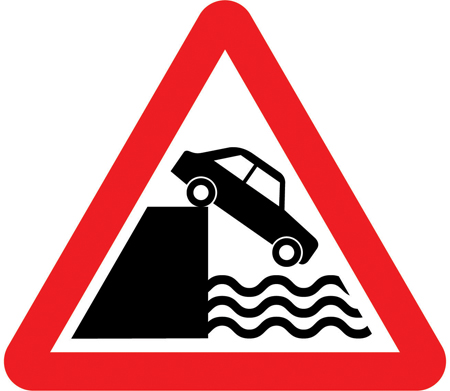
Learners often confuse it with the quayside triangle, which warns of an unprotected drop to water rather than soft soil. Uneven road shows a wavy baseline under all four wheels for rippled tarmac. Road narrows plates talk about width from both sides without mentioning verge strength. Read the black symbol: sinking wheels at the nearside edge mean weak verges ahead.
Temporary cones may hide the post during ditch clearing, yet the permanent triangle often stays because the underlying drainage problem returns each spring. If a diversion sends you onto an unfamiliar parish road, any repeated warning still counts even when sat nav optimism suggests a smooth shortcut.
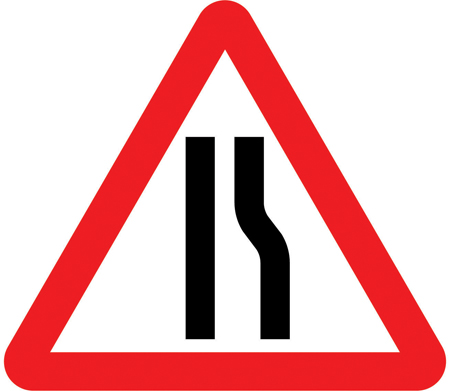
Quayside warnings flag sudden drops beside harbours and rivers. Ford and flood plates deal with water on the carriageway itself. Road narrows describes geometry, not whether the grass can hold weight. When chevrons, two-way traffic repeaters, or passing-place signs appear together, read them as one story: narrow lane, weak edges, and little room to recover if a wheel slides off the metalled band.
What the Soft Verges Sign Means
Highway authorities install the warning where the carriageway is supported but the adjoining verge is not. That mismatch is common on rural single track roads built decades ago with narrow tar strips and generous grass margins that tractors once used as unofficial extra width. The plate does not create a new offence; it supports the general duty in The Highway Code to drive at a speed that lets you stop within the distance you can see to be clear and to keep your vehicle under control.
Rule 125 reminds you that speed limits are maximums, not targets. On a lane where meeting traffic means someone must wait, the safe pace may be walking speed long before you reach the legal limit because a half-metre error can plant a wheel in mush. The triangle buys time to plan passing places rather than improvising with two wheels on soil.
Verge failure is often invisible until you feel it. Dry summer grass can hide a void where a badger sett or collapsed culvert undermined the edge. After heavy rain the same strip turns to paste that grips like glue until it suddenly lets go, pulling the nose toward the ditch. The warning marks stretches where that pattern is recorded, not every muddy margin in the county.
Lane position is the practical lesson. Hugging the centre feels fair when you fear the nearside drop, yet it intimidates oncoming drivers and cyclists who expect left-side discipline. Hugging the left edge saves crown space but invites a buried nearside wheel if the tarmac is only three metres wide. A balanced track on the metalled surface, with mirrors glanced often, beats heroic extremes.
Passing places are part of the behaviour the sign implies. On many Scottish and Welsh routes the triangle precedes sequences where only one vehicle can occupy a bay at a time. Reversing into a firm pocket is safer than edging two abreast with outer wheels on turf. If you are unsure which bay is forward, stop early and let the other driver commit while you still have tarmac under all four tyres.
HGVs and buses rarely use the smallest lanes, but delivery vans and camper vans do. Long overhangs and wide mirrors tempt drivers to straddle the edge to clear a wall or hedge. One soft nearside rear wheel can list the van toward the ditch and block the lane for hours. The pictogram is as much for commercial drivers as for learners in superminis.
Motorcyclists and cyclists suffer when car drivers dive onto crumbling edges to pass. Rule 213 expects you to give vulnerable road users room; on signed soft verges that means slowing and waiting for a proper bay instead of forcing a squeeze with your offside wheels still on tar and theirs in gravel that may not be solid.
Electric cars are heavy on their tyres. Quiet torque can carry you faster than feels wise on a lane that suddenly shelves away. Regeneration and one-pedal modes do not shorten the distance needed to straighten the car if the nearside drops. Use the triangle as a cue to check speed even when the cabin feels calm.
Night driving hides texture. Dipped beams show the edge late; the red flash of the triangle may be the first reliable clue on an unfamiliar route. Keep thumbs outside the steering wheel rim so a sudden pull toward the ditch does not wrench your wrists if one wheel catches soft fill.
Stopping for photographs, picnics, or phone calls on a signed weak verge risks getting stuck even when traffic is light. Rule 243 discourages stopping where you would obstruct or endanger others; here the extra twist is that your own car may become the obstruction once sunk. Choose a firm gateway or a marked lay-by beyond the signed length when you must halt.
You meet this plate on Highland single tracks, Cornish hedge lanes, Somerset levels roads with raised tar ribbons, and anywhere winter ploughs have nibbled the edge until only a narrow band remains. Holiday drivers in hire cars benefit from the same early lift off the throttle that locals use when meeting milk tankers.
Before a meet, identify the next firm passing place by scanning ahead for widened gravel or signed bays. If none appears, be ready to reverse to the last pocket rather than edging both vehicles half on turf.
When walking the lane is impossible, a tractor may dominate the crown. Wait where your tyres are entirely on tar and your mirrors fold in if needed. Flashing headlights do not grant right of way on soft edges.
After frost, frozen verges can feel firm until midday thaw turns them to porridge. A triangle that seemed overcautious at dawn may feel accurate by teatime when delivery vans have carved ruts.
Towing adds width and pitch. A caravan wheel that drops an inch on mush can snake the outfit even when the car still grips. Find a bay and let oncoming traffic pass before you commit beside a wall.
Report fresh collapse to the highway authority with a map pin and photo from the carriageway, not from inside the ditch. Repeat failures justify edge staking, geotextile, or one-way flow during repair.
Sat navs optimise for distance, not verge strength. When the red triangle appears, trust road furniture over an optimistic arrival time, especially on scenic diversions during roadworks.
If you must allow an emergency vehicle through, pull forward onto known firm tar in a bay rather than climbing the nearside to create a gap. Soft ground delays everyone when the ambulance is past but you are not.
Highway Code rules 122 to 125, 213 and 243 (control, speed, vulnerable road users and stopping)
Soft verges vs Similar Signs
| Sign | Meaning | Legal or warning? |
|---|---|---|
| Soft verges | Verge edges may not support wheels; stay on the carriageway | Warning triangle |
 Quayside or river bank | Unprotected drop to water close beside the road | Warning triangle |
 Road narrows | Width reduces; less room for two vehicles to pass | Warning triangle |
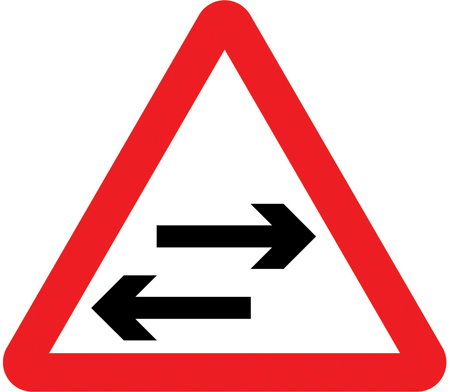 Two-way traffic | Oncoming flow on a route that may feel like one lane | Warning triangle |
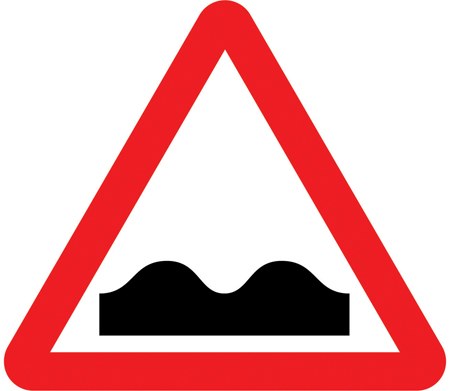 Uneven road | Rough or ridged carriageway surface ahead | Warning triangle |
Rules and Penalties
There is no fixed penalty for passing a soft verges warning because it is advisory. Enforcement instead targets careless or dangerous driving if speed, lane position, or loss of control contributes to a crash or obstruction after a wheel left the metalled surface.
Blocking a narrow lane while a recovery truck winches you from a ditch can attract attention for unnecessary obstruction, especially if passing places were available earlier. Insurers may dispute claims where ignoring obvious weak edges made the vehicle unrecoverable without specialist kit.
Damaging verges, hedges, or drainage ditches may lead to civil claims from landowners even when no motoring offence is charged. National park and common land routes carry extra sensitivity; ruts you cut today channel tomorrow’s rain onto the carriageway.
Driving tests on rural routes mark serious faults for mounting soft verges to rush past oncoming traffic, reversing unpredictably because the nearside dropped, or failing to use passing places when the examiner expects courteous sharing. Early speed reduction and calm steering score better than heroic inches gained on grass.
Theory items test recognition and safe response rather than fines. Expect the sinking-wheel pictogram paired with keep on the carriageway or weak verges ahead, and reject answers that describe ford depth, ice risk, or quayside drops unless the artwork matches.
Check the latest theory test pass mark and book when you are ready via our booking guide.
Soft verges in Practice
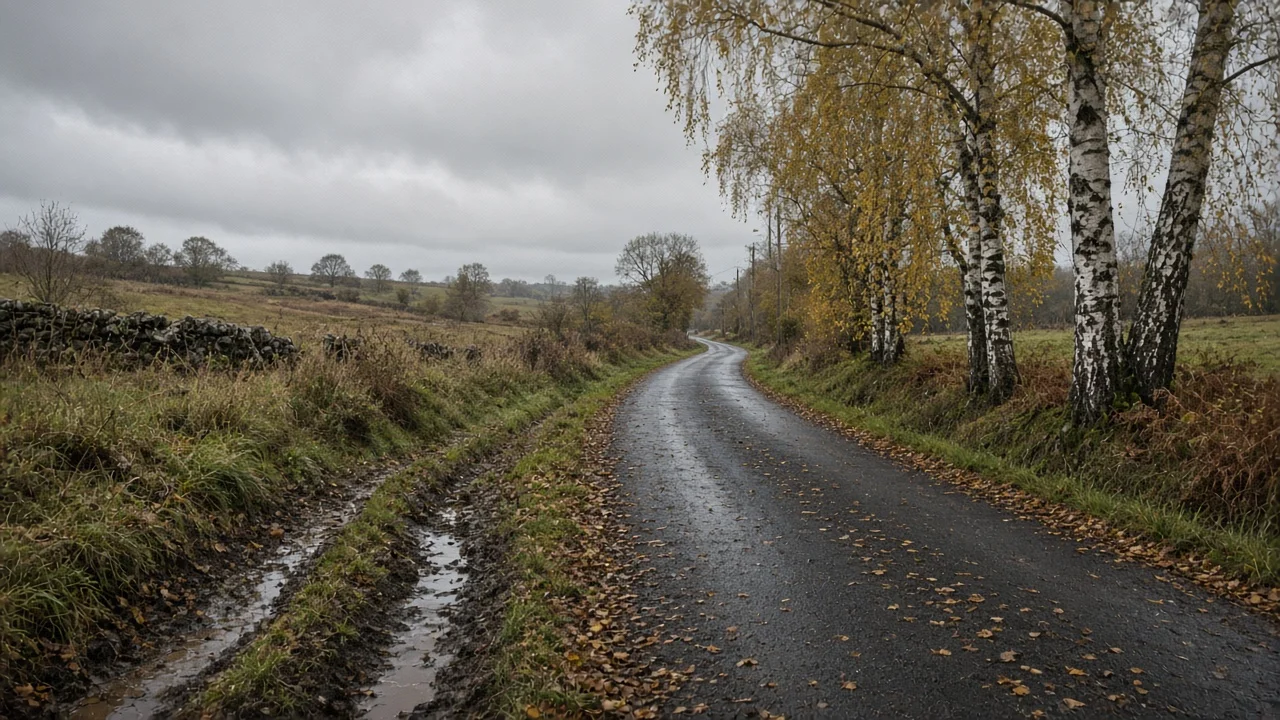
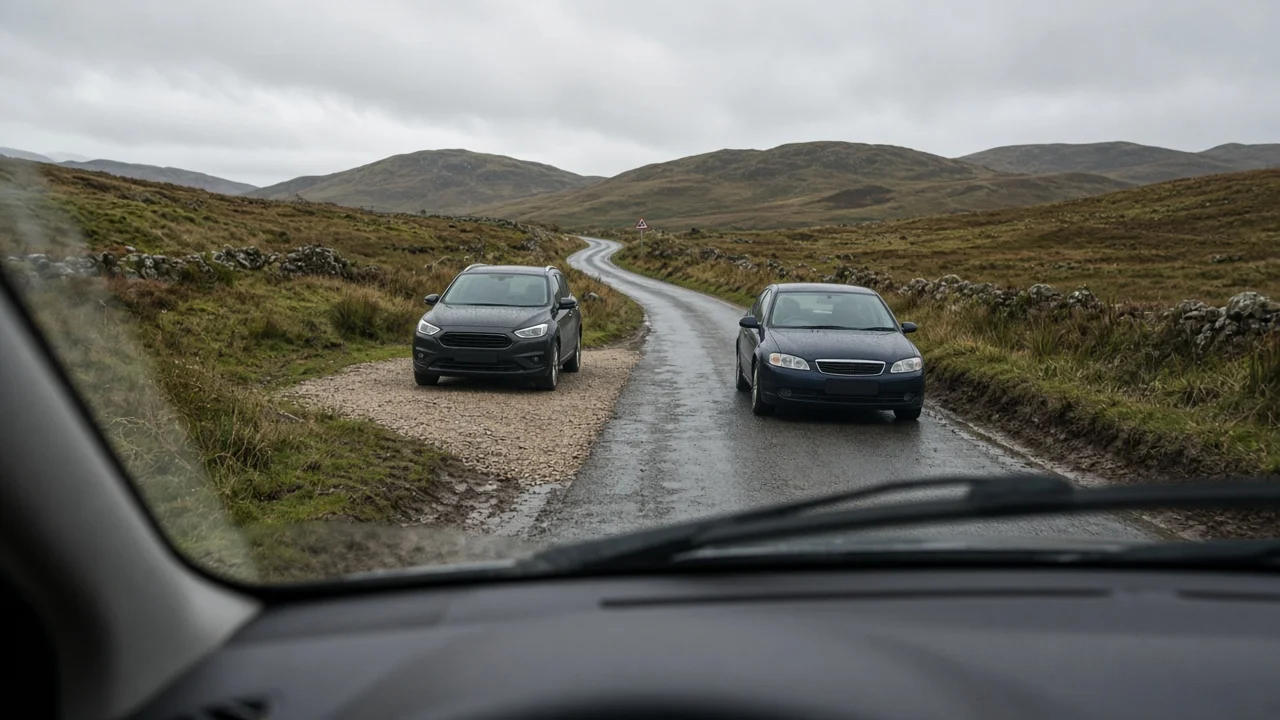
Jon drives a family SUV along a Perthshire single track during a wet October half term. A soft verges triangle with a plate reading three hundred yards appears where the tar strip narrows between birch trees, the nearside edge dark with tyre scars in the grass.
He cancels adaptive cruise, checks mirrors for a camper van behind, and lets speed fall toward fifteen miles per hour while the surface still feels generous. Ahead, a red estate approaches with its nearside wheels close to the crumbled lip.
Jon spots a passing place on his left with a firm gravel base. He pulls in fully, stops with all wheels on the pocket, and waits. The estate passes with both vehicles still on metalled or packed surfaces, mirrors clearing by a hand’s width.
Further on, a walker steps from a gate on the soft side. Jon holds his line on the crown rather than swerving onto turf that shows fresh ruts. The camper behind mirrors his pace without sounding the horn.
On his theory test the following month, the sinking-wheel pictogram appears among four answers. He selects weak verges or keep wheels on the carriageway wording, rejecting quayside and ford options because the artwork shows soil collapse, not water.
During a driving lesson on a different county lane, his instructor asks how the plate differs from road narrows. Jon explains that narrows describes width closing in, while soft verges warns that the remaining grass may not carry weight even if two cars could theoretically squeeze past.
That evening he checks tyre sidewalls in the driveway because one jolt felt like a hidden edge drop. No damage appears, but he logs the location on the council website so maintenance teams see another report beside the signed length.
How This Sign Appears on the Theory Test
Picture questions show the car with nearside wheels sinking and ask what hazard to expect. Choose soft or weak verges ahead and keep on the carriageway, not quayside, ford, or uneven road unless the symbol matches.
Some stems add narrow-road context. The safe pattern is slow, hold position on the tar, and use passing places; reject answers that tell you to mount the verge to help oncoming traffic or to park on the edge for photos.
Compare artwork carefully: quayside plates show water and a crumbling rim; uneven road uses a wavy line under all wheels. Examiners swap triangles to test whether you read the pictogram rather than memorising one generic countryside hazard.
Hazard perception clips on rural routes reward early easing when oncoming headlights approach on a ribbon of tar with dark margins, even if the post is off-screen. Late swerves onto grass score poorly because recovery time vanished.
When revising warning triangles, sketch the sinking-wheel car inside a frame and label it beside quayside and narrows symbols. Car, motorcycle, HGV, and PCV banks reuse the same pictogram with identical correct wording.
Take a free mock theory test and filter questions on road and traffic signs. Pair that with the warning signs guide for triangle symbols.
Related Road Signs
Road narrows
Width pinch points where soft edges leave no room to recover.
Two-way traffic
Oncoming flow on lanes too narrow for careless verge use.
Uneven road
Rough metalled surface where wheels bounce but may still grip.
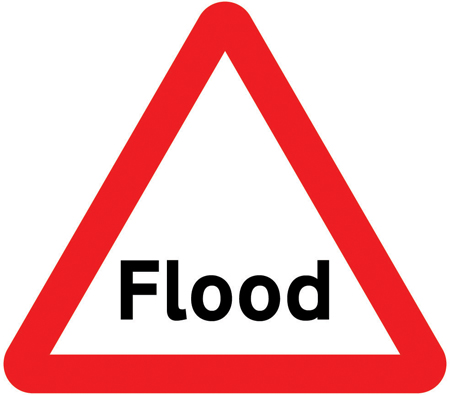
Flood
Standing water on the carriageway rather than weak soil at the side.
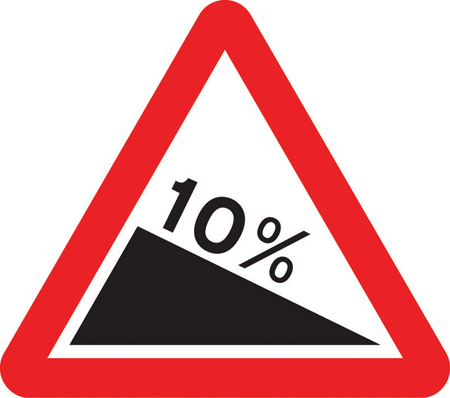
Steep hill down
Descents where gravity pushes you toward ditches on tight bends.
Test Yourself on UK Road Signs
Let the soft verges warning shape how you share narrow lanes: stay on the metalled band, slow before meets, and treat passing places as part of the route plan rather than an afterthought. Calm positioning keeps you inside Highway Code expectations and gives examiners fewer reasons to mark a serious fault when rural test routes tighten. A free mock theory test helps you practise warning triangles before the exam swaps artwork.
Frequently Asked Questions
What should I do when I see the soft verges warning?
Ease off speed, keep all wheels on the carriageway where possible, and plan passing places before you meet oncoming traffic. The triangle warns that the edge may not support tyres; it does not set a numeric limit.
How is it different from the quayside sign?
Quayside warns of an unprotected drop to water beside the road. Soft verges warns that soil or grass at the edge may collapse under a wheel even when no open water is visible.
May I pull onto the verge at a passing place?
Use only firm, marked, or obviously compacted bays. If the grass looks rutted, soggy, or stepped away from the tar, stay forward on the metalled pocket or reverse to a better spot rather than risking a sunk wheel.
Does the warning mean the road is one-way?
No. Traffic remains two-way unless other signs say otherwise. The plate highlights weak edges on a shared narrow lane, not a change in priority or direction.
Will this appear on my theory test?
Yes. Warning triangles are core knowledge. Expect image questions linking the sinking-wheel pictogram to weak verges ahead and keeping on the carriageway.