
Last updated: October 2026 · Checked against Highway Code
Deafblind Pedestrians Sign: meaning, rules and what to do
The UK deafblind pedestrians sign is a red-bordered warning triangle that tells you people with combined sight and hearing loss may step into the road nearby, often with a guide or assistance dog, so you must slow early, avoid revving or honking to hurry them, and give them time to judge traffic they cannot fully see or hear.
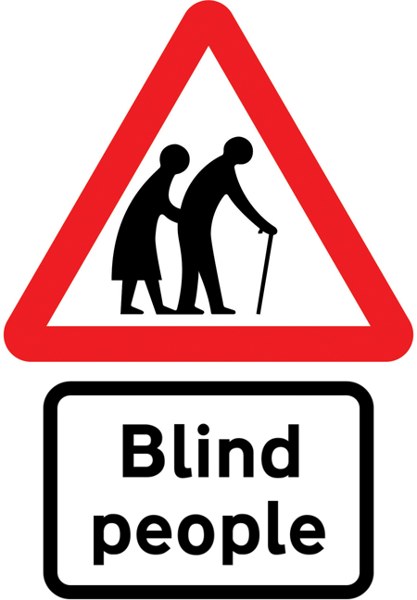
Sign image © Crown copyright, reproduced from GOV.UK traffic sign images under the Open Government Licence v3.0.
What the Deafblind pedestrians Sign Looks Like
The official GOV.UK plate is a standard UK warning triangle: thick red border, white centre field, and a black pictogram of two walking figures. Artwork revisions vary slightly, but the pairing is meant to read as a deafblind pedestrian warning rather than a generic school plate: one figure is often shown with a white cane, a harness line, or a companion guide, signalling combined sight and hearing loss rather than pupils on a school run.
Unlike zebra or pelican advance signs, there are no stripes, Belisha beacons, or traffic-light symbols. Unlike the children going to or from school triangle, the silhouettes are not sized as a tall adult with two small pupils and satchels. Unlike the plain pedestrians in road plate, the graphic emphasises assisted crossing rather than walkers sharing a lane without pavements.
Councils mount the board on approaches to tactile crossing points, near deafblind charity premises, rehabilitation centres, and housing schemes where residents use guide dogs or human guides daily. You may see one triangle on the nearside verge or paired boards bracketing a short stretch. A distance plate underneath sometimes quotes metres to the crossing.
Temporary versions on plastic stands can appear during open days or roadworks that reroute foot traffic. The symbol stays the same. Treat every mounting as live information, including on routes you commute when your attention drifts.
At night the retroreflective border glows while fine black detail can vanish until your beam strikes the board squarely. Rain, mist, and low sun behind the sign flatten contrast. If you know the road, the triangle still matters on the journey home when you stop actively hunting for hazards.
Highway authorities choose the deafblind pedestrians plate where mapping shows regular crossings by people with dual sensory loss. Frail pedestrians likely to cross warnings target slower elderly walkers. School triangles highlight pupils. Zebra and puffin advance signs describe formal crossings with markings. All share triangle grammar; the black symbol tells you which group needs patience, not a blast of horn.
What the Deafblind Pedestrians Sign Means
Deafblind people experience the road differently from sighted hearing pedestrians. Some use a white cane, a guide dog, both, or a sighted guide. They may rely on touch, vibration, and trained routines at specific crossing points. The warning triangle marks where those routines intersect your line of travel often enough that engineers asked for a permanent reminder.
Rule 205 in The Highway Code tells drivers to watch out for pedestrians and to drive slowly when you see a warning about vulnerable road users. Rule 206 adds that people who are deaf or blind may not be aware of your vehicle. Rule 170 sets the baseline when someone is already crossing: give way if they have started, and do not behave in a way that pressures them to hurry.
Sound and sight cues you take for granted do not reach every road user equally. Indicators clicking, tyre noise on wet tarmac, and a friendly beep from a locked car can be useless information. A smooth, predictable approach at low speed gives time for a guide to listen and look on their behalf, or for a deafblind person to feel traffic through a cane tip or harness tension.
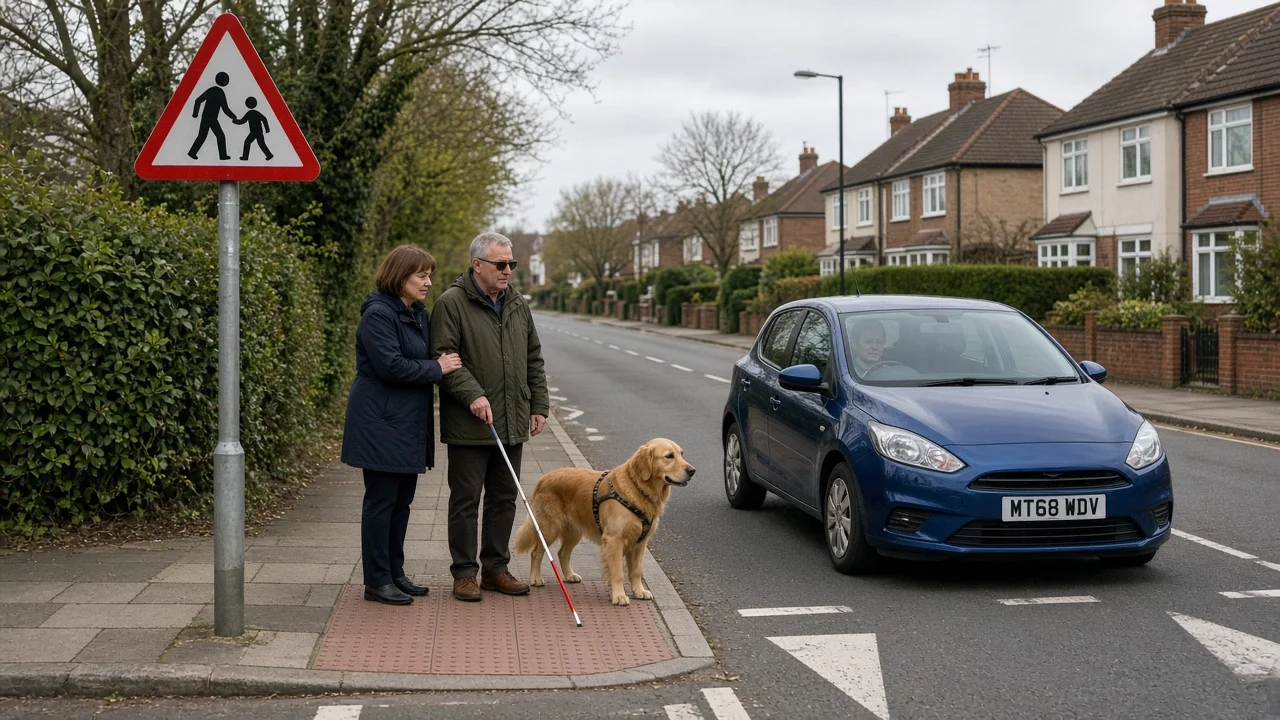
Guide dogs and assistance dogs are working animals, not pets on a stroll. Rule 57 reminds you not to distract them. Revving, edging forward, or allowing a passenger to call out of the window can break concentration at the worst moment. Wait in silence with wheels straight until the whole team, human and dog, is clear of your path.
The sign does not create a formal zebra crossing by itself. Priority still follows normal crossing law: if a pedestrian has stepped into the road and you can stop safely, you must not run them down to save thirty seconds. Near tactile paving and rotated kerbs, assume the crossing is deliberate infrastructure, not a shortcut across paint.
Electric and hybrid cars at crawling speed are almost silent. That helps urban noise at night, yet it removes the engine note deafblind pedestrians might have learned to detect on older streets. Extra mirror checks and a wider passing gap matter more than asserting that you had the right of way on paper.
Rule 146 expects a speed that lets you stop within the distance you can see to be clear. On a signed deafblind crossing approach, that distance must include someone reversing a mobility scooter onto the carriageway, a guide pausing to reorient after a blocked pavement, or a dog sitting to refuse an unsafe gap. A national speed limit repeater downstream does not cancel that duty.
Parking on dropped kerbs or tactile paving can force crossings into the live lane. As a moving driver you adapt to the layout the community uses daily. Civil enforcement on pavements may target stationary cars, yet your responsibility is to pass only when you can leave generous clearance.
Northern Ireland uses the same warning triangle family on public roads, with The Highway Code (Northern Ireland) mirroring vulnerable pedestrian advice. If you drive in Belfast or Derry after studying GB materials, apply the same slow, patient approach at assisted crossings rather than assuming different symbology.
You most often meet this plate near tactile crossings outside sensory support centres, on distributor roads linking residential care schemes to shops, and on rebuilt junctions where councils installed rotating kerbs and audible signals for long-term residents.
Driving instructors on urban test routes may pass signed approaches without naming the plate aloud, yet examiners still note whether you adjust speed before vulnerable pedestrians enter your lane. A test is less about reciting catalogue numbers and more about proving calm gap selection.
Bus stops and delivery bays beside signed crossings create blind spots. A guide dog may step out from behind a parked van while your windscreen pillar still looks clear. Hold back until you can see the full width of the crossing.
Cyclists filtering past queues must expect assisted crossings to take longer than a confident jogger. If you ride, slow to walking pace through signed stretches and avoid passing between a guide and their partner.
Rain hoods, umbrellas, and winter scarves change profiles. Do not assume a silhouetted figure on the sign matches every real crossing on the ground. Behaviour matters more than clothing: slow early, wait generously.
Residents sometimes campaign for extra lighting after near misses. Reporting broken lamps near the board helps maintenance teams prioritise posts that vulnerable pedestrians rely on after dusk.
Highway Code rules 146, 170, 205 and 206 (vulnerable pedestrians)
Deafblind pedestrians vs Similar Signs
| Sign | Meaning | Legal or warning? |
|---|---|---|
| Deafblind pedestrians | People with sight and hearing loss may cross; give time and space | Warning triangle |
 Frail pedestrians likely to cross | Elderly or disabled pedestrians may cross slowly | Warning triangle |
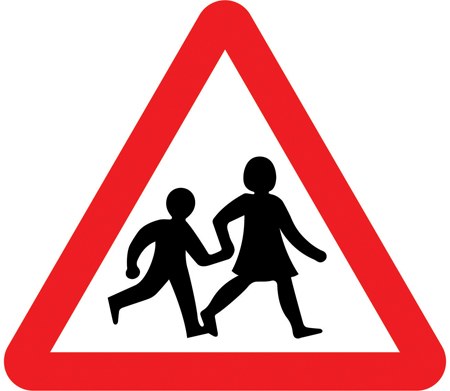 Children going to or from school | Child pedestrians likely near schools | Warning triangle |
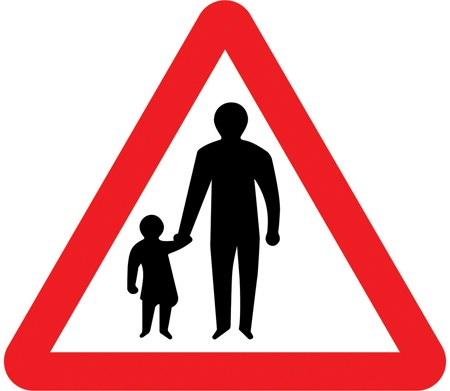 Pedestrians in road | People may walk on the carriageway ahead | Warning triangle |
 Zebra crossing ahead | Formal crossing with give-way duty when pedestrians wait | Warning triangle |
Rules and Penalties
The deafblind pedestrians triangle does not print a numeric limit on the post. Speeding past a separate limit sign still attracts standard fines and points. Driving at an unsafe speed for assisted crossings can support careless driving charges if evidence shows you could not stop in time.
Close passes that clip a cane, startle a guide dog, or force someone to stumble can be investigated as careless or even dangerous driving when injury results. Civil claims for personal injury follow the same facts insurers use: could you have slowed earlier once the warning was visible?
Using a handheld mobile while approaching a crossing merges two offence categories. The sign gives you no exemption from attention rules.
Theory tests rarely quote fines for this plate. They ask what you should do when vulnerable pedestrians cross: slow, be ready to stop, and avoid intimidating horn use.
Failing to stop for a pedestrian who has committed to a crossing can attract the same scrutiny as ignoring a zebra, even when Belisha beacons are absent. Patience is cheaper than arguing after a bump.
Check the latest theory test pass mark and book when you are ready via our booking guide.
Deafblind pedestrians in Practice
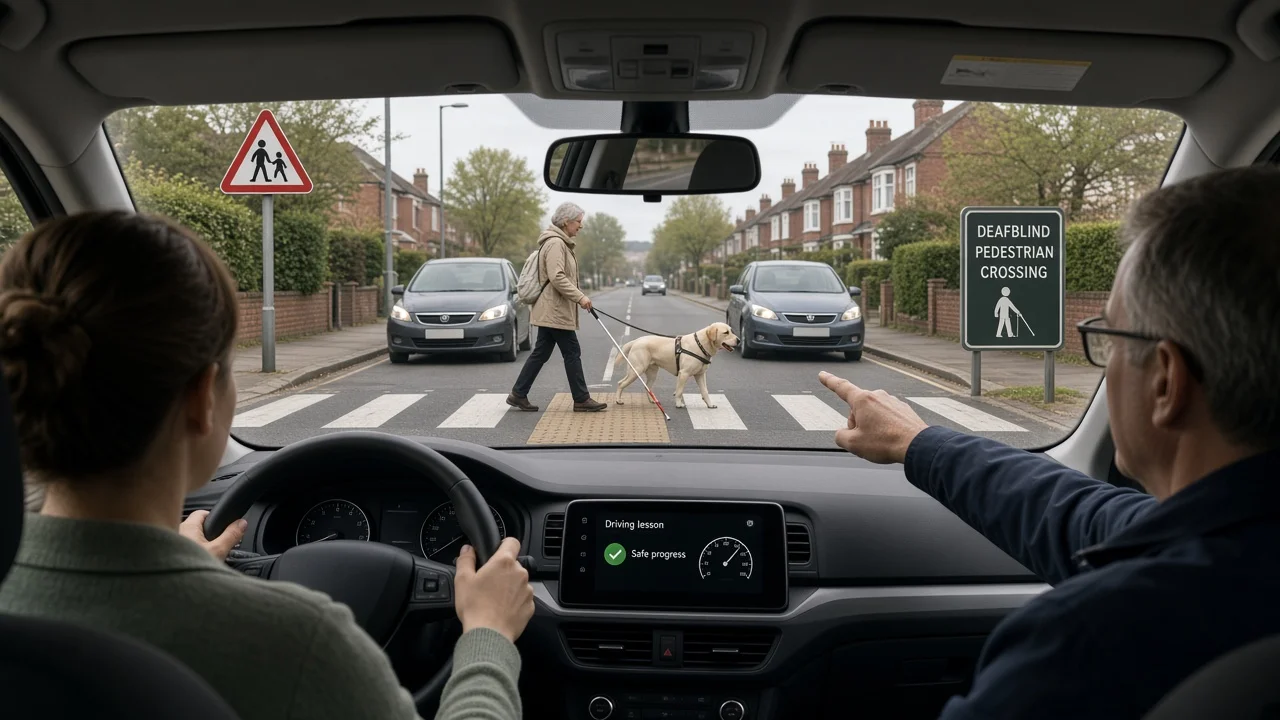
On a bright but windy morning in Leeds, Aisha drives to work along a road she usually treats as thirty miles per hour. A red triangle with two black figures catches her eye before a tactile paving band spans the nearside lane.
She checks her mirror, eases to fifteen miles per hour, and stops well short of the dropped kerb. A woman with a white cane and a guide dog steps off the pavement while a sighted companion checks over the roof line of a parked delivery van. Aisha holds position without revving. The dog sits, then moves when the companion taps the harness.
A hatchback behind her hoots once. Aisha ignores it because the crossing team needs another four seconds to square up on the far tactile strip. When the pavement is clear, she pulls away smoothly without surging. The warning primed her before the cane entered the lane; that is exactly why the council mounted the post outside the support centre.
How This Sign Appears on the Theory Test
Multiple-choice items show assisted pedestrian triangles and ask how to respond. Correct answers favour reduced speed and readiness to stop, not accelerating to clear the crossing before someone steps out.
Picture questions may swap in school children or zebra artwork. Identify the deafblind pedestrian pairing before applying vulnerable user rules from the Highway Code.
Hazard perception clips on urban streets reward early slowing when figures appear near tactile paving or guide dogs pause at the kerb. Late braking after someone is mid-lane scores poorly.
Filter revision on warning signs in the car theory test, then reread rules on pedestrians who are deaf or blind. Reject options that suggest honking to announce your presence.
Remember the car theory test uses fifty multiple-choice questions with forty-three correct answers needed to pass in fifty-seven minutes. Sign recognition is only part of the paper; attitude questions still expect patience at crossings.
Pair this plate with hazard perception practice on the same site: clips often punish aggressive overtakes near crossings even when no triangle is visible on screen.
Take a free mock theory test and filter questions on road and traffic signs. Pair that with the warning signs guide for triangle symbols.
Related Road Signs
School warning sign
Pupil movement near gates; do not confuse with assisted crossings.
Pedestrians in road
Walkers sharing the carriageway where pavements are missing.
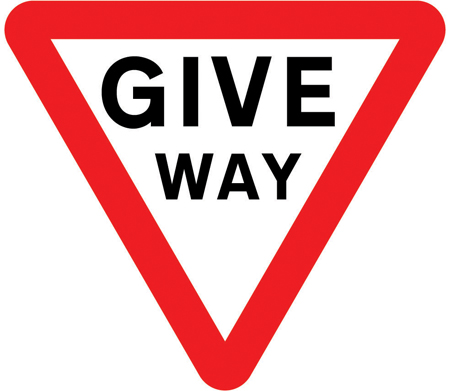
Give way sign
Side roads joining routes with tactile crossings.
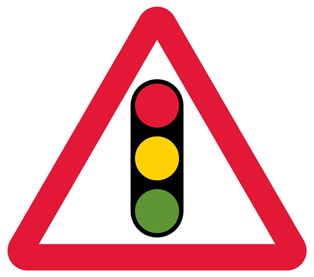
Traffic signals ahead
Junctions where puffin crossings may include audible signals.

Urban clearway
Stopping bans that keep crossing mouths visible.
Test Yourself on UK Road Signs
Treat this warning triangle as a promise that someone may cross without hearing your approach or seeing your mirror signal. Slow before the tactile paving, wait without pressuring horn or engine note, and give guide dogs room to work. Revise the full warning family on our warning signs hub, then run a free mock theory test so you recognise assisted pedestrian plates when exam artwork shuffles symbols.
Frequently Asked Questions
What does the deafblind pedestrians sign mean?
It warns that people with combined sight and hearing loss may cross the road ahead, often with a guide or assistance dog. Reduce speed, be prepared to stop, and give them time to complete the crossing safely.
Should I sound my horn so deafblind pedestrians know I am there?
No. Horn blasts can startle guide dogs and companions without helping someone who cannot rely on sound alone. Use slow, steady speed and visible gap instead of noise.
How is this plate different from the school warning sign?
The school triangle highlights children near education sites. The deafblind pedestrians warning targets people with dual sensory loss who may use canes, guides, or assistance dogs, not term-time pupil traffic.
Does this sign create a zebra crossing?
Not by itself. It is a warning only. You must still give way when pedestrians have started crossing and drive at a speed that lets you stop safely, especially near tactile paving.
Will I get points for driving too fast past this sign?
There is no separate points tariff for ignoring the triangle alone. You can still face speeding penalties on limit signs, or careless driving allegations if your speed was clearly unsafe for vulnerable pedestrians at the crossing.