
Last updated: October 2026 · Checked against Highway Code
Turn Left Ahead Sign: meaning, rules and what to do
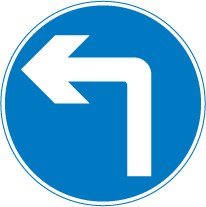
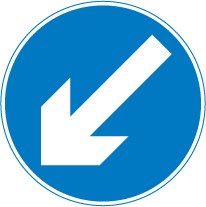
The official plate is a blue circle with a white border and a white arrow that rises then bends to the left, ordering every vehicle facing the sign to leave the main route by turning left at the junction or exit ahead.
Sign image © Crown copyright, reproduced from GOV.UK traffic sign images under the Open Government Licence v3.0.
What the Turn left ahead Sign Looks Like
The regulatory disc belongs to the UK mandatory blue family: deep blue fill, crisp white rim, and one white arrow symbol. On this plate the shaft climbs from the base of the circle and the head points left, telling you the only lawful exit from your approach is a left turn at the junction ahead.
Uprights appear on suburban distributor roads where councils want through traffic to stay on the primary link while local traffic peels off toward a neighbourhood centre, park-and-ride, or industrial estate. You will often see the circle beside a splitter island, on a nearside post before hatched markings, or repeated for traffic joining from a bus lay-by.
Learners swap it mentally with the barred left arrow inside a red ring, which forbids a left turn rather than requiring one. They also mix it with keep left mandatory circles that route you past a refuge, with side-road-left warning triangles that only describe geometry, and with painted-only filter arrows that should match the plate but do not replace it when the upright symbol is clear.
Mandatory direction blues tell you what you must do. Red prohibition circles tell you what you cannot do. Warning triangles describe layout or hazard without ordering a manoeuvre. When you revise, contrast this pictogram with no left turn, ahead-only layouts, and roundabout mandatory discs so pictogram swaps in the theory test do not trap you.
What the Turn Left Ahead Sign Means
Highway authorities use the order on distributor roads where straight-ahead traffic should remain on a classified route while left-turning traffic feeds a local network, retail frontage, or station forecourt. Without the plate, drivers often carry straight on by habit and then block side streets or cross bus gates illegally.
Rule 143 in The Highway Code treats circular signs as orders. Driving past the filter while intending to go straight is failing to comply with a traffic sign, not a casual lane choice. That distinction feeds fixed penalties when enforcement cameras cover the junction, and it shapes insurance arguments after a shunt in the mouth.
The obligation begins where the sign faces your direction and lasts until you have entered the left-turn arm or passed the junction if you obeyed it. It does not remove give way or stop duties on the stem you join, and it does not grant priority over pedestrians on a crossing at the mouth.
Supplementary white rectangles may exempt cycles or buses, or restrict the order to peak hours. Read every plate on the post before you assume the symbol applies to all vehicles at all times. Motorcycles and cars remain bound unless named.
Large vehicles need the approach lane early. If you sit in a straight-ahead queue until the hatch closes, you may have to cross solid white lines to honour the order, which is both unsafe and a separate marking offence. Plan the filter before the last broken line.
Roadworks sometimes mount the same blue arrow on a portable stand. Treat it as binding while the scheme is lawful. Sat-nav may still describe the distributor as continuous; the kerbside order overrides the spoken instruction.
Suburban filters often sit where a 40 mph distributor meets a 30 mph residential spine. Slow before the splitter so you can merge left without braking sharply in front of commuters who know the layout.
Bus stops and lay-bys sometimes sit between straight and left lanes. Watch for passengers stepping between lanes as you move into the filter; mirrors matter as much as the symbol on the post.
School-run peaks pack the left arm with queues back onto the distributor. The mandatory turn still applies; blocking the filter while you wait to go straight obstructs lawful traffic and annoys examiners on test routes.
Rain makes white hatching hard to see. Use the upright blue circle as your anchor and follow the channel even when paint is thin, reporting worn markings to the local authority after your journey if the layout feels unsafe.
When the left arm is one-way toward a car park, oncoming traffic should not appear, but cyclists and delivery scooters still use the mouth. Yield where markings and signals require it after you commit to the turn.
Highway Code rules 143, 160 and 178 (mandatory signs and junctions)
Turn left ahead vs Similar Signs
| Sign | Meaning | Legal or warning? |
|---|---|---|
| Turn left ahead | Must turn left at the junction ahead | Regulatory blue circle |
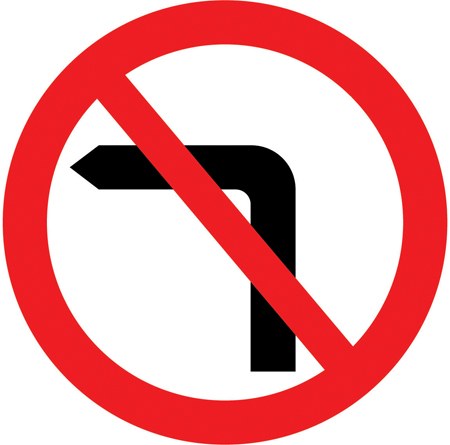 No left turn | Left turn forbidden at this junction | Regulatory red circle |
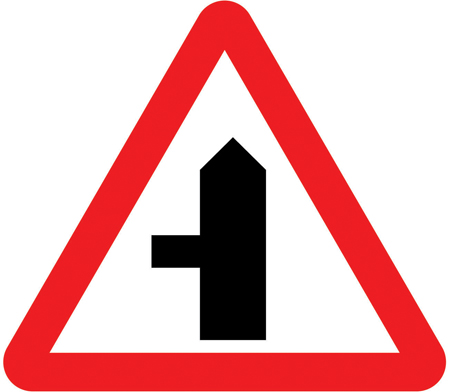 Side road left | Side road joins from the left; no turn order | Warning triangle |
 Keep left | Pass on the left of an island | Regulatory blue circle |
Rules and Penalties
Police may report failing to comply with a traffic sign if you continue straight or turn right where the mandatory plate requires left. Points and fines depend on the offence code and whether your line created danger.
Junction safety cameras on distributor roads increasingly capture drivers who straight-line across hatching. Appeals succeed only when signage was absent, illegible, or overridden by a lawful temporary order.
Insurers compare dashcam clips at filter mouths. Ignoring a clear blue mandatory arrow weakens your position if a lawful left-turner was in the channel you blocked.
Practical tests treat continuing straight against the order as a serious fault when another road user must react. The fault can stand even without contact.
Stopping in the filter to unload, or straddling lanes while you decide, can attract obstruction or waiting penalties in addition to any sign breach.
Check the latest theory test pass mark and book when you are ready via our booking guide.
Turn left ahead in Practice
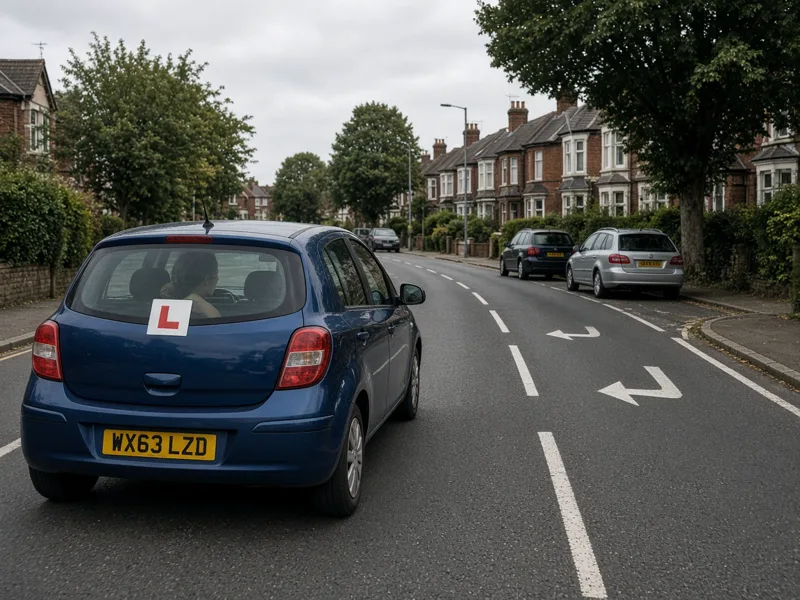
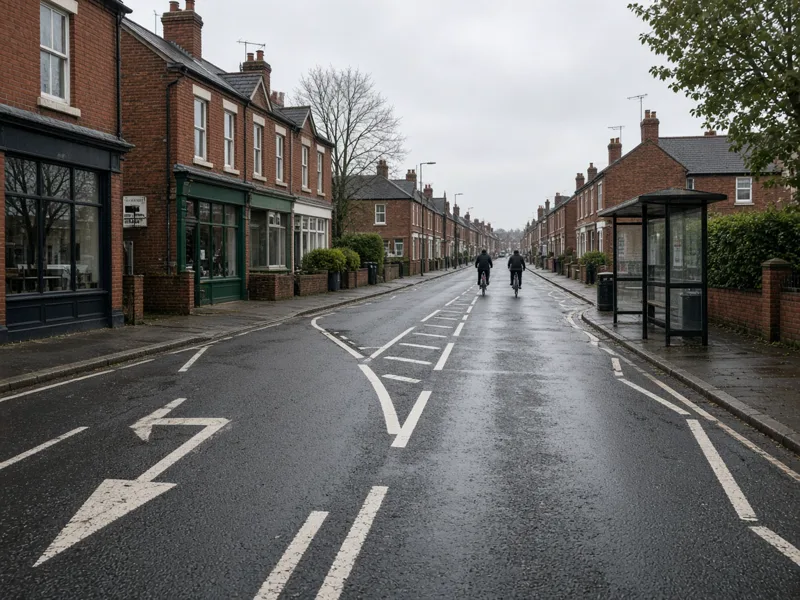
On a grey Tuesday in outer Birmingham, learner driver Amira follows a dual-lane suburban distributor toward a local shopping parade. A turn left ahead mandatory circle faces her nearside lane where white hatching splits a left filter from the through carriageway toward a faster A-road link.
She checks the left mirror, signals early, and drifts into the filter before the hatch becomes solid. A van behind attempts to carry straight by straddling the marking; Amira holds her lane rather than steering right to open a gap that would tempt the van into an illegal line.
At the mouth, give way markings cross the stem into the parade street. Amira slows for a mother with a pushchair on a dropped kerb, then completes the mandatory left at walking pace while through traffic on the distributor keeps moving.
The van driver who cut straight receives a fixed penalty notice from a junction camera a fortnight later. When Amira practises sign questions, she links the upward-then-left white arrow on blue with mandatory direction at suburban filters, not with a no-left-turn prohibition or a keep-left island plate.
How This Sign Appears on the Theory Test
Multiple-choice stories describe distributor roads, retail park exits, and station forecourts where only one exit is lawful. Pick the answer that orders a left turn at the junction ahead, not passing an island or warning of a side road.
Image sets place the blue circle next to red-ring turn bans and warning triangles. Train your eye on arrow direction and rim colour; prohibitions always show a slash through the movement.
Scenario text may tempt you to continue straight because the main road feels quicker. The correct response keeps the mandatory path even when the left arm looks quiet.
Link the plate with lane markings revision: hatched areas and solid lines often fence the filter. If paint is worn but the upright symbol is clear, follow the sign and note the defect after the drive.
Hazard perception clips sometimes show queue-jumpers crossing hatching while lawful traffic stacks in the left filter. Recognising the blue mandatory circle early helps you merge calmly instead of copying the hazard.
Take a free mock theory test and filter questions on road and traffic signs. Pair that with the warning signs guide for triangle symbols.
Related Road Signs
No left turn
Red ring forbids left turns; opposite duty to this plate.
Give way
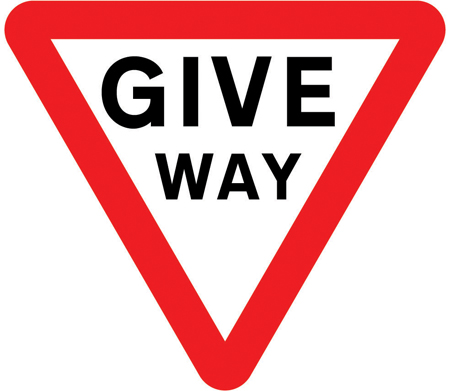
Yield on the stem; mandatory direction still applies.
Roundabout ahead
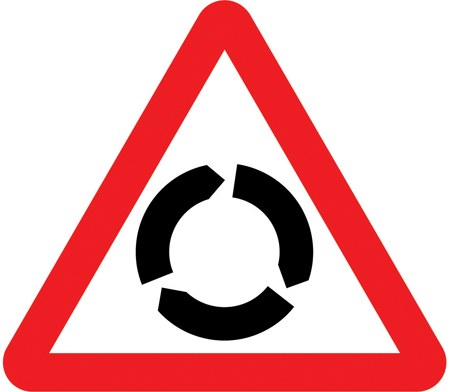
Warns of circulatory layout; different from a single turn order.
Keep left
Routes you past an island, not off the main line.
Side road left
Triangle warns of joining traffic; does not force a turn.
Test Yourself on UK Road Signs
On distributor roads the blue left arrow is easy to miss when you focus on through traffic. Read it before the hatch tightens, commit to the filter in good time, and rehearse mandatory direction pictograms on a free mock theory run before test day.
Frequently Asked Questions
What does the UK turn left ahead plate require?
It orders you to turn left at the junction or exit ahead. The blue circle is mandatory for traffic facing it, unless a lawful supplementary plate exempts your vehicle class.
How is this different from the no left turn sign?
Turn left ahead makes the left turn compulsory where the blue plate stands. No left turn forbids that movement at a junction you may otherwise enter straight or right.
May I carry straight on if the left street looks empty?
No. The order applies whenever the sign is in place. Plan a lawful route that respects every direction plate on your journey.
Does the plate cancel give way markings on the side road?
No. You must still yield or stop as marked after you enter the left-turn arm. Mandatory direction names the manoeuvre, not who has priority at the mouth.
Could ignoring this fail my driving test?
Examiners often record a serious fault if you stay in the through lane against the arrow and another road user must react. Merge left while broken lines still allow it.