
Last updated: October 2026 · Checked against Highway Code
No Left Turn Sign: meaning, rules and what to do
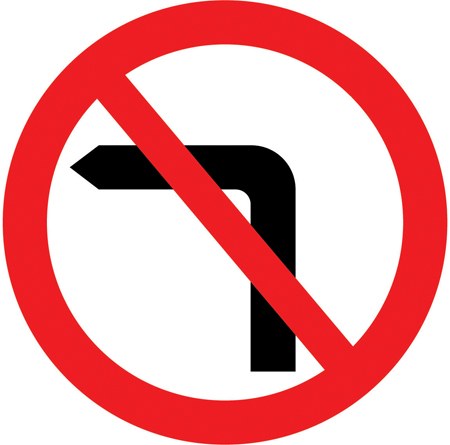
A red-ringed circle with a black left-turn arrow crossed by a diagonal bar tells you that turning left at the junction ahead is forbidden for your direction of travel.
Sign image © Crown copyright, reproduced from GOV.UK traffic sign images under the Open Government Licence v3.0.
What the No left turn Sign Looks Like
The regulatory disc is white with a thick red border. A black curved arrow points left, and a red diagonal slash crosses the arrow from upper left to lower right. The layout matches the international prohibition style used across Europe, so the shape alone signals a mandatory ban rather than a warning.
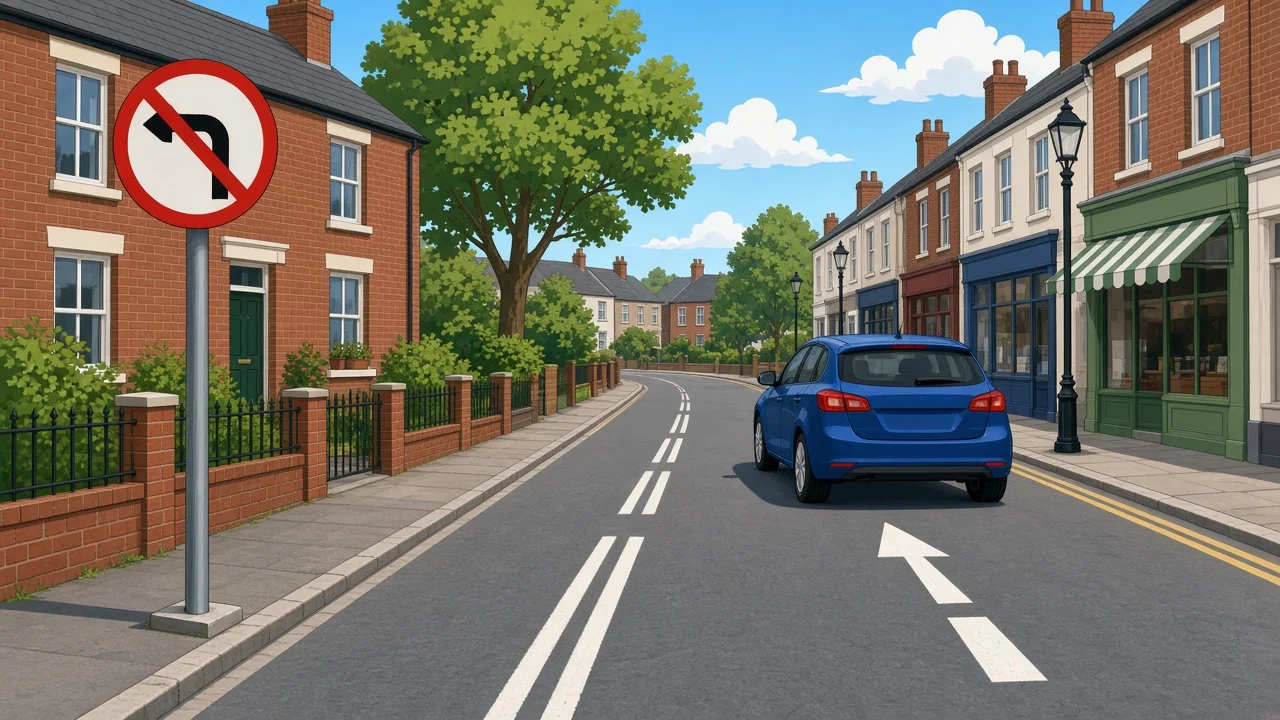
Posts usually sit on the left verge or on a central island immediately before the junction mouth. On one-way streets the plate may face traffic that would otherwise cut left into a bus gate or tram corridor. Repeat circles sometimes appear after side streets so late joiners still see the restriction.
Learners confuse it with “keep left” chevrons on blue direction signs, with no-entry bars that block the whole carriageway, and with filter arrows painted on the road that allow left only. The barred left arrow in a red ring always means the turn is illegal for drivers facing that plate.
At night, retroreflective red rings stand out before the black arrow detail resolves. Slow enough to read supplementary white rectangles that exempt cycles, buses, or time bands. A small plate beneath the circle is part of the legal order, not optional decoration.
On dual carriageways the symbol may appear only on the approach you use. The opposite carriageway can still permit left turns into a service road. Check both sides when you U-turn legally further back and rejoin facing the other way.
Pair it mentally with no right turn and no U-turn circles, which use the same red ring but different arrow symbols. No entry blocks the entire width for contraflow. Direction signs with plain arrows inform; barred arrows inside red rings prohibit.
What the No Left Turn Sign Means
Traffic authorities use the order where left turns would send traffic across tram tracks against signals, into narrow high streets, or across a main line with poor visibility. It applies from the sign to the junction unless a plate names a shorter distance or exempts certain vehicle classes.
Rule 143 in The Highway Code reminds you to follow mandatory signs and road markings. Ignoring a turn ban is treated as failing to comply with a traffic sign, not as a mere lane discipline slip. That distinction matters for both fixed penalties and insurance after a collision.
The ban covers any leftward movement onto the restricted arm, including sharp turns, sweeping turns, and cutting the corner across a hatched area. If road markings show a left-only lane but the regulatory circle forbids left, the circle wins because it reflects the traffic order.
Cycles may still turn left when a supplementary plate says “Except cyclists” or when a parallel toucan crossing invites bikes to leave the main carriageway. Motorcycles and cars remain bound unless the exemption names them. Read every rectangle on the post before you commit.
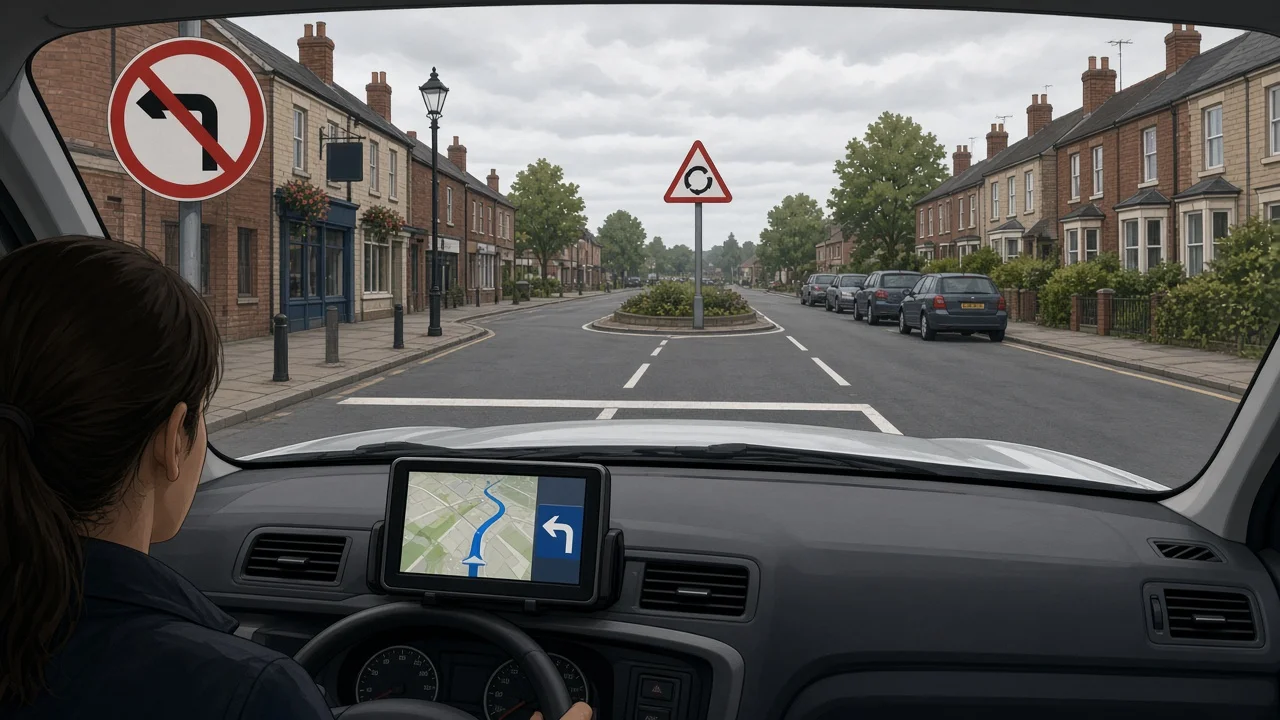
Sat-navs may still suggest a left at the junction because map data lags behind new schemes. Treat the plate as authoritative. Reversing in the junction to undo a wrong turn creates risk for pedestrians and oncoming traffic.
The restriction ends once you have passed the junction centre on the arm you entered, or when an end plate or different layout makes another manoeuvre legal. Side roads before the junction are not automatically banned unless their mouths also display the symbol facing your direction.
City one-way grids often show the circle at the mouth of a bus-only link. Delivery drivers should plan a right-hand circuit or use signed loading bays rather than assuming access because the street looks quiet.
Outside schools, left bans keep queues from blocking the main road when parents would otherwise turn into a side street against peak-hour flow. Yellow zigzags may reinforce the message, but the circle is the enforceable turn ban.
At complex gyratories, a no-left plate on one approach prevents shortcuts through a retail car park exit. Watch for advance direction signs that list “ahead only” so you choose the correct lane early.
When you drive for the practical test, examiners expect you to obey turn bans even if the empty junction looks safe. A left turn against the plate can fail the test immediately regardless of other traffic.
If roadworks temporarily cover markings, the standing regulatory sign still applies. Do not follow unofficial diversion arrows that contradict the barred left symbol without a lawful temporary order.
Highway Code rules 143 and 109 (mandatory signs and signals)
No left turn vs Similar Signs
| Sign | Meaning | Legal or warning? |
|---|---|---|
| No left turn | Left turn prohibited for traffic facing the sign | Regulatory red circle |
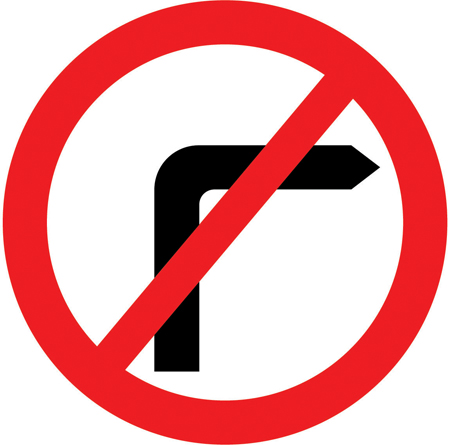 No right turn | Right turn prohibited at the junction | Regulatory red circle |
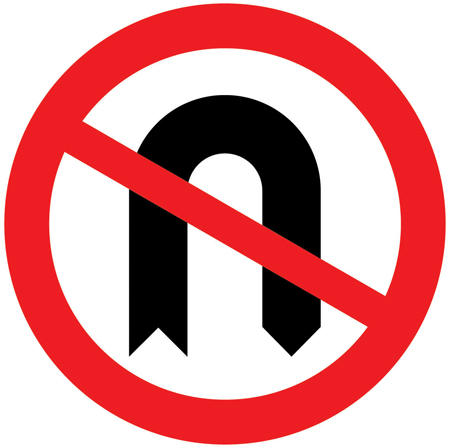 No U-turn | U-turn or turn through more than 180° forbidden | Regulatory red circle |
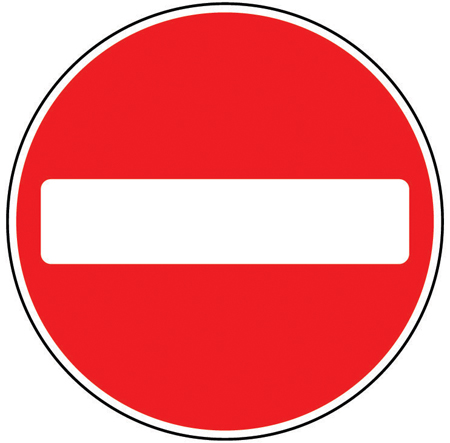 No entry | Do not enter the carriageway beyond the sign | Regulatory red circle |
Rules and Penalties
Police may issue a fixed penalty for failing to comply with a traffic sign when they see you turn left against the order. Penalty points and fines depend on the offence code used and whether the turn caused danger.
Local authorities sometimes install cameras on bus corridors where left turns would cross lanes illegally. Evidence is usually photographic, and appeals succeed only when signage was missing, covered, or contradicted by a lawful temporary scheme.
If your left turn forces another road user to brake, prosecutors can treat the manoeuvre as careless or dangerous driving, which carries much heavier penalties than a simple sign breach.
Insurance claims after a collision at a banned turn often hinge on whether you ignored a visible plate. Insurers may reduce compensation when you were clearly in breach of a regulatory order.
HGV and PCV drivers face the same symbol in theory and practical tests; professional drivers should note locations on route plans because height or length does not exempt you from turn bans.
Check the latest theory test pass mark and book when you are ready via our booking guide.
No left turn in Practice
Morgan approaches a T-junction in Leeds where the main road continues ahead and a side street leaves to the left toward a market square. A no left turn circle faces her lane, while a filter light shows green straight ahead.
She needs the market car park, which sat-nav places via that left arm. Rather than turning, she drives through the junction, uses the next signed roundabout to loop back, and enters the square from a street where left turns remain legal.
Another driver in the queue turns left anyway to save time and meets a bus exiting the square. The bus driver records dashcam footage and the council issues a fixed penalty because the plate was unobstructed.
Morgan’s extra minute preserved a clean licence and avoided blocking the bus gate. The scenario mirrors DVSA questions that ask what you must do when the barred left arrow appears at a junction you know well.
How This Sign Appears on the Theory Test
Multiple-choice items show the barred left arrow and ask which manoeuvre is forbidden. Select “no left turn” rather than “no entry” unless the pictogram is a horizontal white bar on red.
Picture sets contrast left and right variants. Learn arrow direction inside the ring; the slash always crosses the banned movement, not the permitted ones.
Scenario questions describe a driver who needs a shop on the restricted arm. The correct answer keeps them on the lawful route rather than turning because the junction looks quiet.
Link the sign with road markings revision: if a left-turn lane is hatched out or signed ahead only, the same outcome applies even when the circle is repeated only on one approach.
Hazard perception clips rarely centre on signs, but spotting the plate early helps you hold lane position and avoid a last-second illegal turn when sat-nav prompts late.
Take a free mock theory test and filter questions on road and traffic signs. Pair that with the warning signs guide for triangle symbols.
Related Road Signs
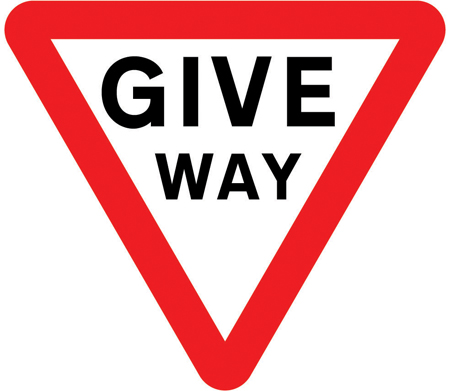
Give way sign
Triangle for priority at open junctions, not a turn ban.
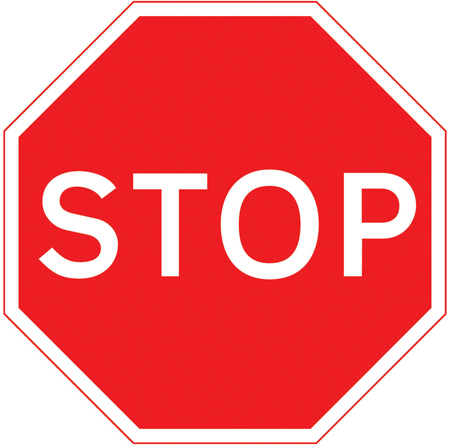
Stop sign
Requires a halt before proceeding straight or turning.
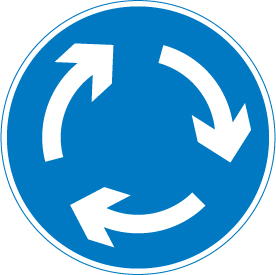
Mini roundabout sign
Blue circle for circulate clockwise at small roundabouts.
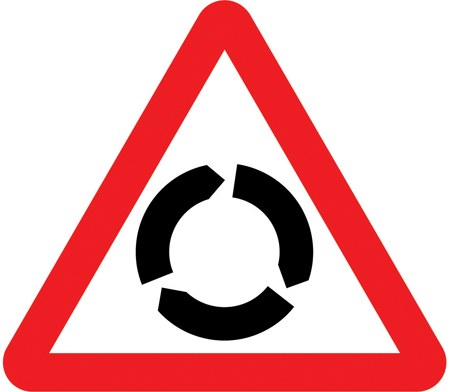
Roundabout sign
Warning triangle before a larger gyratory junction.
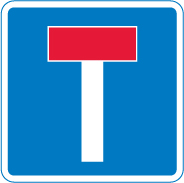
No through road
Information about dead ends, not a left-turn ban.
Test Yourself on UK Road Signs
When the red ring shows a barred left arrow, plan another route before you reach the stop line. A free mock theory test helps you recognise the symbol quickly under exam conditions.
Frequently Asked Questions
Can I turn left if the junction is clear?
No. The regulatory order applies whenever the sign faces your approach, even at quiet times. Use a lawful alternative route instead.
Does the ban apply to cyclists?
Only if no exemption plate allows them. Many city schemes exempt cycles; read supplementary plates on the same post.
What is the difference from no entry?
No entry blocks all traffic from entering a carriageway, often the wrong way on a one-way road. The no left turn sign forbids one movement at a junction you may still enter straight or right.
Can I cut the corner if I stay in my lane?
No. Any leftward turn onto the restricted arm counts, including wide sweeps across hatched markings.
Will I get points for turning left here?
You can receive a fixed penalty with points if police witness the breach or camera evidence is available. Severity rises if the turn causes danger.