
Last updated: October 2026 · Checked against Highway Code
Keep Left Sign: meaning, rules and what to do
A blue mandatory circle with a white arrow curving anti-clockwise around a black obstruction tells you to pass on the left of the island, bollard, or chicane ahead, not cut the wrong side.
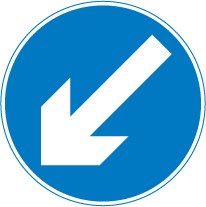
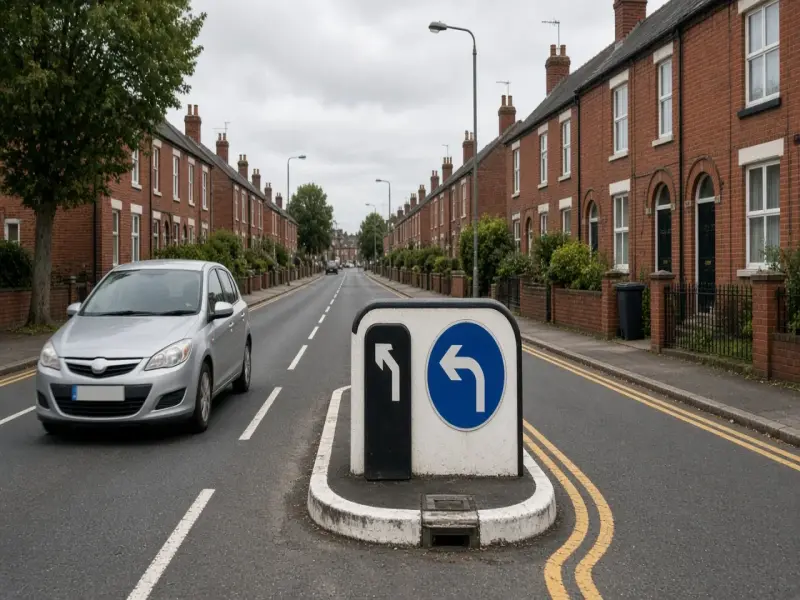
Sign image © Crown copyright, reproduced from GOV.UK traffic sign images under the Open Government Licence v3.0.
What the Keep left Sign Looks Like
The regulatory disc is solid blue with a thin white border. A white curved arrow runs anti-clockwise around a small black bump in the centre, showing the path your nearside should follow. There is no red ring and no speed number; shape and pictogram carry the order.
Posts often sit on traffic islands, pedestrian refuges, the noses of splitter islands at junctions, and temporary concrete blocks in roadworks. You may see the same graphic repeated on the approach and again beside the obstruction so drivers who join mid-island still read the instruction.
Learners confuse it with the keep-right plate, which mirrors the arrow clockwise around the bump. Pass either side uses two arrows and a different layout. Mini-roundabout mandatory circles show three chasing arrows around an empty centre, not a single arc past one obstruction.
At night the white arrow and border reflect before you can read kerb detail. In snow, the black bump is only paint on the sign face; the real island may be buried. Trust the upright plate and any white hatched or solid island markings on the carriageway.
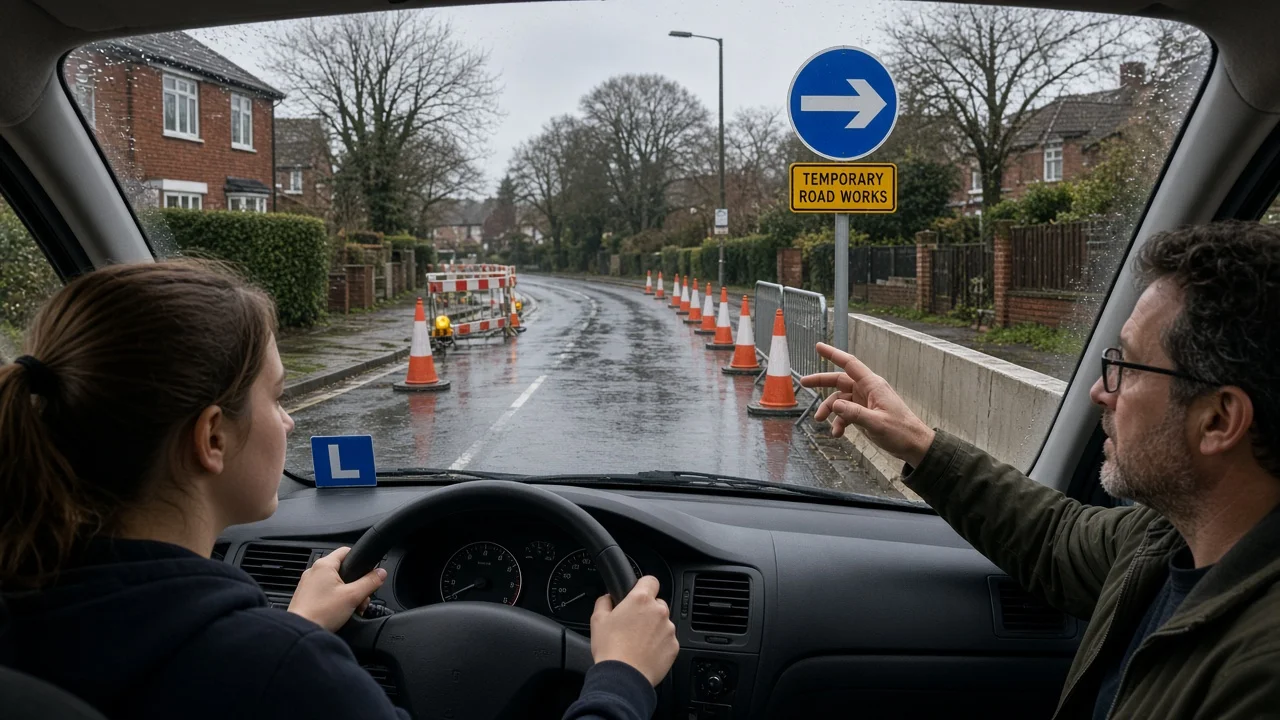
Temporary versions on metal frames copy the GOV.UK layout during diversions. Treat them as binding until traffic returns to the permanent route or an end plate cancels the layout. Sat-nav lane guidance may ignore a narrow chicane; the plate at the kerb still governs your path.
Mandatory blue circles give orders, not gentle advice. A warning triangle might alert you to road narrows, but this plate tells you which side of an obstruction to use. Pair it in revision notes with keep right, pass either side, and mini-roundabout mandatory discs so pictogram swaps in the exam do not trip you.
What the Keep Left Sign Means
Traffic engineers install the layout where a fixed obstruction splits the carriageway and wrong-side passes would meet oncoming traffic or strike the island. The order begins at the sign and continues while you pass the feature, including short chicanes that slow traffic through shopping fronts or bridge parapets.
Rule 143 in The Highway Code reminds you to keep left unless road signs or markings direct otherwise. Mandatory direction plates turn that general habit into a fixed path for a specific obstacle. Driving to the right of the island when the plate faces you is a sign breach even if the nearside lane looks empty.
The restriction is about lateral position relative to the obstruction, not about which carriageway you use on a dual road. On a one-way street with a central refuge, the plate still means pass left of the refuge as you face travel. On two-way roads with a narrow central island, each direction has its own plate on the appropriate approach.
Large goods vehicles and buses may need a wider arc. You remain responsible for not clipping the island or swinging into the opposite lane. If the geometry is too tight, reduce speed early rather than mounting the kerb on the offside to cheat the line.
Pedestrians on refuges have priority over your convenience. The plate keeps motor traffic on the carriageway side of the island; it does not invite you to squeeze past people standing on the crossing nose. At signalled crossings, follow the lights and wait positions even when a keep-left plate sits on the same island.
Roadworks sometimes line a series of cones with repeated mandatory arrows. Each segment behaves like a mini island. Maintain lane discipline through the whole taper; darting right to skip a queue often means crossing a white line you are not allowed to cross.
City centres use the plate on splitter islands where a main road forks. Approach in the lane that feeds the left side of the fork, mirror check, and resist cutting across chevrons painted on the nose.
Rural narrow bridges may pair the circle with give-way triangles on the wider mouth. Read both: yield if needed, then pass left of the central hump once it is your turn.
Bus stops inset behind a refuge often repeat the mandatory arrow on the island cap. Cyclists may pass on the left in slow traffic; leave them room rather than forcing them into the kerb drain.
Driving tests in towns such as Bristol, Oxford, or parts of Glasgow include refuge chicanes where examiners watch lane position. Straddling the island or choosing the wrong side is a serious fault when it forces another road user to react.
After dark, use dipped headlights so oncoming drivers see you tracking left of the island. Full beam on a tight chicane can dazzle someone mirroring the manoeuvre from the other direction.
Highway Code rules 143, 160 and 239 (lane discipline and signs)
Keep left vs Similar Signs
| Sign | Meaning | Legal or warning? |
|---|---|---|
| Keep left | Pass left of the central obstruction | Regulatory blue circle |
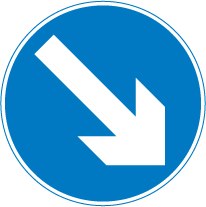 Keep right | Pass right of the central obstruction | Regulatory blue circle |
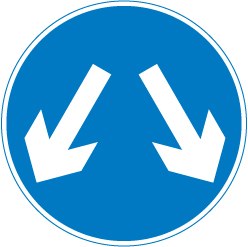 Pass either side | Obstruction may be passed on either side | Regulatory blue circle |
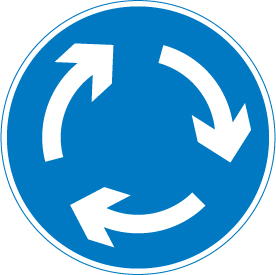 Mini roundabout | Circulate clockwise around painted disc | Regulatory blue circle |
Rules and Penalties
Police can report failing to comply with a traffic sign when your wheels cross to the wrong side of a signed island and another road user must brake. Penalty points and fines depend on the offence code and whether a collision resulted.
Insurers often treat wrong-side passes on chicanes as clear negligence when dashcam footage shows the mandatory plate. Liability shifts to the driver who ignored the lateral order, even at low speed in a retail zone.
Fixed cameras seldom enforce keep-left geometry alone, but average-speed zones and bus-lane cameras on the same street still apply. A plate does not exempt you from solid white lines or yellow box junction rules beside the island.
Professional drivers on scheduled routes should brief new staff on refuge layouts. One wrong-side shortcut to regain time can produce a complaint from a cyclist clipped by a wing mirror.
Civil claims after mirror strikes on narrow islands frequently cite the blue mandatory circle as notice that the overtaking driver chose an unlawful line, even when no speed limit was broken.
Check the latest theory test pass mark and book when you are ready via our booking guide.
Keep left in Practice
Jonah approaches a painted pedestrian refuge on a 30 mph distributor road in Sheffield. A keep-left mandatory plate sits on the island cap, with broken white lines encouraging traffic to pass either side of the marking on the carriageway.
A delivery van in front drifts right across the hump to overtake a slow hatchback. Jonah holds the nearside lane, steers a smooth arc left of the refuge, and checks his right mirror for a cyclist filtering on the inside.
The van meets an oncoming bus in the opposite lane and brakes hard, horn blaring. Jonah’s line kept him in his half of the road and left the cyclist a full door width. Had he copied the van to save seconds, he could have failed a practical test for lane discipline and put the cyclist at risk.
That evening he spots the same blue pictogram in a mock theory question about roadworks chicanes and selects “Pass to the left of the obstruction” instead of “Overtake on the right”.
How This Sign Appears on the Theory Test
Image items show the blue circle with the curved arrow and black bump. Read whether the stem asks for the sign name, the manoeuvre it orders, or how it differs from keep right and pass either side.
Scenario questions describe a central island with pedestrians waiting. Correct answers keep left of the obstruction and yield to people crossing, not squeeze past on the offside because the queue is long.
Filter drills on regulatory circles mix mini-roundabout, turn prohibitions, and direction arrows. If only one white arrow skirts a single bump, the answer family is keep left or keep right, not circulate.
Hazard perception clips may show a car cutting a refuge nose. The developing hazard is wrong-side position, not the sign flash. Link sign revision with clips on urban distributors.
You need forty-three correct answers from fifty questions within fifty-seven minutes. Recognising mandatory blue circles quickly frees time for longer vignettes on rules of the road.
Take a free mock theory test and filter questions on road and traffic signs. Pair that with the warning signs guide for triangle symbols.
Related Road Signs
Mini roundabout sign
Three arrows around a disc, not a single keep-left arc.
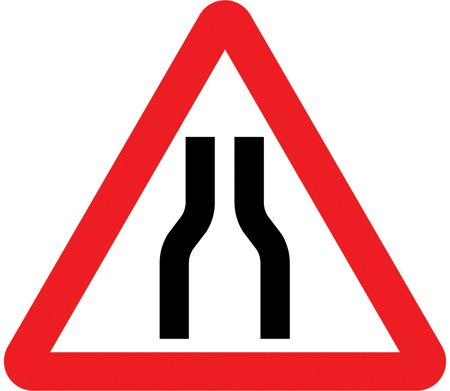
Road narrows on the left
Triangle warning; does not replace mandatory direction.
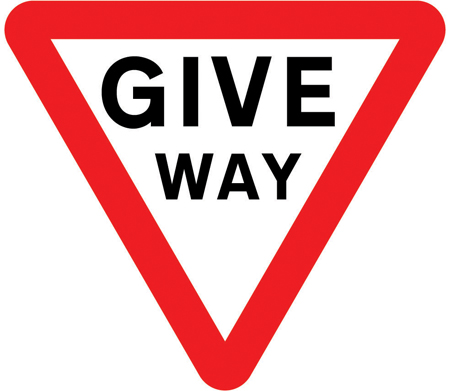
Give way sign
Yield duty at junctions near splitter islands.
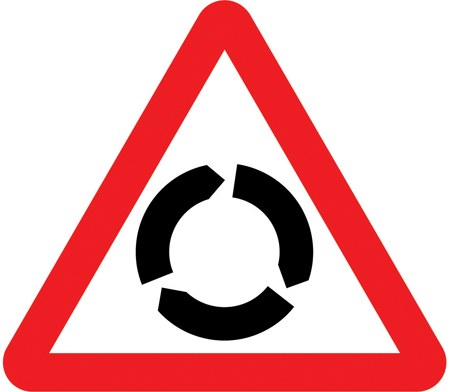
Roundabout sign
Larger circulating junction warning ahead.
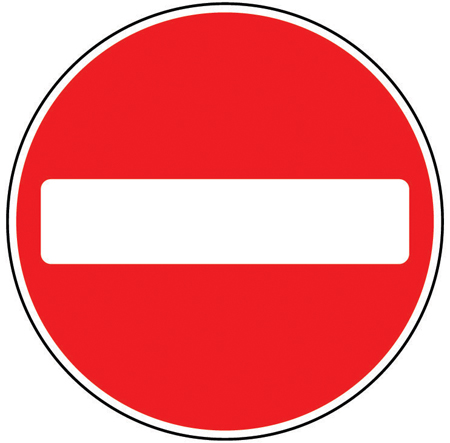
No entry
Wrong-way ban, not lateral path around an island.
Test Yourself on UK Road Signs
When the blue arrow curves left around the bump, plan your line early and stay off the island. Practise recognition on a free mock theory test so refuge chicanes feel familiar before your exam.
Frequently Asked Questions
What does the keep left mandatory plate order?
It tells you to pass on the left of the central obstruction ahead, such as an island, refuge, or roadworks block. Stay on the signed side unless your vehicle cannot fit safely.
How is keep left different from keep right?
The pictogram mirrors direction. Keep left shows an anti-clockwise arrow around the bump; keep right shows a clockwise arrow. Read the plate facing your direction of travel.
Can I pass on the right if the left side is blocked?
Only when a pass-either-side plate or markings allow it. A standard keep-left order still applies if you can proceed safely on the left; do not use the offside to skip queues unless the layout permits.
Does this sign apply on dual carriageways?
It controls position around a specific obstruction, not which carriageway you use. On dual roads you still obey lane and motorway rules; the plate appears on islands and chicanes within the signed layout.
Will cutting the island fail my driving test?
Crossing to the wrong side of a signed refuge or chicane is usually a serious fault when it affects other road users. Examiners expect you to follow the mandatory path even at low speed.