
Last updated: October 2026 · Checked against Highway Code
No Entry Sign: meaning, rules and what to do
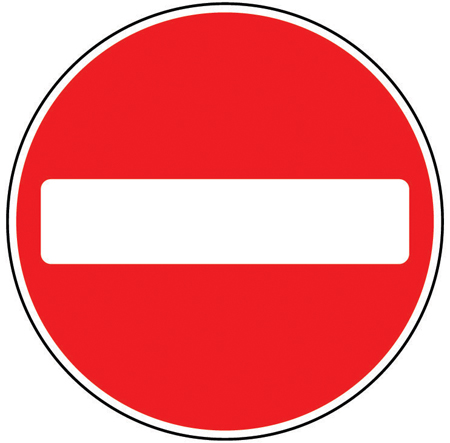
A red-ringed circle with a horizontal white bar forbids every vehicle from driving past the plate into the road or carriageway beyond, most often because traffic flows the other way.
Sign image © Crown copyright, reproduced from GOV.UK traffic sign images under the Open Government Licence v3.0.
What the No entry Sign Looks Like
The regulatory disc is a white circle inside a thick red border, with a single horizontal white bar across the centre. The bar is wider than the ring is tall, so the symbol reads instantly as “closed gate” rather than a pictogram of a vehicle class. There is no black lettering on the face itself; meaning comes from shape and colour alone.
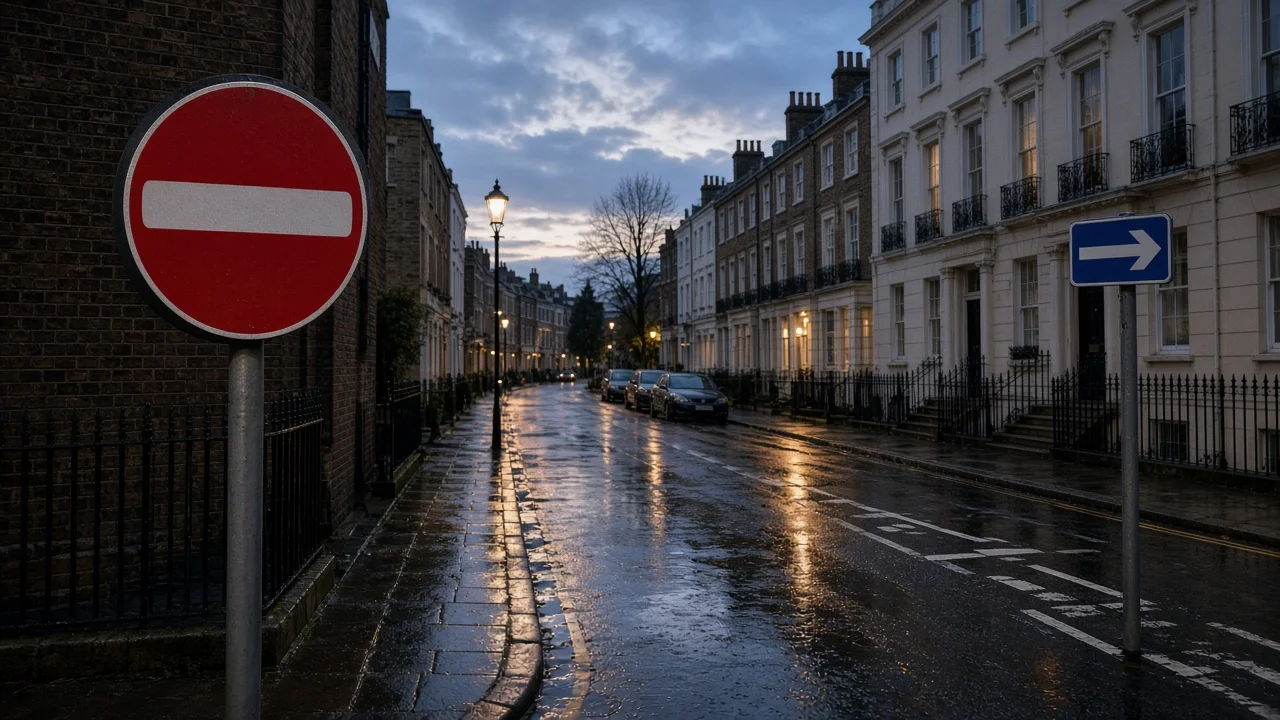
Posts stand at the mouth of one-way streets, the exit of car parks facing the wrong way, and the nearside entry to motorway slip roads when you would join against the flow. You may see the same symbol painted at ground level on private sites, but the roadside version is the one DVSA uses in recognition questions.
Blue rectangular plates with a white arrow often appear on the legal entry to the same one-way system. Learners must read both sides of a junction: the arrow shows where traffic may enter; the barred circle shows where it may not. A “No motor vehicles” plate uses car and motorcycle silhouettes instead of a plain bar.
Temporary boards during events sometimes copy the layout on metal stands. Treat any official red-ring bar as binding until an open diversion or end plate cancels it. Sat-navs may still route you toward the mouth of a one-way arc; always trust the plate at the kerb over a screen arrow.
At night, retroreflective red rings catch headlights before you can read side-street detail. Slow on unfamiliar town centres so you can reject a turn before the steering lock commits you past the post.
The horizontal bar stops entry into a length, usually because of one-way flow. “No motor vehicles” bans a class of traffic but may still allow cycles. “No through road” is a white rectangle about layout, not a wrong-way prohibition. Pair the barred circle with blue one-way arrows on the opposite mouth of the street.
What the No Entry Sign Means
Traffic authorities install the order where allowing entry would send drivers into oncoming lanes, against bus gates, or up motorway off-slip geometry. The ban starts at the sign and continues along the signed one-way length until an end plate, a junction that clearly leaves the system, or markings show you have joined lawful traffic again.
Rule 239 in The Highway Code lists signs that give orders, including entry bans. Driving past the plate is a deliberate breach even if the road ahead looks empty. You remain wrong-way until you leave the forbidden length, which is why police treat contraflow incidents seriously on fast dual carriageways and urban bus corridors.
The order is about direction of travel, not about vehicle type in the basic form. Pedal cycles may still be restricted by separate orders on pedestrianised lengths, but the plain barred circle targets motor traffic entering from the wrong end. Read supplementary “Except buses” or time plates before assuming every class is barred.
Reversing back out after a mistake does not erase the offence if an officer or camera already recorded the entry. Prevention matters: check mirrors before you turn into an unfamiliar side street, especially after leaving a multi-storey car park whose ramps look symmetric.
One-way systems in historic city centres may hide the plate behind hanging baskets or delivery vans. Creep forward only when you can confirm no barred circle faces you. If you are already past it, stop in a safe lay-by or side road as soon as possible rather than continuing against the flow.
Emergency access for residents sometimes uses key fobs or rising bollards on the forbidden mouth. Unless your vehicle is covered by the published exemption, the sign still applies when the bollard is down. Blue-badge holders are not automatically allowed to ignore a wrong-way entry order.
Before you commit to a left or right turn off a high street, scan the kerb for the red ring. Taxi ranks and bus lanes often sit beside barred mouths; a quick glance saves a three-point turn in front of an audience.
After one-way roadworks, temporary plates may face a direction that contradicts old habits. Councils sometimes add “New layout” boards; still obey the current plate even if you drove the street last month in the opposite direction.
Motorway and major A-road slip roads place the symbol where a driver might mistake an off-ramp for an on-ramp. If you see the bar while still on the main carriageway, you have strayed onto the wrong slip; do not reverse; use the next safe exit strategy described in Rule 275.
Driving instructors in test towns such as Worcester, Cambridge, or parts of central London drill candidates on reading entry plates before steering. Examiners mark serious faults for entering a one-way street the wrong way, even if you correct yourself quickly.
Electric cars are quiet at parking speeds, which can mislead pedestrians who assume the street is empty. If you must reverse out lawfully after a near miss, do so with windows open and hazard lights on so people hear you moving.
Highway Code rules 239, 253 and 275 (signs, access and motorways)
No entry vs Similar Signs
| Sign | Meaning | Legal or warning? |
|---|---|---|
| No entry | Do not enter this way | Regulatory (white bar) |
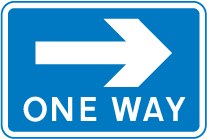 One-way street | Traffic must follow arrow direction | Regulatory blue arrow |
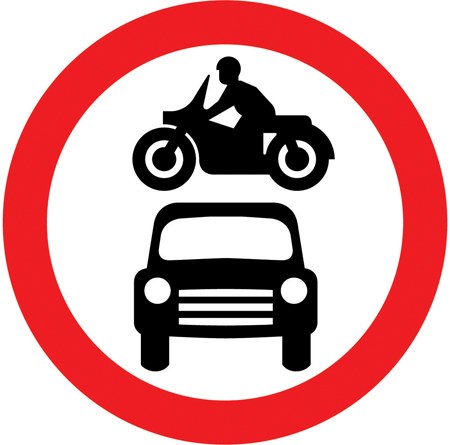 No motor vehicles | Motors banned; cycles may continue | Regulatory pictogram |
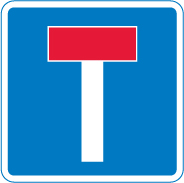 No through road | Layout ends ahead | Information rectangle |
Rules and Penalties
Police can stop and report drivers who enter against the plate. Fixed penalty notices and court summons appear in serious wrong-way cases, especially where oncoming traffic had to brake or swerve.
Civil enforcement cameras on bus gates and city-centre zones may capture number plates even without a uniformed officer present. Appeals need evidence of misread temporary signing, not merely that the street looked quiet.
Insurance claims after head-on or sideswipe collisions on one-way lengths often turn on whether a driver passed a visible barred circle. Dashcam footage showing the plate in frame strengthens liability findings against the wrong-way vehicle.
Driving tests treat wrong-way entry as a serious fault because it endangers lawful traffic immediately. A candidate who crosses the plate may fail even if they reverse before leaving the side road.
Motorway wrong-way entries trigger high-risk police responses. Never turn across the white bar to “just check” a lay-by; proceed to the next junction and replan.
Check the latest theory test pass mark and book when you are ready via our booking guide.
No entry in Practice
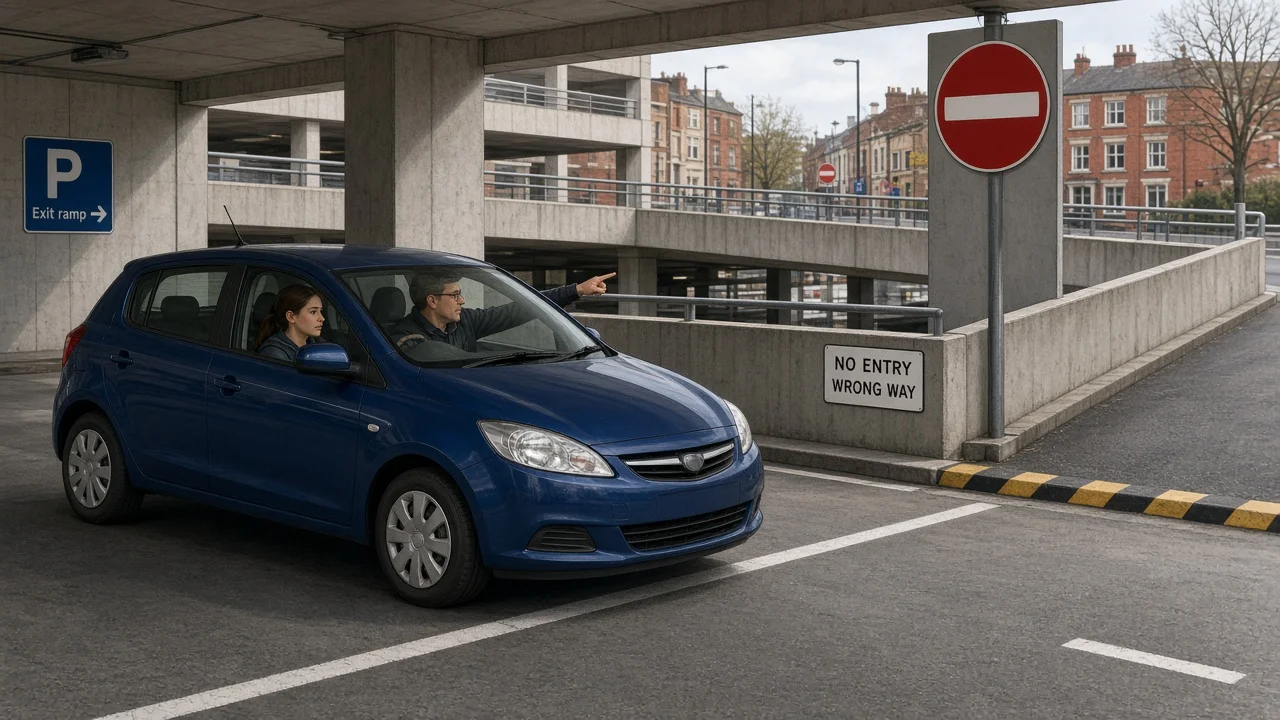
Maya leaves a cinema car park in Leeds and follows sat-nav guidance toward a side street that should loop back to the main road. The ramp levels with a narrow terrace where a red circle and white bar face her bonnet, while a blue arrow on the opposite kerb points away from her.
She stops with the wheels still on the car-park tarmac, engages the handbrake, and checks both mouths of the street. Because the barred plate forbids entry from her direction, she selects reverse gear, returns to the pay machine level, and exits via the signed arrow on the other ramp.
Another driver in the same week rolled past the plate to “find a space” and met a bus head-on twenty metres inside the one-way section. The bus driver reported the incident; Maya’s pause at the line avoided a penalty and a frightening meeting in a lane barely wide enough for one coach.
When Maya later practised on a free mock theory test, she recognised the horizontal bar in a scenario about car parks and picked the answer that said turn around rather than proceed.
How This Sign Appears on the Theory Test
Multiple-choice items show the barred red circle beside short stories about car parks, one-way systems, and motorway slips. Choose the option that forbids entry from the driver’s approach, not the option about parking time limits or vehicle weight.
Contrast the symbol with the car-and-motorcycle “no motor vehicles” plate and with information dead-end signs. Shape and colour come first: red circles prohibit; white rectangles usually inform.
Picture banks sometimes pair the plate with a blue one-way arrow in the same item. Read who may enter from which mouth before you tap the answer. The car theory test has fifty questions; you need forty-three correct within fifty-seven minutes, so recognition drills save precious seconds.
Hazard perception clips rarely isolate the plate, but wrong-way risk appears when a car drifts across the centre line on an urban one-way. Link early plate reading with easing off the accelerator before the last escape turn disappears.
Take a free mock theory test and filter questions on road and traffic signs. Pair that with the warning signs guide for triangle symbols.
Related Road Signs
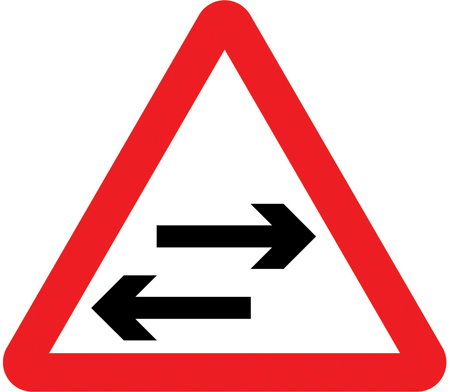
Two-way traffic
Opposing flows after one-way or narrow sections.
No motor vehicles
Class ban, not a wrong-way entry plate.
No through road
Dead-end information; motors may still enter.
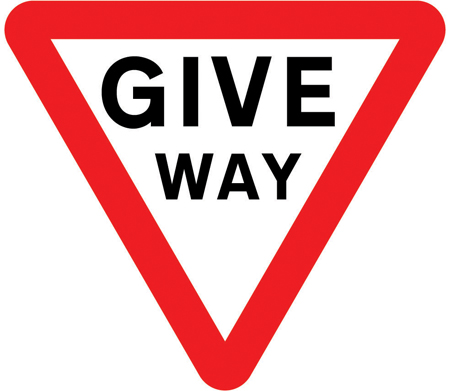
Give way sign
Yield at junctions, unrelated to one-way entry.

Stop sign
Mandatory halt at a line, not a direction ban.
Test Yourself on UK Road Signs
Treat the white bar as a closed gate across the road mouth. If the plate faces you, choose another route before your wheels cross it, then reinforce the habit with sign questions on a mock theory run.
Frequently Asked Questions
What does the UK no entry sign mean?
It forbids you from driving past the plate into the road beyond, usually because traffic is one-way the other way. All motor vehicles must obey unless a lawful exemption plate applies.
Can I enter for parking if I reverse straight back out?
No. Crossing the plate to find a space is still wrong-way entry. Use a signed entrance or a car park whose arrows allow your approach.
How is no entry different from no motor vehicles?
The barred circle blocks direction of travel into a length. The car-and-bike circle bans motor traffic by class but may still allow cycles and walkers on pedestrianised streets.
Does the sign apply to motorcycles?
Yes. Motorcycles count as motor vehicles unless a supplementary plate exempts a specific class. Mopeds restricted by law follow the same entry order as cars.
What should I do if I pass the sign by mistake?
Stop as soon as it is safe, do not continue against the flow, and reverse or turn only when you will not force oncoming traffic to brake. On motorways, do not reverse; follow official wrong-way recovery guidance.