
Last updated: October 2026 · Checked against Highway Code
Stop Ahead Sign: meaning, rules and what to do
The stop ahead sign is a red-bordered warning triangle carrying a small black-and-white STOP octagon, telling you a regulatory halt is coming on a blind or fast approach so you can brake early and plan a proper pause at the line.
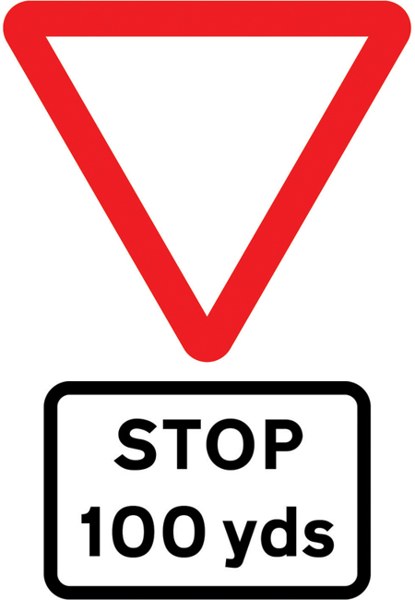
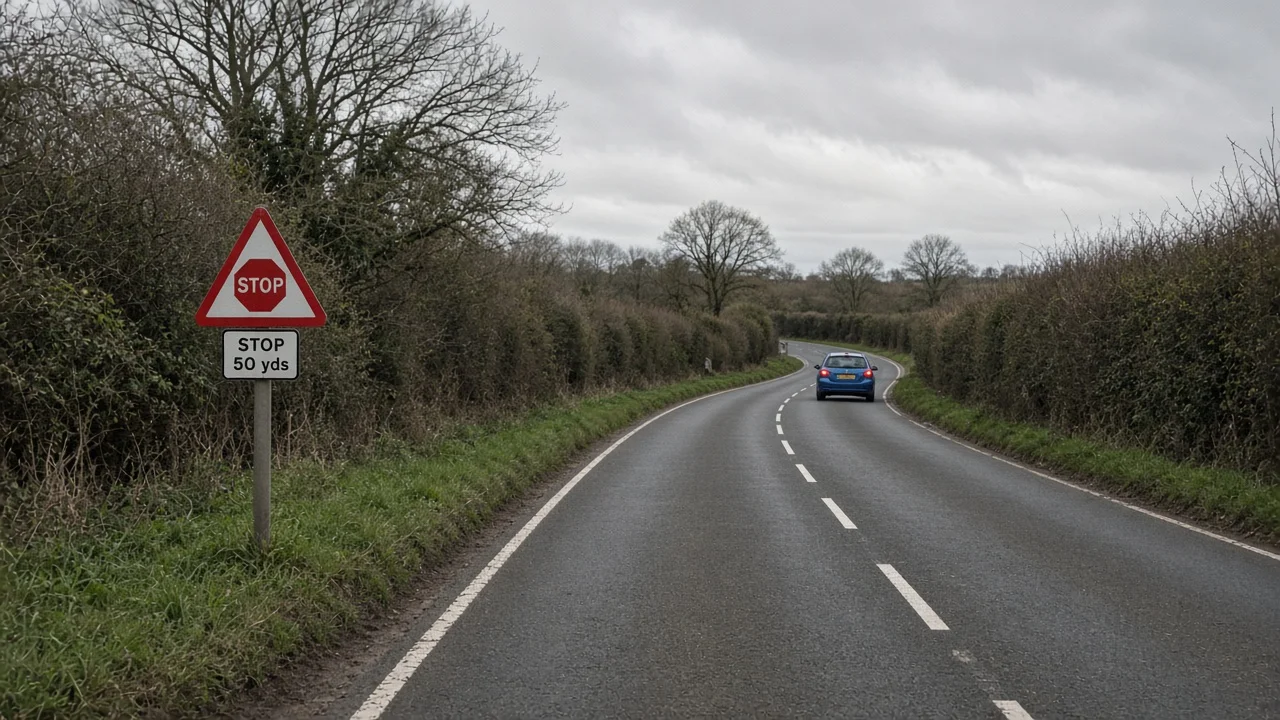
Sign image © Crown copyright, reproduced from GOV.UK traffic sign images under the Open Government Licence v3.0.
What the Stop ahead Sign Looks Like
The board points upward with the standard warning frame: thick red border, white centre, black symbol. The pictogram is a scaled-down regulatory stop plate, an eight-sided red shape with white STOP lettering, drawn in solid black outline on the white triangle so you read “mandatory halt soon” before you see the real octagon at the mouth.
Posts usually stand on the nearside verge where a side road meets a faster through route, or where a private drive joins a rural lane with poor sight lines. Beneath the triangle you may see a rectangular distance plate quoting yards or metres to the stop line. Repeaters at three hundred, two hundred, and one hundred yards are common on NSL approaches where drivers historically arrived too fast for a sudden octagon.
Learners confuse it with the regulatory STOP octagon itself, which is red, full size, and sits beside the line. They also mix it up with the give way ahead triangle, which shows the inverted yield symbol instead of the octagon. Temporary roadworks boards may copy the graphic on yellow backing; treat those as live instructions for that shift, not as background on a route you memorised last year.
At night retroreflective sheeting keeps the red rim bright while the inner octagon outline can look faint until headlamps strike the board squarely. Rain, spray, and low sun can hide the post until you are close; treat the first triangle as the cue to cover the brake and widen following distance, not as decoration on a commute you know by heart.
Only the full-size red octagon at the line creates the legal duty to halt. Give way ahead triangles forecast yield markings, not a mandatory pause. Crossroads and T junction warnings describe geometry without promising a stop bar. If both warning and regulatory plates are missing but a solid white line remains, still halt when the line was lawfully installed.
What the Stop Ahead Sign Means
Highway authorities use the advance triangle where collision data or sight-line surveys show drivers need extra seconds before a rare UK stop layout. Side roads onto dual carriageways, estate exits behind hedges, and industrial yards onto 60 mph single carriageways are typical homes. The warning buys time to finish overtaking, cancel a sat-nav prompt, and settle speed before the octagon fills your windscreen.
Rule 175 in The Highway Code requires a complete stop at the stop line when the regulatory octagon is in place. The warning triangle does not replace that duty and does not let you roll through because you saw the junction early. It simply separates “start braking” from “wheels must be still at the bar”.
A proper stop means the vehicle is no longer moving relative to the road before any part of it crosses the line. Peering past the line while creeping forward is not a legal halt. If snow hides the paint, use the octagon post and kerb geometry to judge where the pause should happen, then edge forward only after observation if the mouth is blind.
Distance plates under the triangle are not speed limits. Use them to choose a gear and gap that lets you stop smoothly when the regulatory plate appears. Harsh braking after ignoring repeaters is a common rear-end trigger on rural distributors where the limit feels high for a hidden side road.
All-way stop layouts are uncommon in Britain, but where they exist each arm may carry its own octagon. The advance warning on one approach still matters for drivers on the through road who rarely meet a halt order. Expect unfamiliar visitors to pause longer than locals while they read markings.
Pedestrians on a nearby zebra or puffin crossing keep priority if they are already on the carriageway after your lawful halt. School crossing patrols override memory about quiet roads: when the lollipop is raised, stay stopped until it drops, even if your junction arm looked clear during the pause at the line.
Traffic signals on the same junction replace plain priority when red shows. The warning triangle for stop ahead may still stand on approaches where signals were added later, or on a separate slip where the octagon remains. Read live lamps and fresh stop lines instead of assuming last month’s layout.
Large goods vehicles need longer to decelerate. The triangle on the main road warns car drivers that a lorry may be halting ahead at the side-arm octagon. Hang back on repeaters so you can see past the trailer before you commit to passing on a single-carriageway climb.
When the first triangle appears, cover the brake and glance at following traffic. If you stare only at the bonnet ahead, you may miss a fresh octagon hidden by a bend or a parked lorry on the verge.
On downhill approaches, select a lower gear early so engine braking shares the load. A late stamp at the regulatory line can push the nose over the bar even when you felt slow at the warning board.
Hybrid and electric cars creep silently after a halt. Pedestrians at the mouth may assume you will remain still. Move off only when observation confirms the way is clear, not because the cabin is quiet.
Visitors from countries with yield-heavy junction customs sometimes treat the octagon like a suggestion. UK law needs a full pause every time the regulatory plate faces your approach, regardless of how empty the crossroad looks.
Open windows on rural Ts help you hear gravel on the side arm before you see a vehicle. The warning time is when that listening window opens, not when the hedge gap finally appears.
After storms, branches can hide the regulatory octagon while the warning triangle remains visible. Trust the advance plate, slow anyway, and hunt for the line paint before assuming the order was removed.
Cyclists on the main road may not expect a car to halt suddenly at a rare octagon. Signal early if you are turning after your pause so riders behind can plan a pass or a shared stop.
Sat nav may call the side road but not mention the halt order. Live signs and markings beat memory when a new estate adds an exit onto your familiar commute.
Highway Code rules 174 and 175 (junction stopping and stop lines)
Stop ahead vs Similar Signs
| Sign | Meaning | Legal or warning? |
|---|---|---|
| Stop ahead | Mandatory STOP octagon and line soon | Warning triangle |
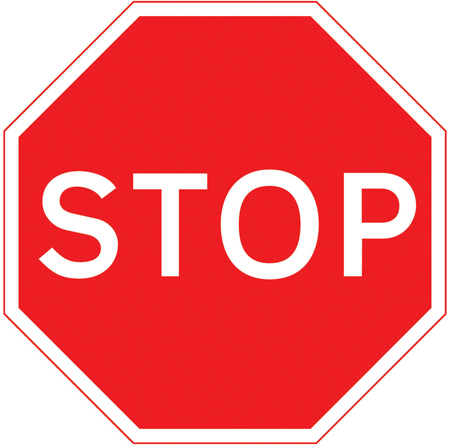 Stop | Halt completely at the stop line every time | Regulatory octagon |
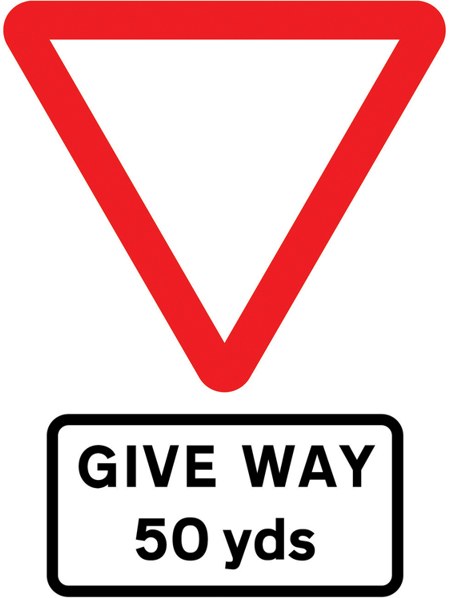 Give way ahead | Yield line ahead; stop only if needed | Warning triangle |
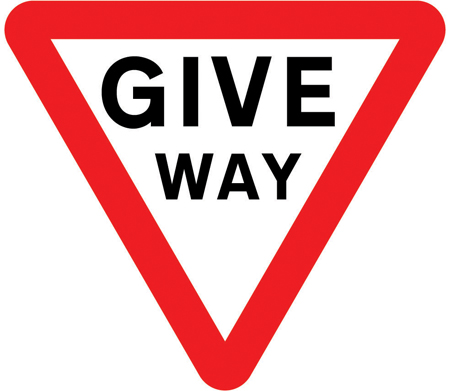 Give way | Yield without a mandatory halt when clear | Regulatory inverted triangle |
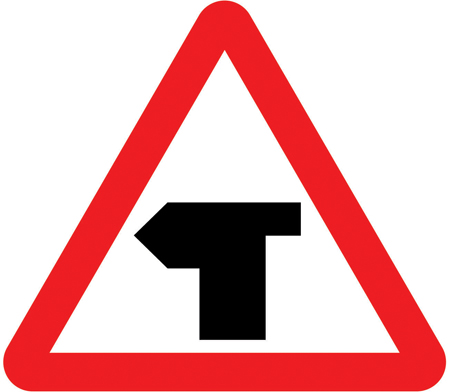 T junction | Side road meets a through route | Warning triangle |
Rules and Penalties
Failing to stop at the regulatory octagon is an endorsable offence when police observe a rolling approach or a wheel crossing the line without a pause. Camera evidence at industrial exits is increasingly common where hauliers skip halts on quiet night shifts.
Entering the junction after a lazy pause can still support careless driving reports if another road user must brake hard. The advance warning should produce a visible cessation of movement, not a slow crawl that clears the line while you lean for a view.
Rear-end collisions on repeaters often involve the lead driver braking for the octagon while the follower stared at a phone. Treat each distance plate as a mirror-and-gap check, not only a sign for the junction mouth.
Driving tests mark serious faults for rolling through the regulatory plate, for stopping beyond the line where sensors no longer see the car, and for pulling out before a proper left-right-left scan. Examiners reward firm halts paired with clear head movement.
Insurance disputes after side-road shunts may hinge on whether dash footage shows a complete stop. A lawful pause at the line strengthens your account even when the other party was speeding on the main carriageway.
Check the latest theory test pass mark and book when you are ready via our booking guide.
Stop ahead in Practice
Marcus drives a 50 mph single-carriageway where a stop ahead board sits with a three-hundred-yard plate before a farm track joins the main road. Ash trees hide the octagon until the last dip. He lifts off the accelerator, checks the mirror for a close artic, and drops to forty before the regulatory post appears.
At the line he stops with the tyres still on the near side of the white bar, head moving left-right-left along both carriageways. A motorcycle on the main road would have met his bonnet had he rolled the junction as he did before the warning repeaters were installed.
On his driving test the following month the same layout appears in rain. He uses the reflective warning rim to judge braking distance, halts firmly despite spray from the vehicle ahead, and earns praise for observation rather than a hurried merge.
In a theory session he spots the miniature octagon inside the triangle and rejects an answer about give way ahead. Linking the pictogram to a mandatory halt ahead, not a yield line, saves a mark on a signs question.
His instructor later adds a hazard perception clip with a queue forming before a hidden side road. Marcus clicks when the conflict develops as a van brakes for the octagon, not when the distant warning triangle first flashes past the frame edge.
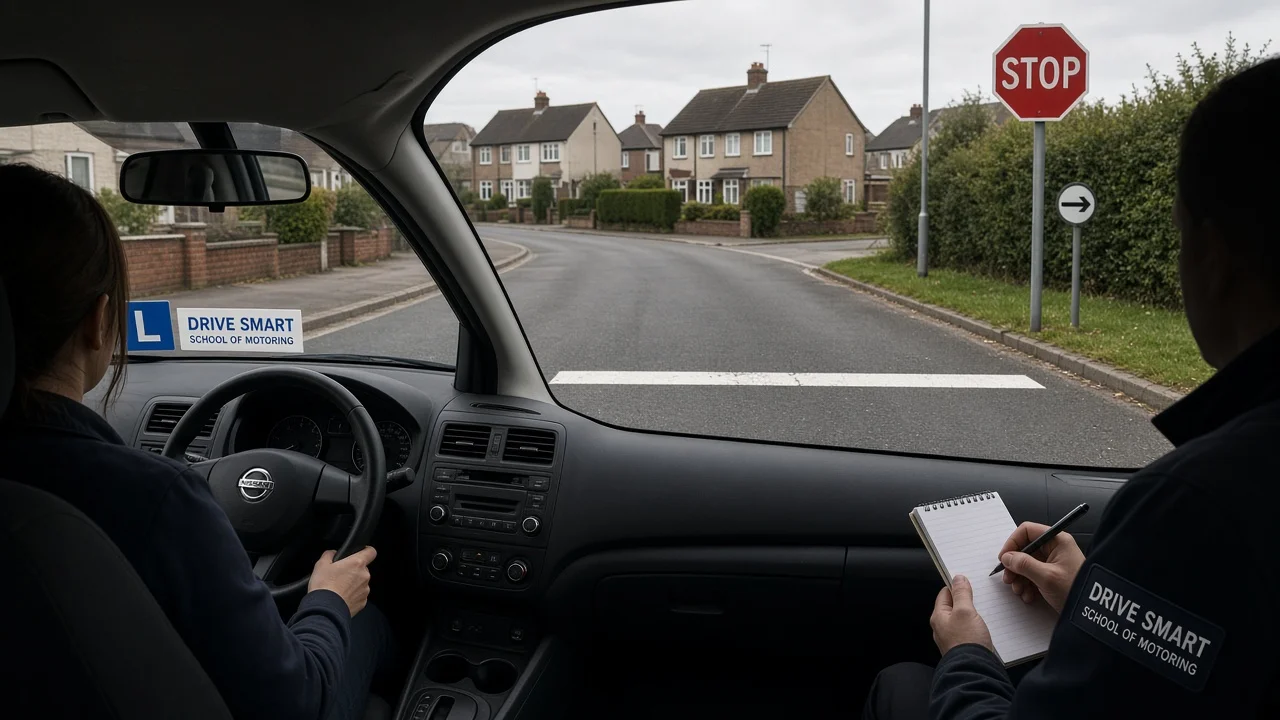
How This Sign Appears on the Theory Test
Picture items show the warning triangle with a small STOP octagon and ask what lies ahead. Choose answers about a mandatory stop line soon, not about level crossings, tunnels, or national speed limit changes unless the stem says so.
Distractors often mention give way ahead or plain T junction warnings. The stop ahead graphic always includes the octagon symbol inside the red-bordered triangle.
Scenario questions may describe a hidden junction on a fast road. Pair that story with preparing for a full halt at the line, not merely slowing to a crawl.
When two answers both say slow down, prefer the one that mentions being ready to stop completely at the stop line and checking mirrors on distance plates.
Hazard perception clips sometimes feature sudden braking before rare octagons on rural routes. Anticipate the conflict when following traffic closes up, not when a far warning board is barely visible.
Sketch the triangle and label the inner octagon. Examiners expect instant recognition without confusing the plate with the full-size regulatory sign at the junction.
Take a free mock theory test and filter questions on road and traffic signs. Pair that with the warning signs guide for triangle symbols.
Related Road Signs
Stop sign
Regulatory octagon where you must halt every time.
Give way sign
Yield without a mandatory pause when safe.
T junction sign
Stem meets a through road; stop orders may follow.
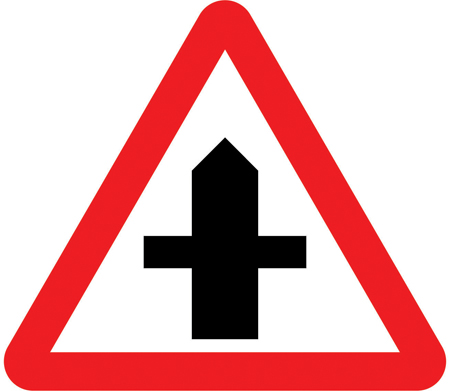
Crossroads sign
Four-way meeting; watch for stop or give way lines.
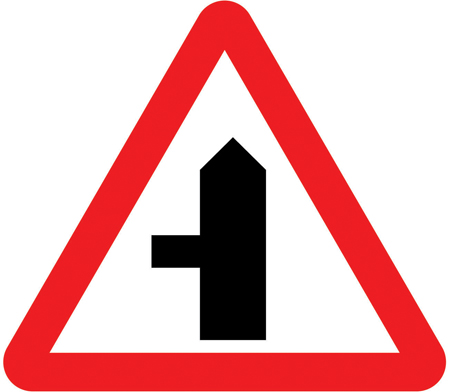
Side road left sign
Minor arm joins from the left on your approach.
Test Yourself on UK Road Signs
Treat the warning triangle as breathing space before a rare halt order: settle speed on the repeaters, plan a firm pause at the regulatory octagon, and scan the mouth before you move. Calm braking beats horn blasts and emergency swerves for everyone on the through road.
Frequently Asked Questions
What does the stop ahead sign mean?
It warns that a mandatory STOP octagon and stop line lie ahead on your route. Slow down, use distance plates to judge braking room, and prepare for a complete halt before the line, not a rolling creep into the junction.
Must I stop when I pass the warning triangle?
Not solely because of the triangle. You must stop completely at the regulatory octagon and white line when you reach them. The warning only tells you that halt is coming soon.
How is stop ahead different from give way ahead?
Give way ahead shows the inverted yield triangle inside the warning frame and forecasts a give-way line. Stop ahead shows a miniature STOP octagon and forecasts a mandatory halt at the solid bar.
Do distance plates under the triangle set a speed limit?
No. They quote distance to the stop line. Use them to reduce speed and increase following gap before the regulatory sign appears, especially on faster rural approaches.
Can I edge forward after stopping if I cannot see?
After a lawful halt with wheels still before the line, you may inch forward carefully to improve sight lines, provided you do not enter the path of other traffic. Peering while still rolling across the line is not a valid stop.