
Last updated: October 2026 · Checked against Highway Code
70 mph Sign: meaning, rules and what to do
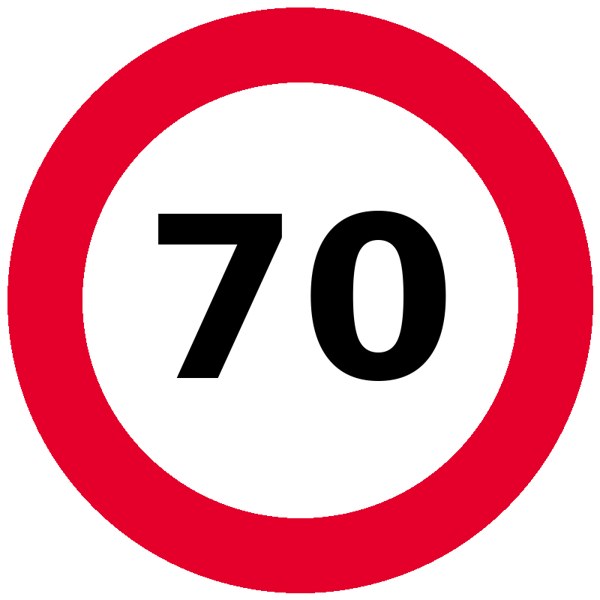
The circular plate with seventy in black on white inside a red border is the explicit UK order that you must not drive faster than seventy miles per hour on the signed length, even when the road already feels like a fast dual or motorway.
Sign image © Crown copyright, reproduced from GOV.UK traffic sign images under the Open Government Licence v3.0.
What the Seventy limit Sign Looks Like
The GOV.UK artwork is a perfect circle: thick red ring, white centre, and bold black digits reading 70. Like every numeric limit in Great Britain, the shape is regulatory rather than warning. Theory materials and DVSA apps use the same graphic, so you should recognise it instantly beside a gantry or on a verge post.
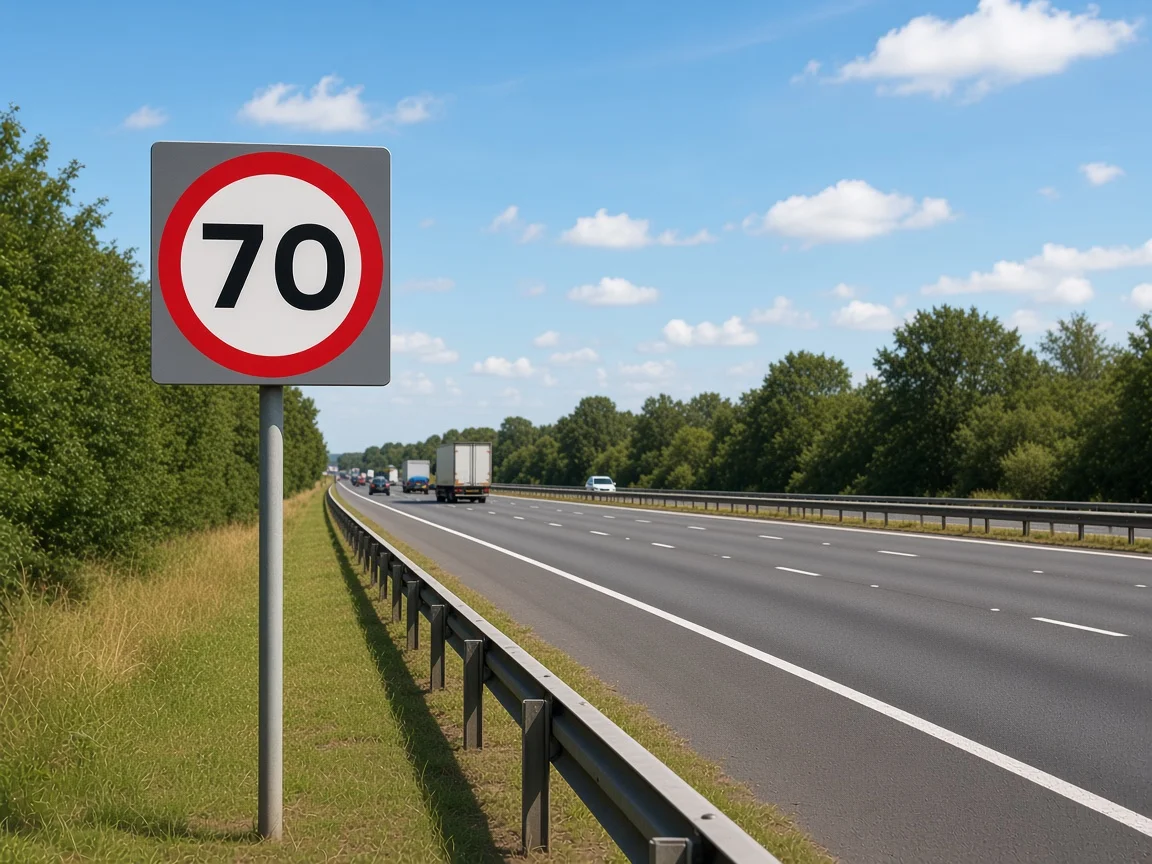
You will often see the plate after a lower temporary order, at the mouth of a dual carriageway leaving a town, or as a repeater on long motorway stretches where variable limits have ended. Some authorities pair it with distance plates or camera symbols bolted underneath. The digits mean miles per hour even when the word mph is absent from the drawing.
Do not confuse it with the national speed limit sign, which is a white diagonal slash on a black disc and never shows a number. That slash restores defaults by road type; the red-ring seventy states an explicit cap. A blue circle with a white number is a minimum speed order, which is rare outside tunnels and some motorway slips.
Temporary roadworks may copy the same red-ring design on yellow backing. Cones and narrow lanes do not relax the order until you pass an end plate, a different number, or the national limit symbol placed after the works. At night the retroreflective rim stays bright while the black numerals need a square headlamp beam to read from distance.
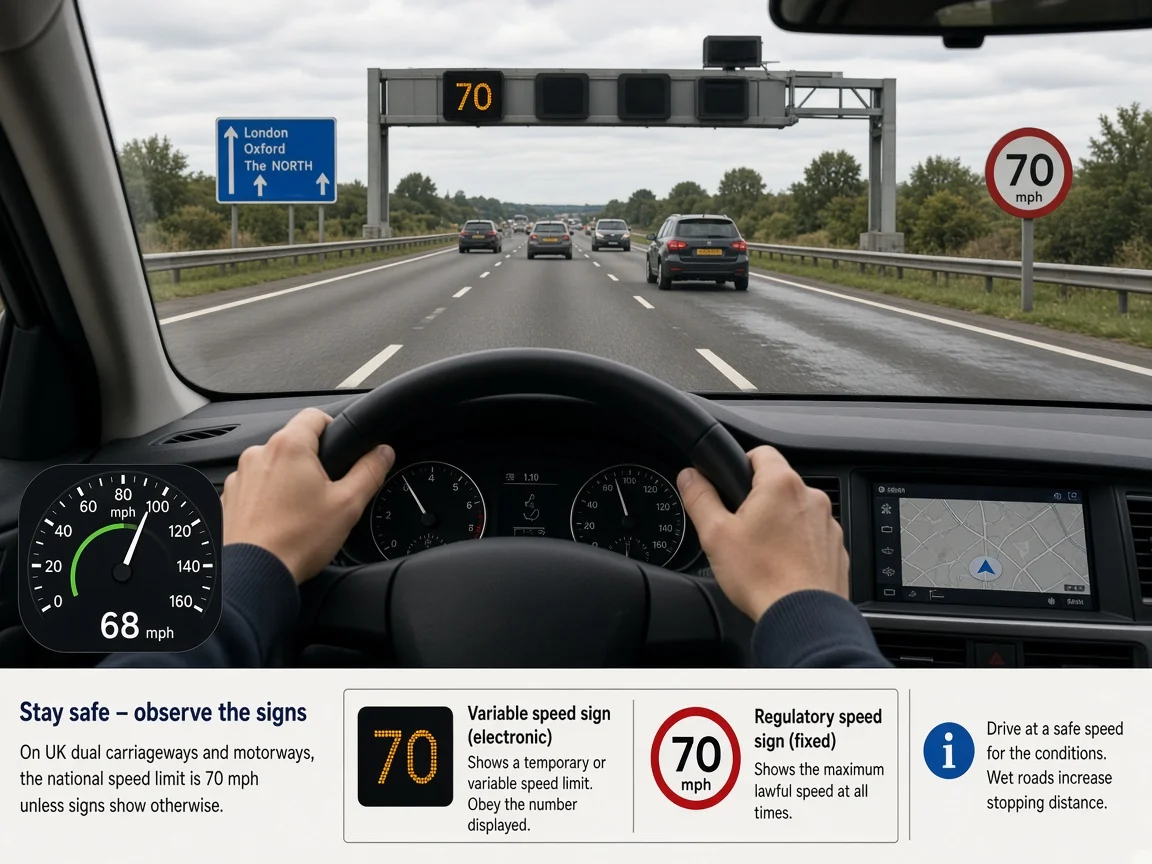
Smart motorway gantries sometimes show seventy on an electronic matrix instead of a fixed post. Treat that matrix as law for your lane until it changes. A fixed roundel on the verge can still sit beside the gantry as a reminder after a long stretch of fifty or sixty.
Seventy can appear where the national framework would already allow seventy for your vehicle class on a dual or motorway. The roundel still matters for cameras, for drivers leaving a fifty bypass, and anywhere a traffic order fixes the cap in writing. Read the last regulatory plate you passed before trusting sat-nav icons or road width alone.
What the 70 mph Sign Means
The order sets a maximum, not a target. Rule 124 in The Highway Code lists speed limits; Rule 125 reminds you that the limit is the absolute ceiling and that you must be able to stop within the distance you can see. Spray, crosswinds, lane closures and queuing traffic can demand far less than seventy even when the roundel is fresh in the mirror.
A signed seventy applies to the carriageway the plate faces until cancelled by an end-of-restriction sign, a lower numeric order, a red X above your lane, or a clear change in the legal framework. Side slips and parallel roads keep their own limits unless plates say otherwise. If you join from a slip road, read the plate at the merge before accelerating with main-line traffic.
Cars and motorcycles may use the full seventy where the order and road class allow. Cars towing caravans or trailers are limited to sixty on motorways and dual carriageways unless a lower plate appears. Large goods vehicles and coaches have their own lower caps in the same table. The roundel does not override those vehicle rules.
Dual carriageways in law need physical separation between directions, not merely a painted central hatching strip. If you are unsure whether the layout counts as dual, treat a wide single as sixty for cars until signage and reservation prove otherwise. A seventy roundel on a single carriageway is unusual but can exist where orders and safety audits support it.
Motorways share the seventy ceiling for cars when no variable matrix lowers the cap. Middle-lane hogging and tailgating remain offences even inside the limit. The plate does not grant immunity from careless driving charges when you follow too closely in rain.
Average-speed cameras measure compliance over hundreds of metres or several miles. A brief dip below seventy before a camera may not repair an average that stayed high across the whole section. Watch for pairs of white posts with orange fronts on faster routes.
Leaving seventy needs an end plate with a black diagonal on white, a fresh number such as fifty or sixty, or the national limit slash. Do not assume the limit ends at the next junction unless a plate or matrix confirms it. Smart motorways can drop to sixty without a side road.
Northern Ireland uses the same circular design for posted limits on public roads. Penalties and course offers follow NI procedures, but the symbol on theory materials matches GB artwork. Always read local press for temporary orders during storms or major events.
Repeaters are helpful on long straights but not always present. Relying on memory after miles of roadworks is risky: one missed plate can mean a ticket from an overhead gantry. When in doubt, read the last roundel, the gantry above your lane, and the road layout together.
Sat-nav speed limits sometimes lag by one junction after a matrix returns to seventy. On lessons along the M1 or M6, instructors ask learners to call out the last limit order before trusting the dashboard icon. The fixed roundel and gantry digits are ground truth when technology disagrees.
Joining a motorway from a slip, build speed on the slip to match a safe gap, then settle at or below seventy once merged. Examiners fail candidates who stop at the end of the slip or who charge into lane three without a mirror check.
Electric cars are quiet at seventy. Lorries and coaches may still be governed below the legal maximum. Give heavy vehicles room rather than sitting inches off their rear bumper in lane two.
Towing practice should include reading the sixty cap for combinations even when every car around you shows seventy on the post. Your safe speed may be lower on wet days with a high-sided caravan.
Before your theory appointment, mix sign photos with scenarios that mention trailers, smart motorways and end plates. Flag any item where you guessed between sixty and seventy on a single carriageway photo, then reread Highway Code rules 124 to 126 on GOV.UK.
Fleet telematics and hire policies sometimes flag motorway speeding even when fines stay in the lower bands. Employers with duty-of-care rules may treat seventy corridors as zero tolerance regardless of points.
Highway Code rules 124 to 126 (speed limits and stopping distances)
Seventy limit vs Similar Signs
| Sign | Meaning | Legal or warning? |
|---|---|---|
| 70 mph limit | Do not exceed seventy miles per hour | Regulatory (number in red ring) |
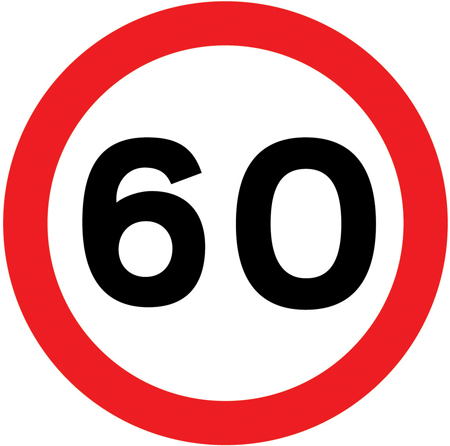 60 mph limit | Lower fixed cap until cancelled | Regulatory (number in red ring) |
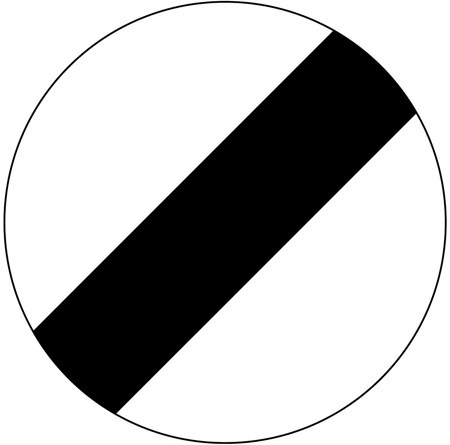 National speed limit | Default max for road type, no digit shown | Regulatory (white slash on black) |
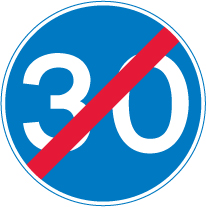 Minimum speed | Do not drive slower than shown | Regulatory (blue circle) |
 End of 70 mph | Leaves posted seventy; check next order | Regulatory (black diagonal on white) |
Rules and Penalties
Breaking a posted seventy limit is standard speeding. Penalties depend on how far over you were, with fixed penalties, speed awareness courses in some bands, and court referrals for high readings on motorway cameras.
Average-speed enforcement on duals and motorways can fail you even when you braked hard at each gantry. The system measures your mean speed across the whole linked section.
New drivers who collect six points within two years of passing can lose their licence. Two moderate motorway speeding offences may be enough without any other faults.
Police can prosecute driving too fast for conditions below the posted maximum. Standing water, fog and debris across lane one still demand much lower speeds than the roundel allows.
Ignoring a red X while continuing at seventy in a closed lane is a separate serious offence with large fines and points, not a routine speeding ticket.
Work zones may keep seventy on yellow plates with cones, or may drop to fifty with the same red-ring grammar. Read the live matrix and the nearest fixed post together.
Check the latest theory test pass mark and book when you are ready via our booking guide.
Seventy limit in Practice
Owen leaves a fifty-mile-per-hour smart motorway stretch near Birmingham. The gantry above lane two switches from amber sixty to a steady seventy, and a fixed red-ring repeater glints on the nearside verge beside a camera warning plate.
He checks the mirror, signals, and moves back to lane one once past a slower lorry. His speedometer settles at sixty-eight miles per hour with a four-second gap to the vehicle ahead. Spray from a shower earlier leaves shallow pools in lane three, so he ignores temptation to drift right for a clear run.
A car behind flashes its headlights while closing fast. Owen holds his gap rather than accelerating beyond seventy to appease the driver. Had he touched eighty-one past the repeater, an average-speed pair further north could still record a failing mean even after he braked.
Twelve miles on, a matrix drops to sixty before roadworks. Owen lifts off early, reads the red X above lane three, and does not use that lane. Only after the end plate and a fresh seventy roundel does he plan a gentle return to the cap, still watching for joiners from slips.
How This Sign Appears on the Theory Test
Car theory papers include fifty multiple-choice questions; you need forty-three correct within fifty-seven minutes. Sign items may show the red-ring seventy and ask the maximum speed or which vehicle class must stay lower.
Hazard perception is scored separately; you need forty-four out of seventy-five clips for a car licence in Great Britain. Motorway clips reward early slowing when traffic stacks ahead, even when no plate appears on screen.
Picture questions may hide the plate behind a gantry leg. Look for dual layout, central reservation, and matrix digits before you tap an answer.
Wrong options sometimes quote seventy on every rural single carriageway. Eliminate those when the photo shows one lane each way without a barrier and no numeric seventy post.
Trailer scenarios expect sixty even when the illustration includes a seventy roundel. Read the vehicle description in the stem before choosing a speed.
Some items pair the plate with an end-of-restriction symbol. Learn that the black diagonal on white cancels the posted number until the next order appears.
Take a free mock theory test and filter questions on road and traffic signs. Pair that with the warning signs guide for triangle symbols.
Related Road Signs
National speed limit
Slash plate restores defaults without showing seventy.
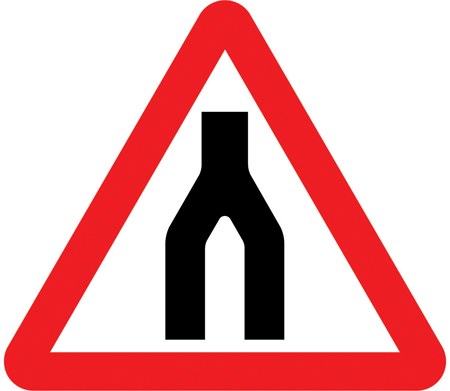
Dual carriageway ends
Layout change can drop cars from seventy to sixty.
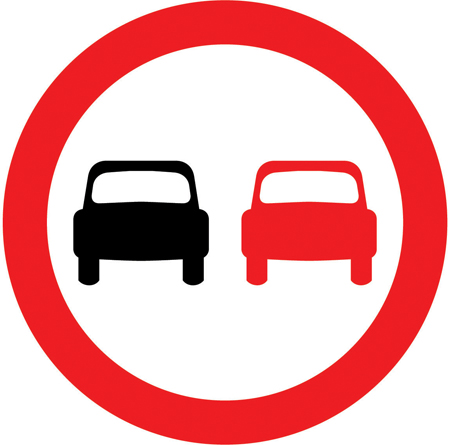
No overtaking
Overtaking bans still apply below seventy.
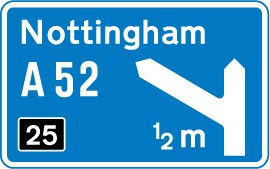
Ring road
Direction boards on fast dual routes.
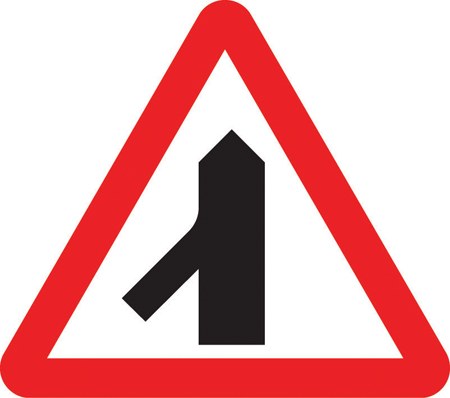
Traffic merges
Joining traffic on slips before the limit rises.
Test Yourself on UK Road Signs
Treat every red-ring seventy as a ceiling for that signed length, then adjust for weather, queues, towing rules and gantry orders above your lane. Revise limits with mocks, read the Highway Code table for your vehicle class, and notice how dual layout and the last plate confirm the order before you settle into cruise control.
Frequently Asked Questions
What does a 70 mph sign mean in the UK?
It is a mandatory maximum of seventy miles per hour on the signed length. You must not drive faster unless a later plate or matrix changes the limit.
Is a 70 mph sign the same as the national speed limit on a motorway?
For many cars the numeric cap matches the national ceiling on duals and motorways, but the roundel is an explicit order that cameras and traffic orders can name directly. The national limit sign uses a white slash on black and never shows a digit.
Can I drive at 70 mph when towing a caravan?
No on motorways and dual carriageways. Car and trailer combinations must stay at or below sixty unless a lower plate appears. The seventy roundel does not raise that towing cap.
What sign ends a posted 70 mph limit?
A white disc with a black diagonal bar marks the end of the posted seventy zone. Check immediately for a new number, a lower matrix order, or the national limit slash.
Will the 70 mph sign appear on the theory test?
Yes. DVSA materials use the standard GOV.UK artwork. Questions test the speed cap, vehicle exceptions, and how it interacts with motorways and dual carriageways.