
Last updated: October 2026 · Checked against Highway Code
50 mph Sign: meaning, rules and what to do
The circular plate with fifty in black on white inside a red border is the fixed order that caps your speed at fifty miles per hour until another regulatory sign or a clear end plate changes the law on that length of road.
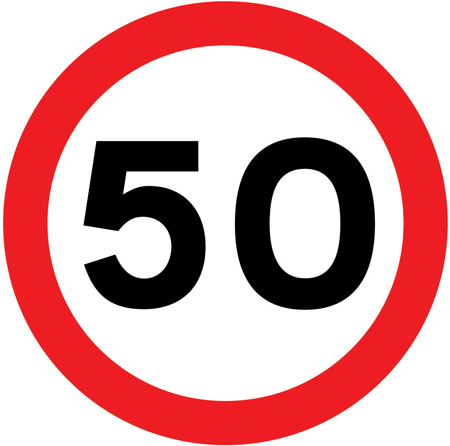
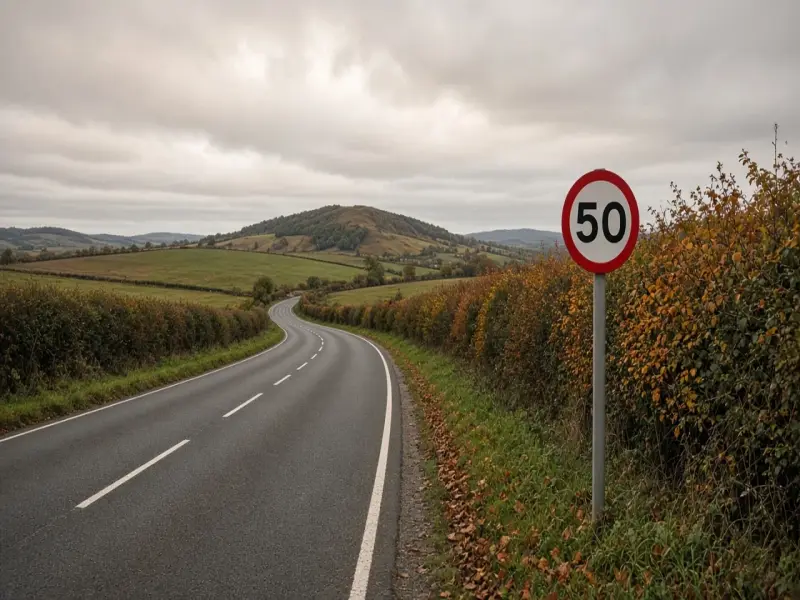
Sign image © Crown copyright, reproduced from GOV.UK traffic sign images under the Open Government Licence v3.0.
What the 50 mph limit Sign Looks Like
The GOV.UK fifty limit disc matches every other numeric limit: perfect circle, thick red ring, white centre, and bold black digits reading 50. The artwork rarely prints the letters mph, yet the figure always means miles per hour in Great Britain. Theory materials and DVSA clips use the same disc, so recognition on a small screen should feel automatic before you sit the exam.
Highway teams mount the plate on verge posts, bridge parapets, and advance boards before villages, industrial estates, and green corridors. On dual carriageways you may see pairs facing each direction, sometimes with a camera symbol on a grey panel underneath. Temporary versions at roadworks copy the red ring on yellow backing while cones narrow the lanes.
Repeaters are smaller copies of the same roundel, spaced where drivers might forget a limit after a long straight. Their absence does not legalise fifty-one. Sat-nav speed icons sometimes lag by one junction; trust the plate at the kerb when the dashboard disagrees.
Do not confuse this disc with the national speed limit slash on black, which never shows a digit. A blue circle with a white number is a minimum speed order, uncommon on open A-roads. A black diagonal on white ends a posted fifty zone rather than setting a new speed by itself.
Fifty sits between forty and sixty in the same red-ring family. A dual may show fifty where you expect seventy, while a single may drop from sixty to fifty before terraced housing. Read any camera plate, distance repeater, or time-of-day panel bolted below the main roundel.
What the 50 mph Sign Means
The order is a ceiling, not a target. Rule 124 in The Highway Code lists speed limits; Rule 125 reminds you that the figure is the absolute maximum and that you must be able to stop within the distance you can see. Rain, mud, cyclists, and slow tractors can demand thirty or forty on the same signed length.
Fifty miles per hour on a single carriageway is a deliberate reduction from the sixty national cap for cars. Councils use it where junction density, pedestrian crossings, or collision history justify keeping headroom down without posting forty through every field gateway.
On dual carriageways, fifty can replace seventy where the road runs past retail parks, hospitals, or new housing with frequent side turns. The layout may still feel like a fast road, so the roundel is doing legal work your instincts might miss. Check central reservation width and signage rather than guessing from lane count alone.
The limit applies to the carriageway the plate faces until cancelled. Side roads keep their own orders unless zone maps say otherwise. Turning off a sixty-mile-per-hour national-limit single into a link road may drop you to fifty before you see housing if the plate sits on the mouth of the slip.
Goods vehicles, buses, and cars towing trailers must obey the same numeric plate as ordinary cars unless a separate plate shows a lower figure for their class. Fifty does not shrink stopping distances for heavy loads. Downhill sections with fifty still need early braking before bends.
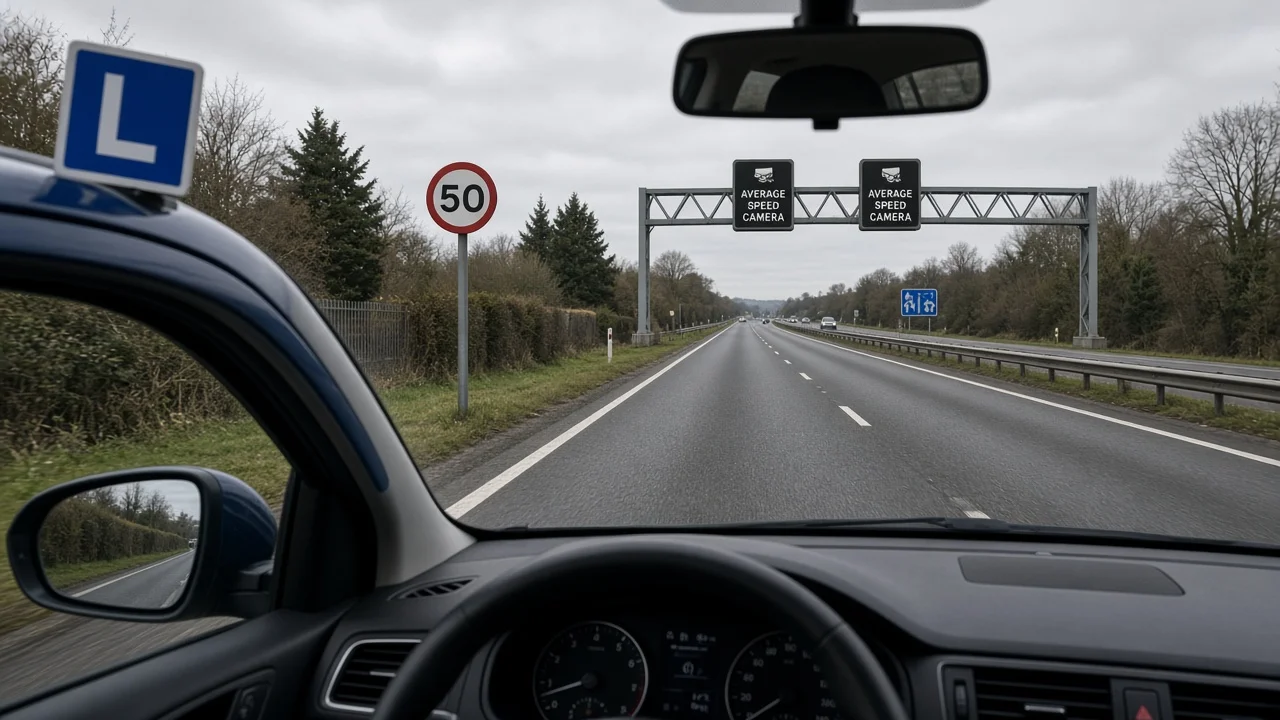
Average-speed camera pairs sometimes guard entire fifty corridors, especially where a dual feeds an urban core. A brief sprint to sixty before braking can fail the average across two posts even if you were legal at each camera individually.
Northern Ireland uses the same circular artwork on public roads. Penalty bands follow local procedures, but the symbol on theory papers matches GB stock. Wales and Scotland follow the same sign grammar; bilingual villages may add text panels without changing the number.
Leaving a fifty zone needs an end-of-restriction plate with a black diagonal on white, or a fresh numeric order such as forty, sixty, or the national limit slash. Driving out of a side road does not cancel fifty on the main line you rejoin.
You meet fifty on distributor duals near cities, on upgraded A-roads approaching towns, and on coastal routes where cliffs and lay-bys squeeze sight lines. Read the last plate after every roundabout because slip roads can hide a roundel behind a barrier.
Instructors on lessons through the West Midlands or South Wales ask learners to call out fifty before easing off from sixty. Smooth lifts off the accelerator score better on tests than late braking that surprises following traffic.
Overtaking at fifty needs longer gaps than at forty because closing speeds rise. Wait for a straight where you can see past the vehicle you are passing and still return before the next hidden junction.
Electric cars are quiet at fifty. Pedestrians on shared paths near the carriageway may not hear you; extra mirror checks before lay-bys and bus stops reduce surprises.
Night glare from oncoming headlights makes fifty feel slower than it is. Keep a two-second gap in dry weather and double it in heavy rain even when the roundel still reads fifty.
Before your theory appointment, mix sign photos with scenarios mentioning dual layouts, national limits, and repeaters. Eliminate seventy answers when the photo shows a red ring with fifty beside a central reservation.
Highway Code rules 124 to 126 (speed limits and stopping distances)
50 mph limit vs Similar Signs
| Sign | Meaning | Legal or warning? |
|---|---|---|
| 50 mph limit | Do not exceed fifty miles per hour | Regulatory (number in red ring) |
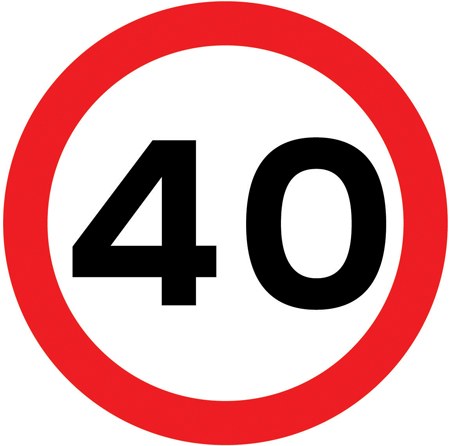 40 mph limit | Lower fixed cap, often before villages | Regulatory (number in red ring) |
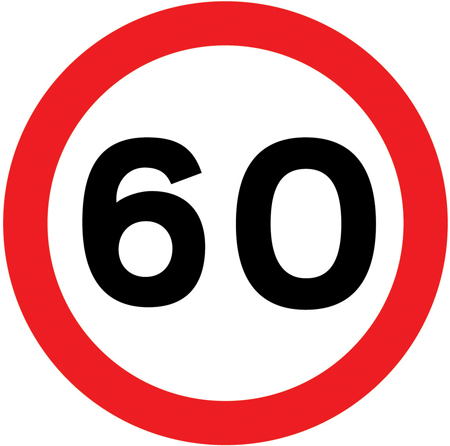 60 mph limit | Higher posted cap until cancelled | Regulatory (number in red ring) |
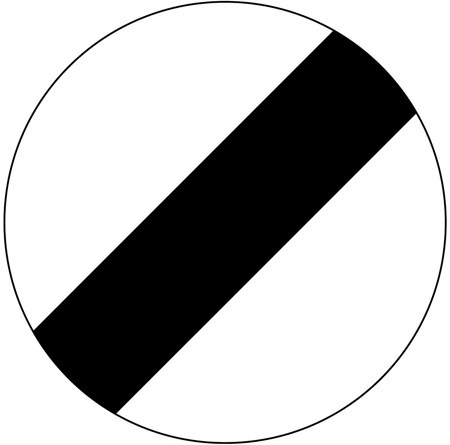 National speed limit | Default max for road type, no digit shown | Regulatory (white slash on black) |
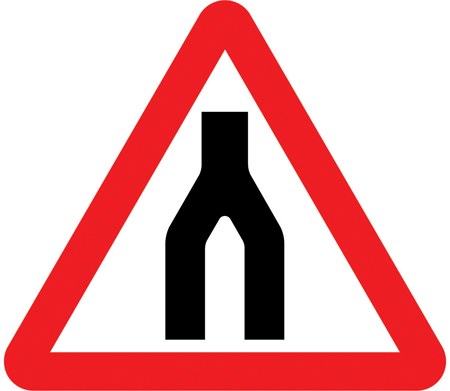 Dual carriageway ends | Warns single-carriageway layout ahead; check next limit | Warning (triangle) |
Rules and Penalties
Exceeding fifty brings standard UK speeding penalties scaled to how far over you were, including fixed penalties, points, speed awareness courses in some bands, and court referrals for high readings.
Mobile camera vans often park on bridges over fifty duals where drivers accelerate early after jams. Compliance is judged at the camera, not at the limit you intend to reach later.
New drivers who collect six points within two years of passing can lose their licence. Two moderate speeding offences on the same commute can be enough.
Police can prosecute driving too fast for conditions below fifty. Fog, standing water, and debris after high winds still demand much lower speeds on the same plate.
Fleet telematics may flag repeated fifty-zone breaches even when fines stay small. Employers with duty-of-care policies sometimes treat hospital approaches as zero tolerance.
Work zones may keep fifty on yellow plates between cones. Ignoring the digits there carries the same risk as on permanent posts.
Check the latest theory test pass mark and book when you are ready via our booking guide.
50 mph limit in Practice
Marcus drives a national-limit single at fifty-eight miles per hour in dry daylight when a red-ring fifty appears beside a row of new houses on a bypass fringe. A repeater glints on a lamp column two hundred metres ahead, and a grey camera symbol sits under the first post.
He checks the mirror, signals early, and settles at forty-eight until a cyclist ahead signals a right turn into a farm track. Marcus covers the brake, holds his lane, and passes with a full metre of clearance without lifting back to fifty until the cyclist has turned.
A following hatchback swings past at sixty-two before the camera pair. Average-speed enforcement across the next kilometre may record that run even if the driver brakes before the village sign. Marcus’s steady pace kept him inside both the law and the view ahead.
Beyond the estate the white end plate with a black diagonal bar shares a post with the national limit slash. Only then does he plan a gentle rise toward sixty on the open single, still matching surface water near a cattle grid.
How This Sign Appears on the Theory Test
Car theory papers include fifty multiple-choice questions; you need forty-three correct within fifty-seven minutes. Sign items often show the red-ring fifty and ask the maximum speed or what to do after a dual narrows.
Hazard perception is scored separately; you need forty-four out of seventy-five clips for a car licence in Great Britain. Clips on fast A-roads reward early easing when limit plates appear behind roadworks or queues.
Picture questions may crop the digit behind a tree. Look for dual layout, central reservation, and repeater spacing before you tap fifty rather than sixty or seventy.
Wrong options sometimes quote national limit speeds on roads that still show a number. Eliminate seventy when a red ring with fifty is visible on the same carriageway.
Some stems describe leaving a fifty zone: pairing the end plate with the national limit slash is a common trap. Read whether the question asks about speed inside the zone or immediately after the boundary.
Take a free mock theory test and filter questions on road and traffic signs. Pair that with the warning signs guide for triangle symbols.
Related Road Signs
National speed limit
Often follows the end of a posted fifty corridor.
Dual carriageway ends
Layout change where the next limit may drop.
No overtaking
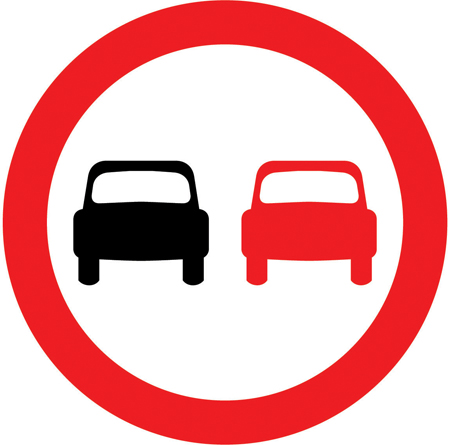
Sometimes paired with fifty on busy dual sections.
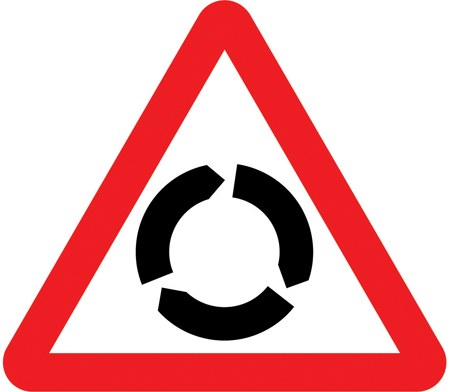
Roundabout ahead
Junction control before limits fall further.
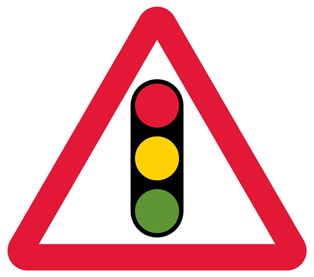
Traffic signals ahead
Lights where fifty approaches urban cores.
Test Yourself on UK Road Signs
Treat every red-ring fifty as a promise that conditions or policy need more time to react than the national limit allows. Read entry and exit plates, ignore sat-nav lag on slip roads, and practise recognition in a free mock theory test before exam day.
Frequently Asked Questions
What does a 50 mph sign mean in the UK?
It sets a mandatory maximum of fifty miles per hour on the signed length. You must not drive faster until another plate changes or ends the order.
Is 50 mph the national speed limit on dual carriageways?
No. The national limit for cars on a dual is seventy unless a lower number is posted. A red-ring fifty is a local order that replaces that default on the stretch ahead.
How is a 50 mph sign different from a 60 mph sign?
Both use the same red-ring design but the digit changes the legal cap. Sixty allows ten miles per hour more than fifty on the same road type until a new sign appears.
What sign ends a 50 mph limit?
A white disc with a black diagonal bar marks the end of the posted fifty zone. Check the same post or the next plate for forty, sixty, or the national limit slash.
Will the 50 mph sign appear on the theory test?
Yes. DVSA materials include the standard GOV.UK roundel. Questions test the speed cap and how it interacts with dual layouts and national limits.