
Last updated: October 2026 · Checked against Highway Code
20 mph Sign: meaning, rules and what to do
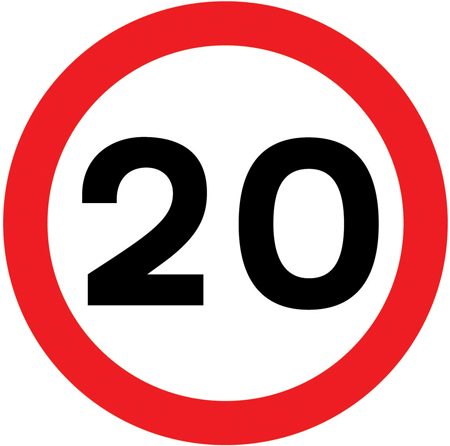
The circular plate with a red border and the number twenty in black on white is the speed 20 sign that creates a fixed maximum you must not exceed until a different order cancels it. It often marks residential streets, school approaches, high streets and whole zones where councils want headroom to stop for pedestrians, cyclists and parked-car surprises.
Sign image © Crown copyright, reproduced from GOV.UK traffic sign images under the Open Government Licence v3.0.
What the Twenty limit Sign Looks Like
The GOV.UK regulatory disc is a red ring on white with the digits 20 in black at the centre. Unlike warning triangles, the shape tells you this is an order, not a hazard preview. Theory apps and examiners label it the twenty miles per hour limit plate; drivers often call it a twenty zone marker when it sits beside humps or raised tables.
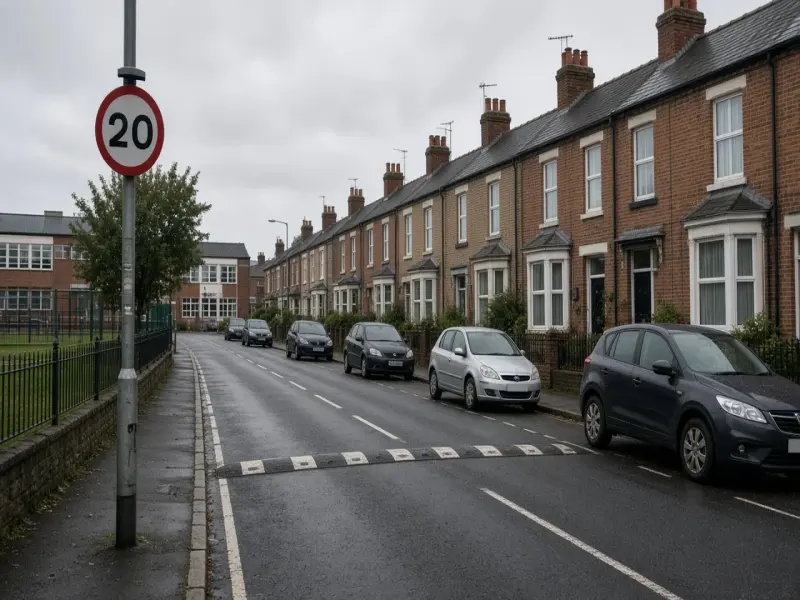
Councils mount the plate on lamp columns, railings and advance boards at the mouth of a zone, sometimes with a smaller “Zone” panel underneath. You may see pairs facing each other across a junction, or one roundel per entry point on a estate loop. The speed 20 sign does not show “mph” in every artwork version, but the number always means miles per hour in Great Britain.
Repeaters are smaller copies of the same roundel, often on the left verge every few hundred metres. They are helpful but not always present. Sat-nav speed limits sometimes lag by one street; trust the plate you pass at the kerb when the map disagrees.
Do not confuse this plate with the black diagonal on white that ends a twenty zone, or with the national speed limit slash that restores defaults. A red ring with a different number, such as thirty or forty, replaces twenty entirely rather than adding to it.
Numeric limits share the same red-ring grammar from twenty through seventy. Minimum speed uses a blue circle. School warning triangles expect slow driving but do not post twenty by themselves. Read any zone plate, camera symbol or “At night” panel bolted below the main disc.
What the 20 mph Sign Means
Twenty miles per hour limits trade a few seconds of journey time for shorter stopping distances where people live, shop and walk to school. Highway authorities choose them where collision data, resident petitions or national policy favour calmer streets. The roundel is the legal switch: before it you obey whatever limit already applied; after it your maximum drops to twenty unless you are already lower.
A single entry plate can define a whole zone if traffic orders and maps say so. Side roads inside the zone usually inherit twenty without their own post, which catches drivers who turn in assuming thirty. Leaving the zone needs an end-of-restriction plate or a fresh numeric limit, not simply driving back out the way you entered unless that exit is signed.
Rule 124 in The Highway Code groups all speed limits. You must not drive faster than the limit for the road and for your vehicle class. Rule 125 adds that the limit is the absolute maximum and is not a target: ice, rain, crowds and tight sight lines can require far less than twenty. Rule 126 discusses stopping distances; at twenty you travel about nine metres per second, so a child stepping from a bus can still be hit if you are distracted.
Repeaters reinforce memory on long straightaways inside a zone. Their absence does not legalise twenty-one. Camera enforcement varies: some councils use fixed posts, others mobile units, and some rely on community speed watch before installing hardware.
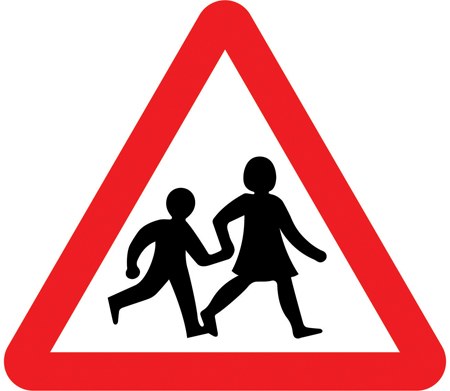
Twenty is common outside schools, though the triangular children warning and the circular limit solve different jobs. Zigzag keep-clear markings ban stopping at the gate; the roundel caps speed along the wider approach. Hospital fronts, market towns and waterfront promenades that allow traffic also appear on local lists.
Larger vehicles and trailers keep the same numeric cap unless a separate plate shows a lower figure for goods vehicles. Electric cars are quiet at twenty; pedestrians may not hear you approach, so extra mirror checks near crossings matter.
Temporary limits at roadworks can copy the same artwork on portable stands. Cones and chapter-eight boards do not cancel the order until you pass the end sign or national limit plate placed after the works.
You meet this plate on Victorian terraces, new-build crescents, city villages and shopping streets where parking bays hug the kerb. Rural lanes outside schools may jump from sixty to twenty for a short stretch; read advance signage so you brake before the village centre, not on it.
Driving instructors use these streets to practise smooth gear changes and scanning doorways. Examiners watch whether you notice the first roundel when joining from a side road and whether you stay at or below twenty without nagging.
Cyclists may pass you legally when you are already at the limit. Give them room without drifting across the centre line into oncoming traffic. At twenty, overtaking a cyclist often gains little time; patience keeps everyone legal.
Buses and refuse lorries sometimes crawl at fifteen in narrow zones. Following too closely removes your view of pedestrians crossing between parked cars. Hang back one bus length and cover the brake near stops.
Residents may ask for twenty after near misses. Humps, raised tables, chicanes and planters often follow the legal order rather than replacing it. The plate remains the enforceable number even when engineering nudges speed down further.
Before your theory appointment, mix sign recognition with scenario questions that mention school times, wet roads and repeaters. A photo question may show housing and lamp columns without a readable digit; look for zone entry boards and traffic-calming paint.
Highway Code rules 124 to 126 (speed limits and stopping distances)
Twenty limit vs Similar Signs
| Sign | Meaning | Legal or warning? |
|---|---|---|
| 20 mph limit | Do not exceed twenty miles per hour | Regulatory (number in red ring) |
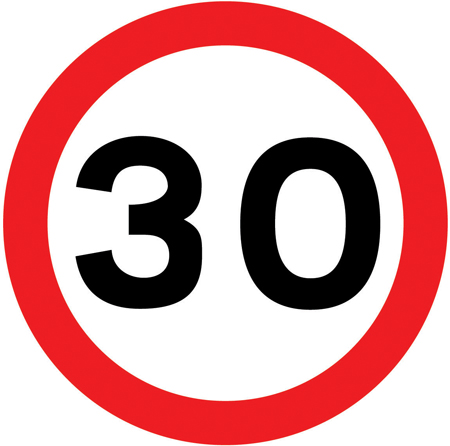 30 mph limit | Default-style cap for many lit streets when posted | Regulatory (number in red ring) |
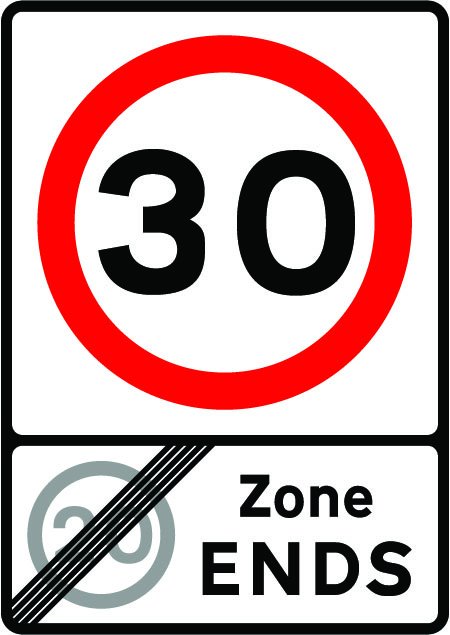 End of 20 mph | Leaves the twenty zone; obey the next order | Regulatory (black diagonal on white) |
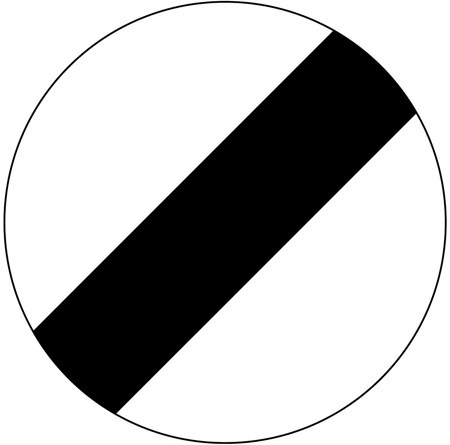 National speed limit | Restores default max for road type | Regulatory (white slash on black) |
Rules and Penalties
Exceeding twenty brings the same speeding framework as any other limit: fixed penalties and points scaled to how far over you were, speed awareness courses in some bands, and court for high readings.
Average-speed cameras sometimes protect whole twenty corridors, especially near schools. A momentary spike followed by braking may still fail an average check across two posts.
New drivers who reach six points within two years of passing can lose their licence; two moderate speeding offences may be enough.
Police can prosecute driving too fast for conditions below twenty. Leaves on wet tarmac, dusk glare and crowds outside a football ground still demand lower speeds.
Fleet telematics and hire-car policies may flag repeated twenty-zone breaches even when fines stay small. Employers with duty-of-care policies sometimes treat school routes as zero-tolerance.
Check the latest theory test pass mark and book when you are ready via our booking guide.
Twenty limit in Practice
On a bright October morning, Priya turns off a thirty-mile-per-hour distributor into a side street marked by a red-ring roundel with twenty at the centre. A “Zone” plate sits beneath it, and a repeater glints on a lamp post fifty metres ahead.
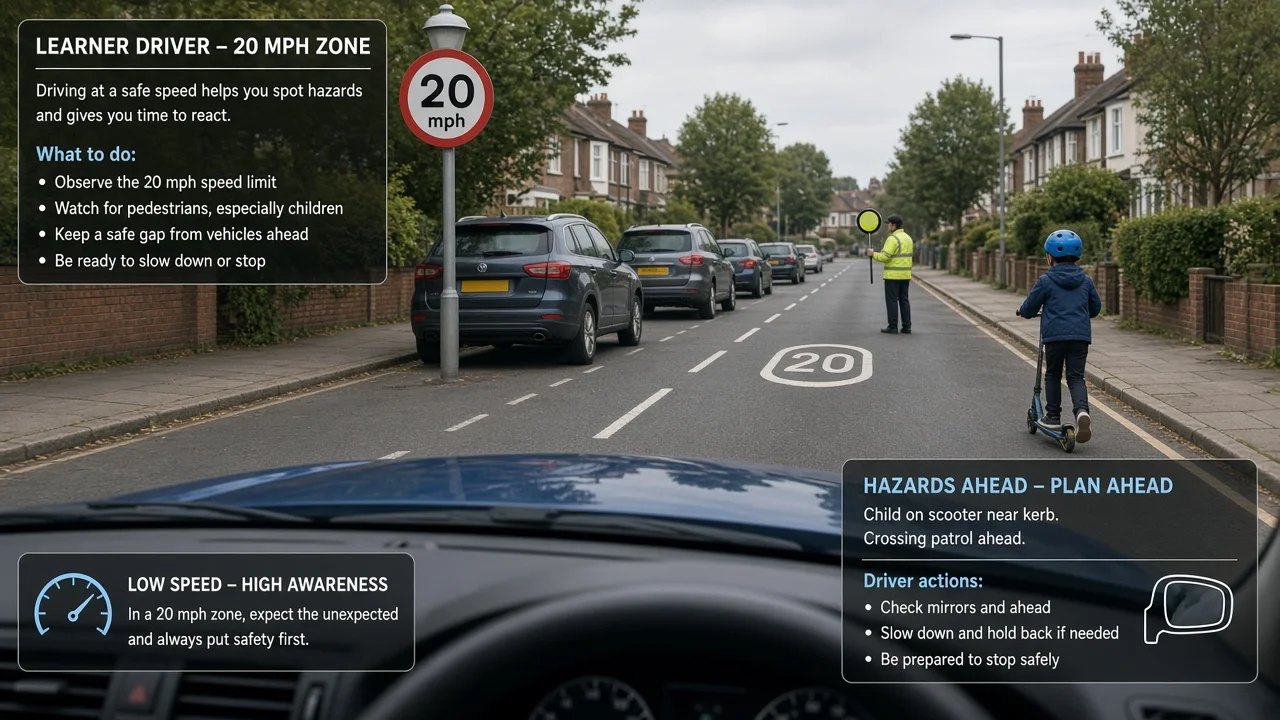
She checks the mirror, confirms her speedometer sits at eighteen, and covers the brake where SUVs line the kerb outside a primary school. A boy on a scooter leaves the pavement; Priya holds a straight line and stops short without honking.
Behind her, a van driver swings past at twenty-eight. A fixed camera further along the zone may capture that reading even if they brake before the next junction. Priya’s steady pace kept her inside both the law and the stopping distance she could see.
At the far end of the estate she passes a white plate with a black diagonal bar and then a thirty roundel. Only then does she rise back toward the higher limit, still matching conditions rather than the ceiling.
How This Sign Appears on the Theory Test
Multiple-choice items show the red-ring twenty and ask the maximum speed. Reject answers that treat the plate as advisory or that quote twenty metres per hour.
Picture questions may hide the digit behind glare but show repeaters and humps. Choose twenty when the zone entry artwork matches the official disc.
Some stems describe leaving a zone: pairing the end plate with the next numeric sign is a favourite trap. Read whether the scenario asks speed inside or immediately after the boundary.
Hazard perception clips on residential streets reward early slowing when parked cars, school buses or crossing patrols appear. You score better by easing off before a child moves than by a late emergency stop.
Filter mocks on road and traffic signs, then revisit Highway Code stopping distances. Knowing nine metres per second at twenty helps you eliminate silly overtaking options.
Take a free mock theory test and filter questions on road and traffic signs. Pair that with the warning signs guide for triangle symbols.
Related Road Signs
National speed limit sign
Often follows the end of a local twenty corridor.
School warning sign
Warns of pupils near the road; pair with twenty limits.
Urban clearway
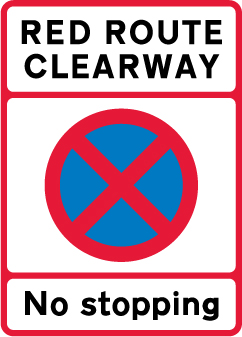
Stopping bans on busy routes through twenty zones.
Give way sign
Side-road control where twenty meets faster roads.
Mini roundabout sign
Small roundabouts on calm streets still inside twenty.
Test Yourself on UK Road Signs
Treat every red-ring twenty as a promise to neighbours that you can stop in the space you can see. Read zone entry and exit plates, ignore sat-nav lag on side roads, and practise recognition in a free mock theory test before exam day.
Frequently Asked Questions
What does the 20 mph sign mean?
It sets a maximum speed of twenty miles per hour on the road or zone ahead until another sign changes the limit. You must obey it even if repeaters are missing.
Is a 20 mph zone the same as a 30 street with humps?
No. Humps alone do not create a twenty limit unless traffic orders and signs say so. The red-ring roundel is what makes twenty the legal maximum.
When does the limit start?
At the sign unless a supplementary plate gives a distance. Joining from a side road inside a signed zone usually means twenty applies immediately, even without a repeater on your arm.
How do I know the zone has ended?
Look for the end-of-twenty plate with a black diagonal on white, or a new numeric limit such as thirty, forty or the national speed limit symbol.
Can I be fined for doing 25 in a 20 area?
Yes. Twenty-five exceeds the posted maximum and can attract standard UK speeding penalties, including points and a fine, or a speed awareness course in some bands.